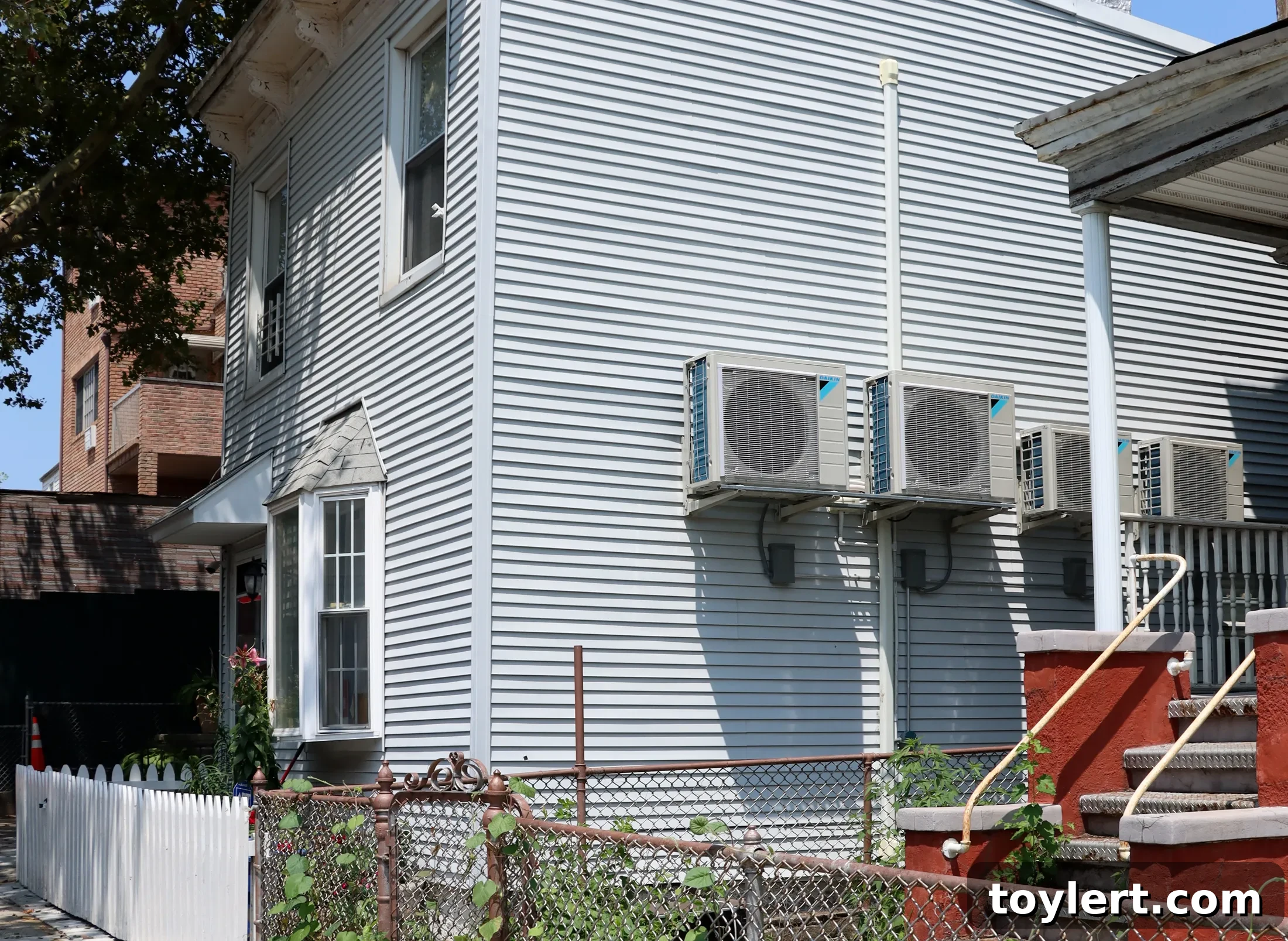
Optimal Mini-Split Condenser Placement: A Comprehensive Guide for Homeowners
Choosing the right location for your mini-split system’s outdoor condenser unit is a critical decision that impacts not only its performance and efficiency but also its longevity and your home’s aesthetic appeal. Many homeowners, especially those facing concurrent home improvement projects like a roof replacement, find themselves pondering the best placement options. This guide will delve into various considerations and common placement strategies, helping you make an informed choice for your home.
Understanding Mini-Split Systems and Their Condensers
Mini-split systems, also known as ductless mini-splits, offer an efficient and flexible solution for heating and cooling individual rooms or zones within a home. Unlike traditional central HVAC systems that rely on extensive ductwork, mini-splits consist of two main components: an indoor air-handling unit and an outdoor condenser unit. The outdoor condenser contains the compressor, condenser coil, and fan, responsible for exchanging heat with the outside air. Its strategic placement is paramount to the system’s overall effectiveness and quiet operation.
Key Factors to Consider for Condenser Placement
Before settling on a location, several vital factors must be evaluated. Overlooking any of these could lead to reduced efficiency, higher energy bills, increased maintenance, or even premature system failure. A thoughtful approach ensures your mini-split operates at its peak performance for years to come.
1. Accessibility for Maintenance and Repair
Regular maintenance is crucial for the efficient and prolonged operation of any HVAC system. The condenser unit will require periodic cleaning of coils, fan blades, and drain pans, as well as professional inspections. Choosing a location that is easily accessible for technicians means less hassle and potentially lower service costs in the future. Difficult-to-reach units, such as those mounted high on a wall or on a very steep roof, can complicate routine servicing and make repairs more time-consuming and expensive.
2. Airflow and Clearance Requirements
Mini-split condensers need ample space around them to ensure proper airflow. They draw air in, cool or heat it, and then expel it. Obstructions like dense bushes, fences, or walls too close to the unit can restrict airflow, causing the system to work harder, consume more energy, and potentially overheat. Most manufacturers recommend specific clearance distances (typically 6-12 inches) from walls and other objects. Always consult your unit’s installation manual for precise requirements to maintain optimal efficiency and prevent damage.
3. Protection from Direct Sunlight and Elements
While condensers are built to withstand outdoor conditions, extreme exposure can impact their performance. Placing the unit in a shaded area, especially during the hottest parts of the day, can slightly improve cooling efficiency by reducing the heat absorbed by the casing. Similarly, protecting it from direct, driving rain or snow drifts can help prolong its lifespan. However, ensuring good airflow is always a higher priority than seeking shade; never sacrifice proper clearance for shade.
4. Noise Considerations
Mini-split outdoor units operate with a compressor and fan, which generate some level of noise. While modern units are significantly quieter than older central AC units, their hum can still be noticeable, especially in quiet residential areas. Consider placing the unit away from bedrooms, patios, decks, or neighboring properties to minimize potential disturbances. Walls and dense shrubbery can help muffle sound, but again, ensure they do not impede airflow.
5. Aesthetic Impact on Your Home
The visual aspect is important for many homeowners. A large outdoor unit can detract from your home’s curb appeal if placed prominently. Explore options that blend seamlessly with your landscaping or are less visible from common viewing angles. Creative screening solutions like trellises with climbing plants or decorative fences can hide the unit, but remember to maintain the necessary airflow clearances.
6. Proximity to Indoor Units and Line Set Length
The outdoor condenser connects to the indoor air handler(s) via a “line set,” which includes refrigerant lines, condensate drain lines, and electrical wiring. Keeping the line set as short as possible generally leads to more efficient operation and lower installation costs. While mini-splits offer flexibility with longer line sets than traditional systems, excessively long runs can decrease efficiency and increase installation complexity and cost. Plan the outdoor unit’s location in relation to all connected indoor units.
7. Condensate Drainage
During the cooling cycle, the indoor unit produces condensate (water) that needs to be drained away. While the outdoor unit also produces some condensate, the primary concern is the indoor unit’s drainage, which usually runs alongside the line set to the outdoor unit’s vicinity or a dedicated drain. Ensure the outdoor unit is placed where condensate can drain freely without causing water damage to your home’s foundation, creating slippery surfaces, or pooling in undesirable areas.
8. Local Regulations and Homeowners’ Association (HOA) Rules
Always check with your local municipality for any building codes or permitting requirements related to HVAC installations. Many areas have regulations regarding noise levels, placement proximity to property lines, and structural requirements. If you live in a community with an HOA, they often have specific rules about outdoor unit visibility, size, and placement. Obtain necessary approvals before beginning any installation to avoid potential fines or rework.
9. Security Considerations
Unfortunately, outdoor HVAC units can be targets for theft (especially for copper components) or vandalism. Consider placing your condenser in a location that is less accessible to passersby or is visible from windows. While security cages are available, they can also hinder maintenance and airflow if not properly designed and installed. Balance security with accessibility and aesthetic concerns.
Common Placement Options and Their Pros & Cons
With these factors in mind, let’s explore the most common placement options for mini-split condensers, paying close attention to the homeowner’s specific dilemma regarding a roof replacement.
1. Ground Level Placement
This is arguably the most common and often the most straightforward installation method.
- Pros:
- Easy Accessibility: Simplest for maintenance, cleaning, and repairs, reducing service costs.
- Reduced Structural Concerns: No need to worry about the structural integrity of walls or roofs.
- Simpler Installation: Often quicker and less complex than elevated installations.
- Noise Dissipation: Ground-level sounds are often absorbed by landscaping elements more effectively than sounds directly transmitted into a structure.
- Cons:
- Takes Up Yard Space: Can intrude on garden areas, walkways, or patios.
- Visual Impact: May be more visible from certain vantage points, affecting curb appeal.
- Vulnerability: More susceptible to accidental damage from lawnmowers, landscaping, pets, or potential vandalism.
- Drainage Issues: Needs proper drainage away from the foundation; can be prone to standing water if not properly elevated on a pad or feet.
- Longer Line Sets: For multi-story homes, ground placement might mean longer line sets to upper-floor indoor units, potentially affecting efficiency and increasing cost.
2. Wall-Mounted Placement (Using Brackets)
Mounting the condenser on an exterior wall elevates it off the ground, offering distinct advantages.
- Pros:
- Space Saving: Frees up ground space, ideal for smaller yards or homes with limited external space.
- Protection from Ground-Level Hazards: Safe from landscaping equipment, pests, and standing water.
- Shorter Line Sets: Can be strategically placed closer to upper-floor indoor units, potentially shortening line sets.
- Reduced Snow & Debris Accumulation: Less prone to being buried in snow or collecting ground-level debris.
- Cons:
- Structural Requirements: Requires a sturdy wall capable of supporting the unit’s weight, often needing reinforcement.
- Noise Transmission: Vibrations and noise can potentially transmit directly into the home through the wall structure. Proper vibration dampeners are crucial.
- Aesthetic Impact: Unit is visibly attached to the side of the house.
- Accessibility for Maintenance: Can be more challenging to access for servicing compared to ground units, potentially requiring ladders or lifts.
3. Roof Placement
Placing the condenser on the roof is an option that appeals to some, particularly for commercial buildings or multi-zone systems needing a central location.
- Pros:
- Out of Sight: Often completely out of the line of sight from ground level, preserving aesthetic appeal.
- Space Optimization: Doesn’t take up valuable ground or wall space.
- Shorter Line Sets: Ideal for multi-story homes where indoor units are on upper floors, leading to shorter and more direct line sets.
- Cons:
- Accessibility Challenges: This is the biggest drawback. Maintenance and repairs become significantly more difficult, dangerous, and expensive due to the need for specialized equipment (ladders, harnesses) and safety protocols.
- Roof Integrity Concerns: The roof must be structurally sound to bear the weight. Penetrations for line sets and mounting hardware create potential leak points if not sealed meticulously.
- Exposure to Elements: Units are more exposed to direct sunlight, high winds, and snow accumulation.
- Noise Transmission: Vibrations can potentially transmit through the roof structure into the home.
- Your Roof Replacement Dilemma: This is the crucial point for the homeowner. Installing on a roof that needs replacement soon is highly impractical and cost-ineffective.
4. Balcony or Deck Placement
For homes with balconies or ground-level decks, these can serve as viable placement options.
- Pros:
- Good Accessibility: Often easily accessible for maintenance without specialized equipment.
- Elevated: Off the ground, protecting from pests, debris, and standing water.
- Shorter Line Sets: Particularly advantageous for connecting to indoor units on the same floor or directly above/below.
- Cons:
- Space Usage: Takes up valuable space on the balcony or deck, potentially limiting its use.
- Noise: Proximity to living or recreational areas can make operating noise more noticeable.
- Aesthetics: Highly visible to occupants of the balcony/deck and potentially from other vantage points.
- Structural Support: The balcony or deck must be structurally capable of supporting the unit’s weight.
Addressing the Roof Replacement Dilemma
Given that your roof needs replacing in the next few years, installing a mini-split condenser on it currently makes little to no sense. Such an installation would necessitate removal and reinstallation of the unit during the roofing project, incurring significant additional costs for labor, crane rental (if required), and potential damage to the system during the process. Furthermore, it could complicate your roofer’s work and potentially void warranties for either the mini-split or the new roof.
Here’s how to navigate this specific challenge:
- Prioritize Ground or Wall Mounting: These options completely bypass the roof issue. Ground-level installation or wall-mounted brackets offer excellent alternatives that won’t interfere with your upcoming roof project.
- Temporary vs. Permanent: There isn’t a good “temporary” roof placement for a mini-split. Installation is meant to be permanent. Investing in a ground or wall mount now will save you double the installation costs and headaches later.
- Coordinate with HVAC and Roofing Professionals: Discuss your plans with both your HVAC installer and your roofer. They can offer insights into the best timing and logistical considerations. For example, if you absolutely must have a roof-mounted unit for some reason (e.g., extremely limited ground space, aesthetic constraints), it would be far more sensible to wait until the new roof is installed. However, this is generally not recommended for the reasons outlined above.
Important Considerations Before Making Your Final Decision
- Consult HVAC Professionals: Always seek advice from certified and experienced HVAC technicians. They can assess your specific property, calculate load requirements, identify optimal line set paths, and recommend the best placement options tailored to your home’s unique layout and your climate. They can also advise on proper sizing and number of units needed for your space.
- Get Multiple Quotes: Don’t settle for the first quote. Obtain proposals from several reputable HVAC companies. This allows you to compare not just prices, but also proposed solutions, equipment brands, and warranty options. A good contractor will spend time evaluating your home and discussing placement with you in detail.
- Check for Permits: Confirm with your local building department if any permits are required for mini-split installation. Ensuring compliance avoids potential fines and ensures the work meets safety standards.
- Long-Term Vision: Consider any future home expansion plans or landscaping projects that might affect your chosen condenser location. Planning ahead can prevent future conflicts.
Conclusion
The decision of where to place your mini-split condenser unit is multifaceted, involving considerations from operational efficiency and maintenance accessibility to noise levels and aesthetic appeal. Given your impending roof replacement, it is strongly advised to explore alternatives to roof placement, such as ground-level or wall-mounted options. By carefully evaluating all factors and consulting with qualified professionals, you can ensure your mini-split system is installed in an optimal location that maximizes its performance, extends its lifespan, and contributes positively to your home’s comfort and value.