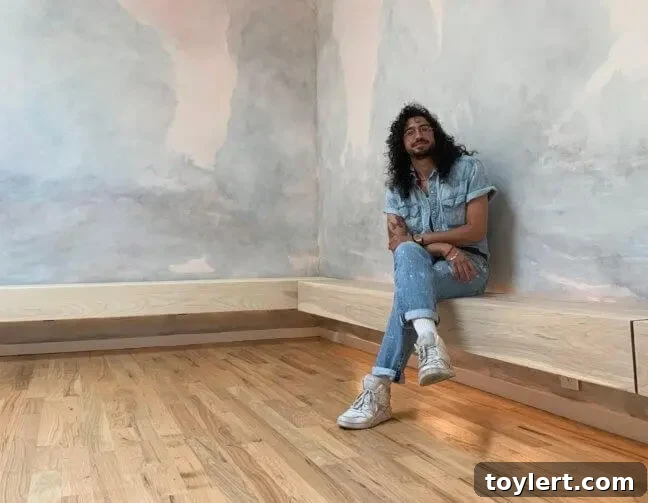
In a city teeming with comedic talent, where stages light up nightly with a myriad of performances, one Brooklyn-based comedian, Ben Wasserman, has carved out a uniquely poignant niche. On the last Saturday of every month, as the vibrant energy of New York City’s comedy scene pulses, Wasserman steps not into a typical club, but into the serene, pastel-painted confines of a Greenpoint funeral home. This unconventional setting is the stage for his critically acclaimed and deeply personal show, “Life After Death,” an exploration of grief, loss, and the profound experience of continuing to live after someone beloved has departed.
The chosen venue, Sparrow, A Contemporary Funeral Home on Driggs Avenue, is itself a testament to the show’s innovative spirit. Far from the somber, traditional imagery often associated with funeral homes, Sparrow offers a modern, thoughtful space designed to foster comfort and facilitate contemporary approaches to mourning. It’s within this surprisingly warm and inviting environment that Wasserman invites his audience to confront one of life’s most universal yet often unspoken experiences: navigating the aftermath of loss. His performance transcends mere stand-up; it becomes a shared journey into the complexities of human emotion, rendered with a raw honesty and a surprising undercurrent of humor that resonates deeply with those who have grappled with the pain of absence.
Ben Wasserman’s comedic journey spans approximately eight years, a period marked by evolution and a growing commitment to authentic expression. His initial foray into the world of stand-up comedy followed a period of disillusionment he describes as a “failed attempt at academia.” This experience left him with a potent revelation: a desire to be perceived as “smart” rather than merely “funny.” This internal shift became a pivotal moment, gradually redirecting his comedic focus from purely lighthearted entertainment to a more substantive and introspective form of storytelling. For the first four years of his career, Wasserman’s shows were characterized by their goofy nature, often untethered from the deeper realities of life, reflecting a common trajectory for emerging comedians honing their craft.
However, the pursuit of intellectual depth and personal resonance ultimately guided Wasserman towards a more profound comedic style. The genesis of “Life After Death” signifies a mature artistic pivot, where the comedian courageously mines his own experiences and observations on grief to create a performance that is both cathartic and genuinely funny. This transition from superficial humor to a poignant exploration of loss showcases a comedian unafraid to tackle challenging themes, transforming personal pain into a shared, illuminating experience. The show’s unique blend of humor and vulnerability invites audience members to find common ground in their individual struggles with loss, fostering a sense of community and understanding within the walls of a place traditionally associated with solitude and sorrow.
The decision to host “Life After Death” within a funeral home is not merely a gimmick; it’s a deliberate artistic choice that amplifies the show’s themes and creates an unparalleled atmosphere. Sparrow’s modern design and philosophy embrace the idea of death as a natural part of life, aligning perfectly with Wasserman’s ambition to normalize conversations around grief. The pastel-painted walls and contemporary aesthetic of the venue subtly challenge preconceived notions about spaces dedicated to mourning, suggesting that healing and even laughter can coexist within them. This unique setting imbues the performance with an immediate sense of gravitas and intimacy, preparing the audience for a journey that will touch upon the tender parts of their own lives and memories.
In “Life After Death,” Wasserman delves into the multi-faceted experience of grief. It’s not just about the initial shock or sadness, but about the lingering presence of absence, the unexpected bursts of memory, the absurdities that can arise in the midst of sorrow, and the quiet resilience required to simply keep going. He masterfully articulates the feeling of being “still around when someone you love is gone,” a sentiment that resonates deeply with anyone who has navigated the bewildering landscape of bereavement. His stand-up is characterized by a blend of dark humor, observational wit, and deeply personal anecdotes, all meticulously crafted to evoke both laughter and introspection. The humor acts as a gentle conduit, allowing audiences to approach uncomfortable truths with a sense of ease and shared humanity, making the difficult topics more accessible and less isolating.
The show challenges conventional societal norms that often relegate discussions of death and grief to hushed tones and private spaces. By openly addressing these themes in a public forum, and especially through the lens of comedy, Wasserman creates a vital space for collective processing. The performance becomes a therapeutic experience, validating the myriad emotions associated with loss—from profound sadness to unexpected moments of joy and even laughter at the sheer absurdity of life without a loved one. This communal release, facilitated by Wasserman’s empathetic and intelligent approach, is what makes “Life After Death” more than just a comedy show; it’s a significant cultural contribution to how we perceive and discuss one of humanity’s most universal experiences.
The act of finding humor in darkness is a powerful coping mechanism, and Ben Wasserman exemplifies this beautifully. His comedy isn’t about trivializing loss, but about acknowledging its pervasive nature and discovering glimmers of light, connection, and even levity within it. He articulates the paradox of grief – how it can both shrink and expand one’s world, how it can isolate and yet connect us to a larger human narrative. The vulnerability he displays on stage invites the audience to drop their own guard, fostering an environment where shared empathy flourishes. This unique connection between performer and audience, nurtured by the intimate setting of Sparrow, transforms a potentially somber topic into an unexpectedly uplifting and profoundly human experience. It highlights the often-overlooked power of dark comedy to heal, to provoke thought, and to foster a deeper understanding of the human condition.
For those seeking unique entertainment experiences in Greenpoint, Brooklyn, or for individuals simply looking for a new perspective on coping with loss, “Life After Death” offers an unparalleled opportunity. It appeals to a diverse audience, from seasoned comedy-goers to those specifically drawn by the show’s thematic content. Wasserman’s performance has garnered significant attention precisely because it dares to traverse the often-uncomfortable terrain between laughter and tears, proving that these seemingly disparate emotions are, in fact, inextricably linked. His ability to articulate the inexpressible feelings that accompany grief, while simultaneously eliciting genuine laughter, showcases a rare and valuable talent within the New York City comedy circuit.
Ultimately, Ben Wasserman’s “Life After Death” stands as a testament to the transformative power of art. By bravely confronting the taboo subject of grief in an environment traditionally associated with it, he has created a powerful, memorable, and profoundly moving experience. The monthly ritual at Sparrow, A Contemporary Funeral Home, is more than just a comedy show; it’s a beacon for those navigating personal loss, a celebration of human resilience, and a poignant reminder that even in the deepest sorrow, there is always room for connection, understanding, and indeed, a little bit of laughter. This masterful blend of stand-up comedy and emotional storytelling ensures its place as a truly unique and impactful cultural event in the vibrant landscape of Brooklyn entertainment.