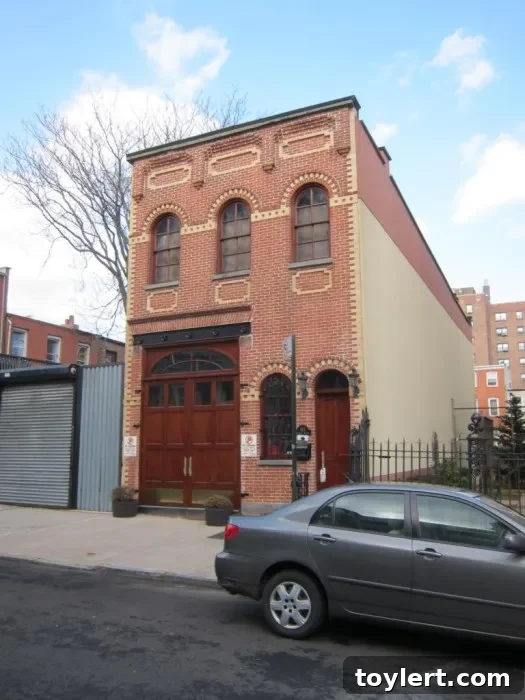
413 Degraw Street, Brooklyn: Unveiling the Charm of a Historic Stable House Reimagined
Brooklyn is a borough rich with history, where every street and every building tells a story. Among its celebrated brownstones and bustling avenues, hidden gems like 413 Degraw Street stand as testaments to the city’s dynamic past and its innovative future. This remarkable structure, originally a bustling stable and carriage house, has been meticulously transformed, preserving its unique character while embracing modern living. It represents a fascinating chapter in Brooklyn’s architectural narrative, offering a glimpse into a bygone era and the ingenious ways historic buildings are being revitalized for contemporary life.
Located in the vibrant and historically significant area of Degraw Street, nestled between the coveted neighborhoods of Carroll Gardens and Gowanus, this building is far more than just bricks and mortar. It is a living artifact, echoing the clip-clop of horses and the rumble of carriages that once defined urban transport. Today, it stands as a shining example of adaptive reuse, a practice that breathes new life into old structures, ensuring their legacy endures.
The Echoes of an Equestrian Past: A Stable House History
The late 19th and early 20th centuries were a golden age for horse-drawn transportation in American cities. Before the advent of the automobile, stables and carriage houses were essential components of urban infrastructure, serving both private residences and commercial enterprises. Buildings like 413 Degraw Street were strategically placed to support the daily rhythm of Brooklyn life, housing the horses, carriages, and groomsmen vital for transport, deliveries, and social outings.
A typical stable and carriage house, much like what we imagine 413 Degraw Street to have been, would feature robust construction designed for durability and functionality. The ground floor would consist of large, arched entryways to accommodate carriages and horses, along with stalls, feed rooms, and perhaps a tack room for saddles and harnesses. The upper levels often housed haylofts, storage areas, or even living quarters for stablehands or coachmen. The robust brickwork and utilitarian design seen in the existing structure are characteristic of buildings built during this period, emphasizing strength and practicality over elaborate ornamentation.
These buildings were integral to the daily commerce and social fabric of neighborhoods. Wealthy residents would keep private carriages and horses, while businesses relied on stables for their delivery fleets. As Brooklyn grew and evolved into a bustling metropolitan hub, the demand for such facilities was immense, creating a network of service buildings that supported the grander residential and commercial structures around them. The former stable at 413 Degraw Street likely played a crucial role in this intricate urban ecosystem, contributing to the movement of goods and people in an expanding city.
Architectural Resilience: Features of 413 Degraw Street
The architectural presence of 413 Degraw Street is both understated and commanding. The building’s two-story brick facade immediately conveys a sense of history and solid construction. Its most defining feature is undoubtedly the grand, arched doorway on the ground floor. This magnificent arch, characteristic of carriage houses from the period, was designed to allow easy passage for horse-drawn vehicles. Adjacent to this impressive entrance, a smaller, more conventional pedestrian door provides a glimpse into its modern functionality, perhaps leading to a contemporary entryway or garage space.
Above this expansive archway, the second story features two symmetrically placed rectangular windows. These windows, while simple in design, allow natural light to flood the interior, hinting at the living spaces within. The choice of materials—primarily sturdy brick—speaks to the building’s original purpose: to withstand the rigors of daily use and the passage of time. The unadorned yet strong lines of the structure reflect a functionalist aesthetic, a hallmark of many industrial and service buildings of the late 19th century in Brooklyn.
Unlike the more ornate brownstones that line many Brooklyn streets, stable houses like 413 Degraw Street often possess a raw, honest beauty. Their charm lies in their historical authenticity and the story they tell through their robust construction and practical design. This particular building, with its well-preserved facade, stands as a quiet sentinel of the past, seamlessly integrating into the evolving streetscape of Degraw Street while retaining its unique identity.
The Art of Adaptive Reuse: From Stable to Sanctuary
The 20th century brought revolutionary changes to urban landscapes, none more impactful than the rise of the automobile. As cars replaced horses, the traditional stable and carriage house faced obsolescence. Many were demolished to make way for new developments, while others lay derelict. However, a growing appreciation for historic architecture and the inherent quality of these robust structures led to a new trend: adaptive reuse.
Adaptive reuse is the process of repurposing old buildings for new uses, breathing new life into structures that might otherwise be lost. For former stables and carriage houses, this often means converting them into residential homes, art studios, commercial spaces, or even unique offices. The conversion of 413 Degraw Street into a modern living space is a prime example of this sustainable and creative approach to urban development.
The transformation process involves careful planning to maintain the historical integrity of the exterior while completely modernizing the interior. The expansive ground floor, once housing horses and carriages, can be reimagined as a spacious living area, an integrated garage, or even a home office. The upper floors, with their generous ceiling heights and often large window openings, lend themselves well to creating bright and airy bedrooms, kitchens, and common areas. The challenge and beauty lie in blending historical elements—such as exposed brick, original beams, or the imposing main archway—with contemporary finishes, smart home technology, and efficient layouts.
Living in a converted stable house offers a truly unique experience. Residents benefit from the robust construction, often superior soundproofing, and distinct architectural features that are impossible to replicate in new builds. These homes provide a tangible connection to the past, offering a sense of place and individuality that appeals to those seeking more than a conventional living space. The conversion of 413 Degraw Street not only preserves a piece of Brooklyn’s history but also creates a highly desirable, character-filled home for its occupants.
Life on Degraw Street: Embracing the Neighborhood Charm
413 Degraw Street is situated in a highly desirable and historically rich part of Brooklyn, often considered the nexus where Carroll Gardens, Gowanus, and sometimes even Boerum Hill converge. This area is celebrated for its tree-lined streets, charming brownstones, and a vibrant community atmosphere.
Carroll Gardens is renowned for its picturesque blocks, front gardens (a rarity in New York City), and an abundance of independent boutiques, cafes, and acclaimed restaurants. It offers a relaxed, family-friendly vibe with excellent schools and parks. Residents enjoy strolling down Court Street and Smith Street, exploring their diverse culinary and retail offerings.
To the west, Gowanus offers a different, yet equally captivating, Brooklyn experience. Once an industrial hub defined by its canal, Gowanus has undergone a dramatic transformation. It’s now a burgeoning arts district, home to numerous galleries, performance spaces, innovative startups, and craft breweries. The blending of its industrial past with a creative present makes Gowanus a dynamic and exciting place to live, attracting artists, entrepreneurs, and those who appreciate its unique, gritty-chic aesthetic.
Living at 413 Degraw Street means enjoying the best of both worlds: the serene, residential beauty of Carroll Gardens and the edgy, artistic energy of Gowanus. The neighborhood provides easy access to public transportation, making commutes to Manhattan and other parts of Brooklyn convenient. Green spaces, local markets, and a strong sense of community further enhance the quality of life in this sought-after locale. The area is constantly evolving, yet fiercely protective of its historical roots, making it an ideal setting for a reimagined historic building like the former stable house.
Preserving Brooklyn’s Architectural Legacy
The story of 413 Degraw Street is a microcosm of a larger movement in Brooklyn and other historic cities: the commitment to preserving architectural heritage. As urban centers continue to grow and modernize, the unique character derived from their past becomes even more precious. Buildings like this former stable house contribute immensely to the identity and soul of a neighborhood.
Historic preservation is not merely about preventing demolition; it’s about understanding and valuing the narrative embedded in old structures. It’s about recognizing the craftsmanship of a bygone era and finding new ways for these buildings to serve contemporary needs. By converting structures such as 413 Degraw Street, we are not only saving them from obsolescence but also championing sustainable development by utilizing existing resources rather than constantly building anew.
The future of Brooklyn’s historic buildings relies on a continued appreciation for their distinct charm and the stories they tell. Projects like the transformation of 413 Degraw Street demonstrate that it is possible to honor the past while designing for the future. These adaptive reuse projects offer inspiring examples of how innovation and respect for history can coexist, creating living spaces that are both functional and profoundly beautiful. They ensure that future generations can continue to marvel at the architectural ingenuity and rich history that define Brooklyn, one building at a time.
In conclusion, 413 Degraw Street stands as a remarkable emblem of Brooklyn’s enduring appeal. Its journey from a functional stable and carriage house to a sophisticated modern residence is a testament to the city’s capacity for transformation and its deep respect for its heritage. This building is more than just an address; it is a vital piece of Brooklyn’s ongoing story, inviting residents and admirers alike to appreciate the layers of history woven into its very fabric.