The Iconic Weir Greenhouse: A Jewel Restored at Green-Wood Cemetery’s Edge
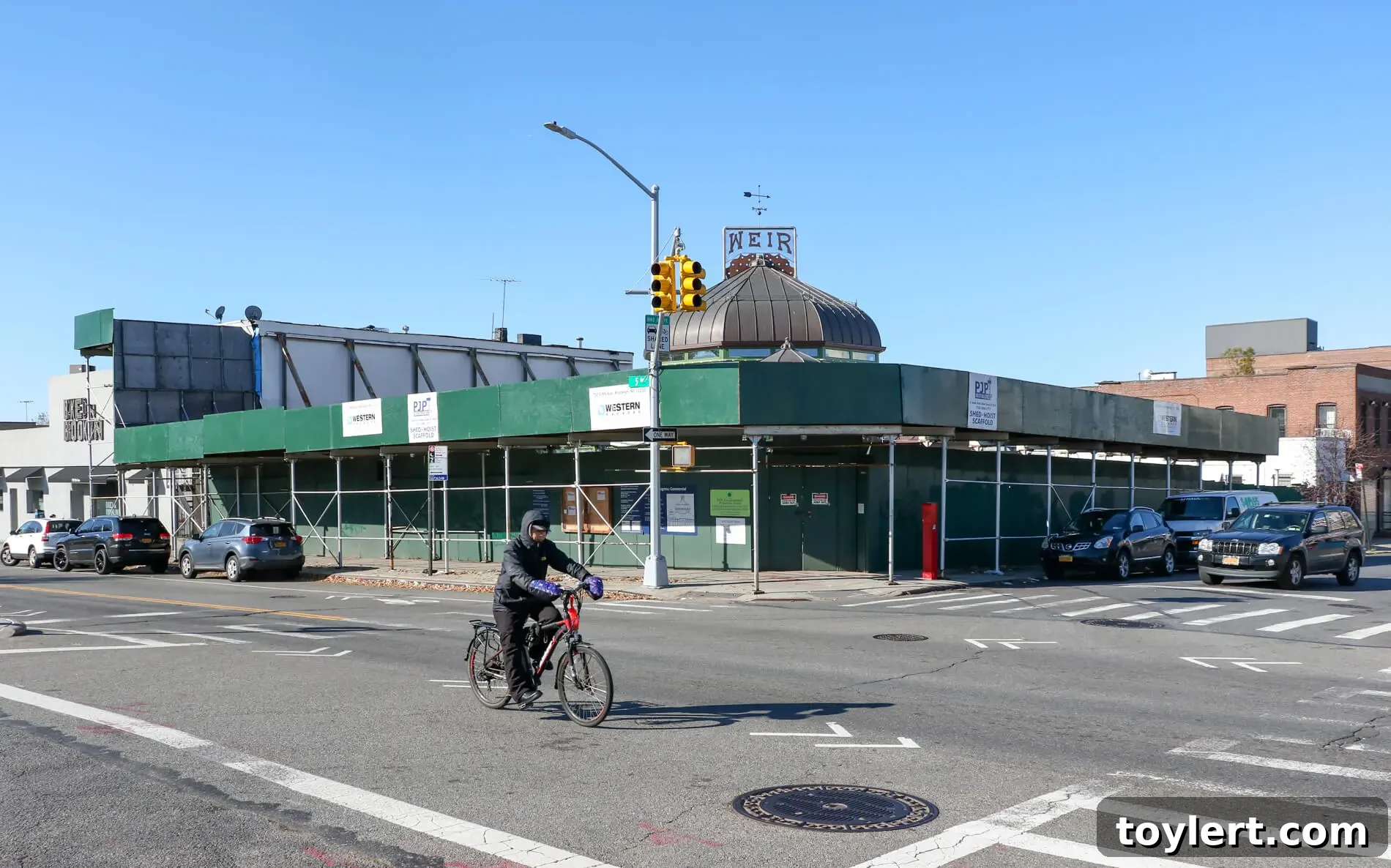
Standing proudly at 750 5th Avenue, directly opposite the majestic entry to Brooklyn’s renowned Green-Wood Cemetery, the historic Weir Greenhouse is steadily being burnished to reclaim its former glory. This architectural marvel, a treasured landmark for generations, is currently undergoing a meticulous restoration, promising to revive its vibrant heritage and reinstate its prominent position in the borough’s landscape.
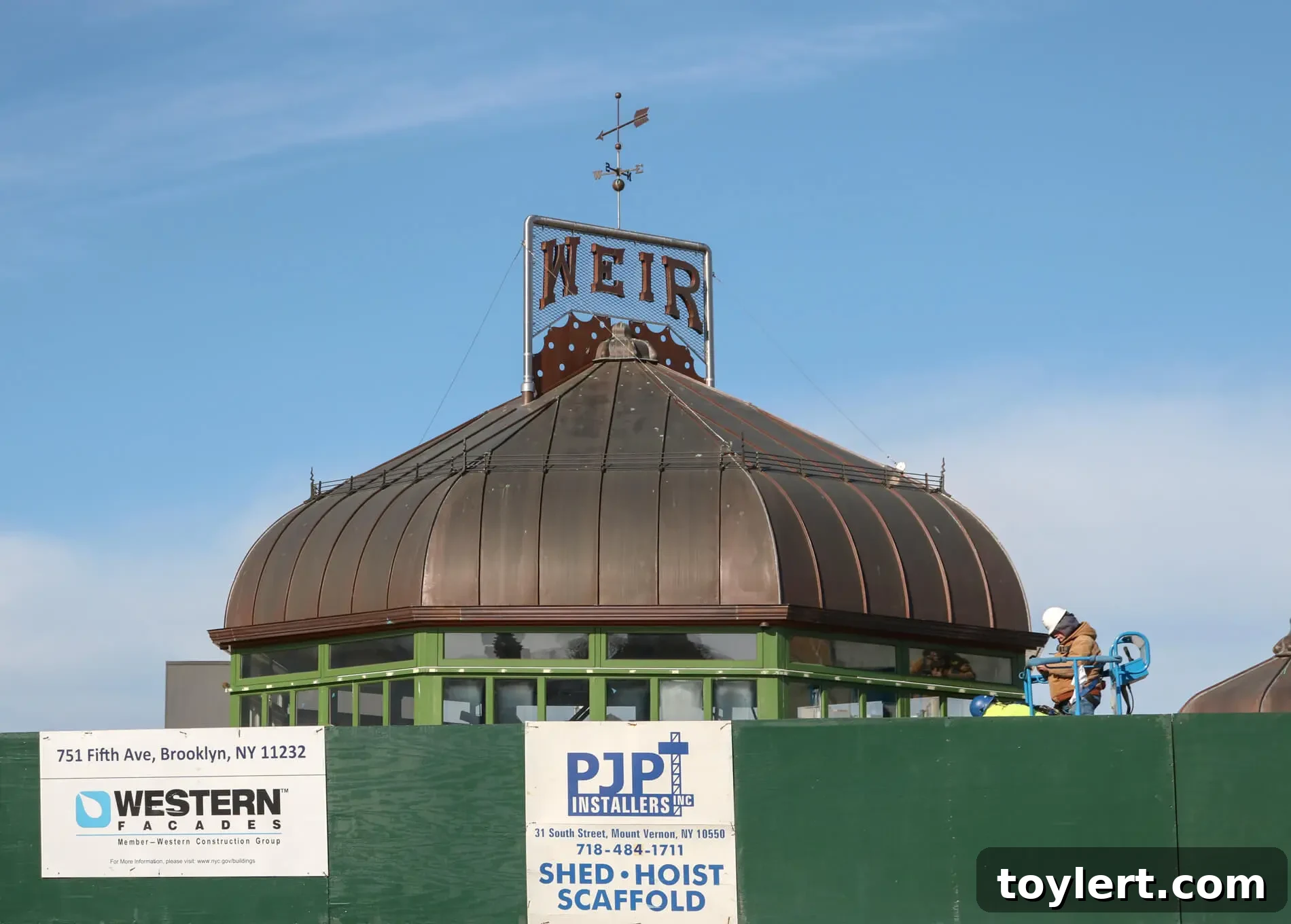
A recent observation confirms significant progress in this ambitious undertaking. While the protective construction fence still encircles the perimeter, glimpses of the rejuvenated structure are already breathtaking. The visible framework now sports a striking bright green paint job, a nod to its original aesthetic, while the elegant copper-clad roof gleams under the sun, a testament to skilled craftsmanship. Crucially, the iconic Weir signage and the distinctive weathervane have been reinstalled, symbols of the building’s identity returning to their rightful place.
A Glimpse into Brooklyn’s Rich Horticultural Past
The Weir Greenhouse is more than just an old building; it is a living piece of Brooklyn’s history, deeply intertwined with the borough’s burgeoning floral industry and the development of Green-Wood Cemetery itself. Established in the 1880s by James Weir, a prominent florist and horticulturist, the greenhouse quickly became a cornerstone for the community. It provided a stunning array of fresh flowers, exotic plants, and landscaping services, catering to the aesthetic demands of Victorian-era Brooklynites. Its strategic location, directly across from Green-Wood, was no coincidence. The cemetery, known for its picturesque landscapes and elaborate monuments, relied heavily on florists like Weir to supply arrangements for funerals, grave decorations, and the beautification of its sprawling grounds.
During its heyday, the Weir Greenhouse was a bustling center of activity, a vibrant hub where residents could procure everything from simple bouquets to intricate floral designs for grand occasions. It represented an era when horticulture was not just a business but an art form, deeply cherished by urban dwellers seeking connection with nature. The intricate ironwork and expansive glass panels of the structure were typical of Victorian-era conservatories, designed to maximize light and create an ideal environment for nurturing a diverse collection of flora. It stood as a beacon of natural beauty and horticultural excellence in a rapidly urbanizing environment, serving both the spiritual needs of those visiting Green-Wood and the everyday floral desires of the neighborhood.
The Symbiotic Relationship with Green-Wood Cemetery
The proximity of the Weir Greenhouse to Green-Wood Cemetery created a unique and enduring symbiotic relationship. Green-Wood, consecrated in 1838, rapidly became one of America’s most prestigious and beautiful rural cemeteries, attracting thousands of visitors annually who came to admire its serene landscapes, elaborate mausoleums, and notable interments. For families visiting their departed loved ones, fresh flowers were an essential component of remembrance and respect. The Weir Greenhouse offered unparalleled convenience and quality, becoming the go-to source for floral tributes, wreaths, and planting services within the cemetery.
Beyond individual tributes, the greenhouse likely played a role in the broader landscaping and botanical development of Green-Wood. Its expertise in cultivating a wide variety of plants could have supported the cemetery’s efforts to maintain its status as an arboretum and a significant green space. The greenhouse and the cemetery shared a common goal: to cultivate beauty and tranquility, each contributing to the other’s allure. This enduring connection made the Weir Greenhouse an unofficial, yet indispensable, part of the Green-Wood experience, solidifying its status as an irreplaceable landmark at the cemetery’s entrance.
A Century of Change: Decline and the Call for Revival
As the decades rolled on, the Weir Greenhouse, like many historic structures, faced the inevitable challenges of changing times. The turn of the 20th century brought shifts in architectural trends, business models, and societal preferences. Maintenance of such a grand, specialized structure became increasingly costly and complex. Over the years, the original Weir family ownership transitioned, and the building began to show the signs of neglect. Weather, age, and a lack of consistent, specialized care took their toll on the delicate glass panels, the ornate ironwork, and the intricate roofing. The vibrant green framework faded, the copper lost its luster, and parts of the structure fell into disrepair, a poignant shadow of its former grandeur.
For many years, the iconic greenhouse stood as a wistful reminder of a bygone era, its deteriorating state a cause for concern among local preservationists and history enthusiasts. Its crumbling facade served as a stark contrast to the meticulously maintained grounds of Green-Wood Cemetery across the street. The community recognized the urgent need to protect this invaluable piece of Brooklyn’s architectural and cultural heritage. The call for revival grew louder, emphasizing not just the aesthetic loss but also the historical significance of a structure that had witnessed over a century of neighborhood life and horticultural passion.
The Ambitious Restoration Project: Breathing New Life into a Landmark
The current restoration project of the Weir Greenhouse represents a monumental effort to reverse decades of decay and breathe new life into this beloved landmark. Spearheaded by the Green-Wood Cemetery, which acquired the property in 2015, the initiative is a testament to a deep commitment to historic preservation and community enrichment. The overarching goal is not merely to repair the building but to restore it with painstaking accuracy to its original Victorian splendor, while also adapting it for modern use, ensuring its relevance for future generations.
The work involved is extensive and meticulous, requiring the expertise of skilled artisans and preservation specialists. Structural integrity, a paramount concern, has been addressed with careful repairs to the underlying framework and foundations. The intricate cast iron and glass structure, characteristic of 19th-century greenhouses, demands a delicate touch. Damaged glass panes are being replaced, and the ironwork is being meticulously repaired, cleaned, and repainted in its authentic, bright green hue, as evidenced by recent observations. The copper-clad roof, a striking feature, has undergone significant restoration to achieve its current gleaming state, a complex process that ensures both aesthetic beauty and long-term durability. The reinstallation of the distinctive Weir signage and the elegant weathervane signifies not just cosmetic progress but a profound dedication to historical authenticity, celebrating the original identity of this architectural gem.
A Vision for the Future: More Than Just a Greenhouse
As the restoration of the Weir Greenhouse approaches completion, the vision for its future use is generating considerable excitement. This project is far more than simply rehabilitating an old building; it is about creating a dynamic new hub for education, community engagement, and cultural experiences. While specific plans are still being finalized, the consensus is that the greenhouse will serve multiple purposes, enhancing the visitor experience at Green-Wood Cemetery and providing a unique amenity for the surrounding Brooklyn neighborhoods.
Among the proposed uses are a state-of-the-art visitor center for Green-Wood Cemetery, offering historical exhibits, interpretive displays, and essential visitor services. It could also house a charming gift shop featuring botanical-themed merchandise, local artisan crafts, and books on Brooklyn history and horticulture. Imagine the greenhouse transformed into an elegant event space, capable of hosting weddings, receptions, educational workshops, and community gatherings, all set against the backdrop of its magnificent Victorian architecture and verdant surroundings. There’s also the potential for it to once again serve a horticultural purpose, perhaps as a showcase for rare plants, a space for gardening classes, or even a renewed floral business that pays homage to its origins. This multifaceted approach aims to integrate the Weir Greenhouse seamlessly into the contemporary fabric of Brooklyn, making it a vibrant destination that honors its past while embracing its future.
The rejuvenation of the Weir Greenhouse stands as a powerful symbol of historic preservation’s impact. It highlights the importance of safeguarding architectural treasures, not just for their beauty but for the stories they tell and the connections they foster between generations. This landmark’s revival will undoubtedly enrich the cultural landscape of Brooklyn, providing a captivating gateway to Green-Wood Cemetery and a testament to the enduring appeal of nature and well-preserved history. Its bright green framework and gleaming copper roof are not merely structural elements; they are heralds of a bright future for one of Brooklyn’s most cherished architectural gems, inviting residents and visitors alike to rediscover its charm and significance.
% | % | % | % | % Single Page