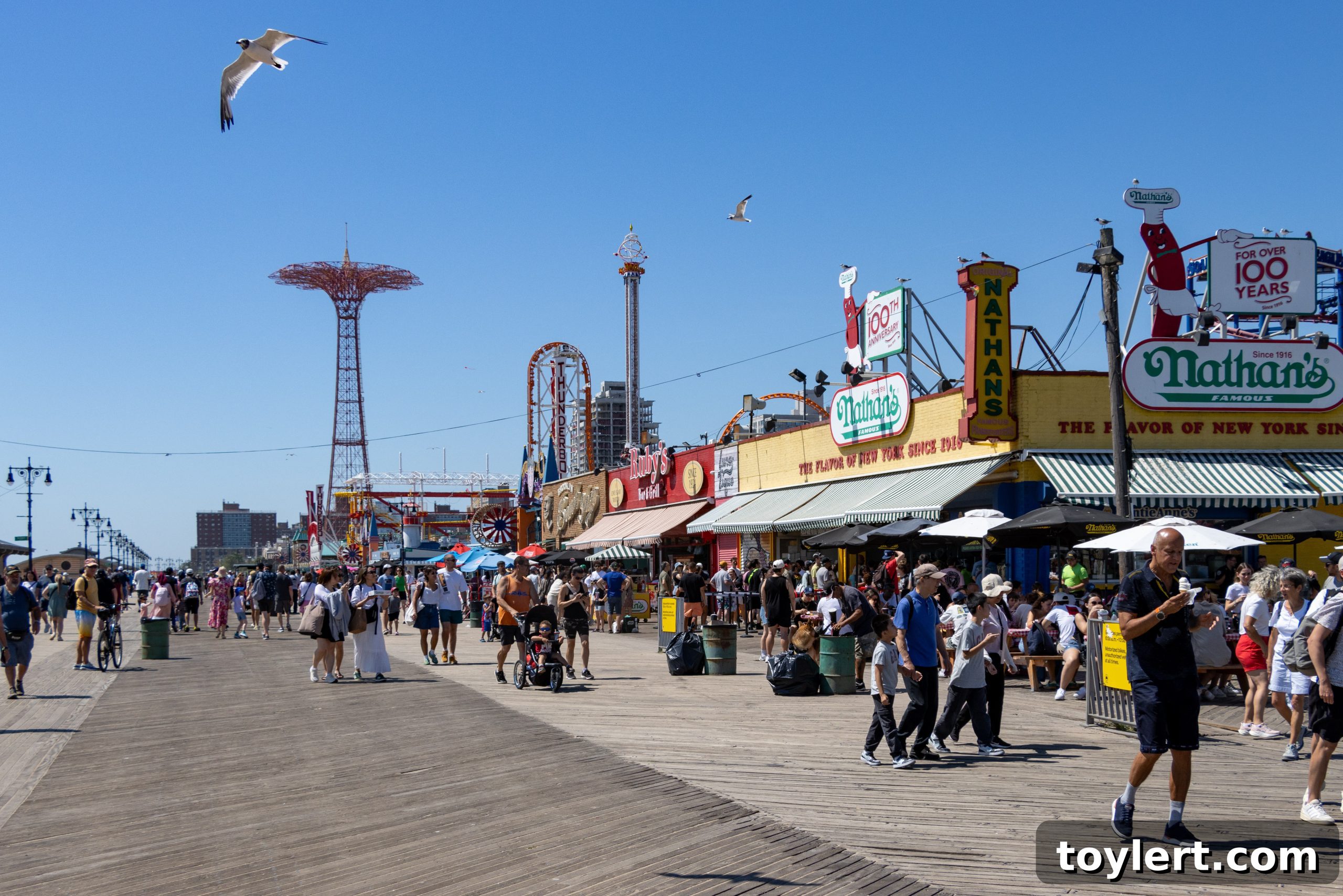
by Kirstyn Brendlen, Brooklyn Paper
Coney Island Casino Proposal Hits Major Roadblock as Key Officials Vow Opposition
The highly anticipated “The Coney” casino project, slated for development in the iconic Coney Island neighborhood, has encountered a formidable obstacle, appearing poised for failure after a significant majority of the Community Advisory Committee (CAC) publicly declared their intention to vote against the proposal. This widespread opposition from influential local and state representatives casts a dark cloud over the future of the multi-million dollar development.
In a series of separate and coordinated announcements made on September 22, prominent Brooklyn leaders confirmed their “no” votes on the contentious project. Council Member Justin Brannan, Brooklyn Borough President Antonio Reynoso, and State Senator Jessica Scarcella-Spanton each voiced their strong disapproval. Adding to the growing chorus of opposition, Marissa Solomon, a member of the CAC appointed by Assembly Member Alec Brook-Krasny, also affirmed her decision to vote against “The Coney” in a statement to Brooklyn Paper.
The Ambitious “The Coney” Proposal: A Brief Overview
The “The Coney” project, one of several contenders vying for a limited number of downstate casino licenses in New York, promised to transform a section of Coney Island into a sprawling entertainment complex. Beyond a state-of-the-art gaming floor, the proposal often included plans for a luxury hotel, convention space, a variety of dining options, retail outlets, and potentially new entertainment venues designed to complement the existing amusement district. Proponents of the casino frequently highlighted its potential to generate thousands of jobs—both construction and permanent—boost tourism, and inject significant revenue into the local and state economies.
Developers argued that a modern casino complex would revitalize the area, drawing a new demographic of visitors while providing a stable economic engine for the community. The allure of tax revenues for New York State and the promise of a significant investment in a historically vibrant, yet economically diverse, neighborhood made the Coney Island site a seemingly attractive prospect for casino operators.
The Critical Role of the Community Advisory Committee (CAC)
The Community Advisory Committee (CAC) is a crucial body established to provide local input and guidance on major development projects, especially those with wide-ranging implications for the community. For downstate casino proposals, the CAC’s role is particularly vital, serving as a conduit for neighborhood concerns and ensuring that local voices are heard in the decision-making process. While its vote is advisory and not legally binding, a strong negative recommendation from the CAC carries substantial weight and can significantly sway the ultimate outcome of a project.
The CAC for the Coney Island casino proposal comprises a diverse group of stakeholders, including elected officials and their appointees, representing various facets of the community—from local residents and business owners to civic leaders. The unified stance of two-thirds of this committee against “The Coney” sends an unequivocal message to the New York State Gaming Commission and the developers that the project lacks crucial local buy-in.
Leading Figures Voice Their Resounding “No”
The announcements from Council Member Justin Brannan, Brooklyn Borough President Antonio Reynoso, State Senator Jessica Scarcella-Spanton, and CAC member Marissa Solomon represent a formidable political and community blockade against the casino. Their reasons, while echoing shared concerns, also reflect their specific purviews and responsibilities.
Council Member Justin Brannan: Protecting Local Quality of Life
As the representative for the 43rd District, which includes parts of Coney Island, Council Member Brannan’s opposition is deeply rooted in concerns about the immediate impact on his constituents’ quality of life. Brannan has historically been a fierce advocate for his district, often prioritizing the preservation of neighborhood character and safeguarding residents from overdevelopment.
- Traffic Congestion: Coney Island already grapples with significant traffic during peak tourist seasons. Brannan worries that a large-scale casino would exacerbate this problem, turning local streets into perpetual gridlock and making daily life unbearable for residents.
- Infrastructure Strain: Increased population density and visitor numbers would place immense pressure on already strained local infrastructure, including public transit, sanitation services, and emergency response capabilities.
- Neighborhood Character: Brannan and many residents fear that a casino would fundamentally alter the unique, family-friendly, and historical character of Coney Island, transforming it into a gambling destination rather than preserving its identity as an iconic amusement park and beach community.
Brooklyn Borough President Antonio Reynoso: Borough-Wide Impact and Equity
Borough President Antonio Reynoso’s “no” vote reflects a broader perspective, focusing on the potential borough-wide ramifications and issues of economic equity. Reynoso is tasked with advocating for the best interests of all Brooklynites, and his concerns extend beyond just the immediate vicinity of the casino.
- Economic Disparities: While jobs are promised, Reynoso and others question whether these jobs would genuinely uplift the local community or primarily benefit workers from outside the borough. There are also concerns about whether a casino truly creates sustainable, high-wage employment or if it leads to a “carousel of poverty” for some residents.
- Local Business Impact: Concerns have been raised about how a large casino, with its own array of restaurants and shops, might negatively impact existing small businesses in Coney Island and surrounding neighborhoods, potentially drawing customers away from long-standing local establishments.
- Social Costs: The Borough President’s office is often attuned to the social costs associated with gambling, including potential increases in problem gambling rates and the associated societal burdens.
State Senator Jessica Scarcella-Spanton: Legislative and Policy Concerns
State Senator Jessica Scarcella-Spanton, representing Senate District 23, brings a state-level legislative and policy perspective to her opposition. Her concerns often touch upon the broader implications for New York State and the efficacy of such projects in achieving their stated goals.
- Overall State Benefits vs. Local Harm: The Senator would weigh the promised tax revenues and economic benefits for the state against the potential localized harms to the Coney Island community and the broader Brooklyn ecosystem.
- Precedent and Future Development: Her vote also considers the precedent a Coney Island casino would set for other development projects across the state and how New York manages the expansion of legalized gambling.
- Comprehensive Planning: Scarcella-Spanton’s stance likely emphasizes the need for comprehensive urban planning that integrates community needs and preserves cultural heritage, rather than pursuing projects that might be perceived as isolated economic drivers with significant negative externalities.
Marissa Solomon (CAC Member): Resident-Centric Opposition
Marissa Solomon, appointed by Assembly Member Alec Brook-Krasny, represents a more direct resident-centric perspective within the CAC. Her “no” vote underscores the ground-level concerns of those who live and work closest to the proposed site.
- Direct Daily Impact: Solomon’s opposition likely highlights the everyday challenges residents anticipate—increased noise, pollution, late-night activity, and the feeling of their neighborhood being overwhelmed by a massive commercial enterprise.
- Community Voice: Her role on the CAC is specifically to ensure the community’s voice is heard, and her vote is a direct reflection of significant local dissent.
The Broader Stakes: NYC’s Casino Race
The “The Coney” proposal is one of several high-profile bids for the three remaining downstate casino licenses authorized by New York State. Other potential sites across New York City and its suburbs are also fiercely competing, each presenting their own visions for economic development and community benefit. The strong opposition in Coney Island could serve as a cautionary tale for other developers eyeing urban areas for casino projects, underscoring the critical importance of robust community engagement and genuine local support.
The New York State Gaming Commission ultimately holds the power to award these coveted licenses. While the CAC’s recommendation is advisory, a unanimous or near-unanimous rejection from a local advisory body, especially one backed by powerful elected officials, creates a significant political and public relations hurdle that even the most well-funded developers would struggle to overcome.
What Happens Next for “The Coney”?
With two-thirds of the Community Advisory Committee now publicly opposing “The Coney,” the proposal faces an extremely uncertain future. While the process for awarding casino licenses is multi-faceted and involves several layers of review, a strong negative signal from the local community, amplified by influential elected officials, is a critical blow.
Developers will likely need to re-evaluate their strategy, potentially attempting to address the outlined concerns or even consider withdrawing their bid. However, given the firm stance of the opposition, it is increasingly difficult to see a clear path forward for “The Coney” to gain the necessary local acceptance for eventual state approval.
This development serves as a powerful testament to the influence of community advocacy and local political will in shaping major urban development projects. The future of Coney Island’s iconic landscape, it appears, will continue to be fiercely protected by those who call Brooklyn home, sending a clear message that not all economic development is welcome without genuine community consent.