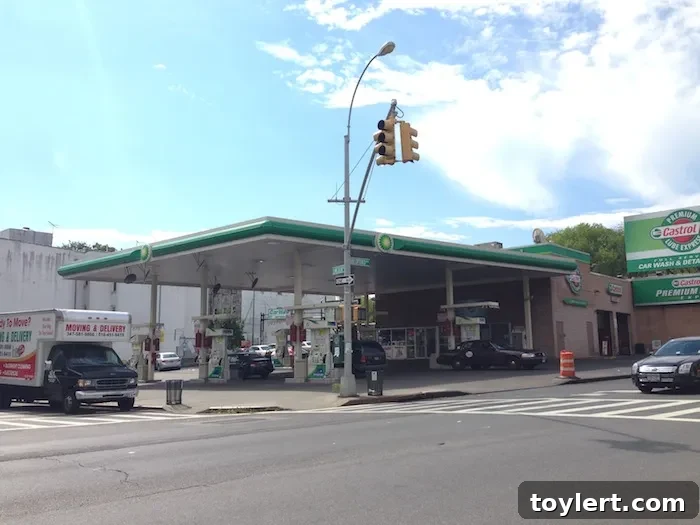
Crown Heights’ Next Landmark? Gas Station Site on Bedford Avenue Poised for Major Redevelopment
Brooklyn’s dynamic real estate landscape continues its rapid evolution, with former industrial sites and underutilized properties transforming into vibrant new developments. The latest prime location poised for a significant overhaul is a BP gas station situated in the heart of Crown Heights, specifically on Bedford Avenue, nestled between Lincoln Place and Eastern Parkway. What was once a humble fueling station is now being actively marketed as a premier development site, signaling a new chapter for this prominent corner in one of Brooklyn’s most sought-after neighborhoods.
This potential redevelopment highlights a broader trend across Brooklyn, where rising land values and a booming population have made gas stations, often occupying sizable, strategically located plots, incredibly attractive targets for developers. As reported by Real Estate Weekly, the property’s current listing by Massey Knakal (now a part of Cushman & Wakefield) underscores the immense potential recognized by leading real estate strategists. This particular site promises not just another building, but a transformative project that could redefine its immediate surroundings and contribute significantly to the area’s ongoing revitalization.
A Strategic Location with Unparalleled Potential
The site in question, known by the addresses 1525 Bedford Avenue and also referred to as 1519 Bedford Avenue, commands a formidable presence. Spanning a substantial 110,200 square feet, this corner lot offers an impressive 500 square feet of frontage along Bedford Avenue, a bustling artery in Crown Heights. Its position between Lincoln Place and Eastern Parkway places it in a highly desirable corridor, benefiting from excellent visibility and accessibility. Corner properties inherently offer distinct advantages, including greater light and air exposure, increased design flexibility, and enhanced retail potential due to dual street visibility.
The inherent value of this land is not merely in its size but in its development capacity. Zoning regulations for this parcel currently permit a substantial 110,203 buildable square feet. This generous allowance provides developers with ample scope to envision and execute a large-scale project, whether it be a prominent residential building, a dynamic mixed-use complex integrating retail and commercial spaces, or a combination designed to cater to the diverse needs of the community. The flexibility offered by such a significant buildable area makes it an exceptionally rare find in an increasingly dense urban environment.
Unlocking Further Value: The Affordable Housing Incentive
Beyond the already impressive baseline, the site presents an even more compelling proposition for developers: the opportunity to significantly increase their buildable square footage through the inclusion of affordable housing. By integrating affordable housing units into the development plan, a potential developer could unlock an additional 34,201 square feet, pushing the total buildable area to over 144,400 square feet. This incentive is a cornerstone of New York City’s urban planning strategy, encouraging the creation of much-needed affordable housing while allowing developers to maximize their investment.
The Inclusionary Housing Program, which facilitates such bonuses, has proven instrumental in shaping Brooklyn’s evolving skyline, ensuring that new development contributes to the city’s housing goals. For a site like 1525 Bedford Avenue, this additional density not only enhances the project’s financial viability but also aligns it with contemporary urban development principles that prioritize community benefit. It allows for a larger, more impactful building that can house more residents and offer a wider array of amenities, creating a truly comprehensive urban living experience.
Crown Heights: A Neighborhood in Ascendance
The choice of Crown Heights for such a significant development is no coincidence. Over the past decade, Crown Heights has emerged as one of Brooklyn’s most vibrant and rapidly transforming neighborhoods. Characterized by its stunning brownstones, tree-lined streets, and a rich cultural tapestry, the area has attracted a diverse influx of residents, from young professionals to families seeking a balance of urban convenience and community charm. Its proximity to major transit hubs, including multiple subway lines (2, 3, 4, 5, A, C), provides seamless access to Manhattan and other parts of Brooklyn, making it an ideal location for commuters.
Beyond transportation, Crown Heights boasts an impressive array of amenities. Prospect Park, Brooklyn Botanic Garden, and the Brooklyn Museum are all within easy reach, offering unparalleled recreational and cultural opportunities. The neighborhood’s culinary scene is thriving, with an eclectic mix of classic eateries and trendy new restaurants. Local boutiques, cafes, and services further enhance its appeal, creating a self-sufficient and highly desirable urban village. The increasing demand for housing in this vibrant locale makes any new development here a strategic investment with strong market potential.
The Evolving Landscape of Brooklyn Gas Stations
The transformation of gas stations into development sites is a recurring narrative across Brooklyn. As urban centers become denser and land becomes scarcer, the once ubiquitous gas station, requiring expansive surface area for pumps and often carrying environmental liabilities, is increasingly seen as an inefficient use of prime real estate. Developers are willing to undertake the often complex and costly process of environmental remediation – removing underground storage tanks and cleaning contaminated soil – because the underlying land value far outweighs these challenges.
This trend is indicative of Brooklyn’s broader economic shift, moving away from car-centric infrastructure towards more pedestrian-friendly, mixed-use environments. The former gas station sites, typically located on busy thoroughfares and corners, are perfectly positioned to become new residential buildings, retail centers, or community spaces, better serving the needs of a growing, transit-oriented population. The redevelopment of 1525 Bedford Avenue is a testament to this ongoing urban metamorphosis.
Crafting a Vision for 1525 Bedford Avenue
Given the site’s characteristics and the neighborhood’s dynamics, various development visions could materialize at 1525 Bedford Avenue. A mixed-use residential building with ground-floor retail is highly probable, offering street-level vibrancy that enhances the pedestrian experience along Bedford Avenue. The retail component could host local businesses, cafes, or essential services, catering to both new residents and the existing community. Above, modern residential units, potentially a mix of studios, one-, two-, and three-bedroom apartments, would address the strong demand for housing in Crown Heights.
Developers might also explore luxury condominiums, capitalizing on the high demand for premium living spaces, or rental apartments designed for the professional and family demographic moving into the area. The building’s design would likely prioritize contemporary aesthetics, integrating sustainable features and amenities such as fitness centers, common lounges, rooftop terraces, and possibly even co-working spaces to reflect modern urban living trends. The sheer scale of the buildable area allows for an architectural statement that could become a new landmark for the neighborhood.
Navigating the Development Journey: Challenges and Opportunities
While the potential for 1525 Bedford Avenue is immense, the development process itself involves several critical stages and considerations. Environmental due diligence, including Phase I and Phase II Environmental Site Assessments, will be crucial to identify and mitigate any legacy contamination from its previous use as a gas station. This often involves soil remediation and monitoring, a standard but significant part of redeveloping such sites.
Furthermore, navigating New York City’s complex zoning and permitting processes requires expertise and careful planning. Engaging with the local community board and stakeholders will also be vital to ensure the project aligns with neighborhood aspirations and addresses any concerns, fostering a collaborative approach to urban development. Market analysis, financing strategies, and careful project management will be key to transforming this vision into a successful reality, maximizing both financial returns and community benefits.
A Glimpse into Brooklyn’s Future
The impending redevelopment of the BP station at 1525 Bedford Avenue represents more than just a real estate transaction; it symbolizes Brooklyn’s continuous evolution and commitment to densification and sustainable growth. It underscores the ongoing trend of repurposing underutilized land to create vibrant, mixed-use environments that cater to a growing population. As Crown Heights continues its trajectory as a cultural and residential hub, projects like this will play a pivotal role in shaping its future, providing much-needed housing, enhancing local amenities, and contributing to the overall economic vitality of the borough.
This site stands as a testament to the dynamic nature of urban planning and the persistent drive to innovate within one of the world’s most competitive real estate markets. The future building at 1525 Bedford Avenue will undoubtedly stand as a new beacon in Crown Heights, embodying the spirit of Brooklyn’s enduring transformation.