JR’s Artistic Takeover: From Brooklyn Museum to Domino Park’s Stacked Containers in Williamsburg
Brooklyn, New York, is currently buzzing with the creative energy of JR, the world-renowned French photographer and street artist. With a major exhibition captivating audiences at the venerable Brooklyn Museum, JR has simultaneously embarked on a new, enigmatic public art project at the iconic Domino site in Williamsburg. This dual presence underscores his profound impact on contemporary art and his unique ability to transform both institutional and urban landscapes, cementing his status as a visionary artist.
JR, whose true identity remains an intriguing mystery, has built an international reputation for his monumental photographic works that adorn buildings, bridges, and public spaces across the globe. His signature style involves wheat-pasting large-scale black and white portraits of ordinary people, often focusing on themes of identity, community, freedom, and the unseen. By placing his subjects directly into the urban fabric, he democratizes art, making it accessible to everyone and sparking dialogue in unexpected places, thereby challenging traditional notions of art accessibility and engagement.
A Deep Dive into “JR: Chronicles” at the Brooklyn Museum
The Brooklyn Museum proudly hosts a comprehensive exhibition dedicated to JR’s prolific career, often titled “JR: Chronicles” or a similar retrospective. This highly anticipated show offers an unparalleled journey through his most ambitious projects, from his early work on the streets of Paris to global interventions in favelas, refugee camps, and the US-Mexico border. Visitors can explore the methodologies behind his powerful installations, viewing original photographs, films, and never-before-seen archives that illuminate his artistic process and the depth of his social commentary.
The exhibition serves as a vital context for understanding JR’s broader artistic philosophy. It highlights his evolution from a graffiti artist to a globally recognized figure who masterfully blends photography, social activism, and public engagement. Through interactive elements and stunning visual displays, “JR: Chronicles” demonstrates how his art transcends mere aesthetics, acting as a catalyst for social change and fostering empathy across cultures. Its presence in a major institution like the Brooklyn Museum solidifies his place in art history while still affirming his roots in the rebellious and inclusive spirit of street art, bridging the gap between high art and popular culture.
Domino Park’s Latest Enigma: JR’s Stacked Blue Containers
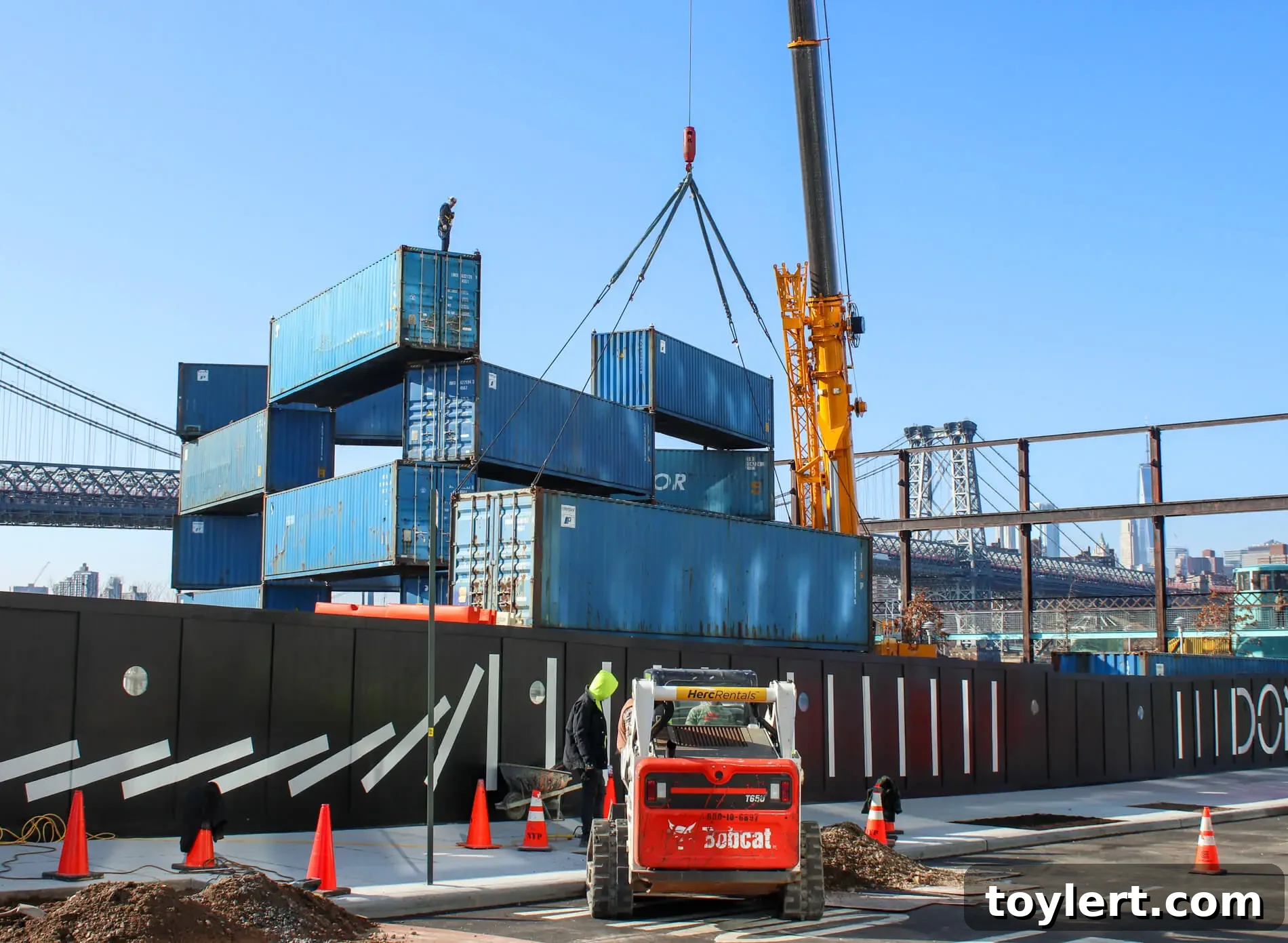
While the museum exhibition draws crowds indoors, JR’s creative spirit has spilled out into the vibrant waterfront of Williamsburg with a fascinating new installation at the Domino Park site. This former sugar refinery, transformed into a beloved public park and residential complex by developers like Two Trees Management, has become a canvas for JR’s latest endeavor: a striking arrangement of sixteen blue shipping containers, stacked meticulously on top of each other. The sheer scale and unexpected color of the containers immediately grab attention, inviting curiosity and speculation from passersby.
The choice of shipping containers is particularly evocative. These ubiquitous symbols of global trade and connectivity are often associated with hidden cargo, movement, and the transient nature of modern life. In JR’s hands, they are transformed from utilitarian objects into a sculptural statement, an urban edifice that commands attention against the backdrop of the Manhattan skyline and the East River. Their electric blue hue stands out dramatically against the industrial textures of the park and the surrounding brick architecture, signaling a deliberate and impactful artistic intervention that prompts contemplation on industry, commerce, and art.
The Anticipation: Will JR’s Iconic Portraits Adorn the Containers?
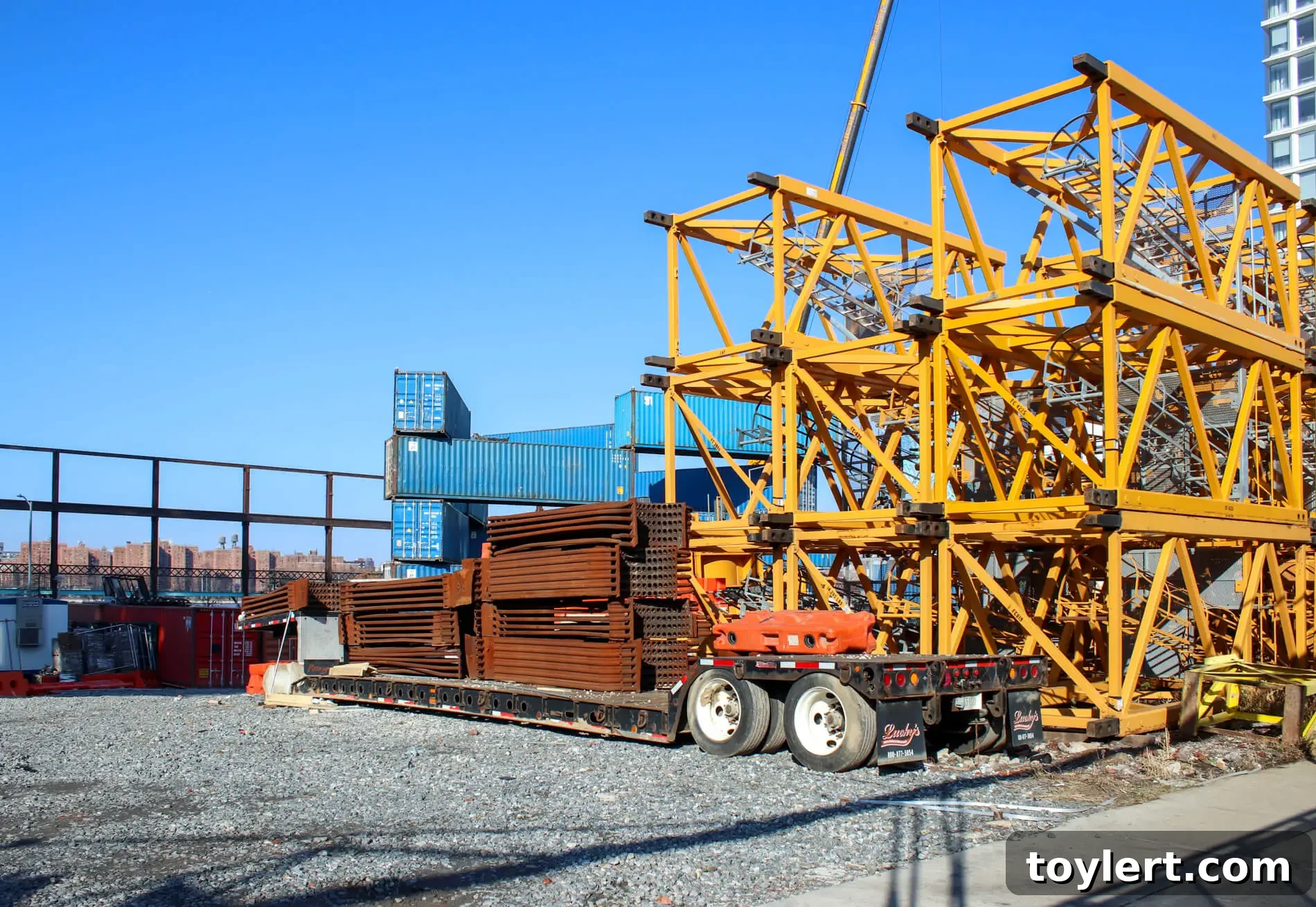
The most compelling question surrounding the Domino Park installation remains: will these towering blue structures eventually be adorned with JR’s signature large-scale photographic portraits? The artist is renowned for his spectacular wheat-pasted images, which breathe life into surfaces, transforming mundane walls into powerful visual narratives. The anticipation that these blue containers might soon host such iconic imagery has captivated art enthusiasts and the Williamsburg community alike, creating an exciting buzz around the project.
If JR chooses to cover the containers with his characteristic black and white faces, the effect would be truly transformative. Imagine colossal eyes gazing out over the East River, or a mosaic of expressions reflecting the diverse community of Brooklyn, serving as a mirror to the city itself. This element of suspense is a hallmark of street art – the process often unfolds in public, inviting speculation and participation even before completion. Whether the containers serve as a standalone sculptural piece, a temporary landmark, or a preliminary stage for his renowned paste-ups, they already embody the spirit of his work: using unexpected elements to create monumental public statements that engage and provoke thought.
JR’s Artistic Philosophy: Public Art as a Catalyst for Connection
JR’s work consistently blurs the lines between art, activism, and community engagement. His projects are not merely visual spectacles; they are profound explorations of human connection and the power of collective storytelling. From his “Face 2 Face” project, which united Israelis and Palestinians, to “Women Are Heroes,” celebrating the resilience of women globally, JR uses his art to highlight universal human experiences and bridge divides, making his work deeply resonant on a humanitarian level.
The Domino Park installation, even in its current form, aligns perfectly with this philosophy. By placing such a striking structure in a public park, accessible to all, JR continues his mission of bringing art out of traditional galleries and into the everyday lives of people. It encourages interaction, provokes thought, and serves as a meeting point for discussion. The containers themselves, often symbols of global movement and transit, could be interpreted as a metaphor for the diverse populations that coalesce in urban centers like Brooklyn, emphasizing themes of migration, community, and interconnectedness.
Williamsburg: A Canvas for Contemporary Art and Urban Transformation
Williamsburg, Brooklyn, with its rich industrial history and contemporary cultural vibrancy, provides an ideal backdrop for JR’s art. The neighborhood has long been a hub for artists, musicians, and innovators, evolving from a manufacturing center into a crucible of cutting-edge trends and creative expression. Domino Park itself is a testament to this transformation, seamlessly blending historical preservation with modern urban design and public accessibility, making it a perfect stage for dynamic public art.
JR’s project adds another layer to Williamsburg’s dynamic art scene, which already boasts numerous murals, independent galleries, and experimental art spaces. His presence reinforces the neighborhood’s reputation as a destination for groundbreaking public art and cultural exploration. The collaboration, whether direct or indirect, with entities like Two Trees Management, who played a pivotal role in developing Domino Park, showcases a growing trend of private developers integrating high-profile art into their urban renewal projects, further enriching the cultural landscape of New York City and defining its modern identity.
The Enduring Impact of Ephemeral Art in a Changing City
Much of JR’s street art is inherently ephemeral, designed to be exposed to the elements and eventually fade or be removed, often within a finite timeframe. This transient nature is part of its power, emphasizing the moment, the here and now, and the ever-changing face of urban environments. The Domino Park containers, while physically robust, embody this spirit of temporary intervention, prompting us to consider the value of art that isn’t confined to a permanent pedestal, but rather exists as a living, breathing part of the city’s pulse.
Even if the blue containers are eventually transformed, relocated, or removed, the discussions they ignite, the photographs taken, and the memories created will endure. JR’s genius lies in his ability to craft experiences that resonate deeply, leaving a lasting impression on individuals and communities long after the physical artwork has vanished. His work reminds us that art is not just about permanence, but about presence, perception, and the shared human experience that shapes our urban narratives.
Conclusion: A Tale of Two Brooklyns, Unified by the Vision of JR
From the hallowed halls of the Brooklyn Museum to the bustling waterfront of Domino Park, JR’s simultaneous artistic presence offers a compelling narrative of how art can transcend traditional boundaries. His comprehensive exhibition provides a deep, historical look at his global impact, while his mysterious Williamsburg installation invites immediate, public engagement with his evolving vision. These two sites, though distinct in their context, are unified by JR’s unwavering commitment to using art as a powerful tool for connection, reflection, and urban transformation, making Brooklyn a focal point for contemporary art dialogue.
Whether you are an ardent follower of street art, a dedicated museum-goer, or simply a curious passerby in Brooklyn, JR’s current endeavors offer an unparalleled opportunity to experience contemporary art at its most accessible and profound. The stacked blue containers at Domino Park stand as a beacon of artistic curiosity, a testament to Brooklyn’s vibrant culture, and a thrilling anticipation of what this visionary artist will unveil next. Don’t miss the chance to witness the unfolding narrative of JR’s monumental and transformative presence in New York City – a true celebration of art in the public realm.