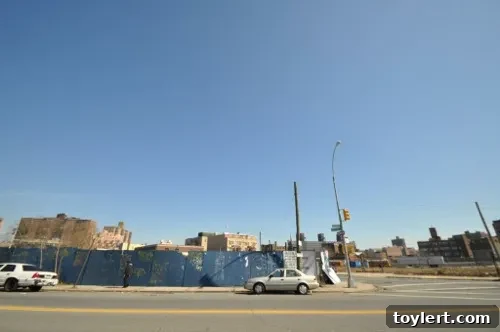
Broadway Triangle: Unraveling Allegations of Housing Discrimination in Brooklyn’s Contested Core
The Broadway Triangle area in Brooklyn, a vibrant and historically significant crossroads, is once again at the heart of a contentious debate surrounding housing equity and community development. Recent allegations have surfaced, pointing towards deeply troubling instances of racial and ethnic discrimination in unbuilt private apartment buildings. These claims, brought forth by the Broadway Triangle Community Coalition, suggest a systemic bias that unfairly disadvantages Black and Hispanic individuals seeking housing in this rapidly evolving neighborhood, sparking renewed calls for vigilance and accountability in New York City’s housing market.
The Core of the Controversy: Allegations at 70 Union Avenue and 246 Lynch Street
At the center of the current dispute are two private apartment buildings, planned for development at 70 Union Avenue and 246 Lynch Street. According to reports from the Broadway Triangle Community Coalition, these projects, though yet to be physically constructed, are allegedly engaging in discriminatory practices. The coalition, having dispatched Black and Hispanic applicants to inquire about available units, claims that these individuals were systematically turned away, often being told that no applications were available or that the buildings were already full. Paradoxically, the group asserts that these unbuilt structures have already been “filled” with Hasidic families, raising serious questions about transparent and equitable housing access.
Such allegations strike at the fundamental principles of fair housing, highlighting concerns that specific ethnic or religious groups might be receiving preferential treatment, thereby excluding other long-standing or aspiring residents. The implications extend far beyond these two properties, touching upon the broader issue of equitable community development and the enforcement of anti-discrimination laws in one of New York City’s most diverse boroughs.
A Troubled History: The Broadway Triangle’s Legacy of Land-Use Disputes
The current controversy is not an isolated incident but rather the latest chapter in the Broadway Triangle’s contentious history. This 31-acre parcel, strategically located at the intersection of Williamsburg, Bushwick, and Bed-Stuy, has long been a flashpoint for land-use decisions and community-based protests. Its past is marked by significant legal challenges, particularly concerning equitable development and access to housing.
A landmark moment occurred just last year, when a federal judge intervened to halt previous plans for public housing in the area. The judge’s ruling was unequivocal, citing that the proposed plans “illegally favored Hasidim over blacks and Latinos.” This judicial decision underscored a profound concern that public resources and development opportunities were being steered towards one group at the expense of others, igniting a fierce debate about fairness and representation in urban planning.
Further exacerbating these concerns is the 2009 rezoning of the Broadway Triangle. Originally designated for industrial use, the area was controversially re-zoned for residential development. Critics, including the Broadway Triangle Community Coalition, allege that this rezoning itself was a political maneuver designed to benefit the Hasidic community, paving the way for developments that would ultimately exclude other populations. This historical context provides a crucial backdrop, suggesting a pattern of land-use decisions that have consistently raised questions about equitable outcomes for all residents of Brooklyn.
Understanding the Broadway Triangle: A Microcosm of Brooklyn’s Diversity
The Broadway Triangle represents more than just a piece of land; it is a microcosm of Brooklyn’s rich and complex diversity. Nestled at the dynamic confluence of Williamsburg, Bushwick, and Bed Stuy, it connects some of the city’s most vibrant and rapidly changing neighborhoods. This area has historically been home to diverse working-class communities, including significant African American and Hispanic populations, alongside a growing Hasidic community. Its strategic location makes it highly desirable for developers, but also a sensitive zone where the impact of development profoundly affects the social fabric and economic opportunities of existing residents.
The contestation over the Broadway Triangle reflects broader struggles across New York City regarding gentrification, housing affordability, and the preservation of neighborhood character amidst intense development pressures. Ensuring that development in such an area is inclusive and benefits all community members, rather than exacerbating existing inequalities, is paramount. The current allegations highlight the urgent need for equitable urban planning that genuinely serves the interests of all residents, protecting against practices that could lead to segregation and displacement.
The Legal and Ethical Framework of Fair Housing
Allegations of housing discrimination, particularly those based on race or ethnicity, are profoundly serious and strike at the core of American civil rights law. The Fair Housing Act, a federal law enacted in 1968, prohibits discrimination in the sale, rental, and financing of housing based on race, color, religion, sex, national origin, familial status, and disability. New York State and City laws further reinforce these protections, extending them to include additional categories such as sexual orientation, gender identity, marital status, and lawful occupation. These laws are designed to ensure that everyone has an equal opportunity to secure housing, free from prejudice and bias.
When claims like those made by the Broadway Triangle Community Coalition emerge, they trigger a mandatory process of investigation and potential enforcement. Discrimination in housing not only violates individual rights but also undermines the social cohesion and economic health of communities. It perpetuates segregation, limits opportunities for certain groups, and creates barriers to upward mobility. The gravity of these allegations necessitates a thorough and impartial investigation by relevant authorities to ascertain their veracity and, if proven, to apply the full force of the law to rectify the situation and prevent future occurrences.
Community Voices and Official Responses
The Broadway Triangle Community Coalition has consistently served as a vocal advocate for equitable development in the area, ensuring that the voices of marginalized communities are heard in critical planning decisions. Their recent actions, including sending applicants to document alleged discriminatory practices, reflect a determined effort to expose and challenge what they perceive as ongoing systemic injustices.
In response to these serious accusations, a City spokeswoman addressed the gravity of the situation, stating that “if private landlords are acting in a discriminatory manner, as is alleged, that is not to be tolerated.” This official stance underscores the city’s commitment to upholding fair housing laws. Furthermore, the spokeswoman urged “concerned citizens should make a report to the authorities responsible for enforcing laws against discrimination.” This call to action is crucial, as effective enforcement relies heavily on individuals coming forward with their experiences and evidence. It empowers residents to participate actively in safeguarding their rights and contributing to a more just housing landscape.
Pathways to Resolution and Future Implications
The unfolding situation in the Broadway Triangle demands a multi-faceted approach to achieve a just and equitable resolution. Immediate steps must involve comprehensive investigations by federal, state, and city fair housing agencies. These investigations should meticulously examine the application processes, rental histories, and demographic compositions of the properties in question to determine if discriminatory practices are indeed taking place.
Beyond immediate enforcement, the broader implications of this controversy highlight the need for systemic reforms in how development projects are approved and monitored, especially in diverse and high-demand urban areas. This could include stricter oversight mechanisms, enhanced transparency requirements for developers, and proactive measures to ensure diverse outreach and fair access to housing opportunities. Community land trusts, inclusionary zoning policies, and other innovative housing models could also be explored to foster genuinely equitable development.
Ultimately, the Broadway Triangle saga is a critical test of New York City’s commitment to fair housing and inclusive community building. The resolution of these allegations will not only impact the residents of 70 Union Avenue and 246 Lynch Street but will also send a powerful message about the values that guide urban development in one of the world’s most dynamic cities. Ensuring that all residents, regardless of their background, have equal access to housing is not merely a legal obligation but a moral imperative for a truly equitable and thriving metropolis.
Further Reading:
- Critics: Two Apartment Buildings Unfairly Filled With Hasidic Families [NY Daily News]
- City Council Approved Broadway Triangle Rezoning in 2009 [Brownstoner]
Photo by Christopher Bride for PropertyShark