Unveiling Brooklyn’s Architectural Guardians: The Enduring Legacy of its Historic Armories
Brooklyn, a borough steeped in history and characterized by its distinct architectural tapestry, is home to some of the most fascinating and imposing structures: its armories. These colossal, castle-like buildings stand as powerful testaments to a bygone era, serving not just as functional military facilities but also as enduring symbols of civic pride and martial readiness. Far more than mere storage spaces for weapons, these armories were designed to house units of the National Guard, America’s volunteer citizen army, providing them with permanent, dignified places to gather, train, and prepare for deployment.
The story of Brooklyn’s armories is deeply intertwined with the nation’s past, particularly the profound impact of the American Civil War. Many National Guard units from New York State garnered immense fame and honor through their valiant service during this brutal conflict. In the wake of the war, a grateful state and local government recognized the invaluable contributions of these citizen-soldiers. To acknowledge their heroism and provide suitable facilities for future readiness, a concerted effort was made to construct structures worthy of their sacrifice and ongoing commitment. The result was a series of monumental edifices across the city, designed not only to be functional but also to impress, inspire, and, to some extent, intimidate, reflecting the strength and resolve of the community they served.
The Genesis of Grandeur: Why Brooklyn’s Armories Were Built
The post-Civil War period in the United States ushered in a new era for the National Guard. With the horrors of the conflict still fresh, there was a renewed understanding of the critical role played by organized volunteer militias in both national defense and local civic stability. Brooklyn, as a burgeoning urban center, was at the forefront of this movement. The construction of armories was a direct response to several pressing needs. Firstly, these units required dedicated, secure spaces for storing weaponry, ammunition, uniforms, and equipment. Prior to the grand armories, many units operated out of makeshift facilities, rented halls, or even private residences, which proved inadequate for the scale of operations and the value of their assets.
Secondly, armories provided essential training grounds. The vast, unobstructed drill halls within these structures allowed for year-round training, regardless of weather conditions. This was crucial for maintaining military discipline, practicing maneuvers, and honing tactical skills. Beyond the physical training, armories also served as administrative hubs, offering offices for commanders, meeting rooms for strategizing, and classrooms for military education. They fostered a sense of community and camaraderie among the volunteer soldiers, strengthening unit cohesion and morale, which was paramount for effective military operations.
Moreover, the architectural grandeur of these armories served a significant symbolic purpose. They were intended to be visible affirmations of the state’s commitment to its citizen army and a testament to the community’s pride in its defenders. The imposing designs, often reminiscent of medieval fortresses or European castles, conveyed a sense of permanence, authority, and impregnability. This deliberate choice in architecture was meant to instill respect, deter potential adversaries, and inspire patriotism among the populace. It was an investment not just in military infrastructure, but in civic identity and national security.
A Castle in the City: The Distinctive Architecture of Brooklyn’s Armories
The “castle-like” appearance so often associated with these historic armories is no accident. Architects of the late 19th and early 20th centuries drew heavily from historical precedents, primarily the Romanesque Revival and Gothic Revival styles, to imbue these buildings with a sense of strength, history, and monumental importance. Features such as crenellated towers, formidable battlements, thick stone walls, deep-set windows, and imposing arched doorways were common, creating a distinct visual language that communicated their military purpose.
Internally, the design was equally purposeful. The heart of every armory was its expansive drill hall, often spanning hundreds of feet, unobstructed by columns, to accommodate large formations of troops for drills and parades. Surrounding this central space were various functional areas: administrative offices, company rooms, officers’ quarters, lecture halls, and, crucially, secure armories for weapons storage. Some even included stables for cavalry units or shooting ranges in the basement. The meticulous planning reflected a comprehensive understanding of military logistics and the daily operational needs of a National Guard unit. These buildings were not just beautiful; they were meticulously engineered fortresses designed for utility and resilience, built to withstand the test of time and serve their purpose for generations.
Brooklyn’s Military Heritage: A Network of Iconic Armories
While this article shines a particular light on the Second Naval Battalion Armory, it’s important to recognize that Brooklyn boasts a rich collection of these magnificent military structures. Each tells its own story, contributing to the borough’s unique character. Examples include the grand Fourteenth Regiment Armory in Park Slope, with its distinctive brick and terra cotta facade, serving as a reminder of an infantry unit’s long service. The Bedford Avenue Armory, also known as the 23rd Regiment Armory, is another prominent landmark, often noted for its striking red brick and Romanesque detailing. These armories, scattered across various neighborhoods, collectively illustrate Brooklyn’s significant role in New York State’s military history and its enduring commitment to national defense.
Spotlight on the Second Naval Battalion Armory, Sunset Park
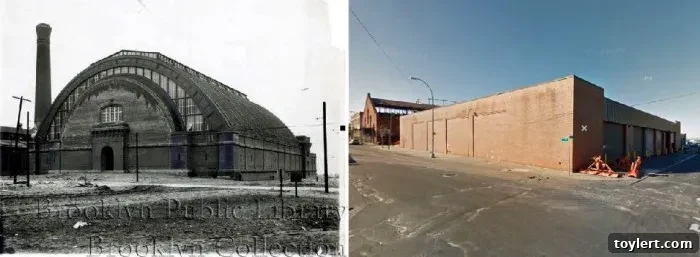
Among Brooklyn’s array of historic armories, the Second Naval Battalion Armory in Sunset Park holds a unique place, distinguishing itself with its maritime connection. Unlike its counterparts designed for infantry or artillery, this armory was constructed specifically for a naval militia unit, reflecting New York City’s vital role as a port city and its rich naval heritage. Located prominently at 520 59th Street, nestled within the vibrant and historically industrial neighborhood of Sunset Park, this armory became a crucial hub for naval training and operations from its completion in 1903.
Designed by the prolific New York State Architect George L. Heins, the Second Naval Battalion Armory stands as a superb example of early 20th-century institutional architecture, blending elements of the robust Romanesque Revival style with the functional demands of a naval facility. Its imposing brick and stone facade, complete with crenellated towers and a distinctive drill shed roof, immediately commands attention. This armory was more than just a training facility; it was a cornerstone of the community, integrating naval preparedness with local life, and symbolizing the nation’s naval might even far from the open sea.
Echoes of the Past: Life Within the Armory Walls
For decades, the walls of the Second Naval Battalion Armory buzzed with activity. Volunteer sailors, officers, and recruits would regularly gather within its massive drill hall, learning seamanship, navigation, signaling, and gunnery. The armory would have hosted drills mimicking shipboard operations, ceremonial parades, and community events that fostered strong ties between the naval militia and the residents of Sunset Park. Imagine the sight of sailors in crisp uniforms marching across the parade grounds, the sound of commands echoing through the vast space, and the meticulous care taken of the naval equipment housed within its secure confines.
The National Guard, including its naval components, played a dual role: ready to defend the nation in times of war and to provide aid during domestic emergencies. During both World Wars, the Korean War, and other conflicts, units trained at the Second Naval Battalion Armory would have been among those called to active service, deploying to protect American interests abroad. Domestically, they would have been instrumental in disaster relief, maintaining order, and supporting civil authorities, embodying the very spirit of the citizen-soldier (or citizen-sailor in this case).
From Garrison to Community Hub: The Modern Transformation of Armories
The turn of the 21st century brought significant changes to the strategic needs of the National Guard and, consequently, to the fate of many urban armories. As military operations evolved and the scale of domestic training requirements shifted, many of these grand structures found themselves underutilized or deemed surplus. This presented both a challenge and an opportunity. The challenge lay in preserving these historically significant buildings, many of which are designated landmarks, while finding new purposes that could sustain them economically and integrate them back into the fabric of modern urban life.
Fortunately, the sheer size, robust construction, and adaptable internal spaces of these armories made them prime candidates for adaptive reuse. Across Brooklyn and beyond, many armories have embarked on remarkable transformations, shedding their military skin to embrace new civilian roles. They have been repurposed into vibrant community centers, offering recreational facilities, educational programs, and performance spaces. Some have been converted into affordable housing, providing much-needed residential units in dense urban areas. Others have found new life as film studios, athletic complexes, art galleries, or even commercial office spaces, demonstrating an incredible versatility that belies their original, singular function.
The process of adaptive reuse is complex, often involving intricate architectural interventions to modernize facilities while respecting historical integrity. However, the successful revitalization of these buildings injects new life into neighborhoods, preserves tangible links to the past, and provides invaluable resources for current and future generations. It’s a testament to sustainable urban development, proving that old structures can indeed learn new tricks.
The Sunset Park Armory Today: A New Chapter
The Second Naval Battalion Armory in Sunset Park is a prime example of this ongoing transformation. While it no longer serves as an active naval training facility in the traditional sense, its imposing structure continues to play a vital role in the community and the nation. Following its period as an active military installation, the armory was acquired by the federal government. Today, it primarily houses operations for the Department of Homeland Security (DHS), including facilities for U.S. Immigration and Customs Enforcement (ICE).
This repurposing signifies a shift from direct military preparedness to broader national security and administrative functions, yet it maintains a link to governmental service. While its primary use is federal, efforts have also been made to ensure that parts of this magnificent landmark can still serve the local community. The sheer scale and architectural presence of the armory continue to define its corner of Sunset Park, standing as a silent guardian of history amidst the bustling modern neighborhood. Its continued use, even in a different capacity, ensures its preservation and prevents the decay that often befalls abandoned historic buildings. It stands as a powerful symbol of evolution, adapting its purpose to meet contemporary needs while retaining its profound historical significance.
Conclusion: Brooklyn’s Armories – Timeless Sentinels of History
Brooklyn’s armories are much more than mere buildings; they are monumental pieces of living history, each telling a story of civic duty, military service, and architectural ambition. From their origins as training grounds for Civil War heroes and subsequent generations of citizen-soldiers to their modern incarnations as vital community assets or federal facilities, these structures have continuously adapted, demonstrating remarkable resilience and relevance.
The Second Naval Battalion Armory in Sunset Park, with its distinctive naval heritage and prominent architectural features, perfectly encapsulates this journey. It serves as a powerful reminder of Brooklyn’s diverse past, its commitment to defense, and its capacity for urban renewal. As we traverse the streets of Brooklyn, these castle-like sentinels invite us to pause, reflect on their storied past, and appreciate their enduring presence in shaping the borough’s identity. They are, indeed, timeless guardians, connecting Brooklyn’s “then” with its vibrant “now,” standing firm as enduring symbols of strength, community, and heritage.