From Ashes to Affordable Homes: Broadway’s Remarkable Revival in Ocean Hill & Bushwick
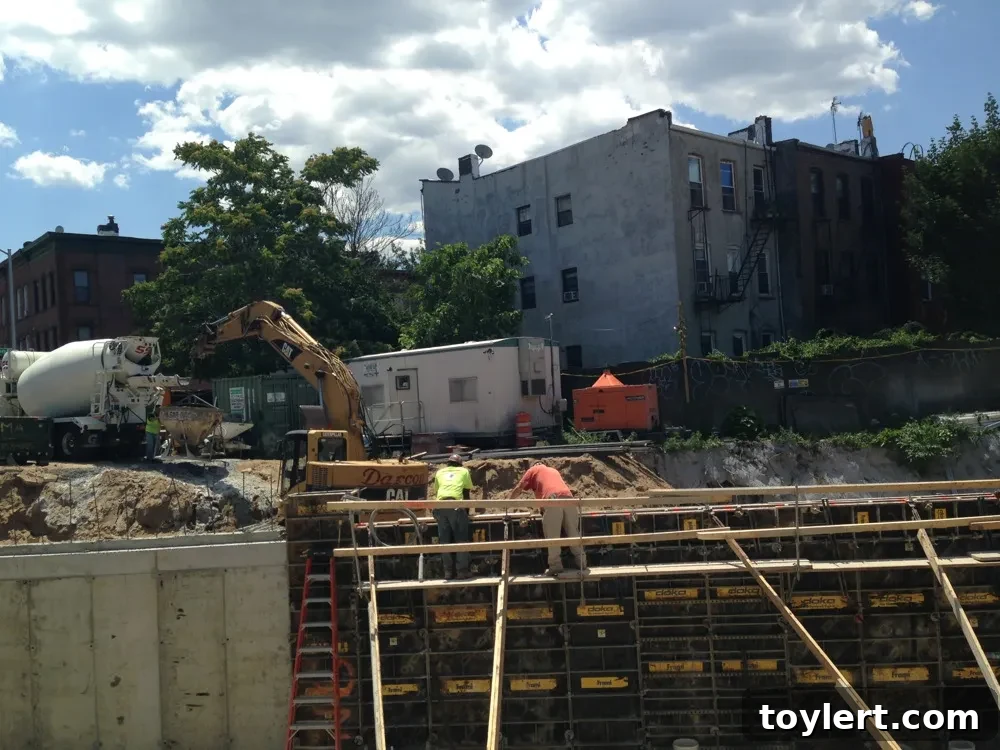
The indelible scars left by the devastating arson fires that ravaged Broadway and its adjacent blocks in the Ocean Hill and Bushwick neighborhoods of Brooklyn during the 1970s are steadily, yet definitively, being erased. A new wave of development is sweeping through these areas, breathing fresh life into a landscape once marked by blight and neglect. This transformation signifies not just the construction of new buildings, but a profound renewal of community spirit and economic vitality.
At the forefront of this revitalization is a major affordable housing complex, rising prominently on the corner of Broadway and Decatur Street in Ocean Hill. Situated strategically beneath the elevated J train tracks, this development has been a hive of activity since its public groundbreaking in March 2015. Construction teams, a diverse group of skilled professionals and laborers, have been diligently working, transforming empty lots into a vibrant testament to the neighborhood’s resilience and forward momentum. This particular project, celebrated for its potential to provide much-needed affordable homes, stands as a symbol of the broader urban renewal efforts gripping this historic Brooklyn corridor.
A Look Back: The Devastation of the 1970s and Its Lingering Shadow
To truly appreciate the current resurgence, one must understand the depths from which Ocean Hill and Bushwick are emerging. The 1970s represented a dark chapter for many New York City neighborhoods, but few suffered as dramatically as parts of Brooklyn. A combination of economic downturn, urban flight, and systemic disinvestment created fertile ground for widespread devastation. The term “planned shrinkage” often described a municipal policy of withdrawing essential services from struggling areas, inadvertently accelerating their decline.
In Ocean Hill and Bushwick, this era was characterized by an epidemic of arson fires. Often fueled by unscrupulous landlords engaging in “arson for profit” schemes to collect insurance money on decaying properties, these fires systematically decimated block after block. Residential buildings, local businesses, and community gathering spots were reduced to rubble, leaving behind vacant lots and skeletal remains of once-thriving streetscapes. Thousands of residents, predominantly working-class families and communities of color, were displaced, their lives uprooted, and their neighborhoods fractured.
The socio-economic impact was catastrophic and long-lasting. Property values plummeted, businesses closed, and remaining residents faced a stark environment devoid of essential services, safe public spaces, and economic opportunities. Broadway, once a bustling commercial artery, became a desolate stretch, a stark reminder of what had been lost. For decades, these neighborhoods carried the weight of this history, struggling to overcome the visual and emotional scars of the fires and subsequent abandonment.
The Seeds of Change: How Urban Renewal Took Root
The journey from devastation to revitalization has been a long and arduous one, marked by the persistent efforts of community activists, local leaders, and eventually, renewed interest from city planners and developers. The late 1990s and early 2000s saw a gradual shift in perception regarding Brooklyn’s forgotten neighborhoods. As other parts of the borough became increasingly unaffordable, areas like Ocean Hill and Bushwick, with their rich cultural histories, strong community bonds, and direct subway access, began to attract attention once more.
This renewed interest wasn’t without its complexities, often bringing with it concerns about gentrification and displacement. However, it also catalyzed significant investment in infrastructure, public spaces, and crucially, new housing. The strategic importance of Broadway, serving as a vital thoroughfare connecting various parts of Brooklyn and providing direct access to Manhattan via the J and Z subway lines, became undeniable. Urban planning initiatives began to focus on rebuilding the residential and commercial fabric, aiming to create diverse, mixed-income communities that could thrive sustainably.
Broadway & Decatur: A Landmark Affordable Housing Initiative
The specific project at the corner of Broadway and Decatur Street serves as a prime example of this transformative wave. Identified as a critical site for community revitalization, this development, often referred to as the Broadway-Decatur Affordable Housing Project, broke ground with significant public fanfare. This event was not merely a ceremonial gesture; it represented years of planning, negotiation, and a commitment from various stakeholders, including city agencies like the NYC Department of Housing Preservation and Development (HPD) and the Housing Development Corporation (HDC), along with private developers and community housing organizations.
The unique location directly under the elevated J train tracks presents both architectural challenges and opportunities. Architects and urban planners designed the structure to seamlessly integrate with the existing urban fabric while mitigating noise and vibration from the transit line. The building itself is conceived not just as housing, but as a community asset, offering a range of amenities designed to enhance the quality of life for its residents. These often include shared common spaces, laundry facilities, a community room, and potentially retail spaces on the ground floor, further activating the street level.
The core mission of this development is to provide quality, affordable housing units to a diverse group of income-eligible individuals and families, addressing a critical need in a city grappling with a severe housing crisis. Such projects play a vital role in preventing displacement, promoting economic diversity, and ensuring that long-term residents can continue to live and thrive in their neighborhoods. Beyond providing homes, the construction phase itself generated numerous local jobs, injecting economic benefits directly into the community.
Broader Impact: Reshaping Ocean Hill and Bushwick
The Broadway-Decatur project is not an isolated incident but rather a cornerstone of a larger, sweeping transformation across Ocean Hill and Bushwick. Stretches of Broadway, once dotted with vacant lots, are now bustling with activity. Other developments, both residential and mixed-use, are taking shape, attracting new residents and businesses. This influx is spurring the growth of local amenities, from new cafes and restaurants to grocery stores and service providers, all contributing to a more vibrant and walkable streetscape.
The changing demographics reflect a renewed appeal for these areas. Young professionals, artists, and families are drawn by the relative affordability (compared to trendier Brooklyn neighborhoods), excellent transit links, and the authentic community feel. This growth, however, comes with its own set of responsibilities. City planners and community leaders are tasked with ensuring that new development harmonizes with the existing character of the neighborhoods, preserves historical elements where appropriate, and most importantly, serves the needs of all residents, old and new.
Public investments in parks, green spaces, and local schools are often integral parts of this revitalization, creating a more holistic improvement in urban living. The presence of the J train, alongside other subway lines, remains a critical artery, making these areas highly desirable for commuters and fostering a dynamic urban environment where connectivity is key.
Looking Ahead: A Future of Sustainable Growth and Community Vibrancy
The ongoing transformation of Ocean Hill and Bushwick’s Broadway corridor is a compelling narrative of urban resilience. It’s a testament to the power of targeted development and community-led initiatives to heal historical wounds and build a brighter future. The process is complex, involving intricate balances between economic growth, cultural preservation, and social equity. However, the visible progress, exemplified by projects like the affordable housing complex at Broadway and Decatur, offers a hopeful vision.
As these neighborhoods continue to evolve, the focus remains on fostering sustainable growth – development that considers environmental impact, promotes economic inclusivity, and strengthens the social fabric. The aim is to create communities that are not only vibrant and economically stable but also deeply rooted in their unique identities, offering a high quality of life for all who call them home. The legacy of the 1970s fires will always be a part of their history, but the future of Ocean Hill and Bushwick is now firmly being written by the hands of those committed to rebuilding, revitalizing, and rising above.