A Retrospective Glance: Unpacking Brooklyn’s Historic Real Estate Market Six Months On
In the fast-paced world of Brooklyn real estate, understanding market dynamics often requires a look back to truly appreciate where we stand today. This week, we’re taking a deep dive into our archives, revisiting some prominent listings from six months ago, and analyzing their journey on the open market. By examining these unique properties, we gain invaluable insights into current trends, buyer behavior, and the enduring appeal of historic Brooklyn homes. From rare pre-Civil War gems to meticulously preserved brownstones, Brooklyn’s diverse housing landscape continues to captivate buyers and investors alike. Let’s explore how a selection of these distinctive properties have fared, uncovering the stories behind their market performance.
Brooklyn Heights’ Enduring Appeal: The Rarity of 65 Pineapple Street
Our journey begins in one of Brooklyn’s most iconic and sought-after neighborhoods: Brooklyn Heights. Renowned for its stunning waterfront views, tree-lined streets, and a wealth of architectural treasures, Brooklyn Heights stands as a testament to the borough’s rich history. It’s here we find a truly remarkable property, a two-family house located at 65 Pineapple Street, which continues to grace the market.
What makes this particular listing so captivating is its profound historical significance. Dating back to 1835, this residence predates the Civil War, a fact that makes it an exceptional find even within a borough steeped in history. According to Old Brooklyn Heights: New York’s First Suburb, the architectural style of 65 Pineapple Street is a beautiful synthesis of Federal and Greek Revival elements – a transitional design rarely encountered today. The Federal style, characterized by its elegant simplicity, symmetrical facades, and delicate decorative elements, gracefully blends with the more monumental and classical influences of Greek Revival, seen in its sturdy forms and grander scale. This unique combination offers a glimpse into the evolving architectural preferences of early 19th-century America, making the property not just a home, but a living piece of history.
Despite its undeniable charm and historical provenance, 65 Pineapple Street remains available. This status prompts a deeper examination of the luxury market segment in Brooklyn Heights. While properties of this caliber attract a very specific buyer pool – often those with a deep appreciation for historical integrity and the resources for potential restoration or modernization – their unique nature can sometimes lead to a longer market tenure. Factors such as a precise historical niche, specific configuration as a two-family dwelling (which offers versatility but might require a buyer to plan for rental income or a multi-generational living arrangement), and the sheer magnitude of its historical value contribute to its distinct market position. For the right buyer, however, this property represents an unparalleled opportunity to own a piece of Brooklyn’s foundational heritage, complete with the allure of original pre-Civil War features that are increasingly difficult to come by in such pristine condition.
The “still available” status does not diminish its value; rather, it highlights its exclusivity. Potential buyers are not just purchasing square footage; they are investing in an artifact, a connection to the very origins of Brooklyn as a residential hub. The property offers substantial living space, historical gravitas, and the prestige of a Brooklyn Heights address, all contributing to its status as a standout listing. It’s an offering for those who seek not just a home, but a legacy.
Carroll Gardens’ Timeless Allure: A Grand Brownstone on Carroll Street
Shifting our focus slightly south, we arrive in the picturesque neighborhood of Carroll Gardens, a locale celebrated for its tree-lined streets, charming community gardens, and an abundance of magnificent brownstone and brick townhouses. Here, a historic four-story brick and brownstone townhouse, formerly an Open House Pick, recently found its new owners. Located on the idyllic Carroll Street, nestled between Clinton and Henry streets, this residence perfectly encapsulates the enduring appeal of this quintessential Brooklyn neighborhood.
Built in 1870, this stately townhouse spans approximately 3,500 square feet of magnificent living space, further enhanced by a finished basement. This generous footprint is a significant draw in New York City, offering ample room for expansive family living, dedicated work-from-home spaces, and luxurious entertaining. The basement, often a critical amenity in urban homes, provides versatile space that can be adapted for a media room, home gym, guest suite, or additional storage, significantly boosting the property’s utility and overall value.
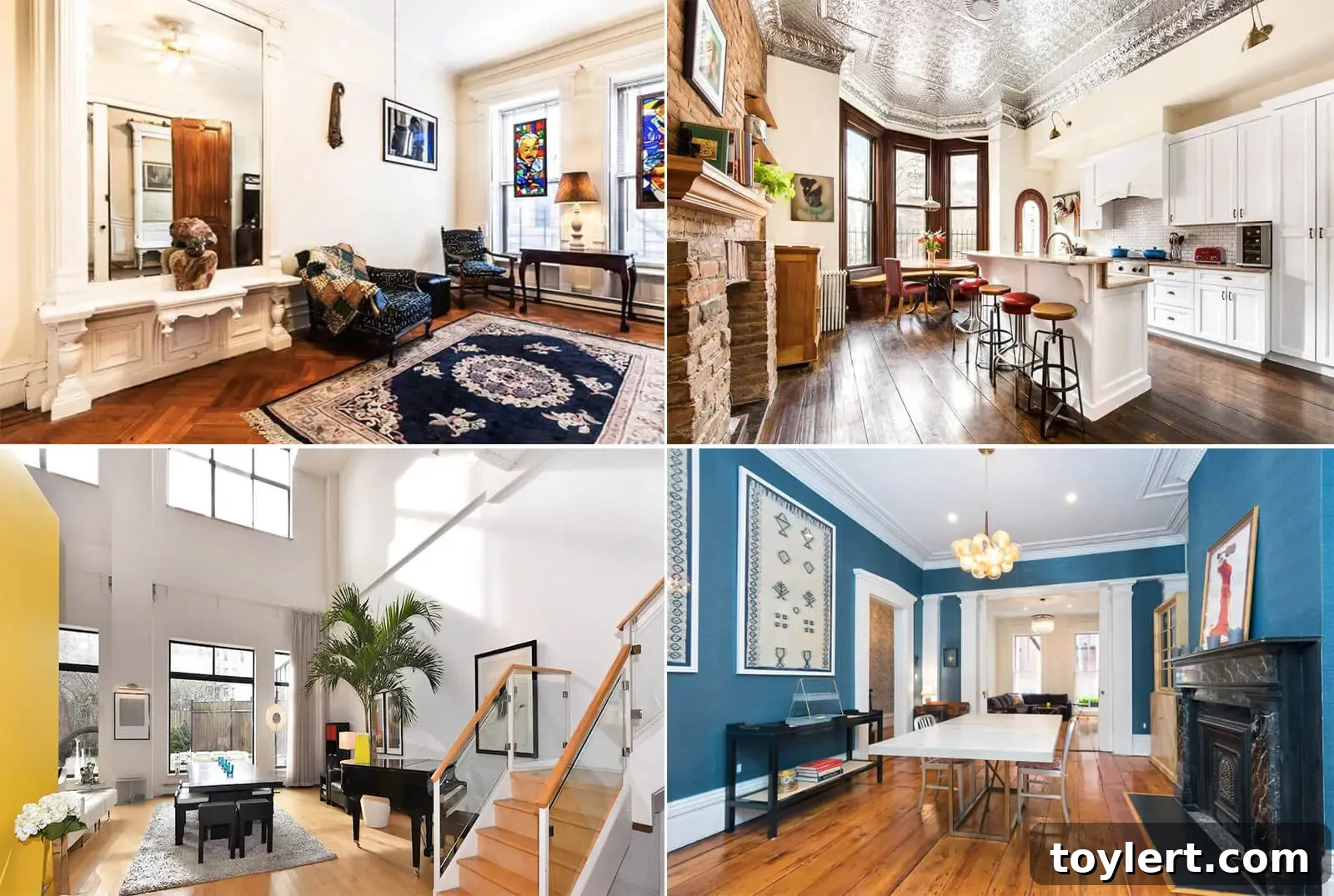
What truly set this Carroll Gardens brownstone apart were its meticulously preserved original details. From intricate crown moldings and ceiling medallions to stunning parquet floors and original fireplace mantels, these features told a story of craftsmanship and historical elegance. Such details are not merely decorative; they are integral to the home’s character, providing a sense of grandeur and authenticity that modern constructions often struggle to replicate. The presence of these preserved elements indicated a history of careful stewardship, appealing strongly to buyers who value heritage and architectural integrity.
Boasting grand proportions and a gracious layout, the home offered a seamless flow between its various living areas, creating an inviting and functional environment. This thoughtful design, combined with its historical charm, undoubtedly contributed to its successful sale in July for $4 million. Interestingly, this final price was $200,000 below its initial asking price. This slight adjustment often reflects strategic negotiation in a dynamic market, or a realistic recalibration by the seller to meet buyer expectations. For the purchaser, acquiring such a well-preserved, spacious, and historically rich property in a prime Carroll Gardens location for $4 million can be viewed as an excellent investment, securing a piece of Brooklyn’s residential legacy at a competitive price point.
The successful sale of this Carroll Gardens townhouse underscores several key aspects of the current Brooklyn real estate landscape: the robust demand for move-in-ready historic homes, the willingness of buyers to invest in neighborhoods with strong community ties and excellent amenities, and the recognition that even in a seller’s market, realistic pricing and well-maintained properties command attention and achieve desirable outcomes for both parties.
Navigating Brooklyn’s Diverse Real Estate Landscape: Trends and Investment Opportunities
The contrasting journeys of 65 Pineapple Street in Brooklyn Heights and the Carroll Street townhouse offer a microcosm of Brooklyn’s multifaceted real estate market. While some unique, ultra-historic properties require patience, others, like the Carroll Gardens brownstone, attract swift offers when perfectly aligned with buyer expectations for space, condition, and location. This divergence highlights the importance of nuanced market understanding for both sellers and prospective buyers across the borough.
Beyond the Heights and Gardens: Broadening Our Gaze to Other Thriving Brooklyn Hubs
While our focus today has been on specific listings in Brooklyn Heights and Carroll Gardens, it’s imperative to recognize the broader narrative unfolding across other vibrant Brooklyn neighborhoods. Areas such as Bed-Stuy (Bedford-Stuyvesant), Crown Heights, and Prospect Heights continue to evolve, offering diverse opportunities and attracting different segments of the market. These neighborhoods, rich in their own historical context and architectural splendor, present compelling alternatives for buyers seeking value, space, or a particular community vibe.
For instance, Bedford-Stuyvesant is celebrated for its expansive brownstones and historic districts, often offering more square footage for the dollar compared to its more established counterparts like Brooklyn Heights. Buyers here are often drawn to the grand scale of the homes, the vibrant cultural scene, and the potential for appreciation as the neighborhood continues its revitalization. Properties in Bed-Stuy might include beautifully restored multi-family brownstones that serve as both a primary residence and an income-generating asset, or single-family homes undergoing thoughtful modern renovations while retaining their historic charm.
Similarly, Crown Heights offers a blend of historic architecture, diverse community, and burgeoning commercial corridors. Its market often features stately limestone and brownstone homes, many of which provide excellent investment opportunities for those looking to customize their living space or secure rental income. The proximity to Prospect Park and various cultural institutions adds to its appeal, positioning it as a dynamic and desirable area for a wide range of buyers.
Prospect Heights, nestled between Prospect Park and Downtown Brooklyn, strikes a balance between historic charm and urban convenience. Known for its beautiful residential blocks and access to some of Brooklyn’s finest cultural attractions, including the Brooklyn Museum and Botanic Garden, this neighborhood attracts buyers seeking a sophisticated urban lifestyle. Real estate here encompasses elegant brownstones, pre-war co-ops, and modern condominiums, catering to diverse preferences and budgets, but always with a premium on location and quality of life.
Key Market Trends and Investor Considerations
- The Enduring Value of Historical Integrity: Homes with well-preserved original details and authentic historical charm continue to command significant attention and often higher prices, underscoring a strong buyer preference for character over purely modern aesthetics.
- Location, Location, Location: Prime neighborhoods like Brooklyn Heights and Carroll Gardens consistently demonstrate resilience and desirability, driven by their established reputations, excellent amenities, strong school districts, and convenient access to Manhattan.
- Strategic Pricing is Paramount: While sellers naturally aim for the highest possible return, the Carroll Gardens sale illustrates that realistic pricing, or a willingness to negotiate slightly below ask, can be the key to a timely and successful transaction, even for highly desirable properties.
- Versatility of Multi-Family Homes: The two-family nature of the Pineapple Street property highlights the appeal of homes that offer income potential or flexible living arrangements, a significant advantage in high-cost urban environments. These properties often attract investors as well as owner-occupants looking to offset mortgage costs.
- Investment in Quality of Life: Buyers in Brooklyn are increasingly prioritizing homes that offer not just space, but also access to green areas, vibrant community life, and cultural institutions, factors that contribute to a holistic and enriched urban experience.
The Brooklyn real estate market remains a robust and dynamic landscape, continually shaped by economic factors, buyer preferences, and the inherent value of its unique housing stock. Whether it’s the grandeur of a pre-Civil War Federal-Greek Revival home or the charm of a 1870 brownstone, these properties tell a story that extends far beyond their market price. They embody the rich tapestry of Brooklyn’s past and present, offering not just a place to live, but a piece of history to cherish and a future to build upon.
Conclusion: The Timeless Allure of Brooklyn’s Historic Real Estate
Our retrospective look at these Brooklyn listings reaffirms the borough’s status as a premier real estate destination. From the dignified elegance of Brooklyn Heights to the family-friendly charm of Carroll Gardens, and extending to the vibrant communities of Bed-Stuy, Crown Heights, and Prospect Heights, the demand for distinctive properties remains strong. The stories of these homes – one patiently awaiting its next steward, another successfully transitioning to new ownership – provide valuable lessons for anyone navigating this complex yet rewarding market.
Ultimately, investing in Brooklyn’s historic real estate is more than a financial transaction; it’s an embrace of a unique lifestyle, a rich heritage, and a vibrant community. As we continue to monitor the market, the timeless appeal of these architectural treasures will undoubtedly remain a cornerstone of Brooklyn’s enduring desirability, promising a future as rich and compelling as its storied past.