Williamsburg’s Waterfront Transformed: Bjarke Ingels’ River Ring Development Begins Public Review
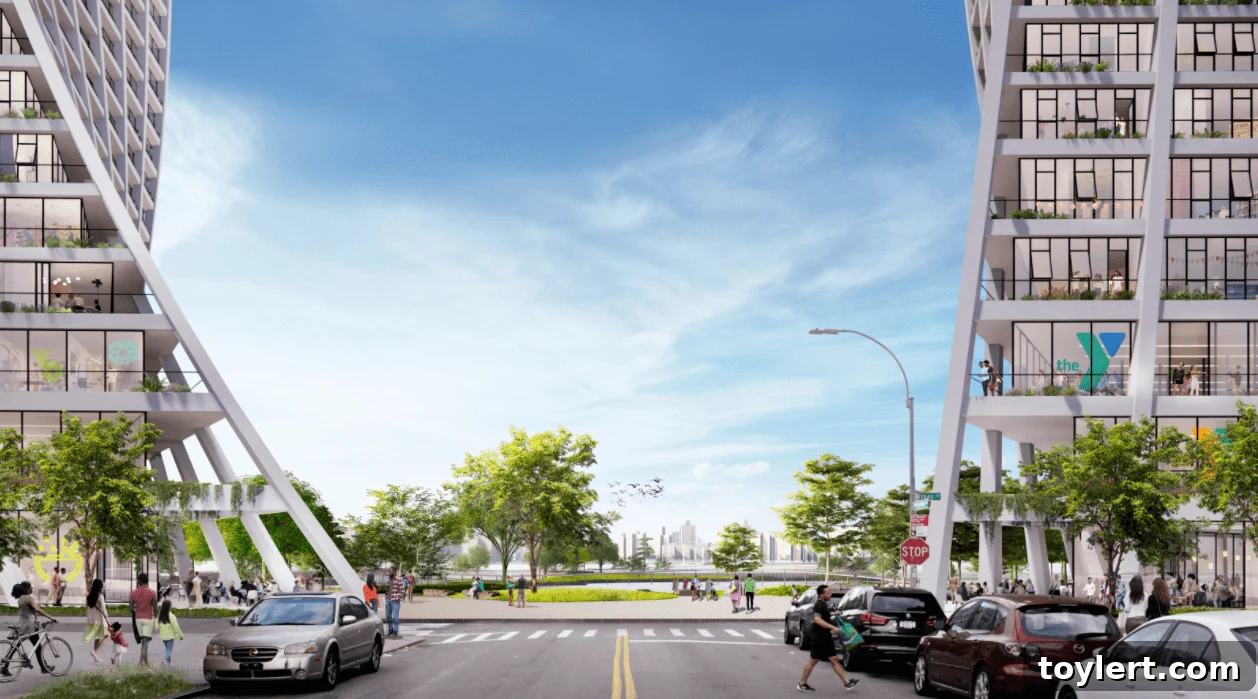
A monumental new vision for the Williamsburg waterfront has taken its pivotal first step towards becoming a reality. The River Ring development, a sprawling project featuring two striking rental towers, an expansive public beach, and a verdant waterfront park, officially commenced its journey through New York City’s public review process. This ambitious endeavor promises to redefine the Brooklyn skyline and significantly enhance public access and green space along the East River.
On Monday, August 16th, the Department of City Planning certified the gigantic project, thereby initiating the city’s official Uniform Land Use Review Procedure (ULURP). This certification marks a critical milestone for a development designed not only to provide much-needed housing but also to seamlessly connect existing public spaces along the bustling Williamsburg shoreline, creating a cohesive and vibrant new urban amenity. The project is poised to become a landmark that balances architectural innovation with community-centric public infrastructure, reflecting a forward-thinking approach to urban development in one of Brooklyn’s most dynamic neighborhoods.
The Ambitious River Ring Project: Reimagining the Williamsburg Waterfront
The River Ring development, spearheaded by Two Trees Management and designed by the globally renowned Bjarke Ingels Group (BIG), represents a transformative undertaking for Williamsburg. At its heart lie two architecturally distinct rental towers, envisioned to offer a substantial addition to the neighborhood’s housing stock. However, the project’s impact extends far beyond residential units. A significant portion of the development is dedicated to public amenities, including a first-of-its-kind public beach and an extensive waterfront park. This park is specifically designed to create a continuous stretch of public access, linking previously fragmented sections of the waterfront and providing unparalleled recreational opportunities for residents and visitors alike.
Beyond leisure, the development incorporates critical environmental resilience measures, a vital consideration for any project situated along New York City’s coastline. The design includes innovative strategies to mitigate flood risks and enhance ecological habitats, ensuring that the new waterfront is not only beautiful but also robust and sustainable. The integration of green infrastructure and accessible public spaces exemplifies a holistic approach to urban planning, aiming to foster a thriving community while safeguarding the environment. This commitment to public good and ecological stewardship distinguishes the River Ring as more than just a real estate venture; it’s a comprehensive urban revitalization project.
Designed by Bjarke Ingels Group (BIG): A Visionary Approach to Urban Living
The architectural prowess behind the River Ring project comes from Bjarke Ingels Group (BIG), an international firm celebrated for its innovative and often playful approach to design. BIG’s philosophy, often encapsulated by the term “pragmatic utopianism,” seeks to find the sweet spot where the practical demands of development meet visionary, sustainable, and community-focused design. Their portfolio boasts a wide array of projects that challenge conventional urban forms, from the striking CopenHill waste-to-energy plant with a ski slope on its roof in Copenhagen to the pyramidal VIA 57 West residential building in Manhattan.
For the River Ring, BIG has channeled its expertise into creating a waterfront experience that is both iconic and deeply integrated with its surroundings. The design emphasizes natural light, expansive views, and a seamless flow between indoor and outdoor spaces. The towers themselves are envisioned with a distinctive aesthetic that will contribute to the visual identity of the Williamsburg waterfront, while the ground-level public spaces are meticulously crafted to maximize usability and enjoyment. By incorporating elements such as undulating landscapes, natural materials, and ample seating, BIG aims to create a magnetic public realm that draws people to the water’s edge and encourages interaction, recreation, and appreciation for the Brooklyn coastline.
Two Trees Management: A Legacy of Brooklyn Development and Waterfront Revitalization
The developer at the helm of the River Ring is Two Trees Management, a family-owned real estate firm with a storied history of transforming Brooklyn’s urban landscape. Known for their long-term vision and commitment to community engagement, Two Trees has been instrumental in the revitalization of several key Brooklyn neighborhoods. Their most notable project to date is the conversion of the Domino Sugar Refinery site, also on the Williamsburg waterfront, into a vibrant mixed-use complex that includes residential, commercial, and extensive public park space. This project, Domino Park, has become a beloved destination and a testament to Two Trees’ ability to deliver large-scale, impactful urban developments.
With the River Ring, Two Trees Management continues its dedication to creating dynamic, accessible waterfront destinations. Their involvement in this project underscores their ongoing commitment to Brooklyn, not merely as a developer but as a stakeholder invested in the borough’s growth and prosperity. The firm’s approach often involves extensive collaboration with local communities and adherence to high standards of design and public benefit, aiming to create developments that endure and enhance the urban fabric. This extensive experience positions Two Trees as a formidable force in steering the River Ring through its complex development stages, with a proven track record of successful, community-enriching projects.
Navigating the ULURP: The Public Review Process Unveiled
The Uniform Land Use Review Procedure (ULURP) is a crucial and often lengthy process that all significant land use actions in New York City must undergo. Established in 1975, ULURP ensures that proposed developments, rezonings, or special permits are thoroughly reviewed by various city agencies, community boards, and elected officials, providing multiple opportunities for public input. For a project as massive and impactful as the River Ring, the ULURP process is not just a formality; it’s a fundamental mechanism for transparency, accountability, and democratic participation in shaping the city’s future.
The journey through ULURP begins with certification by the Department of City Planning, as the River Ring project recently achieved. Following certification, the proposal moves through a series of mandated reviews. First, it goes to the local Community Board, which holds public hearings and issues an advisory recommendation. Next, the Borough President reviews the project and provides their own advisory statement. These recommendations, while not binding, carry significant weight and inform the subsequent stages. The City Planning Commission then conducts its own comprehensive review and a public hearing, ultimately issuing a binding decision. If approved by the CPC, the project then proceeds to the City Council, which holds another public hearing and can approve, modify, or disapprove the application. Finally, if approved by the City Council, the Mayor has a limited window to veto the Council’s decision, though this is rare for projects that have garnered broad support throughout the process. Each stage offers avenues for community members, local advocacy groups, and stakeholders to voice their opinions, concerns, and suggestions, making ULURP a cornerstone of urban planning in New York City.
Community Impact and Benefits: Shaping Williamsburg’s Future
The River Ring development holds the potential to deliver a multitude of benefits to the Williamsburg community and broader Brooklyn. Foremost among these is the creation of substantial new housing, which is critical in a city facing persistent affordability challenges and a growing population. While the details of affordability within the rental towers are subject to ongoing discussion and ULURP negotiations, the sheer volume of new units will contribute to the housing supply. Beyond housing, the project is expected to generate numerous construction jobs, followed by permanent employment opportunities in retail, services, and park maintenance, providing a significant economic boost to the area.
Perhaps the most transformative aspect of the River Ring lies in its commitment to public open space. The proposed public beach, a novel amenity for New York City, along with the expansive waterfront park, will provide residents with unprecedented access to the East River. These spaces are designed to be vibrant hubs for recreation, relaxation, and community gathering, complete with green lawns, ecological habitats, and potentially cultural programming. The goal is to create a dynamic public realm that is both inviting and environmentally robust, enhancing the quality of life for all New Yorkers. While concerns about infrastructure strain and the changing character of Williamsburg are valid and will be addressed during ULURP, the project’s emphasis on public amenities aims to foster inclusive growth and ensure that the benefits are widely shared, providing lasting value to one of Brooklyn’s most iconic neighborhoods.
A New Chapter for Williamsburg’s Rapidly Growing Waterfront
Williamsburg’s waterfront has undergone a dramatic transformation over the past two decades, evolving from an industrial hub into one of New York City’s most desirable residential and commercial districts. This evolution has brought with it a surge in high-rise developments, boutique shops, and a vibrant cultural scene. The River Ring project is poised to become the latest, and perhaps one of the most ambitious, chapters in this ongoing saga of urban regeneration. Its scale and the extensive public amenities it promises reflect a continued belief in the potential of this waterfront stretch, not just as a place for new buildings, but as a critical public resource.
The development is strategically located to capitalize on and enhance the existing public infrastructure and the energy of the neighborhood. By connecting disparate sections of public waterfront, the River Ring aims to complete a larger vision of continuous public access along the East River, mirroring similar efforts in other burgeoning waterfront communities across the city. This project will undoubtedly influence the future direction of development in Williamsburg, setting new standards for integrating private development with expansive, resilient public spaces. It signifies a bold step towards realizing a more integrated, sustainable, and publicly accessible urban waterfront for Brooklyn, cementing Williamsburg’s reputation as a dynamic leader in contemporary urban living.
What’s Next for the River Ring: Anticipating the Future of Williamsburg
With the commencement of the ULURP process, the River Ring development now enters a crucial phase of public scrutiny and community dialogue. Over the coming months, the project will be debated, discussed, and potentially refined as it moves through the various stages of review. Community boards, local advocacy groups, and individual residents will have ample opportunity to examine the proposal, ask questions, and offer their feedback, playing an integral role in shaping the final outcome. This extensive public engagement is vital for ensuring that the development aligns with the needs and aspirations of those who call Williamsburg home.
The ultimate approval of the River Ring will depend on its ability to demonstrate compelling public benefits, address potential impacts, and garner sufficient support from key stakeholders and elected officials. Should it successfully navigate the complexities of ULURP, the project promises to be a transformative addition to Brooklyn’s skyline and public realm, delivering a unique blend of housing, green space, and waterfront access that stands as a testament to visionary urban planning. The eyes of New York City will be watching as this massive Bjarke Ingels-designed development moves closer to becoming a reality, setting a precedent for future waterfront projects and cementing Williamsburg’s place as a beacon of innovative urban living.