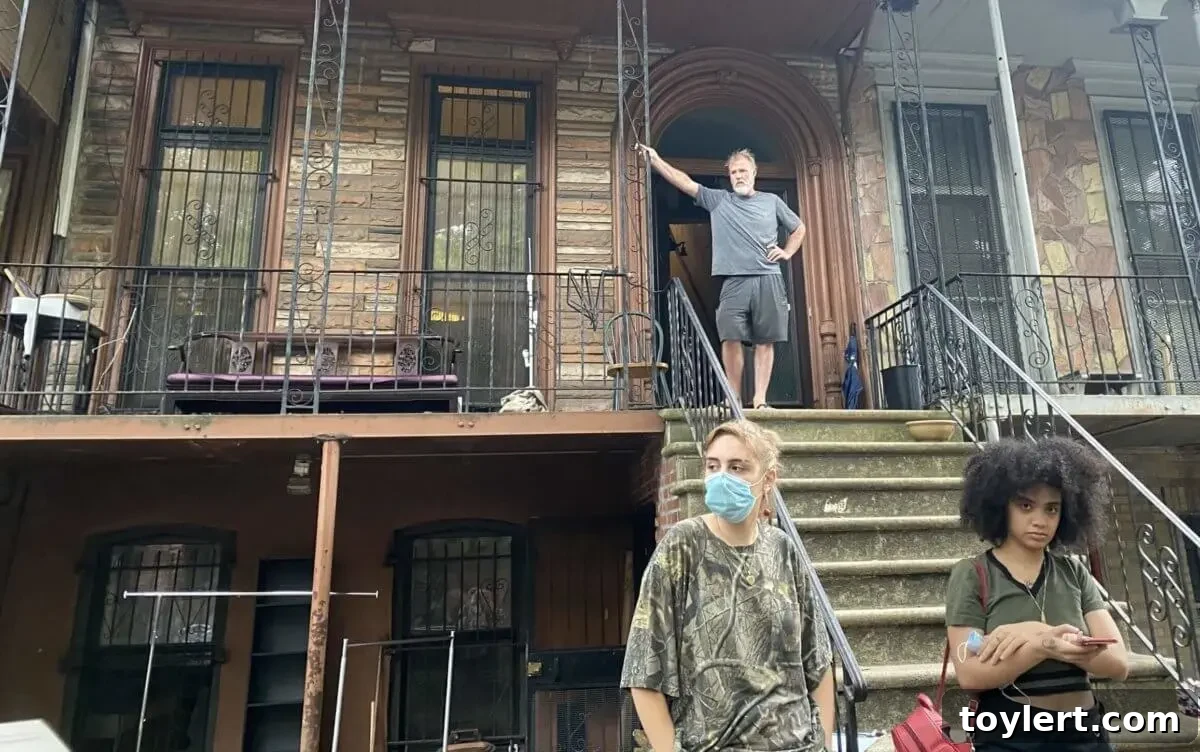
Landmark Settlement: NYC “Eco-Yogi Slumlords” Face Millions in Fines, Property Seized for Affordable Housing
In a groundbreaking victory for tenant rights and housing justice, New York City has announced a substantial $2.25 million settlement against a notorious pair of Brooklyn landlords. Gennaro Brooks-Church and Loretta Gendville, dubbed “eco-yogi slumlords” by the mayor’s office, were found to have systematically violated housing laws, including attempting to evict vulnerable Crown Heights tenants during the height of the COVID-19 pandemic, contravening state moratoriums. Furthermore, the landlords allegedly operated an extensive and illicit hotel business across numerous properties throughout the borough for several years, capitalizing on a housing market already strained by demand.
Unpacking the Case: Illegal Evictions and an Unlawful Hotel Empire
The settlement represents the largest in New York City’s history specifically addressing illegal short-term rentals, sending a clear and unequivocal message to those who exploit the housing system. The practices of Brooks-Church and Gendville spanned multiple egregious violations. Their attempts to remove tenants from their homes during a period of unprecedented global health crisis showcased a stark disregard for human dignity and legal protections designed to safeguard residents during emergencies. The state’s eviction moratorium was a critical lifeline for countless New Yorkers facing economic hardship and health risks, yet these landlords allegedly sought to bypass these vital safeguards for their own gain.
Beyond the pandemic-era eviction attempts, the duo stands accused of orchestrating a sophisticated illegal hotel operation. This enterprise involved converting residential units, intended for long-term residents, into lucrative short-term rentals, often targeting tourists or transient occupants. Such operations not only contravene local zoning laws and hospitality regulations but also exacerbate the city’s severe affordable housing crisis by removing legitimate housing stock from the market. These unauthorized short-term rentals can also disrupt the character and safety of residential neighborhoods, leading to increased noise, transient populations, and a diminished sense of community for long-term residents.
The Terms of a Historic Resolution: Fines and Forfeiture
The comprehensive settlement mandates significant penalties and reparations from Brooks-Church and Gendville. Central to the agreement is the payment of $250,000 in fines, a financial penalty intended to reflect the severity and scale of their illegal activities. However, the most impactful aspect of the settlement involves the forfeiture of one of their prime properties: a mid-19th century wood-frame row house located at 1214 Dean Street in the esteemed Crown Heights North Historic District.
This property, valued by the mayor’s office at a substantial $2 million, will be acquired by the city and subsequently converted into much-needed affordable housing. This creative and impactful component of the settlement not only punishes the offenders but also directly contributes to alleviating one of New York City’s most pressing challenges. By transforming a property once allegedly used for illicit short-term rentals into permanent affordable homes, the settlement provides a tangible benefit to the community and underscores the city’s commitment to increasing housing accessibility for its residents.
A Resounding Warning from the Attorney General
New York Attorney General Letitia James, whose office spearheaded the prosecution of this critical case, issued a strong statement underscoring the gravity of the landlords’ actions and her unwavering commitment to protecting tenants. In her remarks, Attorney General James highlighted the particularly egregious nature of exploiting residents during a time of crisis: “During a period of unprecedented global struggle, Brooks-Church and Gendville callously forced New Yorkers from their homes,” she declared in a public statement.
The Attorney General further elaborated on the systemic problem of housing exploitation, particularly prevalent in areas like central Brooklyn, which have experienced rapid gentrification and increasing housing pressures. “We have long seen these types of harmful housing scams, especially in central Brooklyn, where people make a business out of unfairly and inhumanely pushing others out of their homes,” James stated. Her words resonate deeply within communities where tenants often face immense pressure from landlords seeking to maximize profits, sometimes at the expense of legal and ethical boundaries.
The statement concluded with a stern warning that is expected to reverberate throughout the landlord community across the state: “Let this serve as a warning: Any landlord who mistreats and tries to unlawfully evict renters will face the full force of my office and the law.” This powerful declaration reinforces the message that authorities are vigilant and prepared to employ all available legal mechanisms to protect tenants and maintain housing stability, particularly against those who seek to profit from illegal or predatory practices. It serves as a crucial deterrent, aiming to prevent similar abuses in the future and ensure greater accountability for landlords.
Broader Implications: Combating Housing Scams and Supporting Affordable Living
This landmark settlement extends far beyond the specific actions of Brooks-Church and Gendville; it illuminates broader challenges facing New York City’s housing landscape. The proliferation of illegal short-term rentals has been a contentious issue for years, drawing criticism for its role in reducing the availability of long-term housing options, driving up rental costs, and altering the fabric of residential neighborhoods. Many argue that such operations unfairly compete with legitimate hotels and create an uneven playing field, while also posing potential safety and quality-of-life concerns for neighbors.
Furthermore, the case underscores the critical importance of tenant rights and robust protections, especially during times of crisis. The COVID-19 pandemic highlighted the vulnerability of many New Yorkers to displacement and the essential role of moratoriums and other legal safeguards in preventing widespread homelessness. This settlement sends a powerful message that these protections are not merely suggestions but enforceable laws that carry significant consequences for those who violate them. It reaffirms the city and state’s commitment to ensuring that all residents have stable and secure housing, free from illegal pressure and exploitation.
The conversion of 1214 Dean Street into affordable housing is particularly symbolic. In a city grappling with an acute affordable housing crisis, every unit of accessible housing is invaluable. This outcome demonstrates a tangible path forward for justice that not only penalizes wrongdoing but also actively contributes to solutions for systemic issues. It exemplifies how legal enforcement can be leveraged to create positive social impact, turning a site of alleged exploitation into a beacon of hope for families seeking stable and affordable homes.
A Victory for Urban Integrity and Tenant Advocacy
The $2.25 million settlement against Gennaro Brooks-Church and Loretta Gendville represents a significant victory for tenant advocacy groups, legal aid organizations, and the broader community dedicated to preserving urban integrity. It reinforces the principle that no landlord, regardless of their perceived status or wealth, is above the law. By holding these “eco-yogi slumlords” accountable for their alleged transgressions, New York City has set a powerful precedent, indicating its resolve to confront illegal housing practices head-on.
This case will undoubtedly serve as a crucial reference point for future legal actions against landlords who prioritize profit over people and legality. It encourages tenants to know their rights and empowers them to come forward with complaints, knowing that government agencies are prepared to act decisively. Ultimately, this settlement is a testament to the ongoing fight for equitable housing and a more just urban environment, ensuring that the spirit of community and the rule of law prevail over greed and exploitation.