By Barbara Russo-Lennon, amNY
New York City’s Climate Crossroads: Preparing for a Warmer, Wetter Future
As if the recent rumble of a 4.8 magnitude earthquake wasn’t enough to remind New Yorkers of the unpredictable forces of nature, the metropolis is now grappling with a stark new reality outlined in its latest climate assessment. Released just this week, the comprehensive report paints a vivid picture of a city poised to become significantly warmer and wetter, facing an increasing barrage of intensely hot days and heavy rainfall. These environmental shifts are projected to lead to profound challenges, most notably a heightened risk of widespread and disruptive flooding across the five boroughs.
This critical analysis comes from the esteemed New York City Panel on Climate Change (NPCC), which has just unveiled its fourth full climate assessment report, aptly dubbed NPCC4. The findings are unequivocal: New York City will experience more extreme heat events, with temperatures climbing steadily over the coming decades. Concurrently, the report confirms a growing and alarming risk stemming from increased intense rainfall, which will exacerbate inland flooding and put immense strain on the city’s aging infrastructure.
Understanding the NPCC4 Report: A Blueprint for Resilience
The New York City Panel on Climate Change (NPCC) serves as an independent advisory body, providing objective, science-based information on climate change and its potential impacts to the city. Comprised of leading climate scientists, academics, and experts, the NPCC’s assessments are crucial for informing urban planning, policy decisions, and resilience strategies. NPCC4, the latest iteration, builds upon decades of research and observational data, offering the most up-to-date projections specifically tailored for New York City’s unique geography and infrastructure.
Unlike previous reports, NPCC4 delves deeper into the interplay between various climate stressors, providing nuanced projections that consider a range of future emissions scenarios. This allows city planners and residents alike to better understand the scope of the challenges ahead and to formulate robust, adaptive responses. The report emphasizes not just the physical changes to the environment but also the socio-economic implications for New York City’s diverse population and dynamic economy. It is a vital tool for understanding how climate change will reshape the cityscape and the lives of its inhabitants.
Key Projections from NPCC4: A Warmer and Wetter Metropolis
The Escalating Threat of Extreme Heat Events in NYC
One of the most immediate and pervasive threats highlighted by NPCC4 is the dramatic increase in extreme heat events. New York City, already prone to the urban heat island effect—where concrete, asphalt, and buildings absorb and re-emit heat—will see average temperatures rise significantly. This means not only more days above 90 degrees Fahrenheit but, more dangerously, a surge in “heat wave” conditions, defined by consecutive days of oppressive heat and humidity. These prolonged periods of high temperatures can transform the city into an uncomfortable and, at times, hazardous environment.
The consequences of prolonged extreme heat are far-reaching, affecting public health, energy systems, and infrastructure. Public health will be severely impacted, with a higher incidence of heat-related illnesses such as heatstroke, heat exhaustion, and dehydration. Vulnerable populations, including the elderly, young children, individuals with pre-existing medical conditions, and outdoor workers, will face particularly elevated risks. The demand for air conditioning will skyrocket, placing immense strain on the city’s energy grid and potentially leading to power outages, further endangering residents. Beyond health, extreme heat can degrade critical infrastructure, buckling roads, stressing power lines, and even impacting air quality by exacerbating ground-level ozone pollution, making it harder to breathe for those with respiratory issues.
Intensified Rainfall and the Rising Specter of Flooding
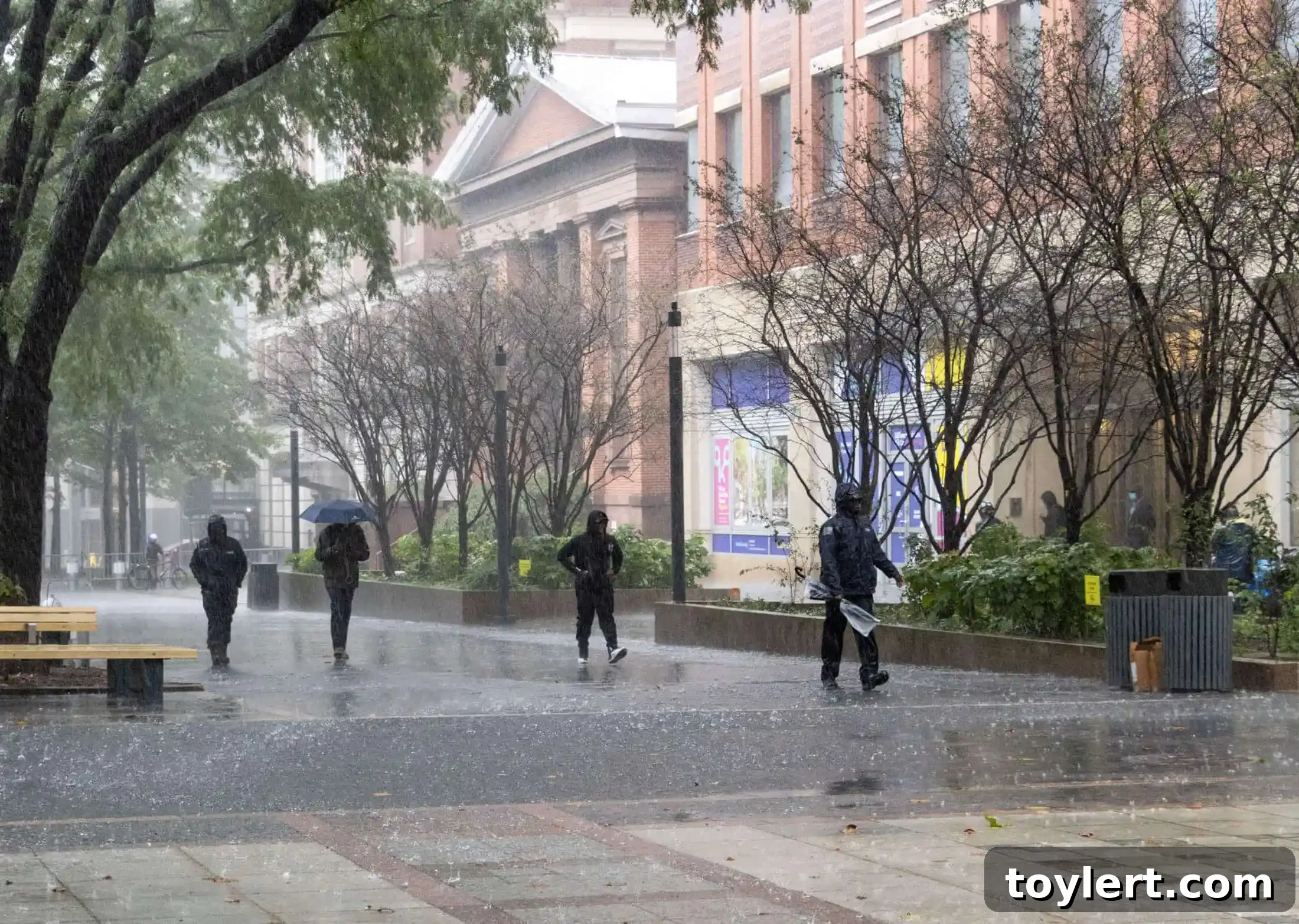
Complementing the warming trend is the projection for a substantial increase in the intensity of rainfall. While the annual total precipitation might not change drastically, the NPCC4 report indicates that when it rains, it will rain much harder and faster. This shift towards more concentrated, heavy downpours poses a significant threat, particularly regarding inland flooding, which can occur far from coastal areas due to overwhelmed drainage systems.
New York City’s stormwater management system, much of which dates back over a century, was not designed to handle the volume and velocity of water from these new, extreme precipitation events. When drainage systems are overwhelmed, streets rapidly turn into rivers, subway lines become inundated, and basements in residential and commercial buildings are prone to flooding. This inland flooding can cause extensive property damage, disrupt crucial transportation networks, and pose serious public safety hazards, trapping commuters and hampering emergency services. Such events are not mere inconveniences; they can bring daily life to a standstill and inflict significant economic losses.
Moreover, while NPCC4 specifically highlights inland flooding, the broader context of a “wetter” city inherently includes the increasing threat of coastal flooding and sea level rise. New York City, a sprawling coastal metropolis with miles of coastline, is particularly vulnerable. Even modest rises in sea level exacerbate the impacts of storm surges, allowing coastal waters to penetrate further inland and making nuisance flooding a more regular occurrence during high tides or minor storms. The combination of intense rainfall and rising sea levels presents a formidable dual challenge, complicating resilience efforts and demanding comprehensive, multi-layered solutions to protect the city’s extensive waterfront and low-lying areas.
The Far-Reaching Impacts on New York City and Its Residents
The implications of a warmer and wetter New York City extend across virtually every aspect of urban life. The NPCC4 report serves as a stark reminder that climate change is not a distant, abstract threat but an immediate and evolving challenge with tangible consequences that will impact millions of people.
- Public Health: Beyond direct heat-related illnesses, increased humidity can worsen respiratory conditions like asthma. Flooding introduces risks of mold growth in buildings, potential exposure to waterborne diseases, and significant mental health impacts from displacement, property loss, and the stress of repeated extreme weather events.
- Infrastructure Resilience: The city’s vast and complex network of subways, roads, tunnels, bridges, and utilities faces unprecedented stress. Floodwaters can disable transit lines, damage electrical systems, corrode vital components, and erode building foundations. Extreme heat can buckle train tracks, cause asphalt to melt, and lead to widespread power grid failures, disrupting essential services and jeopardizing safety.
- Economic Stability: Businesses across all sectors suffer from operational disruptions, supply chain interruptions, and decreased consumer activity during and after extreme weather. Property values in flood-prone areas may decline, and insurance costs for homeowners and businesses are likely to rise sharply. Tourism, a cornerstone of the city’s economy, could also be adversely affected by frequent extreme weather events and their aftermath.
- Environmental Justice: Low-income communities and communities of color are often disproportionately affected by climate impacts due to historical inequities in housing quality, infrastructure investment, and access to resources like green spaces and cooling centers. Addressing climate change in NYC must therefore include a strong focus on environmental justice, ensuring that resilience strategies benefit all residents equitably.
- Daily Life and Quality of Life: From delayed commutes and overcrowded public transport during disruptions to damaged homes and reduced access to outdoor recreational spaces during heat waves, the overall quality of life for millions of New Yorkers will be impacted. The urban landscape itself will transform as the city adapts, potentially leading to increased stress and a diminished sense of security for residents.
Charting a Course for Resilience: NYC’s Adaptive Strategies
Understanding the gravity of these projections, New York City has already embarked on various initiatives to build resilience, but the NPCC4 report underscores the urgency for accelerated and expanded action. A multi-pronged approach is essential, combining robust infrastructure investments with innovative natural solutions and deep community engagement.
Infrastructure Upgrades and Green Solutions
Central to the city’s adaptation strategy is the modernization and hardening of its vital infrastructure. This includes upgrading stormwater management systems, expanding permeable surfaces like rain gardens and green roofs to absorb excess rainfall, and implementing strategically placed flood barriers in vulnerable coastal areas. Investments in resilient power grids, subsurface utility protection, and the creation of community cooling centers are also vital to mitigate the impacts of extreme heat and ensure continuous service during critical times.
Green infrastructure plays a crucial dual role: it helps manage stormwater naturally by absorbing rainwater and reducing runoff, and it contributes significantly to cooling urban environments. By integrating more trees, parks, and vegetated spaces, the city can combat the urban heat island effect, lower ambient temperatures, and provide valuable ecosystem services such as improving air quality, supporting biodiversity, and creating more livable, aesthetically pleasing neighborhoods.
Policy, Planning, and Community Engagement for a Resilient Future
Beyond physical infrastructure, robust policy and urban planning are critical components of a comprehensive resilience strategy. This involves updating building codes to require more resilient construction standards that account for future climate risks, developing comprehensive and accessible flood-zone mapping, and implementing sophisticated early warning systems for extreme weather events. Furthermore, sustained public education and awareness campaigns are crucial to ensure residents understand the risks, know how to prepare, and can participate effectively in adaptation efforts.
Community engagement is paramount for equitable and effective climate action. Empowering local communities with resources, knowledge, and direct involvement in planning processes, especially those most vulnerable to climate impacts, ensures that resilience strategies are tailored to local needs and priorities. Neighborhood-level planning, incorporating local insights and diverse perspectives, can lead to more targeted, innovative, and impactful solutions that truly resonate with and protect the people they serve.
Looking Ahead: A Collective Responsibility
The NPCC4 report is not merely a warning; it is a profound call to action for New York City. While the projections for a warmer and wetter metropolis are sobering, they are also a testament to the power of scientific inquiry to inform and guide our future. New York City has a long and storied history of adapting to immense challenges, from economic downturns to global pandemics, and its response to climate change will undoubtedly define its trajectory in the 21st century.
Addressing these complex and interconnected issues requires a concerted effort from all stakeholders: government agencies at all levels, private sectors, academic institutions, non-profit organizations, and every single New Yorker. By embracing innovation, investing wisely in both gray and green infrastructure, fostering a spirit of collective responsibility, and prioritizing environmental justice, New York City can not only mitigate the worst impacts of climate change but also emerge as a global leader in urban resilience. The future of this iconic metropolis, its vibrant culture, and the well-being of its millions of residents depend on the decisive actions taken today to prepare for the climate realities of tomorrow.