Brooklyn Subway Attack: A Morning of Terror in Sunset Park and the City’s Resilient Response
On a harrowing Tuesday morning, April 12, 2022, the usually routine commute for thousands of New Yorkers turned into a scene of unimaginable horror. A man, later identified as Frank James, donning a construction vest and gas mask, unleashed chaos on a Manhattan-bound N express train as it pulled into the 36th Street subway station in Sunset Park, Brooklyn. The assailant detonated smoke devices and opened fire on unsuspecting passengers, leaving 22 people injured and sending shockwaves through the city and nation.
This calculated attack, occurring at approximately 8:24 a.m. during the peak of morning rush hour, plunged commuters into a terrifying ordeal. As the train approached the station platform, the suspect reportedly put on a gas mask, retrieved a canister from his bag, and filled the subway car with dense smoke. Amidst the sudden, disorienting haze and panic, he then discharged his firearm, striking multiple individuals both inside the train and on the platform. Eyewitness accounts later suggested that more than one smoke device may have been deployed, amplifying the fear and confusion.
The Attack Unfolds: A Detailed Account of the Chaos
The 36th Street station, typically a bustling hub connecting Sunset Park residents to the rest of the city, became a crucible of fear. Passengers described a surreal and terrifying sequence of events. The moment the train doors opened, smoke billowed out, followed by the deafening sound of gunfire. Commuters, initially disoriented by the smoke, quickly realized they were under attack. Panic ensued as people scrambled for safety, some collapsing, others trying to assist the wounded, and many fleeing in terror onto the platform and up the stairs.
Police Commissioner Keechant Sewell, addressing reporters at a press conference later that Tuesday afternoon, confirmed the sequence of events. The suspect’s deliberate actions – donning a gas mask and deploying smoke before firing – indicated a premeditated assault designed to maximize casualties and obscure his identity. The immediate aftermath was a scene of pandemonium, with injured passengers collapsing on the platform, and others desperately seeking refuge or attempting to help those around them. The sheer volume of smoke made it difficult for victims to see or breathe, adding to the trauma and complicating rescue efforts.
Initial reports from authorities indicated a significant casualty count. Acting Fire Commissioner Laura Kavanaugh stated that ten people sustained gunshot wounds, with five of them in critical but stable condition at local hospitals. Remarkably, and a testament to the swift medical response, none of the injuries were deemed life-threatening by NYPD’s Sewell, though the emotional and physical toll on the victims was undoubtedly immense. Beyond those directly struck by gunfire, another 12 individuals suffered various injuries, including smoke inhalation, falls, and panic-related issues, bringing the total injured to 22. This broad range of injuries highlighted the indiscriminate nature of the attack and the wide-reaching impact of such an event.
Immediate Response and Emergency Operations
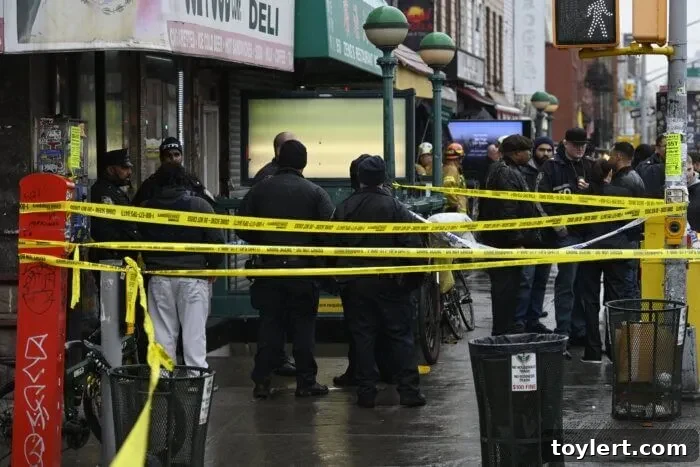
Within minutes of the first emergency calls, the 36th Street station became the epicenter of a massive, multi-agency emergency response. Uniformed officers from the New York City Police Department (NYPD) flooded the scene, securing the perimeter and beginning the grim task of attending to the wounded. Paramedics and emergency medical technicians (EMTs) from the Fire Department of New York (FDNY) swiftly established triage areas, administering life-saving first aid to victims on the platform and within the smoke-filled train cars.
The coordination between NYPD, FDNY, and other city agencies was critical. Ambulances lined the streets surrounding the station, rapidly transporting the injured to nearby hospitals such as NYU Langone Hospital-Brooklyn and Maimonides Medical Center. Medical staff, alerted to a mass casualty event, were on standby, ready to receive and treat the victims of this heinous act. The sheer speed and scale of the emergency response undoubtedly played a crucial role in preventing any fatalities and ensuring that those with critical injuries received immediate attention.
Meanwhile, the entire New York City transit system, a sprawling network that serves millions daily, was immediately impacted. Subway lines were rerouted, stations were closed, and an increased police presence was mandated across all five boroughs. Commuters across the city experienced significant delays and disruptions, but the collective understanding was that safety and the apprehension of the perpetrator were paramount. The visible deployment of emergency personnel and law enforcement acted as a critical, albeit somber, reassurance to a city grappling with newfound anxiety.
The Manhunt Begins: A City on Edge
As emergency services focused on the victims, law enforcement launched an intensive manhunt for the shooter. The description of a man wearing a construction vest and gas mask, captured by surveillance footage and eyewitness accounts, became central to the investigation. Investigators immediately began sifting through hundreds of hours of surveillance video from the subway system and surrounding streets, painstakingly piecing together the suspect’s movements before and after the attack.
The NYPD released images of a “person of interest” within hours, urging the public to come forward with any information. The city was gripped by a mixture of fear and determination. Residents were asked to remain vigilant, and tips began pouring into law enforcement hotlines. The search extended beyond Brooklyn, with federal agencies like the FBI and ATF joining the effort, recognizing the significant threat posed by an armed individual at large in America’s largest city. The recovery of key evidence, including a Glock 9mm handgun, multiple high-capacity magazines, smoke grenades, a hatchet, and a credit card linked to Frank James, proved instrumental in identifying the suspect.
Apprehension of the Suspect: Frank James
The intense, 30-hour manhunt culminated in the apprehension of Frank James on Wednesday, April 13, 2022. Following a deluge of tips from the public and relentless detective work, James was located and arrested in the East Village neighborhood of Manhattan. In an unusual turn of events, James himself reportedly contacted the police, informing them of his whereabouts, although details surrounding this remain somewhat debated.
His capture brought a collective sigh of relief across New York City. Frank James, 62, was subsequently charged with a federal count of committing a terrorist attack on a mass transit system. Prosecutors revealed that James had a history of posting rambling, often violent, and anti-social videos online, some of which expressed grievances against various groups and individuals. His digital footprint provided critical insight into his potential motives and state of mind, painting a disturbing picture of a man harboring deep-seated resentments. The arrest allowed the city to begin the process of healing, knowing that the immediate threat had been neutralized and justice could begin its course.
Community and City-wide Impact
The Sunset Park subway shooting left an indelible mark on New York City. For days, the city grappled with a heightened sense of vulnerability. Many commuters, especially those who rely on the subway daily, experienced increased anxiety. The attack underscored the challenges of ensuring safety across such an expansive and open public transit network. Yet, amidst the fear, there was also an outpouring of resilience and community spirit.
Brooklynites and New Yorkers from all walks of life rallied to support the victims. Blood donation centers saw an increase in donors, and community groups organized vigils and support initiatives. The swift return to normalcy for the subway lines, even with increased security, demonstrated the city’s unwavering resolve to not be deterred by acts of violence. The incident sparked widespread conversations about public safety, mental health support, and the need for vigilance without succumbing to fear.
Reassessing Subway Safety and Security
In the aftermath of the attack, significant attention was directed towards reassessing and enhancing subway safety and security measures. The incident prompted a re-evaluation of current protocols, leading to discussions about increased police presence on trains and platforms, improvements in surveillance technology, and better coordination between law enforcement and transit authorities. While the NYPD already maintained a visible presence in the subway system, the shooting highlighted the need for adaptive strategies to counter evolving threats.
City officials and transit authorities emphasized their commitment to making the subway system as safe as possible for its millions of daily riders. This included reinforcing the “see something, say something” campaign, encouraging public vigilance, and exploring technological advancements that could deter similar attacks in the future. The Brooklyn subway shooting served as a stark reminder that even in a city known for its resilience, continuous efforts are required to protect its most vital arteries and its people.
The Brooklyn subway shooting was a profoundly disturbing event that tested the nerves and resolve of New York City. Yet, in the face of terror, the city’s immediate response, the bravery of its first responders, the compassionate care for its victims, and the relentless pursuit and capture of the assailant showcased the unwavering spirit of a metropolis that refuses to be broken. While the scars of that Tuesday morning undoubtedly remain, the incident also reinforced the enduring strength and unity of the New York community.