Final Rezoning Proposal Unveiled for Dumbo’s P.S. 8 and Vinegar Hill’s P.S. 307: A Critical Step for Brooklyn Schools
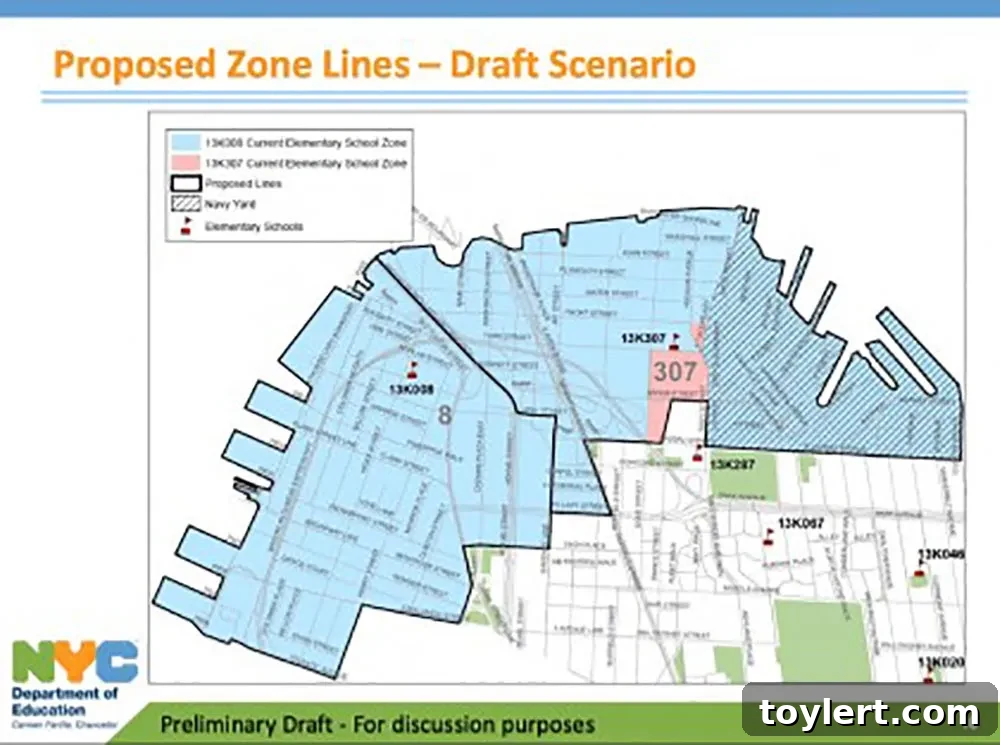
Tonight, Wednesday, September 30th, marks a pivotal moment for public education in Brooklyn as the Department of Education (DOE) presents its final rezoning proposal for two key schools: P.S. 8 in Dumbo and P.S. 307 in Vinegar Hill. The highly anticipated meeting is scheduled from 6:30 to 9:00 p.m. at P.S. 307, located at 209 York Street. This event represents the culmination of extensive discussions, community feedback, and careful planning aimed at addressing complex demographic shifts and ensuring equitable access to quality education within these dynamic neighborhoods.
School rezoning is a challenging but often necessary process, particularly in rapidly developing urban areas like Brooklyn. It involves redrawing the geographical boundaries that determine which public school a child attends based on their residential address. The primary objective is to manage student enrollment, alleviate overcrowding in some schools, and optimize space in others, all while striving to maintain or improve educational standards and foster diverse learning environments. For the communities of Dumbo and Vinegar Hill, this proposal has been a central topic of conversation, reflecting the deep commitment parents and residents have to their children’s futures.
The impetus behind the rezoning effort for P.S. 8 and P.S. 307 stems from distinct, yet interconnected, issues. P.S. 8, situated in the affluent and rapidly gentrifying neighborhood of Dumbo, has experienced significant overcrowding in recent years. Its popularity, driven by its reputation and location, has led to a student population that consistently exceeds its building capacity, straining resources and potentially impacting classroom quality. Conversely, P.S. 307 in Vinegar Hill, a historically underserved but evolving community, has faced challenges related to underutilization of its facilities. This disparity creates an imbalance in resource allocation and educational opportunities across adjacent districts.
Addressing these imbalances is at the heart of the DOE’s strategy. The goal of this Brooklyn school district rezoning is not merely to shuffle students from one building to another, but to create a sustainable and equitable educational landscape. By realigning the school zones, the DOE aims to relieve the pressure on P.S. 8, providing its students and teachers with more optimal learning conditions, while simultaneously bolstering P.S. 307 by increasing its enrollment and potentially attracting more diverse student body and resources. This strategic move is designed to benefit both schools and their respective communities in the long run, ensuring that all children in the area have access to well-resourced and vibrant learning environments.
The journey to tonight’s final proposal has been a long and intricate one, marked by numerous public forums, community workshops, and intensive data analysis. Throughout the process, the Department of Education’s Office of District Planning has engaged actively with parents, educators, local elected officials, and community leaders. Initial proposals were met with a wide range of reactions, as is typical in such sensitive matters. Concerns were raised regarding potential impacts on neighborhood identity, travel distances for students, and the perceived quality of education at different schools. Every piece of feedback, every voiced concern, has been crucial in shaping the amendments that will be presented tonight.
Community engagement has been a cornerstone of this rezoning initiative. Parents from both Dumbo and Vinegar Hill have passionately advocated for their children’s best interests, participating in meetings, submitting written comments, and organizing local groups. The dialogue has often been robust, highlighting the diverse perspectives and priorities within a rapidly changing urban fabric. Discussions have touched upon topics ranging from preserving school diversity and maintaining strong academic programs to ensuring adequate support for students with special needs and those learning English as a new language. This active participation underscores the vital role that local communities play in shaping public education policy and decisions that directly affect their families.
Tonight’s meeting offers a unique and final opportunity for public comment before the proposal moves towards official adoption. Representatives from the DOE’s Office of District Planning will meticulously explain any amendments they have incorporated into the proposal, directly responding to the extensive community reaction received over the past months. This transparency is critical, allowing stakeholders to understand how their feedback has influenced the final plan. Following the presentation, attendees will have the chance to voice their opinions, ask clarifying questions, and offer final reflections on the proposed changes. This direct line of communication is essential for ensuring that the rezoning plan is as responsive and well-considered as possible.
The implications of this rezoning extend far beyond the classroom walls. For students, it means new classmates, potentially new school environments, and a refreshed learning experience. For parents, it entails adjusting to new school routines, navigating new school communities, and understanding how these changes will impact their family’s daily life. For the schools themselves, P.S. 8 Dumbo and P.S. 307 Vinegar Hill, it signifies a fresh chapter, with potential shifts in demographics, resources, and instructional approaches. Moreover, school zoning changes can also have broader effects on local neighborhoods, influencing property values and the overall sense of community identity. The hope is that these changes will foster stronger, more integrated communities, united by the common goal of providing exceptional education.
Ultimately, the aim of this comprehensive district planning effort is to ensure educational equity and excellence for all students in this part of Brooklyn. By proactively addressing issues of overcrowding and underutilization, the DOE seeks to create a balanced and resilient school system that can adapt to the city’s evolving demographics. The decision made regarding P.S. 8 and P.S. 307 will set a precedent for how the city approaches similar challenges in other growing neighborhoods. It highlights the constant need for thoughtful urban planning that prioritizes the well-being and academic success of its youngest citizens, reinforcing the idea that education is a collective responsibility shared by schools, families, and the wider community.
As the community gathers tonight, the focus remains on securing the best possible educational outcomes for all children affected by these changes. The dialogue, though sometimes intense, is a testament to the passionate commitment to public education in Brooklyn. It underscores the belief that by working together, and by thoughtfully considering the needs of every student, a more equitable and effective school system can be built for the future. The final rezoning proposal represents not just a bureaucratic decision, but a strategic investment in the future generations of Dumbo, Vinegar Hill, and the entire borough of Brooklyn.