Coney Island’s Grand Transformation: A Vision for the Future
By Adam Daly, amNY
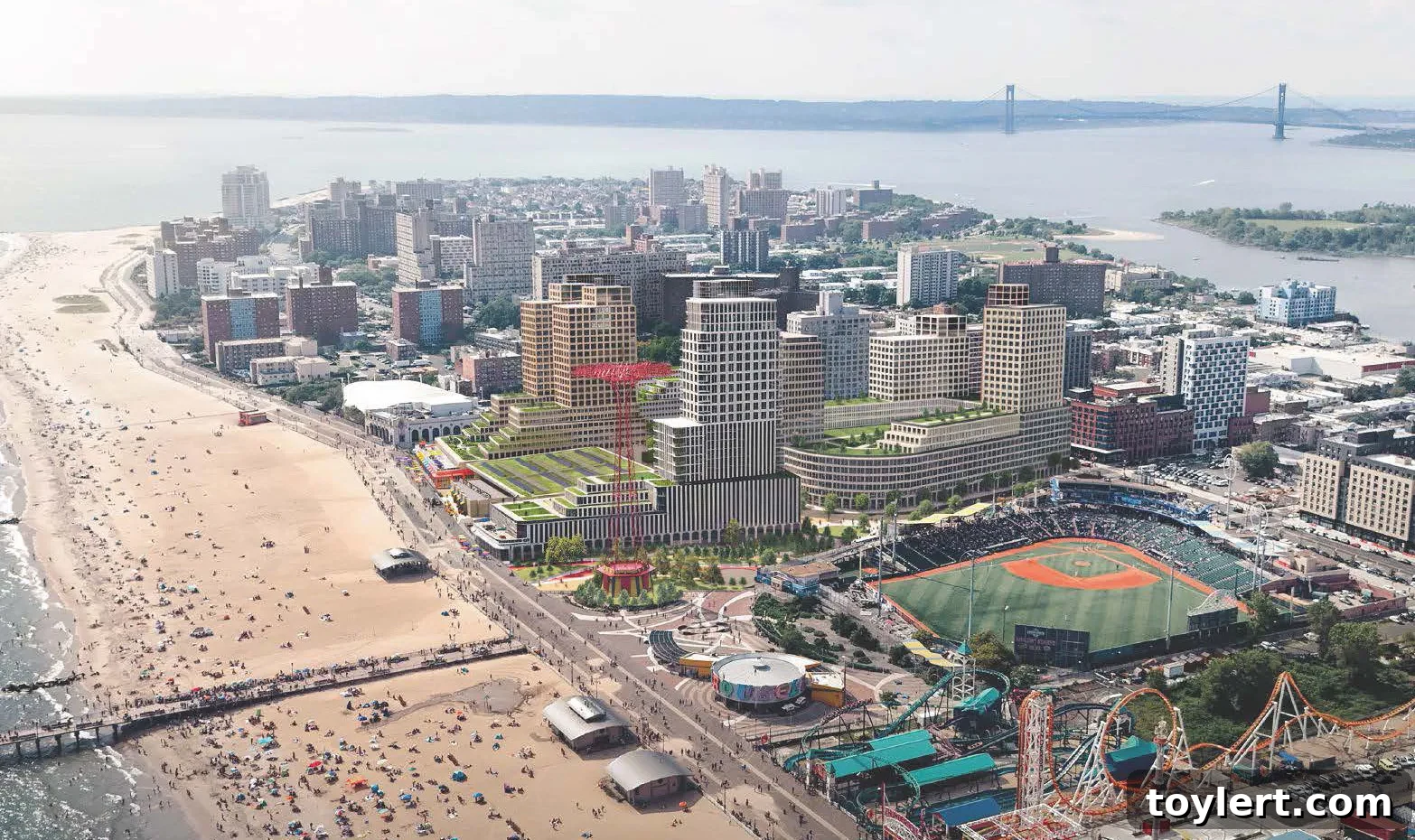
Coney Island, the legendary “People’s Playground” and an iconic jewel in New York City’s crown, is poised for a monumental revitalization. New city plans are set to usher in a sweeping transformation, promising not only 1,500 new mixed-income homes but also significant investments in the beloved Riegelmann Boardwalk, crucial utilities, and essential infrastructure. This ambitious initiative aims to breathe new life into the historic entertainment district, blending its nostalgic charm with modern urban necessities and opportunities for sustainable growth.
Embracing Coney Island’s Enduring Legacy
For generations, Coney Island has captivated imaginations with its vibrant amusement parks, sandy beaches, and unique cultural tapestry. From its origins as a seaside resort in the 19th century to its golden age of amusement in the early 20th century, Coney Island has always been a place of joy, escape, and innovation. It holds a special place in the hearts of New Yorkers and tourists worldwide, symbolizing an enduring spirit of fun and community. This latest redevelopment plan acknowledges and seeks to enhance that legacy, ensuring that as it evolves, it remains true to its roots as a diverse and welcoming destination.
A Holistic Approach to Urban Revitalization
The comprehensive city plan for Coney Island represents a holistic approach to urban development, focusing on several key pillars: housing affordability, infrastructure resilience, economic stimulation, and the preservation of cultural landmarks. The goal is to create a more vibrant, resilient, and inclusive community that can thrive for decades to come. By meticulously planning across these various sectors, the city aims to mitigate potential challenges and maximize the benefits for both current and future residents and visitors.
Addressing the Housing Crisis: 1,500 Mixed-Income Homes
At the heart of this transformative plan is the commitment to introduce 1,500 new mixed-income homes. This substantial housing development is a critical response to New York City’s ongoing housing affordability crisis. Mixed-income housing ensures that a diverse range of residents, across various economic strata, can find a place to call home in Coney Island. This approach is designed to foster a more equitable community, preventing gentrification while simultaneously attracting new families and individuals to the area. These new residential units are expected to integrate seamlessly into the existing urban fabric, providing modern living spaces close to the iconic attractions and public transport links. The influx of new residents will also bolster local businesses and services, contributing to a more dynamic and self-sufficient neighborhood economy.
Preserving a Historic Landmark: Investment in the Riegelmann Boardwalk
The Riegelmann Boardwalk, a nearly three-mile-long promenade steeped in history, is more than just a wooden path; it is the pulsating artery of Coney Island. Under the new city plans, it will receive substantial investments aimed at both structural integrity and aesthetic enhancement. This critical infrastructure upgrade will address decades of wear and tear, ensuring the boardwalk remains a safe and enjoyable public space for countless future generations. Improvements may include repairs to the wooden planks, upgrades to lighting, new seating areas, and enhanced accessibility features. These enhancements are not merely functional; they are essential for preserving the boardwalk’s iconic character, which is integral to Coney Island’s identity and its appeal as a global tourist destination. A revitalized boardwalk will elevate the visitor experience, encouraging longer stays and increased engagement with local vendors and attractions.
Underlying Foundations: Utilities and Infrastructure Upgrades
Beyond the visible structures, significant attention is being directed towards upgrading Coney Island’s foundational utilities and other essential infrastructure. These often-overlooked components are crucial for supporting new residential developments and ensuring the long-term sustainability and resilience of the entire district. Investments will encompass modernizing water supply systems, improving sewage and drainage infrastructure, upgrading electrical grids, and enhancing broadband connectivity. Given Coney Island’s coastal location, these infrastructure improvements will also incorporate climate resilience measures, protecting the community from the impacts of extreme weather and rising sea levels. A robust and modern infrastructure network is paramount for accommodating population growth, fostering economic development, and ensuring a high quality of life for all residents.
The Abe Stark Sports Center: A Beacon of Community Revitalization
A significant component of the Coney Island transformation is the $42 million renovation of the Abe Stark Sports Center. This substantial investment underscores the city’s commitment to community welfare and recreational opportunities. The renovation plans include a brand-new entrance and prominent signage facing the Riegelmann Boardwalk, which will significantly improve the center’s visibility and accessibility. This enhanced presence will beckon both residents and visitors, integrating the center more deeply into the boardwalk’s vibrant activity.
Elevating Recreational Facilities
Central to the Abe Stark Sports Center’s overhaul are improved ice-skating facilities. These upgrades are expected to transform the center into a premier destination for winter sports enthusiasts, offering state-of-the-art ice surfaces, enhanced locker rooms, and spectator areas. Such improvements will cater to local sports leagues, provide high-quality training grounds for athletes, and offer a beloved recreational activity for families and individuals. Beyond ice skating, the “other amenities” mentioned will likely include a range of upgrades such as modern fitness equipment, multi-purpose rooms for community events and classes, improved concession areas, and better overall accessibility. These additions will solidify the Abe Stark Sports Center’s role as a vital community hub, promoting health, well-being, and social interaction year-round.
Economic and Social Impact of the Transformation
The ambitious redevelopment plan for Coney Island is anticipated to generate substantial economic and social benefits. The construction phase alone will create numerous job opportunities, stimulating the local economy. Once completed, the new housing units and improved infrastructure will attract more residents and tourists, leading to increased demand for local businesses, from restaurants and retail shops to entertainment venues. This growth will foster new job creation in the service and leisure sectors, providing sustainable economic opportunities for the Coney Island community.
Socially, the plan aims to create a more integrated and vibrant neighborhood. The mixed-income housing will promote diversity and inclusivity, while the enhanced public spaces and recreational facilities, like the Abe Stark Sports Center and the revitalized boardwalk, will serve as crucial venues for community gathering and interaction. These improvements are designed to elevate the overall quality of life for residents, offering better housing, modern amenities, and enriched recreational and cultural experiences. While revitalization efforts always carry discussions around change, the comprehensive nature of this plan seeks to balance progress with the unique character and needs of the existing community.
A Bright Future for the People’s Playground
Coney Island’s grand transformation marks a new chapter for this cherished Brooklyn destination. By thoughtfully integrating new housing, essential infrastructure upgrades, and the revitalization of key landmarks, the city is setting the stage for a thriving, resilient, and inclusive Coney Island. This forward-thinking plan respects the area’s storied past while boldly stepping into a future where it continues to be a vibrant “People’s Playground” for generations to come. It’s an investment not just in bricks and mortar, but in the spirit and future of one of New York City’s most beloved and iconic neighborhoods.