Brooklyn’s Dynamic Transformation: Soaring Skylines and Safeguarding Homes
How Brooklyn’s Proposed Skyscrapers Are Redefining Its Iconic Skyline
Brooklyn, a borough celebrated for its historic brownstones, diverse communities, and vibrant cultural scene, is currently experiencing an unprecedented wave of urban development. Its distinctive skyline, once characterized by low-rise historic buildings and modest commercial structures, is undergoing a radical transformation, punctuated by a series of ambitious and often controversial proposed skyscrapers. This dramatic shift is not merely an architectural phenomenon; it reflects Brooklyn’s burgeoning economic power, its magnetic appeal to residents and businesses, and the relentless upward trajectory of its real estate market, much like the ever-climbing rents that have become a hallmark of the borough.
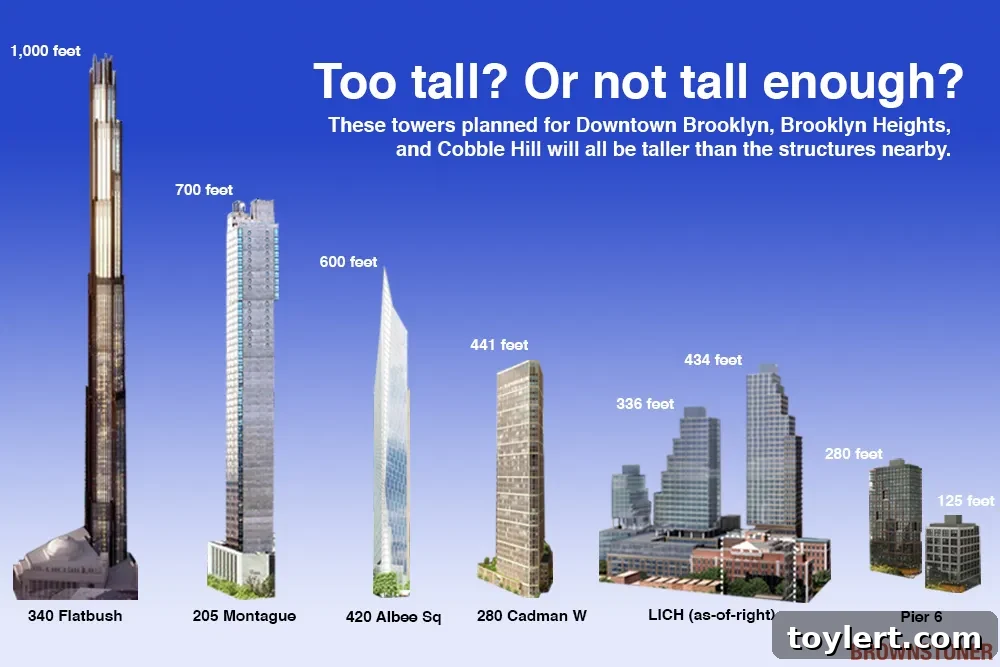
The recent announcement of a colossal 600-foot commercial building slated for 420 Albee Square, coupled with the staggering 1,000-foot-tall tower planned for 340 Flatbush Avenue Extension, brought into sharp focus the sheer scale of these impending changes. These aren’t just isolated projects; they are harbingers of a new era, pushing the boundaries of what Brooklyn’s urban landscape can accommodate and reshaping its visual identity for generations to come. The question is no longer if Brooklyn will build up, but how high, and at what cost to its cherished character and community fabric.
The Vertical Ascent of Downtown Brooklyn: A New Urban Frontier
Downtown Brooklyn, strategically positioned as a nexus of commerce, culture, and transit, has become the epicenter of this vertical expansion. For decades, it primarily served as a commercial and civic hub, but recent rezoning initiatives and a surge in demand have spurred a residential and mixed-use boom unparalleled in the borough’s history. The proposed tower at 340 Flatbush Avenue Extension, famously known as “The Brooklyn Tower” or “9 Dekalb Avenue,” is a prime example of this architectural ambition. Set to become the borough’s first supertall skyscraper and its tallest building, its design is a striking blend of historic preservation and futuristic vision, incorporating the landmark Dime Savings Bank into its base. This mixed-use marvel, upon completion, will not only offer unparalleled residential units with breathtaking panoramic views but also signify Brooklyn’s definitive arrival on the global stage of architectural innovation. Its sheer height and prominent location will irrevocably alter the visual identity of the borough, making it a prominent landmark visible from distant points across New York City and beyond.
Similarly, the development at 420 Albee Square, a key component of the larger City Point complex, further underscores Downtown Brooklyn’s evolution into a comprehensive urban center. While specific details regarding its exact commercial or residential mix are subject to ongoing planning and market demands, such projects typically integrate a dynamic combination of retail spaces, modern office environments, and diverse residential units. These developments aim to create vibrant, self-contained communities that contribute to a 24/7 urban experience. They attract major businesses, foster job creation, and solidify Downtown Brooklyn’s reputation as a dynamic destination for both living and working. The synergy between these new towers and the existing public infrastructure is paramount for the long-term sustainability and success of this concentrated growth, necessitating careful planning for transportation, utilities, and green spaces.
Beyond the Core: Borough-Wide Transformations and Their Impact
While Downtown Brooklyn leads the charge in vertical density, the impulse to build taller and denser extends to other strategic parts of the borough. Neighborhoods like Greenpoint, Long Island City (though technically in Queens, its proximity profoundly influences Brooklyn’s market), and areas around the sprawling Atlantic Yards/Pacific Park project have also seen significant high-rise construction. These developments often spark vigorous debates within the community, pitting the undeniable need for increased housing supply and economic development against critical concerns over gentrification, environmental impact, and the preservation of irreplaceable neighborhood character. The visual impact of these new towers—casting long shadows over existing communities, altering light conditions, and potentially overwhelming local infrastructure—is a common and deeply felt point of contention among long-time residents.
Navigating Controversy: The Social and Economic Ripple Effects
The “controversial” label attached to many of these proposed skyscrapers is well-earned and reflects genuine community anxieties. Critics frequently point to the exacerbation of Brooklyn’s already severe housing affordability crisis, arguing that these luxury high-rises do little to address the pressing needs of average Brooklynites struggling with perpetually rising rents. The influx of new, often affluent residents can significantly drive up property values and rents, leading to the displacement of long-term residents and cherished local businesses, fundamentally altering the social and economic fabric of neighborhoods. Furthermore, legitimate concerns about overpopulation, increased traffic congestion, and the strain on vital public services such as schools, parks, and public transportation systems are frequently raised, highlighting the complex challenges that accompany such rapid urban growth. Community groups often mobilize to advocate for more inclusive development, demand better infrastructure, and protect historic districts from being overshadowed or demolished by these new monoliths.
However, proponents argue that these developments are absolutely essential for Brooklyn’s continued vitality and economic competitiveness. They represent significant private investments, create thousands of construction jobs, and generate new tax revenues that can fund critical public services and infrastructure improvements. The modern, often architecturally significant, designs can also enhance Brooklyn’s image as a forward-thinking, cosmopolitan global city. Many projects include commitments to providing a percentage of affordable housing units, creating public open spaces, or contributing to community facilities, albeit often after intense negotiation and community advocacy. The profound challenge lies in striking a delicate balance: fostering necessary growth and architectural innovation while simultaneously ensuring that Brooklyn remains a diverse, accessible, and livable borough for all its residents, preserving its unique blend of history and modernity.
As these gargantuan structures increasingly pierce the Brooklyn sky, they serve as tangible symbols of a borough in perpetual motion and transformation. The multifaceted debates surrounding them are a microcosm of broader urban challenges facing major cities worldwide—how to manage growth sustainably, address socio-economic inequality, and preserve a distinct identity in the face of relentless global change. Brooklyn’s skyline will undoubtedly continue its upward trajectory, an enduring testament to its resilience, ambition, and the complex interplay of forces shaping its vibrant future.
Con Artists Target Longtime Homeowners: The Alarming Rise of Deed Fraud in Brooklyn
In the vibrant, fast-paced real estate market of Brooklyn, a sinister trend has been quietly eroding the financial security and peace of mind of long-term homeowners: deed fraud. Across historic and rapidly gentrifying neighborhoods like Bed Stuy, Crown Heights, Bushwick, and beyond, unscrupulous con artists, often cloaked behind layers of untraceable Limited Liability Companies (LLCs), are executing elaborate schemes to illicitly seize properties from unsuspecting residents. This predatory practice strips homeowners, many of whom have built significant equity and family legacies over decades, of their most valuable asset, often leaving them in devastating legal and financial limbo without their knowledge until it’s tragically too late to easily intervene.
Understanding the Mechanics of Deed Fraud: Deception and Forgery
Deed fraud is a sophisticated and malicious form of property theft that exploits vulnerabilities in the real estate transaction process and frequently targets individuals who may not be fully conversant with complex legal documents or inherently suspicious of seemingly legitimate, yet unsolicited, offers. The tactics employed by these fraudsters can broadly be categorized into two primary methods, each equally devastating in its outcome:
- Deceptive Signatures and Exploitation: In many cases, con artists actively approach homeowners, often specifically targeting the elderly, those facing significant financial distress (such as arrears in property taxes or mortgage payments), or individuals with limited English proficiency who may struggle to comprehend intricate legal jargon. They might offer “help” with mortgage issues, promise assistance with overdue property taxes, or even present what appears to be a quick cash offer for a “loan,” “investment opportunity,” or a “property survey.” Under these false pretenses, the homeowner is subtly coerced or tricked into signing documents that, unbeknownst to them, are actually a legal transfer of their property deed. These critical documents are often cunningly buried within a thick stack of confusing paperwork, presented under immense pressure, or outright misrepresented as something innocuous. Once signed, the fraudulent deed is rapidly filed with the city registrar’s office, granting the fraudsters ostensible legal ownership and control over the property.
- Forgery and Impersonation: A more brazen, and arguably more shocking, method involves the outright forgery of signatures on property deeds. Fraudsters might meticulously gather personal information through various illicit means, then proceed to create fake identification documents to convincingly impersonate the true homeowner. Equipped with these forged documents, they then illegally sign a new deed, transferring the property to themselves or, more commonly, to a shell LLC specifically created to obscure their identity. Crucially, the legitimate homeowner often remains entirely unaware that their property has been “sold” until they receive an unexpected eviction notice, discover unpaid property taxes from the new “owner,” or are alerted by a concerned neighbor about suspicious activity or changes in property status. The untraceable nature of many of these LLCs makes it incredibly difficult for law enforcement and victims alike to identify and pursue the perpetrators, adding another significant layer of complexity to these devastating cases.
Why Brooklyn? Targeting Vulnerable Communities with High Equity
The alarming prevalence of deed fraud in Brooklyn, particularly in historically Black and brown neighborhoods like Bed Stuy, Crown Heights, East Flatbush, and Brownsville, is no mere coincidence. These areas have experienced dramatic and rapid property value appreciation over the past decade, making them incredibly lucrative targets for opportunistic criminals. Many long-term residents in these neighborhoods are legacy homeowners, having inherited properties or purchased them decades ago at significantly lower prices. They often hold substantial equity in their homes, making their properties exceptionally attractive targets for thieves looking to quickly flip assets for massive, illicit profits. Furthermore, these communities may have a higher proportion of elderly residents or individuals who are less engaged with or knowledgeable about complex property records and legal processes, making them inherently more susceptible to sophisticated deceptive schemes.
The Devastating Impact on Victims: Loss, Distress, and Legal Battles
The consequences of deed fraud are nothing short of catastrophic for its victims. Homeowners can lose their cherished homes, their entire life savings (especially if they were tricked into “selling” for a fraction of market value), and their fundamental sense of security and trust. They are often forced into protracted, emotionally draining, and incredibly expensive legal battles to reclaim their rightful property, enduring immense emotional distress, psychological trauma, and severe financial hardship. The legal process to reverse a fraudulent deed can be incredibly complex and lengthy, requiring victims to conclusively prove they did not willingly or knowingly transfer their deed—a substantial legal burden that can be overwhelming for individuals already reeling from such a profound betrayal.
Protecting Your Home: Essential Safeguards Against Deed Fraud
While the threat of deed fraud is serious and pervasive, homeowners can and should take proactive, critical steps to protect themselves and their most valuable asset:
- Regularly Check Property Records: In New York City, homeowners are strongly encouraged to sign up for the Department of Finance’s ACRIS Property Alert system. This invaluable service notifies registered users via email or mail if any document—such as a new deed, mortgage, or lien—is recorded against their property. This acts as a crucial first line of defense against unauthorized transfers.
- Be Wary of Unsolicited Offers: Approach any unsolicited offers to buy your home, refinance your mortgage, or “help” with financial problems with extreme caution and skepticism. Fraudsters often initiate contact through cold calls, flyers, or door-to-door visits. Always consult with a trusted, independent attorney or reputable financial advisor before signing any documents or agreeing to any terms.
- Verify Identities and Credentials: If someone claims to represent a legal entity, government agency, or real estate firm, always verify their identity and credentials independently. Do not rely solely on the information or documents they provide. Look up their organization and contact them directly through publicly verified channels.
- Seek Independent Legal Counsel: This is perhaps the most crucial step. Always have an independent attorney—one you choose and trust, not one referred by the unsolicited party—review any and all documents related to your property before you sign them. This relatively small investment in legal fees can prevent a catastrophic loss of your home and savings.
- Keep Your Information Private: Be extremely cautious about sharing personal information, especially sensitive details about your property ownership, financial situation, or personal identity, with unknown individuals or suspicious websites. Be aware of phishing attempts and other scams.
- Understand LLCs: While legitimate businesses frequently use LLCs, be extra vigilant when an LLC is involved in an unexpected or unusual property transaction, especially if the origins or members of the LLC are opaque and difficult to verify.
The ongoing battle against deed fraud requires constant vigilance from homeowners, robust public awareness campaigns, and diligent enforcement from authorities. As Brooklyn continues its rapid evolution and economic growth, safeguarding its long-term residents from such malicious and life-altering practices is paramount to ensuring equitable and just development for all members of its diverse communities.