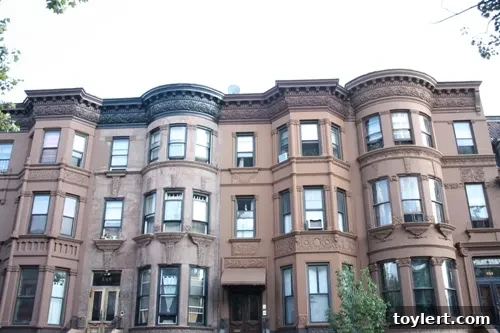
The historic streets of Bedford-Stuyvesant, Brooklyn, are once again at the center of a passionate debate, as a proposal to designate parts of the neighborhood as a new historic district moves forward. This initiative, designed to protect the area’s rich architectural heritage, has garnered enthusiastic support from many long-term residents and preservation advocates. However, it has also sparked significant opposition, particularly from community leaders who express serious concerns about the potential financial implications for local homeowners, especially those on fixed incomes.
The Heart of the Debate: Landmarking in Bed-Stuy’s Historic Core
Bedford-Stuyvesant, affectionately known as Bed-Stuy, stands as a testament to Brooklyn’s vibrant history, boasting an unparalleled collection of meticulously crafted 19th-century homes. These architectural gems, designed by renowned figures such as Montrose Morris, Magnus Dahlander, and Amzi Hill, create a distinctive streetscape that tells the story of a bygone era. The proposed Bedford Historic District aims to legally protect these invaluable structures from insensitive alterations, demolition, and the erosion of their original character. Proponents argue that such landmarking is crucial not just for preserving bricks and mortar, but for safeguarding the very soul and identity of the community, ensuring its unique charm endures for future generations.
A Voice of Opposition: Reverend Johnny Ray Youngblood’s Concerns
Amidst the strong wave of support, influential community voices have risen in opposition, articulating a profound apprehension about the practical consequences of historic designation. Reverend Johnny Ray Youngblood, a revered figure and the leader of Mount Pisgah Baptist Church in Bed-Stuy, has emerged as a prominent critic of the landmarking plan. His concerns, as reported by The New York Daily News, stem primarily from the potential economic burden it could place on homeowners. Youngblood vividly compared the landmarking initiative to the devastating impact of Hurricane Sandy, stating, “It feels like Sandy — it’s just gonna hit us and there’s no way to prepare against it.” This powerful analogy underscores a sense of helplessness and the fear that residents will be caught off guard by unforeseen financial demands.
Reverend Youngblood’s core argument revolves around the increased exterior repair costs that often accompany landmark status. He points out that homeowners, particularly seniors on fixed incomes, unemployed individuals, or families operating on tight budgets, may find it exceedingly difficult to afford these potentially higher expenses. While landmarking aims to preserve historic authenticity, critics fear it could inadvertently push long-time residents out of their homes. “When you’ve worked all your life to own a home, landmarking becomes an undeserved burden, especially in a bad economic climate like this,” he emphasized, reiterating that, “No matter how you look at it, it spells dollars and cents.” This perspective highlights the tension between preserving architectural heritage and ensuring the continued affordability and stability of homeownership for all community members.
Further compounding his objections, Reverend Youngblood also raised concerns about the timing of the public hearing scheduled to discuss the landmarking proposal. He noted that holding such a crucial meeting on Martin Luther King’s birthday, a federal holiday, and at a time that makes it challenging for working individuals to attend, demonstrates a lack of consideration for the very community it seeks to impact. This procedural critique adds another layer to the opposition, suggesting that the process itself might not be as inclusive or accessible as it should be.
The Gentrification Question: Broader Socioeconomic Impacts
The debate around landmarking in Bed-Stuy extends beyond immediate repair costs, touching on the complex and often contentious issue of gentrification. Reggie Shell, one of the founders of the esteemed Brownstoners of Bedford-Stuyvesant, articulated this broader concern, stating unequivocally, “Landmarking is part of gentrification.” He believes that while historic preservation may seem benign, its indirect effects can contribute to rising property values and increased taxes, ultimately making the neighborhood unaffordable for its long-standing middle-income residents. The fear is that the very act of enhancing an area’s desirability through preservation can inadvertently lead to displacement, pushing out the very people who have nurtured the community for decades.
This perspective suggests that landmarking, rather than protecting all aspects of a community, might prioritize aesthetic and historical integrity over economic inclusivity. As property values climb, driven in part by renewed interest in historic areas, the cost of living—from housing to local businesses—can become prohibitive for existing residents. This creates a challenging dilemma: how to safeguard architectural heritage without inadvertently catalyzing socioeconomic shifts that displace the very people who have historically defined the neighborhood’s character. The debate in Bed-Stuy thus becomes a microcosm of a larger national conversation about balancing urban development, historic preservation, and equitable community growth.
Strong Currents of Support for Preservation
Despite the vocal opposition, there is a powerful and organized movement within Bed-Stuy in favor of the landmarking initiative. This support comes predominantly from homeowners and preservation groups who recognize the long-term value and inherent beauty of their neighborhood’s architectural legacy. Claudette Brady of the Bedford-Stuyvesant Society for Historic Preservation, a leading advocate for the designation, underscored the widespread enthusiasm, telling The New York Daily News, “We’ve gone door-to-door — and hundreds of homeowners have told us they support landmarking.” This grassroots effort highlights a deep-seated desire among many residents to protect their community’s unique identity from the pressures of uncontrolled development.
Last year, the proposed Bedford Historic District area received what was described as “overwhelming support” for landmarking. This is hardly surprising, given that the district is celebrated as one of Brooklyn’s most architecturally rich neighborhoods. Its streets are lined with elaborate 19th-century brownstones and rowhouses, masterpieces designed by the era’s most famed architects. The intricate details, grand facades, and timeless elegance of these homes are not just aesthetically pleasing; they embody a significant chapter in New York City’s architectural and social history. For supporters, landmarking is an essential tool to ensure that these irreplaceable structures are not lost to neglect or insensitive modernizations, thereby preserving the visual and cultural continuity of the neighborhood.
Proponents also argue that landmarking contributes to the stability and enhancement of property values in the long run. By maintaining a cohesive and aesthetically appealing historic environment, the district becomes more attractive to potential buyers who appreciate its unique character, leading to sustained demand and investment. Beyond financial considerations, the preservation of these historic homes fosters a strong sense of community pride and identity, transforming the neighborhood into a living museum that educates and inspires both residents and visitors alike. This investment in heritage is seen not as a burden, but as a commitment to the enduring legacy and future prosperity of Bed-Stuy.
Clarifying the Realities of Landmarking: Dispelling Misconceptions
The ongoing discourse often brings to light common misconceptions about what landmarking truly entails. From the perspective of many preservationists and informed observers, the concerns about astronomical repair costs are frequently exaggerated. While it is true that exterior alterations on landmarked properties require approval from the Landmarks Preservation Commission (LPC), this process is not inherently designed to be punitive or excessively burdensome. The core principle is to ensure that changes are appropriate and sympathetic to the historic character of the building, not to compel homeowners into extravagant restorations they cannot afford.
A prime example often cited is the issue of windows, which can be one of the most significant exterior expenses. Critics fear that landmarking will force homeowners to install prohibitively expensive historically accurate windows. However, as experience shows, the LPC often demonstrates flexibility. For instance, if non-historic replacement windows were already present on a property before it was landmarked, the LPC will typically allow similar non-historic replacements when the time comes for new windows. Moreover, while a full restoration might seem costly upfront, the long-term benefits of restoring original, high-quality windows—in terms of durability, energy efficiency, and maintaining historical value—can often make it a more economical choice than repeated replacements of inferior modern units. The author’s personal experience echoes this sentiment: “At least, that’s been our experience,” suggesting that practical and affordable solutions are often available.
Crucially, landmarking primarily serves as a protective measure against drastic and detrimental changes. It does not compel homeowners to undertake immediate, costly restorations of well-maintained properties. Instead, it provides a framework for responsible stewardship, ensuring that when work *is* done, it respects the building’s historical context. The most significant benefit, often overlooked in cost debates, is its power to prevent the irreversible “ruining of the streetscape” by developers. As Bed-Stuy resident and preservationist Reno Dakota aptly summarized, preventing such degradation “is to no one’s advantage.” By establishing clear guidelines, landmarking helps maintain the aesthetic coherence and integrity of the neighborhood, safeguarding its distinct character from speculative development that prioritizes profit over preservation.
Development and Speculation in a Shifting Landscape
The debate surrounding landmarking in Bed-Stuy occurs against a backdrop of intense real estate activity. In recent years, developers have increasingly targeted neighborhoods like Bed-Stuy, buying up historic homes at relatively low prices. These properties are then often subjected to quick, sometimes superficial, renovations before being “flipped” and sold for significantly higher sums—often twice the initial purchase price. This rapid turnover and profit-driven approach, while generating economic activity, can have disruptive effects on the existing community. It fuels speculation, drives up housing prices, and can make homeownership unattainable for new generations of residents, contributing to the very gentrification concerns voiced by Reggie Shell.
Landmarking steps into this dynamic as a crucial regulatory tool. While it doesn’t halt development entirely, it introduces a necessary layer of oversight that can temper unchecked speculation. By requiring approval for exterior alterations, landmarking ensures that even when properties change hands, their historic integrity is maintained. This prevents developers from stripping away original features, demolishing significant structures, or making insensitive additions that might maximize profit in the short term but irrevocably damage the neighborhood’s long-term character. In essence, landmarking seeks to balance the forces of the market with the imperative of preserving cultural and architectural heritage, ensuring that development contributes positively to the community rather than eroding its unique essence.
Navigating the Future: Community, Preservation, and Progress
The discourse in Bed-Stuy surrounding landmarking is a microcosm of the complex challenges faced by historic urban neighborhoods across the globe. It highlights the inherent tension between the desire to preserve irreplaceable architectural heritage and the legitimate concerns of residents about affordability, economic burden, and the pace of neighborhood change. Voices like Reverend Youngblood’s are crucial in ensuring that preservation efforts do not inadvertently marginalize existing communities, while advocates like Claudette Brady underscore the profound communal value of protecting historic districts.
Ultimately, the path forward for Bedford-Stuyvesant lies in fostering a continuous, open, and inclusive dialogue. It requires thoughtful urban planning that seeks to balance the benefits of preservation—such as enhanced property values, tourism, and a strong sense of place—with strategies to mitigate potential negative impacts, like rising costs and gentrification. By understanding the nuances of landmarking regulations and actively engaging with community concerns, Bed-Stuy can strive to achieve a future where its rich history is preserved, its architectural treasures are cherished, and its diverse community remains vibrant and resilient for generations to come. This ongoing conversation is essential to shape a future that truly serves the best interests of all who call this remarkable neighborhood home.
Bed Stuy Landmarking Draws Protest [NY Daily News]
Mark Your Calendars for the Bedford HD Public Hearing [Brownstoner]
LPC Looks to Landmark Bed Stuy Bedford District [Brownstoner]