The Resurrection of a Landmark: Sunset Park’s Historic 68th Precinct Poised for Vibrant Revival
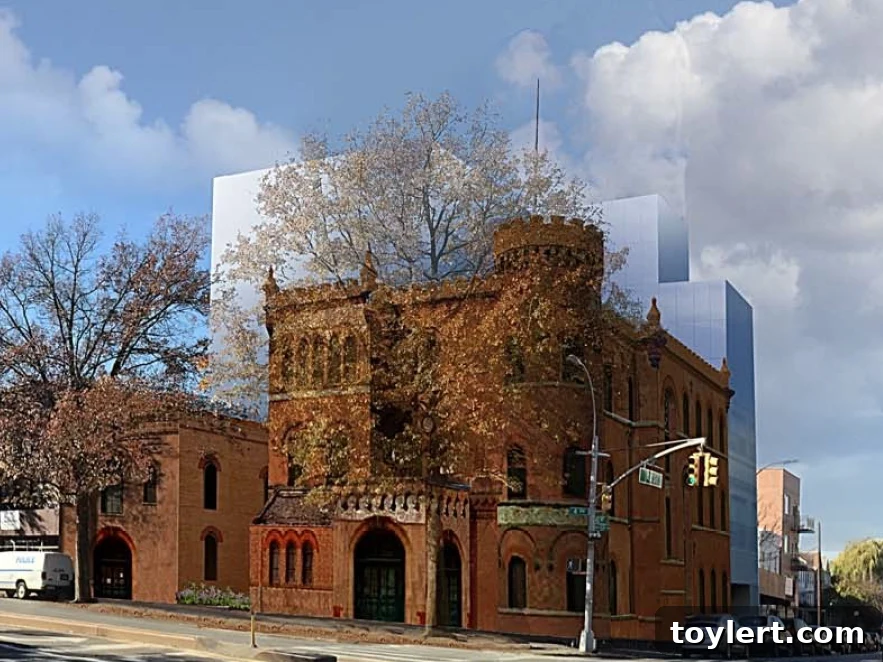
For decades, the stately but slowly decaying 68th Precinct building in Brooklyn’s vibrant Sunset Park neighborhood has stood as a silent testament to a bygone era. Its once-proud turrets and robust brickwork whispered tales of a bustling community, but its abandonment cast a long shadow over its potential. Now, after years of neglect, this architectural gem, located at 4302 4th Avenue, is finally on the precipice of a magnificent restoration, promising to breathe new life into its historic halls and the surrounding community.
The journey towards revival began with a significant acquisition in July when investor Yosef Streicher purchased the property for $6,000,000 from an undisclosed seller. Streicher’s ambitious vision for the crumbling landmark goes far beyond mere renovation; it encompasses a multi-faceted transformation designed to honor its past while serving the contemporary needs of Sunset Park residents. The proposed plans include an upscale cafe on the main building’s lower level, a much-needed community center within the former stables, and a cluster of ten luxury condominiums on an adjacent site, creating a dynamic new hub for the neighborhood.
A Glimpse into the Past: The 68th Precinct’s Enduring Legacy
Built in the late 19th or early 20th century, the 68th Precinct building stands as a remarkable example of institutional architecture from that period. Its distinctive features, including prominent turrets, intricate brickwork, and a commanding presence on 4th Avenue, reflect the architectural trends of its time, often blending Romanesque Revival and Queen Anne elements. For generations, this building was more than just a police station; it was a cornerstone of public safety and a symbol of civic order in a rapidly growing Brooklyn. Its walls have witnessed countless stories, from daily police operations to community gatherings, embedding it deeply into the fabric of Sunset Park’s history.
However, like many historic structures in New York City, the building eventually outlived its original purpose or became too costly to maintain in its existing state. Decades of vacancy took their toll, leaving the once-grand edifice in a state of disrepair. Windows became boarded, facades weathered, and its interior succumbed to the ravages of time and neglect. Yet, even in its deteriorated state, its architectural majesty and inherent historical value were undeniable, prompting local preservationists and community advocates to champion its cause for restoration.
The Vision Unveiled: Adaptive Reuse for a Modern Era
Yosef Streicher’s development plan represents a thoughtful approach to adaptive reuse, a strategy that preserves historic buildings by repurposing them for new functions. This method is particularly celebrated in urban centers like Brooklyn, where it allows communities to retain their unique character and architectural heritage while accommodating contemporary needs. The proposed integration of a cafe, community center, and residential units within and around the former precinct is designed to create a symbiotic relationship, fostering both commercial vitality and social cohesion.
The ground-floor upscale cafe is envisioned as a vibrant gathering spot, offering residents and visitors a sophisticated space for dining and socializing. Such establishments often become cultural anchors, drawing people into the area and contributing to the local economy. Coupled with this, the community center in the erstwhile stable structure promises to be a vital asset. It could host a variety of programs, from educational workshops and art classes to local meetings and social events, providing a much-needed inclusive space for people of all ages to connect and thrive.
The addition of ten luxury condominiums on a neighboring site introduces a residential component, catering to the growing demand for housing in Brooklyn. While the term “luxury” often sparks discussions about gentrification and affordability, the careful integration of these units alongside public-facing amenities like the cafe and community center aims to balance private development with public benefit. The hope is that the project will attract new residents and investment, further enhancing the neighborhood’s appeal while providing tangible resources for existing inhabitants.
Clarifying the Renderings: A Commitment to Preservation
Initial excitement surrounding the project was momentarily clouded by a misunderstanding regarding early architectural renderings. When these images were first published, some outlets misinterpreted them, leading to concerns about the potential for overly modern, incongruous additions, specifically a “glass cube” structure that seemed to clash with the building’s historic aesthetic. Architect Ben Herzog, whose firm is leading the design, quickly clarified the situation.
Speaking to Brownstoner, Herzog emphatically stated, “We’re not proposing a glass cube.” His clarification was crucial in reassuring the public and preservation advocates that the restoration would remain true to the building’s architectural integrity. Herzog’s approach emphasizes a delicate balance: respectfully restoring the original structure while subtly integrating modern elements where necessary for functionality and contemporary living, without overshadowing its inherent character. This commitment to maintaining the historical luster of the 68th Precinct building is paramount to the project’s success and its acceptance by the community.
Sunset Park: A Neighborhood in Flux
The restoration of the 68th Precinct building is particularly significant given the ongoing evolution of Sunset Park. Historically a working-class immigrant neighborhood with strong industrial roots along its waterfront, Sunset Park has experienced considerable change over the past two decades. Its rich cultural diversity, stunning waterfront views (including sunsets over the Manhattan skyline and the Statue of Liberty, from which the neighborhood derives its name), and increasingly attractive housing stock have made it a desirable location for new residents and businesses.
This development, while bringing economic opportunities and new amenities, also raises important questions about gentrification, affordability, and the preservation of neighborhood character. Projects like the 68th Precinct restoration walk a fine line, aiming to catalyze positive growth while honoring the existing community. By incorporating a community center, the developers are signaling an intention to provide direct benefits to current residents, fostering a sense of ownership and belonging that is crucial in times of rapid change.
The Intricacies of Historic Restoration: Challenges and Triumphs
Undertaking a project of this magnitude – restoring a multi-story, century-old building with significant structural decay – presents numerous challenges. From navigating complex city permitting processes and historic preservation guidelines to addressing unforeseen structural issues and integrating modern utility systems into an old shell, every step requires meticulous planning and expert execution. Historic structures often require specialized craftsmen to repair ornate details, original masonry, and period-specific elements, adding to the complexity and cost.
Moreover, striking the right balance between preserving historical authenticity and incorporating modern conveniences (such as energy efficiency, accessibility, and new technologies) is an art form. Architects and developers must collaborate closely with preservation committees and community stakeholders to ensure that the final design respects the past while serving the present and future. The successful restoration of the 68th Precinct will not only rescue a significant piece of Sunset Park’s history but also serve as a model for future adaptive reuse projects across Brooklyn and beyond.
Looking Ahead: A Beacon of Renewal for Sunset Park
As the plans for the 68th Precinct move forward, the anticipation within Sunset Park is palpable. This project represents more than just a real estate development; it embodies the spirit of renewal and the enduring value of history within a dynamic urban landscape. The transformation of a derelict police station into a vibrant cafe, a bustling community hub, and elegant residences promises to be a significant moment for the neighborhood.
The restoration offers a compelling narrative of how architectural heritage, when approached with vision and sensitivity, can continue to enrich modern urban life. It speaks to the possibility of blending old and new, commercial and communal, private and public, to create spaces that are both economically viable and deeply rooted in their local context. When completed, the revitalized 68th Precinct will stand once again as a proud landmark, a testament to Sunset Park’s resilience and its bright, multifaceted future.