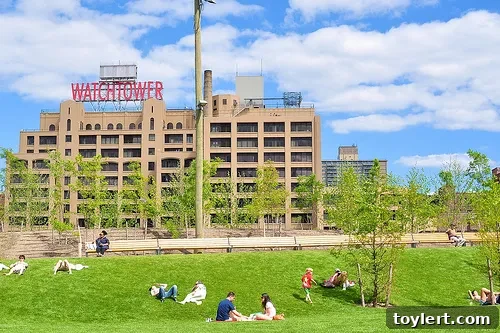
The Billion-Dollar Opportunity: Unpacking the Watchtower’s Brooklyn Real Estate Sale
The impending sale of the Watchtower Bible and Tract Society’s extensive real estate portfolio in Brooklyn stands as a monumental event, poised to reshape the borough’s landscape and generate significant economic activity. This divestment by the Jehovah’s Witnesses, moving their global headquarters upstate, has captured the attention of real estate titans, urban planners, and local officials alike. Valued at over $1 billion and encompassing a staggering 3.2 million square feet across prime Brooklyn locations, these properties represent an unparalleled opportunity in one of the world’s most dynamic real estate markets.
The sheer scale and strategic positioning of these holdings underscore their immense value. For decades, the Watchtower organization has been a prominent fixture in Brooklyn, particularly in neighborhoods like Dumbo and Brooklyn Heights. Their collection of buildings, ranging from residential towers to industrial facilities and offices, offers a diverse array of redevelopment possibilities. This article delves into the potential impacts of this historic sale, exploring who stands to benefit, the types of development likely to emerge, and the broader implications for Brooklyn’s future.
A Strategic Move: Watchtower’s Transition to Warwick
The catalyst for this colossal property sale is the Watchtower Bible and Tract Society’s strategic decision to relocate its world headquarters from bustling Brooklyn to a quieter, purpose-built campus in Warwick, upstate New York. This move, years in the making, aims to consolidate their operations, enhance efficiency, and provide a more serene environment conducive to their spiritual and administrative work. While the exact timeline for their complete departure from Brooklyn has been subject to some fluidity, the organization has been diligently working towards this transition.
A significant milestone in this process involves the submission of their final environmental impact study to Warwick authorities. This crucial step signals that the organization is nearing clearance to proceed with the construction and full establishment of their new campus. Once cleared, the momentum for the full divestment of their Brooklyn assets is expected to accelerate, unleashing these prized properties onto the market. The move reflects a broader trend among large institutions seeking to optimize their operational footprints, but few such transitions come with real estate portfolios as extensive and valuable as the Watchtower’s in Brooklyn.
Who Benefits? A Multitude of Stakeholders
The sale of the Watchtower’s Brooklyn properties is not merely a transaction; it’s an economic ripple effect with benefits poised to touch various sectors and stakeholders. The immediate and most apparent beneficiary will be the **City of New York**. These properties, previously tax-exempt under the Watchtower’s religious status, will transition to taxable entities upon sale. This conversion will inject substantial new property tax revenue into the city’s coffers annually, providing a crucial boost to public services and infrastructure projects. Beyond direct taxes, the subsequent development activities will generate construction jobs, permit fees, and increased economic activity, further enriching the city’s economy.
Developers Eyeing Prime Residential and Commercial Opportunities
The real estate development community has been keenly observing the Watchtower’s portfolio for years. Residential developers, in particular, view these properties as an extraordinary opportunity. With Brooklyn’s housing market consistently strong and demand for luxury residential units soaring, sites with waterfront views, spacious layouts, and historic charm are exceptionally enticing. An executive from Toll Brothers, a renowned residential developer, specifically highlighted the Dumbo properties as “especially enticing.” These properties offer the potential for high-end condominium conversions or ground-up new construction, catering to affluent buyers drawn to Brooklyn’s unique blend of urban sophistication and neighborhood charm.
The appeal for residential development stems from several factors: the sheer size of the parcels, allowing for large-scale projects; the robust demand for housing in Brooklyn, driven by its cultural vibrancy, excellent transportation links, and quality of life; and the potential for creating iconic buildings that capitalize on stunning views of the Manhattan skyline, the Brooklyn Bridge, and the East River. These developments would not only provide much-needed housing but also significantly contribute to the aesthetic and economic fabric of their respective neighborhoods.
Institutional Players: Universities and Senior Housing Operators
Beyond residential developers, other significant players are showing interest. A spokesman for the Jehovah’s Witnesses themselves indicated that many of the buildings could be suitable for universities or senior housing operators. This insight points to the versatility of the Watchtower’s portfolio. For **universities**, particularly those with growing student populations or ambitions to expand their urban campuses, these properties offer large, contiguous spaces that can be adapted for academic facilities, student housing, or administrative offices. The prestige of a Brooklyn location, coupled with potential for integrated campus living, makes these sites highly attractive for institutions looking to establish or grow their presence in New York City.
Similarly, **senior housing operators** are a natural fit for certain Watchtower properties. With an aging population and increasing demand for high-quality senior living facilities, especially those offering a continuum of care, these large buildings could be repurposed. The proximity to amenities, cultural institutions, and healthcare services in Brooklyn would be a major draw for residents and their families. Furthermore, the existing infrastructure within some Watchtower buildings, which historically housed a community, could be adapted for senior living with less extensive renovation compared to other types of properties.
Commercial and Hospitality Ventures: A Vision for Economic Hubs
Former Brooklyn Borough President Marty Markowitz, a vocal advocate for Brooklyn’s growth and economic development, has also weighed in on the potential uses for these properties. He suggested that sites zoned for commercial use could be transformed into hotels or significant economic development hubs. Brooklyn has witnessed a tourism boom in recent years, with visitors drawn to its unique neighborhoods, culinary scene, and cultural attractions. New hotels, particularly boutique or luxury establishments, would cater to this growing demand, providing accommodation and further boosting the local economy through job creation and increased tourist spending.
Transforming some of these properties into economic development hubs aligns perfectly with Brooklyn’s evolution as a global center for innovation, technology, and creative industries. Large commercial spaces could house corporate offices, co-working facilities, research centers, or incubators, attracting businesses and fostering job growth. This would reinforce Brooklyn’s position as a vibrant economic powerhouse, diversifying its industrial base beyond traditional sectors and creating a dynamic environment for businesses to thrive.
The Undeniable Allure of Dumbo
Among the Watchtower’s vast holdings, the properties situated in Dumbo (Down Under the Manhattan Bridge Overpass) hold a particularly magnetic appeal. Dumbo has undergone a dramatic transformation over the past few decades, evolving from an industrial wasteland into one of Brooklyn’s most sought-after and expensive neighborhoods. Its cobblestone streets, converted warehouse lofts, stunning waterfront parks (including parts of Brooklyn Bridge Park), and unparalleled views of the Manhattan skyline and both the Brooklyn and Manhattan Bridges make it a truly unique urban enclave.
The “especially enticing” nature of the Dumbo properties, as noted by developers, comes from several factors. Firstly, the neighborhood’s established reputation as a tech hub, arts district, and high-end residential area means there’s a proven market for luxury real estate. Secondly, the intrinsic architectural character of the existing Watchtower buildings often includes spacious layouts, high ceilings, and robust construction, ideal for conversion into expansive lofts or modern office spaces. Thirdly, the limited availability of developable land in such a prime location makes any large-scale offering exceptionally valuable. Acquiring Watchtower parcels in Dumbo provides developers with a rare opportunity to significantly impact and capitalize on one of New York City’s most dynamic and prestigious neighborhoods.
A Legacy of Transformation for Brooklyn’s Waterfront
The sale of the Watchtower’s real estate assets marks not just a transaction but a significant chapter in Brooklyn’s ongoing urban transformation. For over a century, the Jehovah’s Witnesses have been an integral part of the Brooklyn landscape, their iconic buildings standing as silent witnesses to the borough’s growth and evolution. Their departure, while marking the end of an era, simultaneously heralds the beginning of a new one for these storied properties.
The eventual redevelopment of these 3.2 million square feet will undoubtedly redefine sections of Brooklyn’s waterfront, influencing everything from architectural styles to demographic shifts and economic trajectories. The careful planning and execution of these projects will be crucial to ensuring that the new developments integrate seamlessly with existing communities while contributing positively to Brooklyn’s future as a vibrant, inclusive, and economically robust global city. The dream, as articulated by Crain’s New York, is indeed big, reflecting the immense potential these properties hold for Brooklyn’s continued prosperity and evolution.
Jehovah’s Witnesses’ Land Sell-Off Has Brooklyn Dreaming Big [Crain’s]
Photo by Shawn Hoke Photography