New York’s Affordable Housing Crisis: Unpacking Rent Regulation and the Urstadt Law Debate
New York City, a global icon of opportunity and cultural diversity, is currently grappling with an escalating affordable housing crisis that poses a significant threat to its social and economic stability. The relentless rise in housing costs, coupled with incomes that struggle to keep pace, has pushed the issue of housing affordability to the forefront of political discourse and community concern. Central to this complex challenge are the state’s intricate rent regulation laws—critical safeguards designed to protect tenants and preserve a measure of affordability within an intensely competitive real estate market. With these vital protections slated to expire this summer, the New York State Senate faces momentous decisions that will profoundly shape the housing landscape for millions of residents and influence the future trajectory of housing stability across the entire state.
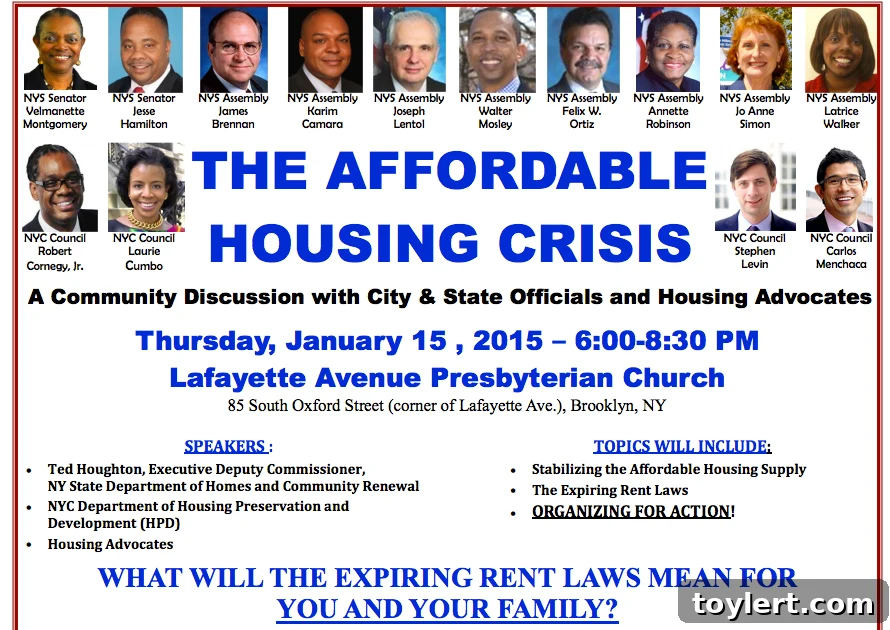
In light of this impending legislative deadline and the urgent need for widespread public engagement, State Senator Velmanette Montgomery has taken the initiative to organize a crucial public conference. This pivotal gathering is designed to thoroughly examine how potential alterations to, or the complete expiration of, current rent regulation statutes could impact tenants, landlords, and the broader housing ecosystem. Scheduled for January 15, the conference serves as an essential forum for bringing together community members, dedicated tenant advocates, and influential policymakers to openly discuss the far-reaching ramifications of these upcoming legislative choices, with a particular focus on the contentious 1971 Urstadt Law.
The Looming Deadline: Why Rent Regulation Laws are Under Scrutiny
For decades, New York’s rent regulation laws have stood as a foundational element of its housing policy, offering a crucial safety net for countless tenants against the pressures of rapidly increasing rents and unjust evictions. These comprehensive laws, which primarily comprise rent control and rent stabilization, not only cap permissible rent increases for designated apartments but also provide tenants with augmented protections, including guaranteed rights to lease renewals. Such regulations are particularly indispensable in high-demand, high-cost urban centers like New York City, where unchecked market forces would otherwise drive rents to levels that remain unattainable for a substantial segment of the population, leading to widespread displacement and socioeconomic stratification.
The existing legal framework governing these crucial regulations is set to expire this summer, creating an palpable sense of urgency among tenant advocacy organizations, community leaders, and affected residents. The New York State Senate is confronted with a critical deadline of June 15 to deliberate and decide on the renewal, potential modification, or the concerning possibility of allowing these essential protections to lapse. The outcome of this legislative process extends far beyond a specific demographic; it will directly determine the housing security for millions of New Yorkers, impacting everything from the vibrant diversity of neighborhoods to the fundamental economic stability of the entire metropolitan region and beyond.
The Urstadt Law: A Decades-Long Battle for Local Control
A central and often fiercely debated component of the broader housing discussion is the 1971 Urstadt Law. This specific piece of legislation enacted a pivotal shift, transferring the authority over rent regulation from New York City’s municipal government to the New York State government. For decades since its enactment, city officials, urban planners, and tenant advocates have consistently argued that the Urstadt Law significantly impedes the city’s ability to effectively address its unique and pressing housing challenges. They contend that it severely restricts the city’s capacity to implement more robust, locally-tailored tenant protections that are responsive to the specific dynamics of its distinct housing market.
Advocates for the repeal of the Urstadt Law assert that local control is not merely preferable but absolutely essential for the formulation and execution of effective housing policy. New York City’s housing market is fundamentally distinct and operates under pressures markedly different from other areas within the state. Granting the city the autonomous authority to craft and enforce its own rent regulations would enable more immediate, flexible, and responsive solutions to the unique affordability crises faced by its residents. Mayor Bill de Blasio has been a prominent and vocal proponent for the repeal of the Urstadt Law throughout his tenure, staunchly maintaining that local governance is inherently best positioned to comprehensively understand and effectively mitigate the severe housing affordability issues present within its own jurisdiction. His administration, supported by a significant number of City Council members, firmly believes that the restoration of local control is an indispensable step towards fostering a more equitable, stable, and sustainable housing environment for all New Yorkers.
A United Front: The January 15th Conference “The Affordable Housing Crisis”
The upcoming conference, meticulously organized by State Senator Velmanette Montgomery, is poised to be a watershed moment in mobilizing public awareness and driving informed legislative action. Aptly titled “The Affordable Housing Crisis,” this crucial meeting is designed to serve as a vital forum for a broad spectrum of stakeholders. It is scheduled to convene on January 15, running from 6 pm to 8:30 pm, at the venerable Lafayette Avenue Presbyterian Church, located at 85 South Oxford Street. The deliberate choice of this community-rooted venue itself powerfully underscores the localized and collective nature of the housing crisis, emphasizing that a unified, community-driven effort is paramount to successfully addressing its complexities.
The distinguished roster of attendees for the conference powerfully highlights the profound significance of the event and the expansive political will to confront the housing crisis head-on. Mayor Bill de Blasio’s confirmed participation signals the strong commitment of the executive branch to this issue, particularly his administration’s unwavering advocacy for the repeal of the Urstadt Law. Alongside Senator Montgomery herself, other influential state senators, including Senator Hamilton, will be present, offering crucial perspectives and insights gleaned from the legislative sphere. The attendance of City Council members Laurie Cumbo, Stephen Levin, Carlos Menchaca, and Robert Cornegy Jr. guarantees that the pressing concerns and innovative proposed solutions originating from the municipal level will be comprehensively represented and debated. Furthermore, the contributions from State Assembly members Joe Lentol, Walter Mosley, and Felix Ortiz will enrich the dialogue, effectively bridging state and local legislative efforts into a cohesive conversation.
This gathering is conceived to transcend the typical boundaries of a mere political meeting; it is envisioned as a community town hall meticulously designed to empower tenants, thoroughly educate the broader public, and actively foster a collaborative and multi-faceted approach to urgent policy reform. Attendees will be provided with an invaluable opportunity to delve into the intricate complexities of rent regulation, gain a profound understanding of the far-reaching implications of the Urstadt Law, and articulate their concerns directly to their elected representatives. Such direct and transparent engagement is unequivocally crucial for shaping legislation that genuinely and authentically reflects the diverse needs and aspirations of the constituents it is intended to serve.
Demystifying Rent Regulation: A Pillar of Housing Stability
To fully appreciate the profound stakes involved in the upcoming legislative decisions, it is imperative to thoroughly understand the fundamental mechanics and historical evolution of rent regulation in New York. The state’s protective housing system primarily consists of two distinct yet interconnected components: rent control and rent stabilization.
- Rent Control: This older, more stringent form of regulation typically applies to residential buildings constructed before 1947, specifically where a tenant has maintained continuous residency since July 1, 1971. Rent control imposes strict limits on rent increases, usually tying them to specific percentages or directly linked to property tax increases or operational costs. Critically, it offers exceptionally robust tenant protections against eviction, ensuring long-term housing security. As rent-controlled apartments eventually become vacant, they typically transition into the rent stabilization system.
- Rent Stabilization: Introduced in 1969, rent stabilization encompasses a much broader array of apartments. This includes, but is not limited to, units in buildings constructed between 1947 and 1974, or buildings with six or more residential units constructed after 1974 if they have received specific tax benefits. Under the framework of rent stabilization, annual rent increases are determined and set by the Rent Guidelines Board, an independent city agency, and tenants are legally entitled to automatic lease renewals. These protections are absolutely vital for preventing widespread displacement, ensuring a degree of predictability in housing costs, and safeguarding the living standards of millions of New Yorkers.
The fundamental and overarching objective of these comprehensive regulations has consistently been to curb speculative practices, prevent predatory price gouging, and ensure that a vibrant and economically diverse population can continue to reside and thrive within the dynamic environment of New York. In the absence of such regulations, the unchecked forces of an intensely competitive urban housing market would inevitably lead to a rapid and unsustainable escalation of rents, systematically pushing out low- and middle-income residents, irrevocably eroding neighborhood diversity, and ultimately inflicting severe harm upon the city’s essential economic and social vitality.
The Dire Consequences: What Happens if Laws Expire or Weaken?
The looming possibility of rent regulation laws expiring or being significantly weakened represents an existential threat to countless New Yorkers, potentially unraveling decades of progress in housing justice. Should the State Senate fail to adequately renew these crucial protections, or if it enacts less stringent versions, the repercussions would be immediate, widespread, and devastating:
- Catastrophic Rent Increases: Without regulation, landlords of formerly protected units would gain unfettered ability to raise rents dramatically, potentially doubling or even tripling them within a very short timeframe. This would be financially ruinous for the millions of tenants who currently rely on regulated rents to afford their homes and maintain their livelihoods.
- Widespread Displacement and Homelessness: Faced with unaffordable market-rate rents, an unprecedented number of tenants would be forced out of their homes and established neighborhoods. This would inevitably lead to mass displacement, a significant surge in homelessness, and a further exacerbation of the existing wealth gap.
- Accelerated Gentrification: The removal of rent regulations often acts as a catalyst for rapid gentrification, fundamentally altering the character, culture, and demographics of long-established neighborhoods by displacing long-time residents and undermining local small businesses.
- Profound Economic Instability: The forced exodus of working-class and middle-class residents would severely deplete the city’s vital workforce, negatively impact local economies across all sectors, and place an immense, unsustainable strain on critical social services and infrastructure.
- Irreversible Loss of Housing Diversity: New York’s iconic and vibrant mix of cultures, income levels, and professions—a defining characteristic that has always made the city unique—would be severely diminished, transforming it into an increasingly exclusive and homogenous enclave accessible only to the wealthy.
The current debate extends far beyond mere renewal; a powerful coalition of advocates is passionately pushing for a substantial strengthening of existing laws. Their proposals include closing detrimental loopholes like “vacancy decontrol” (which currently allows landlords to significantly raise rents once a stabilized apartment becomes vacant) and actively expanding protections to cover a greater number of residential units. The overarching goal is not simply to maintain the existing status quo, but to proactively and decisively address the deepening housing crisis with bold, forward-thinking policy solutions.
The Path Forward: Sustained Advocacy and Decisive Legislative Action
The “Affordable Housing Crisis” conference on January 15 represents a crucial initial step in a much broader, ongoing, and determined battle for comprehensive housing justice across New York. Tenant unions, dedicated community organizations, and progressive politicians are actively engaged in robust advocacy efforts, diligently lobbying state legislators, meticulously organizing public rallies, and tirelessly educating the broader public about the intricacies of the issue. Conversely, the powerful real estate industry and influential landlord associations represent an equally formidable force, consistently arguing for reduced regulation to stimulate investment, maintain robust property values, and ensure profitability.
The ultimate decision rendered by the New York State Senate will necessitate a delicate yet decisive balancing act between these often-competing interests. However, at its core, this decision must unequivocally prioritize the fundamental well-being and long-term stability of its constituents. This critical debate transcends mere economic considerations; it is fundamentally about human dignity, the preservation of vibrant communities, and the inherent right to access safe, stable, and truly affordable housing.
Conclusion: A Call for Unified Action in a Defining Moment
The impending expiration of crucial rent regulation laws and the persistent, vigorous push to repeal the antiquated Urstadt Law collectively represent an unprecedented and critical juncture for the future of housing in New York. The “Affordable Housing Crisis” conference, masterfully spearheaded by State Senator Velmanette Montgomery, stands as an absolutely essential platform for this vital and far-reaching discussion. It successfully brings together a diverse array of key political figures and deeply invested community members to strategically plan and collaboratively work towards safeguarding and strengthening essential tenant protections within a city increasingly defined by its formidable housing challenges.
The collective voices that will undoubtedly be raised and amplified at this conference, coupled with sustained, diligent advocacy and unyielding legislative pressure, will prove instrumental in ensuring that the pivotal decisions made in Albany genuinely reflect the urgent, diverse needs and aspirations of New York’s myriad communities. As the critical June 15 deadline rapidly approaches, the very future of affordable housing hangs precariously in the balance, demanding not only informed debate and proactive policy-making but also unified and decisive action to secure a stable, equitable, and sustainable living environment for every single New Yorker. Community members are therefore strongly and unequivocally encouraged to actively participate in this crucial dialogue by promptly RSVPing to Senator Montgomery’s office at 718-643-6140 or by sending an email to [email protected], thereby ensuring their invaluable voices are heard during this defining and transformative moment for New York’s housing policy.