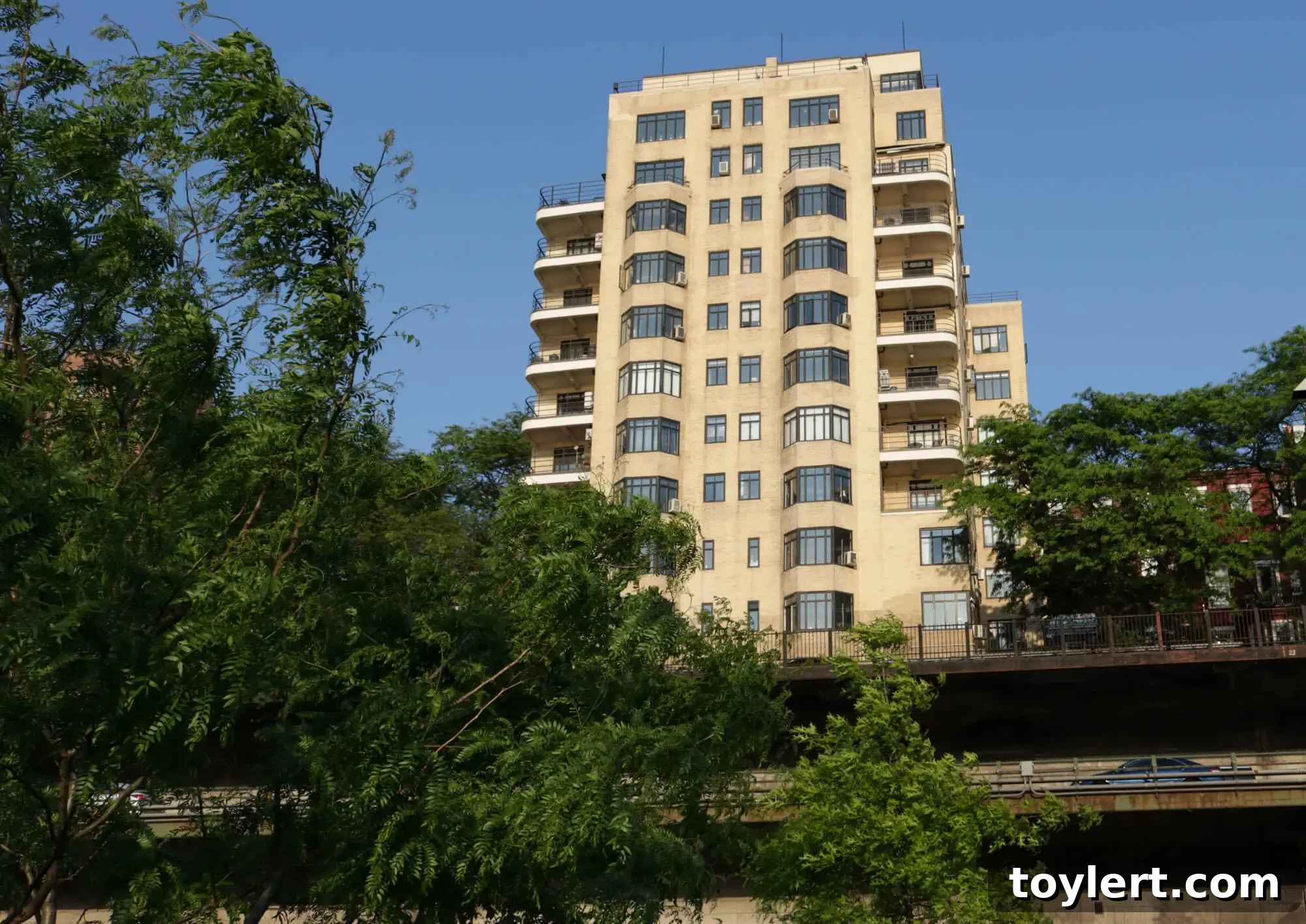
160 Columbia Heights: A Beacon of Art Moderne in Historic Brooklyn Heights
Brooklyn Heights, an iconic neighborhood famed for its picturesque streets, boasts a captivating blend of historical elegance and timeless charm. Its streetscapes are predominantly defined by graceful 19th-century brownstones and row houses, each with distinctive stoops and intricate details that tell tales of a bygone era. Yet, nestled among these cherished architectural treasures, one can discover striking 20th-century additions that offer a fascinating counterpoint to the area’s predominant character. These “interlopers,” far from being out of place, contribute to the rich, evolving tapestry of Brooklyn’s oldest historic district.
One such remarkable structure stands prominently at 160 Columbia Heights, just steps away from the celebrated Brooklyn Heights Promenade. This eleven-story apartment building, characterized by its distinctive yellow brick facade, is a superb example of the Art Moderne and Art Deco styles, an architectural gem that confidently announced itself in 1937. Designed by the talented architect A. Rollin Caughey for the reputable builders Silk & Hitlin, it represents a pivotal moment in the neighborhood’s architectural evolution, blending sleek modernity with the area’s established historical grandeur.
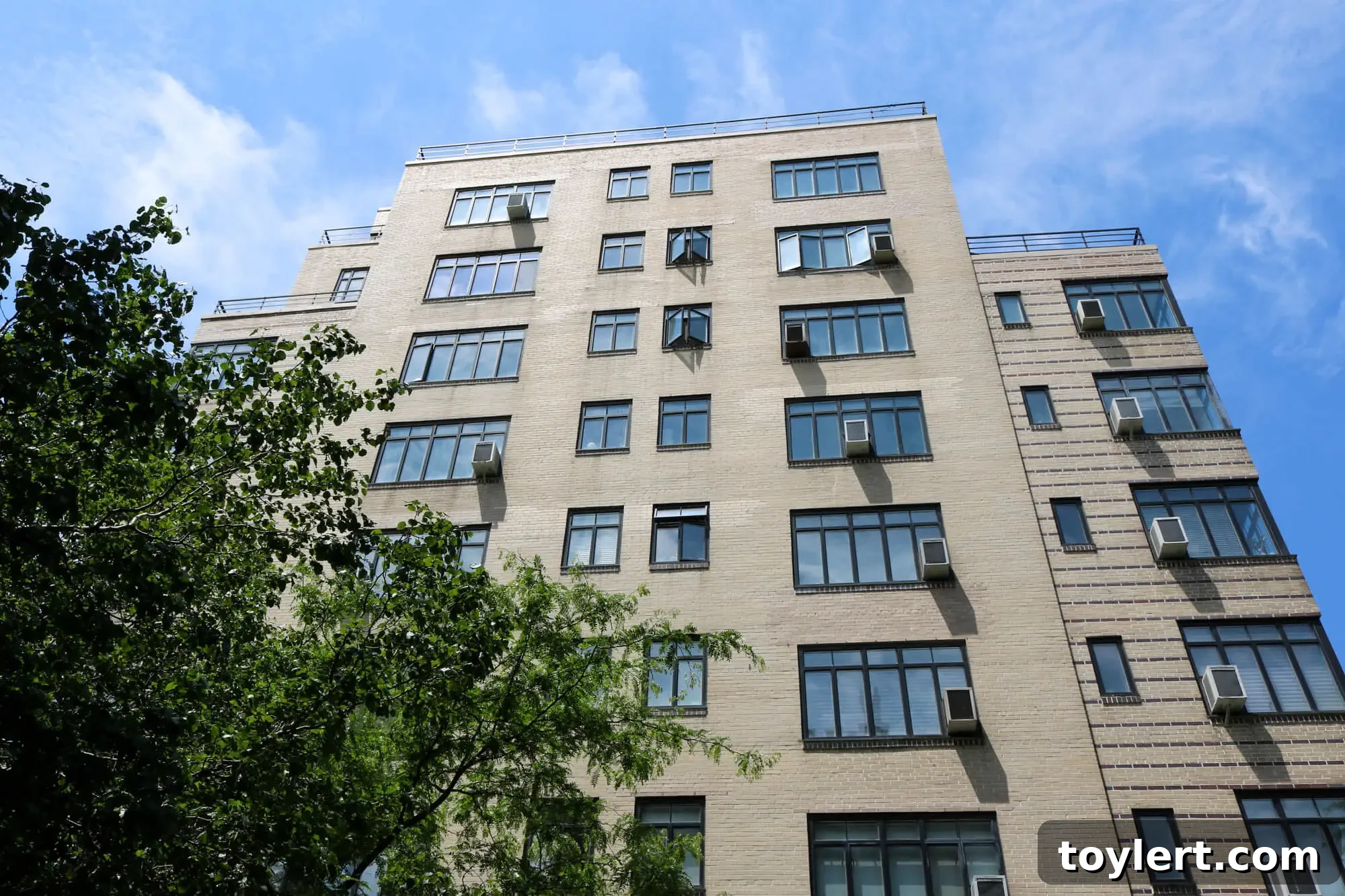
A. Rollin Caughey’s Vision: Replacing the Past, Embracing the Future
The construction of 160 Columbia Heights was not merely the erection of a new building; it marked a significant transformation of its prime waterfront site. Before this elegant high-rise took shape, the parcel was occupied by several older houses, typical of the 19th-century fabric of Brooklyn Heights. The decision to replace these residences with a modern apartment building, while perhaps jarring to some traditionalists, was a recognized trend of the era. As noted by the Brooklyn Daily Eagle in 1936, it was “not unusual” for “fine old Height[s] residences” to be “demolished to make way for apartment operations.” This observation highlights the changing urban landscape of Brooklyn during the 1930s, driven by evolving lifestyles, economic pressures, and a burgeoning demand for modern, amenity-rich housing.
Architect A. Rollin Caughey, a designer often associated with the sleek lines and innovative forms of the Art Deco and Art Moderne movements, understood the potential of this coveted location. His design for the 11-story structure maximized its unique position on a choice corner, offering residents unparalleled panoramic views of the glistening East River and the majestic Manhattan skyline. The choice of yellow brick for the facade, combined with the building’s streamlined massing and geometric detailing, firmly places it within the stylistic lexicon of the late 1930s, a period marked by optimism, technological advancement, and a departure from historical ornamentation.
Art Moderne and Art Deco: A New Aesthetic for a New Era
160 Columbia Heights perfectly encapsulates the fusion of Art Moderne and Art Deco principles. While often conflated, Art Deco (prevalent from the 1920s to 1930s) is known for its opulent, geometric ornamentation, rich materials, and often vertical emphasis, epitomizing luxury and progress. Art Moderne (a sub-style emerging in the 1930s) tends to be more streamlined, minimalist, and horizontal, emphasizing smooth surfaces, rounded corners, and a more industrial, functional aesthetic. This building gracefully blends elements of both.
The yellow brick exterior of 160 Columbia Heights offers a warm yet sophisticated appearance, distinguishing it from the traditional red brick and brownstone of its neighbors. Its clean lines, lack of excessive ornamentation, and emphasis on horizontal bands and fenestration are hallmarks of the Art Moderne style. The careful arrangement of windows, often in continuous bands, creates a sense of dynamism and lightness, reflecting the speed and efficiency of the modern age. Subtle geometric motifs might be found in the spandrels or entryways, hinting at its Art Deco lineage, while the overall massing suggests a powerful, yet elegant, presence on the waterfront. The building stands as a testament to an architectural period that celebrated form over elaborate embellishment, favoring function, sleekness, and a forward-looking vision.
The Builders: Silk & Hitlin’s Contribution to Brooklyn’s Development
The collaboration between architect A. Rollin Caughey and builders Silk & Hitlin was instrumental in bringing 160 Columbia Heights to fruition. During the interwar period, builders like Silk & Hitlin played a crucial role in shaping the urban fabric of New York City, responding to the growing demand for modern housing. Their investment in a prominent location like Columbia Heights underscored the increasing desirability of apartment living, even in historically residential areas known for single-family homes. Such projects required foresight, capital, and a keen understanding of contemporary design trends and urban development patterns. The success of 160 Columbia Heights not only provided luxurious new homes but also left an indelible mark on the visual character of the Brooklyn Heights waterfront.
Brooklyn Heights: A Tapestry of Eras and Architectural Narratives
The significance of 160 Columbia Heights extends beyond its individual architectural merit; it is a vital thread in the larger narrative of Brooklyn Heights. This neighborhood has long been cherished for its remarkably preserved 19th-century architecture, characterized by blocks of Federal-style houses, Greek Revival mansions, and Italianate brownstones. The “graceful stoops” and “quirky charm” are not just aesthetic features but cultural touchstones, reflecting a time when Brooklyn was rapidly developing into a sophisticated urban center. The tree-lined streets, cobblestone alleys, and meticulously maintained facades create an atmosphere of historical tranquility that often feels a world away from the bustling city.
However, the inclusion of buildings like 160 Columbia Heights demonstrates that Brooklyn Heights has always been a dynamic, evolving place. These 20th-century structures, though differing stylistically from their older counterparts, represent periods of growth, innovation, and changing needs. They highlight the tension and eventual harmony between preservation and modernization, a dialogue that is central to the identity of many historic urban districts. Instead of clashing, the Art Moderne lines of 160 Columbia Heights offer a contrast that enriches the visual experience, adding layers of architectural history for residents and visitors to explore.
An Enduring Legacy and Breathtaking Views
Today, 160 Columbia Heights continues to command attention not only for its architectural distinction but also for its coveted location. Its residents enjoy some of the most spectacular waterfront views in New York City, encompassing the sweep of the East River, the iconic bridges (Brooklyn Bridge, Manhattan Bridge), and the unparalleled Manhattan skyline. These vistas are a direct result of Caughey’s thoughtful design and the strategic placement chosen by Silk & Hitlin, ensuring that the building capitalized on its environmental assets.
The building stands as a proud testament to a particular moment in American architecture and urban development. It symbolizes the confidence and optimism of the 1930s, a period when design looked forward, embracing technology and modern aesthetics. For architecture enthusiasts, urban historians, and casual strollers alike, 160 Columbia Heights offers a compelling reason to pause and appreciate the diverse architectural landscape of Brooklyn Heights. It is a reminder that even in a district celebrated for its antiquity, innovation finds a way to integrate, adding new dimensions to an already rich and vibrant urban story. This striking building ensures that the architectural tapestry of Brooklyn Heights remains as diverse and captivating as the city itself, inviting continuous admiration for its blend of past and present.