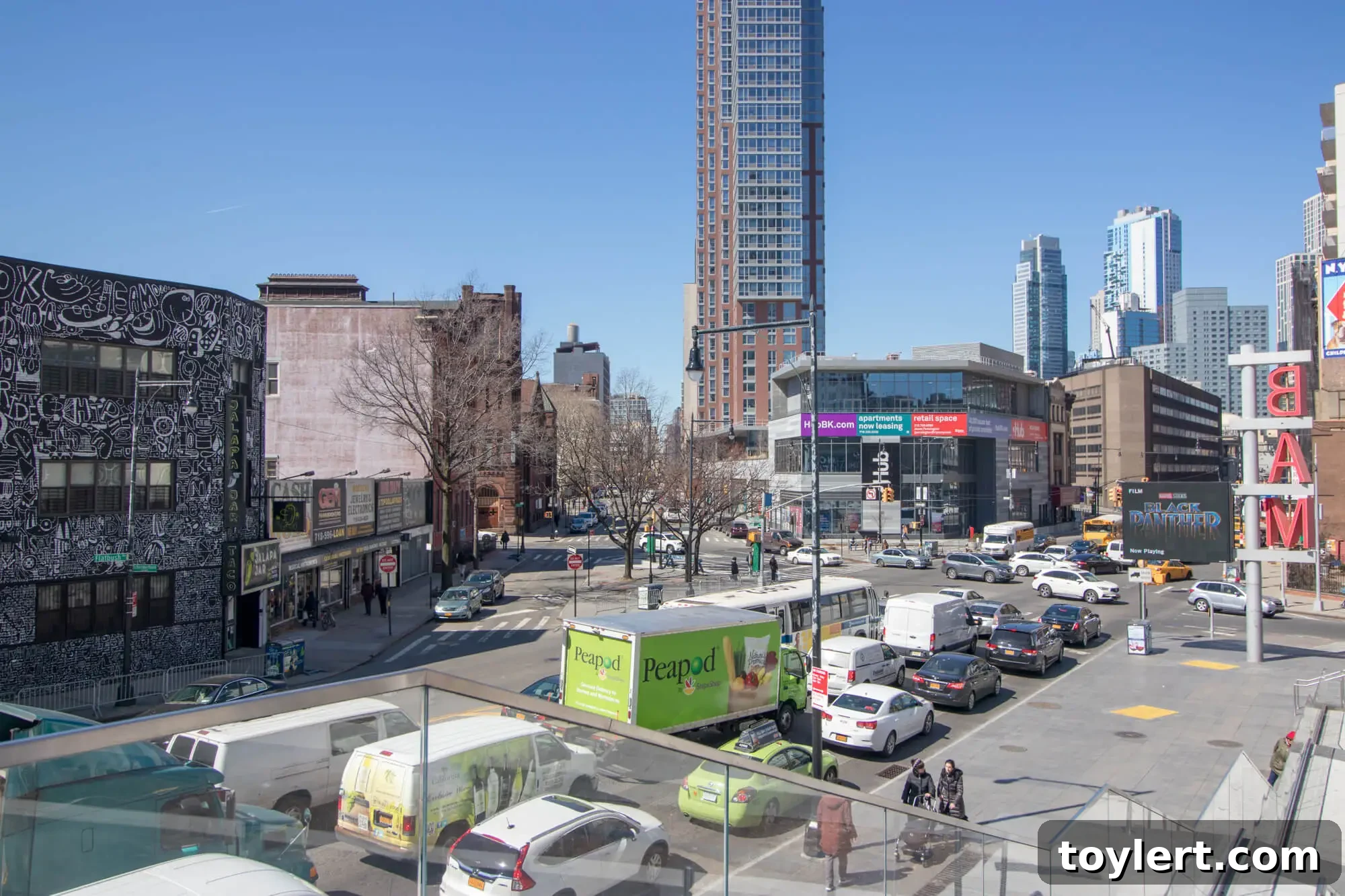
Unanimous Planning Approval Propels Controversial 80 Flatbush Avenue Development Forward
A pivotal moment in New York City’s urban planning landscape has arrived, as the City Planning Commission has officially approved the rezoning necessary for the highly anticipated and often debated 80 Flatbush Avenue development. This landmark decision, reported by the Commercial Observer, was met with a near-unanimous vote, signifying a significant step forward for one of Brooklyn’s most ambitious mixed-use projects. While one commissioner abstained and another recused herself from the proceedings, the overwhelming support underscores a collective recognition of the project’s potential to address critical housing and educational needs in the bustling borough.
The approval marks a crucial milestone in the Uniform Land Use Review Procedure (ULURP) – New York City’s complex public review process for land use applications. Having successfully navigated past community board recommendations and the Borough President’s review, the project now moves closer to its final stage of public scrutiny before the City Council. This journey highlights the intricate balance between urban growth, community concerns, and the city’s strategic vision for its future.
Deciphering the 80 Flatbush Avenue Vision: A Comprehensive Mixed-Use Project
The proposed 80 Flatbush Avenue development is not just another building; it’s a transformative urban intervention designed to occupy an entire city block, redefining the Boerum Hill skyline and adding substantial infrastructure to the area. Spearheaded by Alloy Development in collaboration with the city’s Educational Construction Fund and the vital community nonprofit Fifth Avenue Committee, the project represents a multi-faceted approach to urban development, intertwining residential, commercial, and educational components into a cohesive whole.
Architectural Ambition: Twin Towers Redefine the Brooklyn Skyline
At the heart of the 80 Flatbush Avenue project are its two distinct towers, conceptualized to rise dramatically and contribute to the ever-evolving silhouette of Downtown Brooklyn. While specific heights have been a point of contention and discussion throughout the planning process, the design aims to integrate modern architectural aesthetics with functional urban living. These towers are envisioned not merely as residential structures but as focal points that contribute to a vibrant street-level experience, featuring retail spaces and public amenities that enhance the surrounding neighborhood. The architectural language seeks to balance the grandeur of high-rise living with a human-scale pedestrian environment, ensuring that the development is both iconic and accessible.
Housing Solutions: 900 Units, Including Crucial Affordable Homes for NYC
A cornerstone of the 80 Flatbush Avenue development is its commitment to addressing New York City’s pressing housing crisis. The project plans for an impressive 900 apartments, a significant portion of which – specifically 200 units – are designated as affordable housing. This commitment to affordability is a vital component in gaining community and political support, reflecting the city’s urgent need for diverse housing options across all income levels. The inclusion of affordable units serves as a direct response to the escalating demand for accessible housing in rapidly gentrifying areas of Brooklyn, offering opportunities for long-term residents and new families to thrive within the community. These units will be a mix of studios, one-bedroom, and two-bedroom apartments, catering to a range of household sizes and needs, thereby fostering a more inclusive and equitable urban environment.
Educational Foundation: Two New Schools for a Growing Community
Beyond residential offerings, the 80 Flatbush Avenue project proudly incorporates two new state-of-the-art schools. This partnership with the Educational Construction Fund highlights a proactive approach to addressing the growing demand for educational facilities in Brooklyn. The addition of these schools will significantly alleviate overcrowding in existing institutions and provide modern learning environments for hundreds of students. These educational spaces are not just an afterthought; they are integral to the project’s community-centric vision, promising to enrich the lives of local families and contribute to the long-term vitality of the neighborhood. Details surrounding the specific grade levels and curriculum offerings will continue to be refined, but the fundamental commitment to expanding educational access remains a core tenet of the development.
The Driving Forces: A Collaborative Development for Brooklyn’s Future
The successful navigation of the complex ULURP process for 80 Flatbush Avenue is a testament to the collaborative efforts of several key players, each bringing unique expertise and vision to the table. This consortium approach has been crucial in developing a project that aims to be both economically viable and socially responsible.
Alloy Development’s Visionary Leadership in Urban Real Estate
At the forefront of the 80 Flatbush Avenue project is Alloy Development, a renowned real estate firm known for its commitment to innovative urban design and sustainable development practices. Alloy’s vision for 80 Flatbush extends beyond mere construction; it’s about creating a vibrant, integrated urban ecosystem that responds to the needs of the modern city. Their expertise in blending residential, commercial, and public spaces has been instrumental in shaping the project into a cohesive and impactful development. Alloy Development consistently emphasizes high-quality architecture and thoughtful urban planning, ensuring that their projects contribute positively to the built environment and the communities they inhabit.
Educational Construction Fund (ECF): Investing in Public Education
The Educational Construction Fund (ECF) plays a critical role as a city agency dedicated to developing publicly owned facilities for the New York City Department of Education. Their involvement ensures that the two new schools within the 80 Flatbush Avenue development meet the highest standards of educational infrastructure and are seamlessly integrated into the public school system. This partnership guarantees that the educational component serves a genuine public need, providing essential resources for the growing population in the surrounding neighborhoods. The ECF’s participation underscores the project’s broader civic benefits, extending beyond private residential gain to serve the greater good of the community.
Fifth Avenue Committee: Advocating for Community and Affordable Housing
The Fifth Avenue Committee (FAC) is a prominent Brooklyn-based non-profit community development corporation with a long-standing commitment to social justice and affordable housing. Their collaboration brings an invaluable community-oriented perspective to the 80 Flatbush Avenue project, ensuring that the development addresses local needs and concerns, particularly regarding equitable access to housing. FAC’s involvement helps to guarantee that the 200 affordable units are truly beneficial to the community and that the project contributes positively to the social fabric of Boerum Hill. This partnership exemplifies how private development can effectively integrate with non-profit advocacy to create more inclusive urban spaces.
Navigating the Controversy: Addressing Community Concerns and Project Evolution
Despite its ultimate approval, the 80 Flatbush Avenue development has not been without its share of controversy, a common characteristic of large-scale urban projects in New York City. Community groups and local residents voiced significant concerns throughout the planning process, highlighting the crucial dialogue between developers and the public.
Primary objections often revolved around the sheer scale and density of the proposed towers. Critics worried about the potential for the high-rises to cast significant shadows over existing parks and public spaces, diminishing sunlight and quality of life for neighbors. Concerns about increased traffic congestion in an already dense area, strain on public transit infrastructure, and the capacity of local services to handle a sudden influx of new residents were also prominent. Furthermore, the specter of gentrification and its potential to displace long-term residents and small businesses fueled much of the opposition, prompting calls for greater guarantees of affordability and community benefit.
However, the project’s developers and city planners engaged in extensive public hearings and negotiations, resulting in modifications and commitments aimed at mitigating these impacts. The inclusion of a substantial number of affordable housing units, the provision of two new public schools, and various public realm improvements were key elements in addressing these concerns. These adjustments illustrate the dynamic nature of urban planning in a democratic city, where projects often evolve through robust public discourse and compromise to better serve the collective interest.
The ULURP Journey: A Roadmap Through NYC’s Planning Process
The Uniform Land Use Review Procedure (ULURP) is the prescribed process by which applications for land use changes in New York City are reviewed. It’s a lengthy and often contentious process designed to ensure public input and transparency in development decisions. For a project as significant as 80 Flatbush Avenue, understanding the ULURP stages is essential.
The journey began with review by the local Community Board (CB2 Brooklyn), where residents and local stakeholders provided initial feedback and recommendations. This was followed by a review from the Brooklyn Borough President, who offered further insights and suggested modifications. The City Planning Commission’s recent unanimous vote represents the third major hurdle cleared. This body reviews the project against the city’s broader planning goals and makes a recommendation based on comprehensive urban design principles and public policy. The next, and final, major step for 80 Flatbush Avenue will be a vote by the New York City Council, which has the power to approve, modify, or reject the Commission’s decision. The Council’s decision often heavily considers the local council member’s stance, emphasizing the importance of continued community engagement and political advocacy right up to the final vote.
Broader Implications: Transforming Brooklyn’s Urban Landscape
The approval of 80 Flatbush Avenue extends far beyond the boundaries of a single block; it signifies a broader trend in Brooklyn’s urban development and New York City’s approach to growth. This project is a microcosm of the larger forces shaping Downtown Brooklyn and its surrounding neighborhoods, demonstrating a commitment to high-density, transit-oriented, mixed-use development as a strategy to address the city’s challenges.
Economically, such a large-scale development promises to inject significant investment into the local economy, creating numerous construction jobs and subsequently contributing to a more vibrant retail and commercial environment. Socially, the integration of affordable housing and new educational facilities offers tangible benefits, promoting diversity and providing crucial resources to an ever-growing population. However, it also reignites conversations about balancing rapid growth with preserving neighborhood character and ensuring equitable development for all residents.
The 80 Flatbush Avenue development positions Brooklyn at the forefront of modern urban planning, showcasing how cities can strategically develop to accommodate growth, provide essential services, and foster dynamic communities. It embodies the complex interplay of economic necessity, social responsibility, and architectural ambition that defines 21st-century urbanism in one of the world’s most dynamic cities.
What Lies Ahead: The Path to Groundbreaking for 80 Flatbush Avenue
With the City Planning Commission’s resolute approval, all eyes now turn to the New York City Council, which holds the final legislative authority in the ULURP process. The Council’s review will involve further public hearings and deliberations, culminating in a critical vote that will determine the project’s ultimate fate. While the Commission’s strong endorsement provides significant momentum, the Council maintains the power to introduce additional modifications or conditions, reflecting local political considerations and ongoing community dialogue.
Should the City Council give its final approval, the 80 Flatbush Avenue development will transition from the planning stages to the pre-construction phase. This will involve securing necessary permits, finalizing financing, and initiating site preparation. The anticipated construction timeline for a project of this magnitude is extensive, likely spanning several years. Throughout this period, the developers, in collaboration with the City, will be tasked with careful project management to minimize disruption to the surrounding Boerum Hill and Downtown Brooklyn communities, while diligently working towards the vision of a truly transformative and beneficial urban addition.
The 80 Flatbush Avenue development is poised to become a significant landmark in Brooklyn, a testament to complex urban planning and the continuous evolution of New York City. Its journey through approval reflects the city’s commitment to tackling pressing issues like housing affordability and educational infrastructure, while navigating the intricate dynamics of community engagement and large-scale development. The successful realization of this project promises to reshape a vital part of Brooklyn, creating a vibrant, integrated hub for residents, students, and businesses for generations to come.