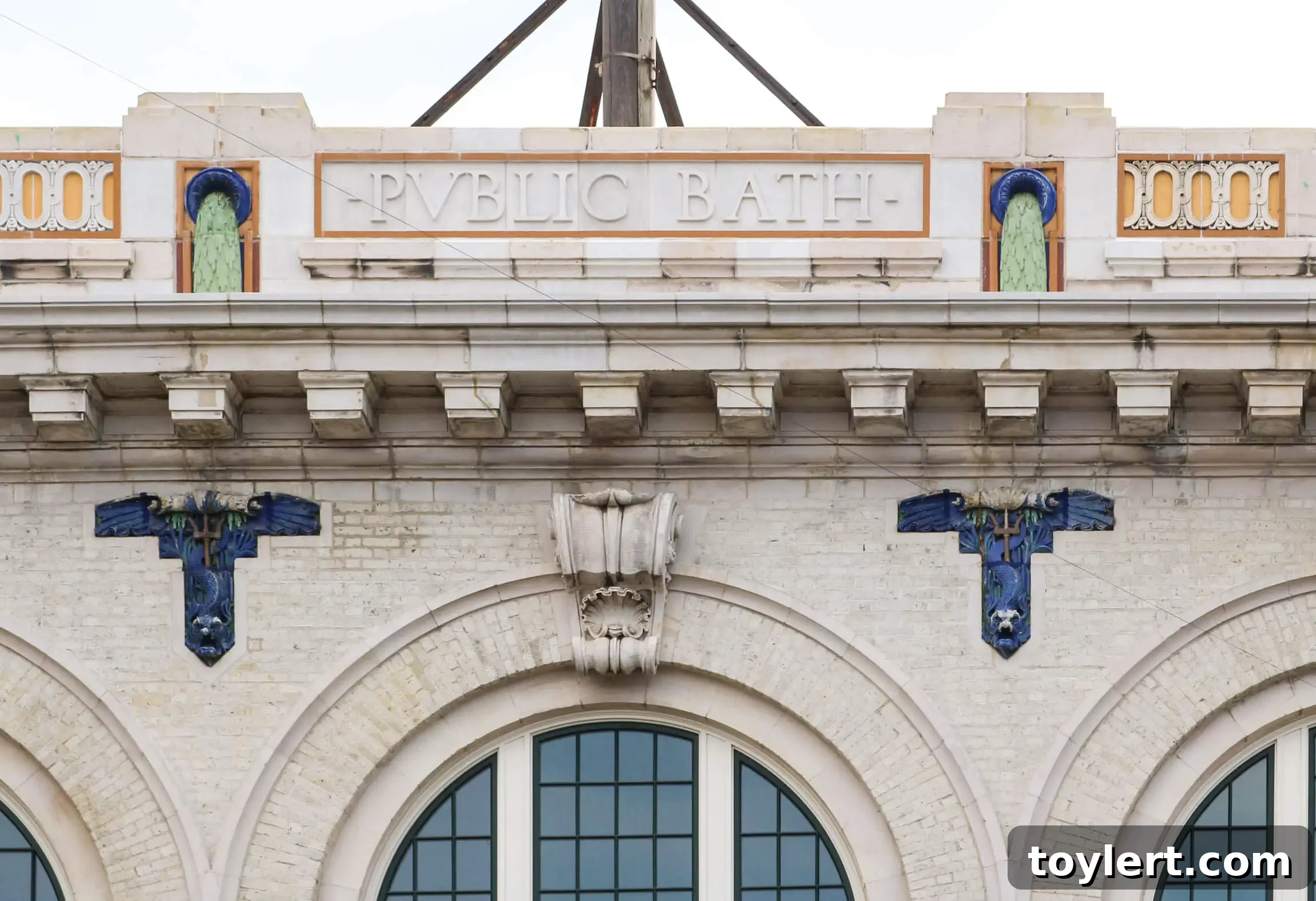
Peek Inside Park Slope’s Newly Restored Brooklyn Lyceum and Public Bath (Photos)
The venerable Brooklyn Lyceum is poised to embark on an exciting new chapter, transforming into a vibrant Blink Fitness center later this month. What was once NYC Public Bath No. 7, a structure steeped in history and for a time left in disrepair at 227 4th Avenue, has been meticulously restored. Its exterior now gleams with renewed grandeur, following a comprehensive restoration project that honors its architectural heritage. A recent preview offered a glimpse into the interior, revealing a remarkable metamorphosis that blends historical essence with modern functionality.
This revitalization project not only breathes new life into a significant Brooklyn landmark but also exemplifies the power of adaptive reuse, turning a decaying piece of the past into a dynamic hub for health and community in Park Slope. The journey of this building, from a crucial public health institution to a contemporary fitness destination, is a testament to Brooklyn’s continuous evolution and its dedication to preserving its unique character.
The Storied Past: NYC Public Bath No. 7
To truly appreciate the Brooklyn Lyceum’s transformation, one must first understand its origins. Built at the turn of the 20th century, specifically in 1906, the building originally served as NYC Public Bath No. 7. This era was a critical period for urban development and public health initiatives in New York City. As the city’s population swelled, particularly with immigrants, access to proper sanitation and personal hygiene facilities was a pressing concern for many working-class families living in tenements without indoor plumbing.
Public baths were established across the city as essential civic institutions, funded by the municipality to provide bathing facilities to those who lacked them at home. These were not merely utilitarian structures; many, like Bath No. 7, were designed with a sense of civic pride and architectural ambition. They often featured grand facades, robust construction, and spacious interiors, reflecting their importance to the community’s well-being. Bath No. 7, with its distinctive Renaissance Revival style, stood as a beacon of public service, offering vital services that dramatically improved the quality of life for countless Brooklynites. Its construction underscored a commitment to progressive social policies aimed at improving living conditions and preventing the spread of disease in densely populated urban areas.
A Period of Transition and Deterioration
As the 20th century progressed, societal norms and urban infrastructure evolved. The widespread adoption of indoor plumbing in homes gradually rendered public baths less necessary. By the mid-20th century, many of these once-vital facilities closed their doors, facing an uncertain future. The building at 227 4th Avenue, like many of its counterparts, transitioned through various uses, often struggling to find a sustainable purpose that matched its grand scale.
For several decades, the building experienced a period of gradual decline. Its beautiful facade, once a source of civic pride, began to show signs of wear and neglect. The interior, designed for the specific function of a public bath, became challenging to repurpose. The structure faced the common fate of many historic buildings that outlive their original purpose: deterioration, vacancy, and the looming threat of demolition. Its state, often described as “crumbling,” painted a stark picture of a magnificent architectural gem slowly fading from prominence, yearning for a new identity that would respect its past while embracing the future.
The Visionary Restoration Project
The recent restoration project marks a triumphant turning point for the Brooklyn Lyceum. Driven by a commitment to historical preservation and urban revitalization, developers embarked on an ambitious plan to salvage and restore the building’s historic integrity. The exterior restoration was a meticulous undertaking, focusing on bringing the Renaissance Revival facade back to its original splendor. Craftsmen carefully repaired and cleaned the intricate brickwork, restored cornices and decorative elements, and replaced damaged windows with historically accurate reproductions. The objective was clear: to ensure that the building’s street presence once again reflected its former glory and contributed positively to the aesthetic landscape of Park Slope’s 4th Avenue.
This comprehensive restoration was not merely cosmetic; it involved significant structural work to stabilize and fortify the century-old building. The challenges were considerable, requiring expert knowledge of historic materials and construction techniques, coupled with modern engineering solutions. The result is a structure that is not only visually stunning but also robust and ready to serve the community for another century. This dedication to preserving architectural heritage while adapting structures for modern use sets a powerful precedent for urban development, showcasing how history and progress can harmoniously coexist.
Interior Transformation: From Public Bath to Blink Fitness
While the exterior restoration preserved the building’s historical integrity, the interior underwent a truly “significant transformation” to accommodate its new role as a Blink Fitness center. The developers and architects faced the exciting challenge of converting a space originally designed for bathing pools and individual stalls into a modern, open-plan gym suitable for a wide range of fitness activities. This involved gutting much of the existing internal structure while carefully integrating new mechanical systems, lighting, and layout designs.
The design team leveraged the building’s inherent architectural strengths, such as its high ceilings and expansive windows, to create a bright, airy, and inspiring workout environment. The vast open spaces that once housed pools or large communal areas are now filled with state-of-the-art fitness equipment, free weights, and dedicated zones for cardio and strength training. The industrial aesthetic often associated with modern gyms is tastefully blended with hints of the building’s original character, perhaps through exposed structural elements or thoughtfully chosen finishes that echo its historical context. This blend ensures that members exercising within its walls are constantly reminded of the unique history surrounding them, creating an experience that transcends a typical gym visit.
Blink Fitness, known for its “Mood Above Muscle™” philosophy, emphasizes an inclusive and positive environment. This ethos resonates remarkably well with the building’s original purpose as a public amenity designed to improve the well-being of the community. In a new guise, the Brooklyn Lyceum continues its legacy as a place dedicated to public service, albeit focused on physical fitness rather than hygiene. The transition from a public bath to a public gym represents a symbolic continuation of the building’s role as a communal space for health and betterment.
Impact on Park Slope and 4th Avenue
The successful revitalization of the Brooklyn Lyceum has a far-reaching impact on the Park Slope neighborhood, particularly along the rapidly developing 4th Avenue corridor. This stretch, once characterized by industrial and underutilized properties, is steadily transforming into a vibrant mixed-use thoroughfare. The restoration of such a prominent historic building serves as an anchor for this redevelopment, setting a high standard for future projects and reinforcing the area’s appeal.
Economically, the new Blink Fitness center brings jobs and increases foot traffic, benefiting surrounding businesses and contributing to the local economy. Aesthetically, the gleaming facade of the Lyceum dramatically enhances the streetscape, replacing a decaying structure with a source of civic pride. For residents, it provides a much-needed fitness facility, enriching the community’s access to health and wellness options. This project is a prime example of how thoughtful adaptive reuse can preserve architectural heritage, stimulate economic growth, and cater to the contemporary needs of an evolving urban neighborhood. It underscores the value of investing in historic assets as catalysts for broader urban renewal.
A New Chapter for a Brooklyn Icon
As the Brooklyn Lyceum opens its doors as Blink Fitness, it marks more than just the launch of a new gym; it signifies the successful culmination of a vision that rescued a piece of Brooklyn’s past and integrated it seamlessly into its future. This building, which once served the fundamental hygiene needs of a burgeoning city, now addresses the modern wellness imperatives of a thriving community. It stands as a powerful symbol of resilience, adaptation, and the enduring value of historic architecture.
The transformation of NYC Public Bath No. 7 into a modern fitness center ensures its continued relevance and vitality for generations to come. It celebrates Brooklyn’s rich history while enthusiastically embracing its dynamic future, offering a space where history buffs and fitness enthusiasts alike can appreciate the seamless blend of old-world charm and cutting-edge functionality. The Brooklyn Lyceum’s journey is a compelling narrative of urban preservation and innovative repurposing, securing its place as a cherished landmark in the heart of Park Slope.