Welcome to School Week on Brownstoner – a special series dedicated to celebrating the vibrant start of another academic year for New York City’s diverse student population and dedicated educators.
Carmen Fariña: A Visionary Leader’s Impact on New York City Schools
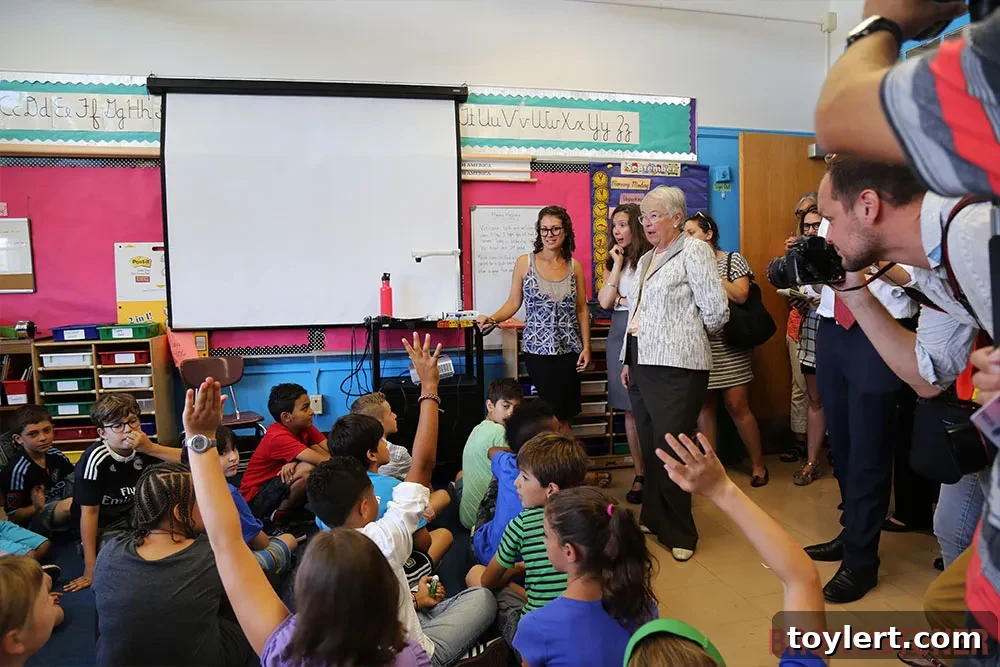
After an illustrious career spanning nearly five decades within the intricate ecosystem of New York City’s public education system, Carmen Fariña ascended to the city’s highest-ranking educational official in January 2014. Her appointment as New York City Schools Chancellor marked a pivotal moment for a monumental school system, tasked with serving a vibrant and diverse student body exceeding 1.1 million across over 1,800 schools. From the outset of her tenure, Fariña embarked on an ambitious mission: to fundamentally reshape and elevate the quality of public education, building a legacy that continues to resonate deeply within classrooms, school communities, and homes throughout the five boroughs.
From Classroom Innovator to Citywide Education Leader
Carmen Fariña’s journey to the helm of the New York City Department of Education (DOE) was uniquely grounded in practical experience. Born and raised in Brooklyn to Spanish immigrant parents, Fariña began her extensive career as a classroom teacher. Her innate passion for fostering student success and her innovative pedagogical approaches quickly distinguished her. This dedication propelled her through the ranks, where she served with distinction as a principal in several schools, earning a formidable reputation for transforming struggling institutions into nurturing, high-achieving environments. Her leadership style, characterized by a deep commitment to collaboration, empowering educators, and an unwavering belief in the potential of every child, made her a natural and highly respected choice to lead the nation’s largest public school system.
Prior to her chancellorship, Fariña also gained invaluable experience as a superintendent, managing complex administrative challenges and successfully implementing district-wide initiatives. This extensive, hands-on background provided her with a crucial perspective, enabling her to approach the role of Chancellor not merely as a high-level policymaker, but as a seasoned educator who intimately understood the daily realities faced by teachers, students, and parents. This profound understanding proved instrumental in navigating the intricate political, social, and logistical dynamics inherent in New York City’s vast educational infrastructure.
Pivotal Reforms: Fariña’s Initial Vision and Foundational Initiatives
During her crucial first 20 months as New York City Schools Chancellor, Carmen Fariña moved swiftly to articulate and implement a clear, comprehensive vision for reform. Her agenda was multifaceted, emphasizing a significant shift away from the previous administration’s focus on high-stakes testing towards a more holistic approach to student development. Key pillars of her strategy included fostering greater school autonomy, significantly enhancing professional development opportunities for educators, and prioritizing social-emotional learning. Central to her philosophy was the conviction that effective leadership originates at the school level, thereby empowering principals and teachers to tailor educational strategies to meet the unique needs of their specific student populations. This approach marked a notable departure from previous, more centralized and top-down administrative models.
Perhaps one of the most impactful and widely celebrated initiatives launched during her early tenure was the dramatic expansion of Universal Pre-Kindergarten (UPK). Working in close partnership with Mayor Bill de Blasio, Fariña spearheaded the rapid and successful rollout of free, full-day pre-K for all four-year-olds across the city. This ambitious program not only provided a critical early learning foundation for tens of thousands of children, particularly those from low-income backgrounds who traditionally lacked access, but also substantially alleviated the financial burden on working families. The resounding success of NYC’s UPK program quickly garnered national attention, becoming a benchmark model for early childhood education access across the United States.
Empowering Educators and Cultivating Thriving Community Schools
Beyond the groundbreaking Universal Pre-K initiative, Fariña’s chancellorship was profoundly defined by her steadfast commitment to empowering the frontline educators who are the backbone of the city’s schools. She vigorously championed initiatives designed to provide robust and continuous professional development, fostering collaborative teaching practices, and cultivating a pervasive culture of continuous learning among all school staff. Her firm belief was that by deeply investing in teachers and principals, the entire school system would experience a systemic uplift, leading directly to improved instructional quality and, ultimately, superior student outcomes. This renewed emphasis on professional growth played a crucial role in restoring morale within the teaching community and actively encouraged the adoption of innovative pedagogical approaches throughout the DOE.
Another truly transformative initiative under Fariña’s visionary leadership was the strategic expansion of community schools. These innovative schools are designed to function as comprehensive hubs for their surrounding neighborhoods, offering an extensive array of services that extend far beyond traditional academics. These critical supports often include on-site healthcare, comprehensive mental health services, and vital social services for students and their families. By integrating these essential resources directly into school buildings, Fariña aimed to systematically address the myriad non-academic barriers to learning, ensuring that students received the holistic support necessary to thrive both inside and outside the classroom. This comprehensive, integrated approach recognized the undeniable truth that student success is intrinsically linked to their overall well-being and the stability of their home and community environments.
Championing Equity and Re-evaluating Standardized Testing
Fariña’s tenure also saw a concerted and focused effort to address long-standing issues of educational equity that historically plagued New York City’s diverse neighborhoods. She actively sought to bridge persistent achievement gaps by directing crucial resources and implementing targeted support programs specifically for underserved schools and communities. This included developing initiatives designed to improve access to rigorous advanced placement courses, enhancing specialized programs for English Language Learners, and significantly strengthening support services for students with disabilities. Her unwavering focus was not merely on overall system-wide improvement, but on ensuring that every single student, irrespective of their zip code, socioeconomic background, or individual learning needs, had equitable access to a high-quality, enriching education.
Furthermore, Carmen Fariña emerged as a vocal and influential proponent of reducing the pervasive over-reliance on high-stakes standardized testing. She passionately advocated for a more balanced and nuanced assessment approach that incorporated multiple measures of student learning and teacher effectiveness, rather than singularly depending on often-limited test scores. This strategic shift aimed to alleviate undue pressure on both students and educators, thereby allowing for the implementation of a broader, more creative, and engaging curriculum, fostering deeper and more meaningful learning experiences. Her administration diligently worked to implement more authentic and meaningful evaluations that more accurately captured the full scope of student growth and teacher impact, promoting a more holistic and accurate understanding of school performance.
Navigating Complexities and Forging a Lasting Impact
Leading a school system as immense, diverse, and inherently complex as New York City’s public education requires a unique blend of strategic foresight, astute political navigation, and unwavering dedication. Fariña faced numerous and significant challenges throughout her chancellorship, including persistent budget constraints, intricate labor relations with powerful teacher and staff unions, and the inherent logistical difficulties of implementing system-wide change across hundreds of schools and dozens of distinct communities. Yet, her consistent focus on fostering collaboration, her genuine willingness to actively listen to a wide array of stakeholders, and her profound understanding of the practical realities of urban education enabled her to make significant and measurable headway.
By the time of her departure in December 2017, Carmen Fariña had undeniably left an indelible and positive mark on New York City’s public education system. Her enduring legacy is characterized by a revitalized emphasis on crucial early childhood education through the universal implementation of Pre-K, the widespread expansion of comprehensive support systems via community schools, and a deeply ingrained culture that genuinely valued and empowered its educators. She meticulously fostered an environment of professional growth, mutual respect, and collaborative endeavor, thereby laying a robust and resilient foundation for sustained improvement. Her leadership unequivocally demonstrated that a steadfast commitment to equity, holistic student development, and a wealth of practical educational experience could indeed drive meaningful, transformative, and lasting change in one of the world’s most complex and dynamic urban school districts.
The Enduring Vision for NYC Schools and Beyond
Carmen Fariña’s chancellorship serves as a powerful and inspiring reminder of the profound impact that dedicated, experienced leadership can have on vital public institutions. Her extensive work underscored the critical importance of an educational philosophy that is deeply rooted in student well-being, teacher empowerment, and proactive community engagement. As New York City continues its perpetual evolution, the fundamental principles and innovative programs established and championed during her tenure remain absolutely vital components of the ongoing, collective effort to provide every child with the equitable opportunity to achieve their fullest potential. The beginning of each new school year inevitably brings with it fresh opportunities, novel challenges, and renewed aspirations, but the robust groundwork meticulously laid by visionary leaders like Fariña ensures that the unwavering focus remains steadfastly on the students and the vibrant communities they so dedicatedly serve.
Her vision continues to inspire vital discussions around how best to comprehensively support diverse student populations, innovate teaching methodologies for the 21st century, and build stronger, more effective partnerships between schools, families, and the wider community. The conversation about the future of public education in New York City is an ongoing, dynamic one, continually adapting to new demands, evolving societal needs, and emerging aspirations. However, the core values championed and exemplified by Chancellor Fariña — unwavering equity, pursuit of excellence, and profound empowerment — endure as guiding lights, illuminating the path forward for generations of students and educators to come.