Brooklyn Shines: Five Historic Landmarks Honored with Prestigious Preservation Awards
New York City’s rich architectural heritage is constantly being celebrated, and nowhere is this more evident than in the meticulous efforts to preserve its iconic structures. The New York Landmarks Conservancy, a leading voice in historic preservation, has proudly unveiled the recipients of its 25th annual Lucy G. Moses Preservation Awards. This year, Brooklyn has emerged as a particularly strong contender, with five of its distinguished buildings earning the organization’s highest accolades for their outstanding and painstaking restorations. These awards not only recognize the beauty and historical significance of these structures but also commend the incredible dedication, craftsmanship, and vision required to bring them back to their former glory, ensuring their legacy for future generations.
The Lucy G. Moses Preservation Awards are often referred to as the “Oscars of historic preservation” in New York. They honor individuals, organizations, and projects that demonstrate exceptional commitment to preserving the city’s architectural treasures. The awards underscore the vital importance of safeguarding New York’s built environment, which tells the story of its past, reflects its diverse cultures, and contributes immeasurably to its unique character. Each winning project represents a triumph of conservation, breathing new life into structures that might otherwise have fallen into disrepair or faced demolition. For Brooklyn, this strong representation highlights the borough’s deep appreciation for its history and its ongoing efforts to marry preservation with progress.
Celebrating Brooklyn’s Architectural Jewels
Brooklyn’s vibrant landscape is dotted with architectural masterpieces, each with its own compelling story. The five buildings in the borough selected for this esteemed recognition have all undergone extensive, high-quality restoration work, ranging from grand theaters and historic churches to vital civic buildings and innovative adaptive reuse projects. These diverse structures collectively demonstrate the breadth and depth of preservation efforts across Brooklyn, showcasing how historical integrity can be maintained while adapting to contemporary needs. The honorees include the majestic King’s Theatre in Flatbush, the serene Co-Cathedral of St. Joseph in Prospect Heights, the venerable Conrad B. Duberstein U.S. Bankruptcy Courthouse in Downtown Brooklyn, the graceful Grace Church in Brooklyn Heights, and the remarkable adaptive reuse project at 1000 Dean Street, home to Berg’n. Each of these projects represents a significant investment in Brooklyn’s cultural and historical fabric.
King’s Theatre: A Royal Revival in Flatbush
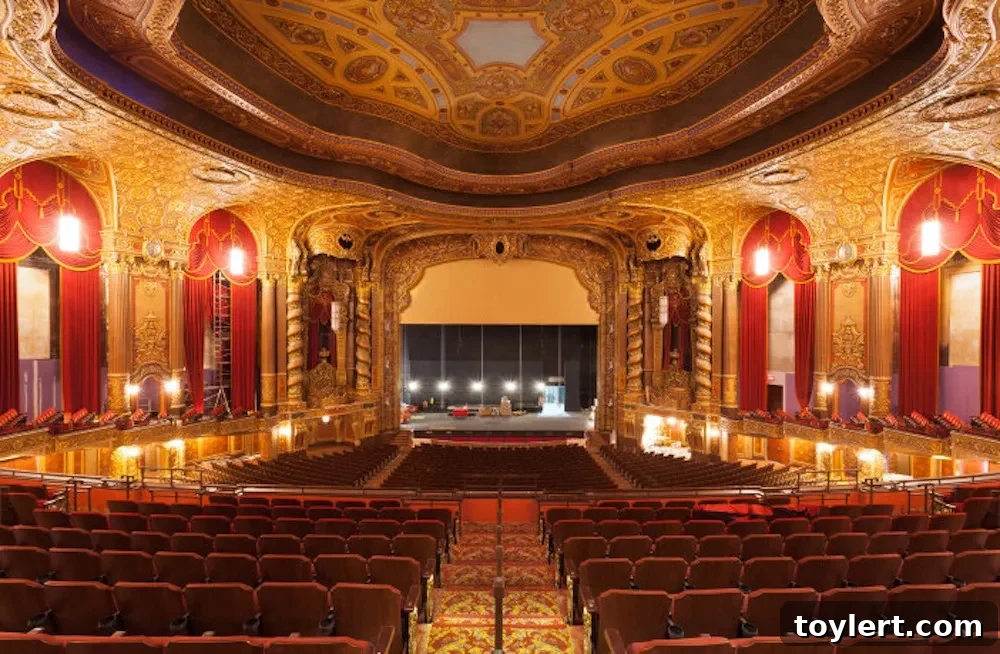
Dominating the intersection of Flatbush and Tilden Avenues, the King’s Theatre stands as a breathtaking example of cinematic palace architecture. Opened in 1929 as one of Loew’s “Wonder Theatres,” it was an opulent escape during the golden age of cinema. Designed by Rapp and Rapp, the theater’s interior is a lavish tapestry of French Baroque and Rococo styles, featuring gilded plasterwork, soaring ceilings, intricate murals, and dazzling chandeliers. After decades of delighting audiences, the theater closed its doors in 1977, falling into a state of severe disrepair and neglect for over 35 years. The restoration project was an monumental undertaking, costing approximately $95 million and meticulously returning the 3,000-seat venue to its original grandeur. Craftsmen painstakingly recreated lost details, repaired damaged ornamentations, and restored the original color schemes, using archival photographs and original design documents as guides. The transformation has been nothing short of miraculous, revitalizing Flatbush Avenue and re-establishing King’s Theatre as a premier cultural hub, hosting concerts, comedy shows, and community events. Its reopening has spurred economic development in the surrounding neighborhood and provides a powerful reminder of how historic preservation can bring vibrant life back to a community.
Co-Cathedral of St. Joseph: A Beacon of Faith in Prospect Heights
The Co-Cathedral of St. Joseph, a prominent feature of Prospect Heights, is a magnificent Romanesque Revival structure that serves as a vital spiritual center for the Diocese of Brooklyn. Completed in 1912, the church boasts an impressive facade of Indiana limestone and an awe-inspiring interior adorned with stained-glass windows, intricate mosaics, and grand altars. Over the decades, the elements had taken their toll on the building’s exterior and interior, necessitating a comprehensive restoration. The award-winning project focused on both structural integrity and aesthetic preservation, addressing everything from the crumbling masonry and leaky roof to the delicate cleaning and repair of its priceless stained-glass windows and elaborate murals. The restoration team worked with precision to conserve the original artistry and craftsmanship, ensuring the co-cathedral’s beauty and solemnity were fully reinstated. This project not only preserved a significant religious landmark but also reinforced its role as a cherished community institution and a symbol of enduring faith within Brooklyn.
Conrad B. Duberstein U.S. Bankruptcy Courthouse: Preserving Civic Grandeur in Downtown Brooklyn
Nestled in the bustling heart of Downtown Brooklyn, the Conrad B. Duberstein U.S. Bankruptcy Courthouse stands as an exemplar of early 20th-century federal architecture. Originally constructed as the U.S. Post Office and Courthouse between 1885 and 1891, it was later expanded and significantly altered. Its imposing Classical Revival design, with stately columns and robust stonework, conveys the dignity and permanence expected of a civic institution. The preservation project for this federal building was complex, involving not only the restoration of its impressive exterior facade but also critical updates to its interior to meet modern judicial and operational requirements while respecting its historic character. The work included extensive masonry repair, cleaning of the exterior stonework, and careful restoration of interior features that had deteriorated over time. The successful completion of this project ensures that the courthouse can continue to serve the public effectively for decades to come, demonstrating how a historic building can remain functional and relevant in a rapidly evolving urban environment while retaining its architectural integrity and historical significance.
Grace Church: A Gothic Gem in Brooklyn Heights
In the historic and picturesque neighborhood of Brooklyn Heights, Grace Church stands as a magnificent example of Gothic Revival architecture. Consecrated in 1849, this Episcopal church was designed by Richard Upjohn, one of America’s most prominent architects of the era, known for Trinity Church in Manhattan. Its distinctive features include a towering spire, intricate stone tracery, and a rich array of stained-glass windows. The church has long been a focal point of its community, but centuries of exposure to weather and urban pollution had begun to threaten its structural integrity and aesthetic beauty. The comprehensive restoration project addressed crucial elements such as the stabilization of its iconic spire, extensive masonry repair and repointing, and the meticulous restoration of its invaluable stained-glass windows, some of which date back to the 19th century. The work also extended to interior elements, preserving the church’s sacred atmosphere and artistic details. This award acknowledges the church’s unwavering commitment to maintaining its historic fabric, ensuring that Grace Church continues to serve as both a spiritual sanctuary and an architectural landmark for Brooklyn Heights.
1000 Dean Street and Berg’n: A Paradigm of Adaptive Reuse
The transformation of 1000 Dean Street, home to the popular food hall Berg’n, presents a different yet equally compelling facet of preservation: adaptive reuse. This industrial building, originally a major garage and warehouse facility constructed in the early 20th century, located near the border of Crown Heights and Prospect Heights, had long outlived its initial purpose. Rather than facing demolition, it underwent an ambitious renovation that repurposed the expansive structure into a vibrant mixed-use complex. The project successfully converted the industrial space into modern offices, retail establishments, and the thriving Berg’n food hall, known for its diverse culinary offerings and lively atmosphere. The genius of this restoration lies in its ability to retain the building’s robust industrial character, including its raw concrete elements, exposed steel beams, and large windows, while integrating contemporary design and infrastructure. This approach not only saved a historically significant industrial building from ruin but also created a dynamic new economic and social hub, injecting new energy into the neighborhood. 1000 Dean Street exemplifies how old structures can be creatively reimagined to meet contemporary needs, contributing to urban regeneration and sustainable development.
The Enduring Impact of Preservation
The recognition of these five Brooklyn landmarks underscores a broader, vital truth: historic preservation is far more than just aesthetics. It is an investment in our collective memory, our cultural identity, and our economic future. Preserving these buildings helps maintain the unique character of our neighborhoods, preventing the homogenization of urban landscapes. It fosters community pride, provides educational opportunities, and often proves to be a more sustainable practice than new construction, reducing waste and conserving resources. Moreover, meticulously restored buildings often become anchors for economic revitalization, attracting tourism, supporting local businesses, and creating jobs for skilled artisans and tradespeople. The work championed by organizations like the New York Landmarks Conservancy ensures that the stories embedded within these structures continue to be told, connecting us to the past and inspiring future generations.
Conclusion
The New York Landmarks Conservancy’s 25th annual Lucy G. Moses Preservation Awards are a testament to the power of dedicated individuals and organizations committed to safeguarding New York’s architectural legacy. Brooklyn’s impressive showing with five award-winning projects—King’s Theatre, Co-Cathedral of St. Joseph, Conrad B. Duberstein U.S. Bankruptcy Courthouse, Grace Church, and 1000 Dean Street/Berg’n—serves as a beacon of excellence in historic restoration. Each project, in its unique way, celebrates the beauty of our built environment and the enduring value of preserving it. Congratulations to all those involved in these remarkable endeavors, whose vision and hard work have ensured that these magnificent structures will continue to enrich the lives of Brooklynites and visitors alike for many years to come.