Brooklyn, one building at a time.
The Enduring Legacy of Vitagraph Studios: A Brooklyn Film History Icon
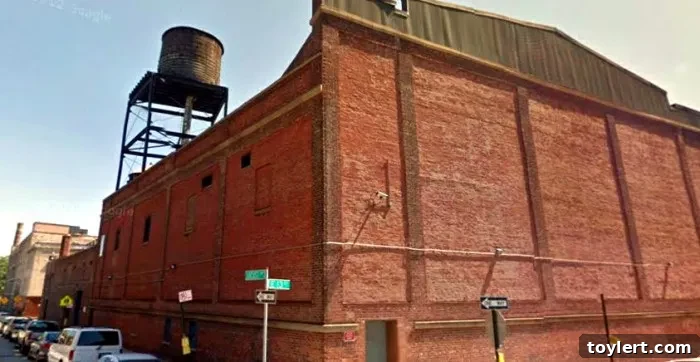
Nestled in the heart of Brooklyn’s Midwood neighborhood stands a complex of buildings that has witnessed over a century of cinematic innovation and transformation. Originally known as Vitagraph Studios, then rebranded as Warner Brothers Studio, and now operating as JC Studios, the site at 1262-1286 East 14th Street is far more than just bricks and mortar; it is a living testament to the genesis of American cinema.
This historically significant location, situated at the corner of Locust Avenue, represents a crucible where cinematic dreams were first forged. Its story is one of visionary entrepreneurs, groundbreaking technological advancements, and the relentless pursuit of storytelling through the moving image. From its origins in 1905, with subsequent additions in 1912, 1914, and as late as 1956, the architectural style reflects its industrial roots—a robust 19th-century brick factory aesthetic that evolved to meet the demands of a burgeoning industry. While the primary architect for some early structures was W. L. Stoddart, known for hotels like the Ponce De Leon in Atlanta, many contributors remain unsung. Despite its profound historical impact, this pivotal site currently holds no landmark status.
From Vision to Vitagraph: Pioneering American Cinema
The saga of this Brooklyn film studio begins in 1897 with two audacious visionaries: J. Stuart Blackton and Albert E. Smith. With an entrepreneurial spirit that belied the nascent stage of the film industry, they founded American Vitagraph in Brooklyn. At a time when the very concept of “movie making” was a bewildering novelty to most, Blackton and Smith, later joined by the shrewd distributor William “Pop” Rock, stood among the vanguard of American film entrepreneurs.
Blackton’s fascination with the moving image was ignited after witnessing Thomas Edison’s revolutionary new film projector. Captivated by its potential, and persuaded by the inventor himself to acquire one, Blackton’s curiosity blossomed into an obsession. He wasn’t content merely to observe; he was driven to create. This drive led Vitagraph to produce some of the earliest American newsreels, offering the public a captivating glimpse into current events that had previously been unimaginable. Beyond mere documentation, Vitagraph also pushed the boundaries of cinematic artistry, producing what is widely credited as the world’s first animated movie, “The Humpty Dumpty Circus.” This pioneering short film also marked the inaugural use of stop-motion photography, a technique that would revolutionize animation and special effects for decades to come, showcasing Vitagraph’s innovative spirit right from the outset.
The Relocation to Midwood: Building a Studio Empire
Initially, Blackton and Smith established their operational base with offices in Lower Manhattan. By 1907, their enterprise had flourished, transforming American Vitagraph into the most prolific film production company in the nation, churning out hundreds of silent movies and newsreels with remarkable speed. While their very first feature film was ambitiously shot on the rooftop of their Nassau Street offices, it soon became abundantly clear that such cramped quarters were unsustainable for their grand cinematic aspirations.
To truly produce films of quality, scale, and innovative complexity, they recognized an urgent need for dedicated, expansive facilities. They required ample space to construct elaborate sets that could transport audiences to diverse worlds, vast storage for an ever-growing collection of costumes and props that brought characters to life, and sophisticated infrastructure to coordinate groundbreaking special effects. The bustling, distracting environment of Manhattan was no longer conducive to their creative and logistical demands. They sought a location that was large, affordable, and preferably removed from the ceaseless clamor of the city.
Their search led them to the serene, undeveloped fields of Brooklyn, specifically the burgeoning area of Midwood. This strategic relocation marked a pivotal moment in American film production. In the early 20th century, Midwood was a far cry from the densely populated urban landscape it is today. It offered vast tracts of open land, providing the perfect canvas for Vitagraph to build a sprawling, self-contained studio complex. This move was not just about acquiring real estate; it was about laying the physical foundation for an emerging art form, creating a dedicated ecosystem where all facets of filmmaking—from pre-production to post-production—could be meticulously controlled and executed. The choice of Midwood underscored Vitagraph’s commitment to independent, large-scale production, solidifying its role as a true pioneer in the industry.
The Golden Age of Vitagraph: A Hub of Innovation and Storytelling
With its new, expansive campus in Midwood, Vitagraph Studios rapidly ascended to become a powerhouse of early American cinema. The period following its move to Brooklyn marked the studio’s golden age, characterized by relentless innovation, prolific output, and a profound influence on the burgeoning film industry. The sprawling complex, steadily expanded with new buildings in 1912, 1914, and beyond, became a hive of creative activity, where countless stories came to life on the silver screen.
Vitagraph attracted an impressive roster of talent, including many of the era’s biggest stars and visionary directors. Actors like John Bunny, Flora Finch, Earle Williams, and Norma Talmadge became household names through Vitagraph productions, starring in a diverse array of genres that captivated audiences nationwide. The studio was renowned for its melodramas, patriotic war films, comedies, historical epics, and thrilling serials that kept audiences returning week after week. Its filmography included adaptations of literary classics, original screenplays, and a steady stream of newsreels that kept America informed and entertained.
Under the guidance of its founders, Vitagraph was not just a production house; it was an incubator for cinematic techniques. Beyond stop-motion animation, they experimented with camera angles, lighting, and narrative structures, constantly pushing the boundaries of what was possible in film. Their meticulous approach to set design, costume creation, and special effects, all housed within their comprehensive Midwood facility, set new industry standards. William “Pop” Rock’s distribution acumen ensured that Vitagraph’s films reached audiences across the country, establishing one of the most effective film distribution networks of its time.
The architectural evolution of the studio mirrored its growth. While the earliest structures likely adopted the prevailing “19th-century brick factory” style, providing durable and functional spaces for sound stages and workshops, later additions would have incorporated more specialized facilities. W. L. Stoddart, an architect more commonly associated with grand hotels, lent his expertise to some of the early designs, contributing to the foundational structures that would house a cinematic revolution. This era cemented Vitagraph’s legacy as not just a studio, but a school of filmmaking, nurturing talent and defining the visual language of silent cinema for a generation.
The Dawn of Sound and the Warner Brothers Era
As the 1920s progressed, the cinematic landscape began to shift dramatically. The rapid rise of Hollywood as the undisputed global film capital, coupled with groundbreaking technological advancements, presented new challenges and opportunities. The most significant of these was the advent of synchronized sound, a revolution that would fundamentally reshape the industry and render the era of silent films obsolete almost overnight.
In 1925, facing increasing competition and the immense costs associated with transitioning to sound technology, Vitagraph Studios, a venerable pioneer, was acquired by the ambitious Warner Bros. Pictures. This acquisition marked a new chapter for the Brooklyn complex. Warner Bros., then a rapidly expanding studio, was at the forefront of the sound revolution, famously introducing the Vitaphone sound-on-disc system to the world. It was a bold move that paid off, transforming Warner Bros. into a major Hollywood player and forever changing the way films were made and experienced.
Under Warner Bros.’ ownership, the Midwood studio continued to play a vital, albeit evolving, role. While much of the large-scale feature film production shifted to Warner Bros.’ expansive West Coast facilities, the Brooklyn studio remained an active East Coast hub. It became a crucial site for producing short subjects, newsreels, and occasionally full-length features that required a New York setting or quick turnaround. The historical sound stages that once echoed with the silent direction of early pioneers now vibrated with recorded dialogue and musical scores, adapting to the demands of the “talkies.” This era saw the studio continue to contribute to American cinema, even as its primary identity transitioned from an independent innovator to a satellite of a major Hollywood studio. The final building on the complex, constructed in 1956, stands as a late testament to Warner Bros.’ continued, if diminished, presence and operational needs in Brooklyn.
From Hollywood Giant to Local Production Hub: The JC Studios Chapter
Following its tenure under Warner Bros., the historic film complex in Midwood eventually evolved into its current incarnation: JC Studios. This transition reflects the dynamic and ever-changing nature of the entertainment industry, where historic sites often find new life by adapting to contemporary production needs. While the grandeur of silent film epics and the pioneering days of sound might be relics of the past, the infrastructure and legacy of the Vitagraph-Warner Bros. complex continue to serve the creative community.
Today, JC Studios operates as a versatile and active production facility, catering to a wide array of media projects. Its sound stages, many of which date back to the early 20th century, have been modernized to host television commercials, independent film productions, music videos, and extensive photography shoots. The studio provides essential services, including state-of-the-art lighting, grip equipment, production offices, and dressing rooms, making it a comprehensive solution for contemporary content creators. This ongoing activity ensures that the spirit of filmmaking, first ignited by Blackton and Smith over a century ago, continues to thrive within these walls.
The journey from American Vitagraph to JC Studios encapsulates a microcosm of American film history. It demonstrates how physical spaces can endure through vast industrial shifts, from the experimental dawn of cinema to the highly commercialized and diverse media landscape of today. The continued operation of JC Studios underscores the enduring value of purpose-built facilities and the timeless need for creative spaces in New York City.
Architectural Heritage and Enduring Significance
The buildings at 1262-1286 East 14th Street tell a silent story of architectural adaptation and industrial evolution. The original structures, dating back to 1905, epitomized the pragmatic “19th-century brick factory” style—robust, functional, and designed for utilitarian purposes. This aesthetic provided durable, no-nonsense spaces ideal for the demanding requirements of early film production, including large sound stages, workshops for set construction, and areas for costume and prop departments.
As the studio expanded, with significant additions in 1912, 1914, and throughout subsequent decades, the architectural styles would have subtly shifted, yet maintained a cohesive industrial character. While W. L. Stoddart, an architect more recognized for his ornate hotel designs, is credited with some early contributions, the complex likely saw the hands of numerous architects and builders adapting and expanding the facilities to accommodate technological advancements and increasing production demands. The final building in 1956 represents the culmination of this continuous evolution, standing as a functional piece of mid-20th-century industrial architecture.
Despite its undeniable historical significance as the birthplace of much of early American cinema and a significant site for Warner Bros., the Vitagraph complex in Midwood has not been granted landmark status. This absence means that while its history is celebrated, the physical structures themselves do not receive the same level of legal protection that designated landmarks do. However, their continued existence and functionality as JC Studios provide a different kind of preservation—a living history where the work of filmmaking persists within its original context.
Midwood’s Cinematic Heart: A Neighborhood Transformed
The establishment of Vitagraph Studios in Midwood profoundly impacted the development and identity of this Brooklyn neighborhood. What was once largely rural and characterized by open fields gradually began to evolve with the influx of talent, crew, and supporting businesses that flocked around the burgeoning film studio. The studio brought not just jobs but a unique cultural vibrancy to the area, embedding a piece of cinematic history deep within Midwood’s fabric.
While Midwood today is a densely populated and diverse residential neighborhood, the presence of JC Studios serves as a tangible link to its past as a creative frontier. It stands as a reminder that Brooklyn, far from being merely Manhattan’s quiet neighbor, has always been a hotbed of innovation and artistic endeavor. The story of 1262-1286 East 14th Street is interwoven with the narrative of Midwood itself, representing a significant chapter in its transformation from rural outpost to a vibrant urban district with a storied past.
Conclusion: A Century of Stories, A Future of Film
The journey of the film studio at 1262-1286 East 14th Street, from its humble beginnings as Vitagraph Studios to its modern incarnation as JC Studios, is a remarkable saga of resilience, innovation, and continuous adaptation. It chronicles the very birth and evolution of American cinema, from the pioneering vision of J. Stuart Blackton and Albert E. Smith who defied conventional wisdom to make movies, through the golden age of silent films, the revolutionary shift to sound under Warner Bros., and its ongoing role in contemporary media production.
This Brooklyn complex is more than just a collection of buildings; it is a monument to human ingenuity and the enduring power of storytelling. Its walls have witnessed the creation of cinematic firsts, nurtured generations of talent, and adapted to every seismic shift in the industry. As it continues to operate today, JC Studios carries forward the torch of its illustrious predecessors, ensuring that the legacy of this Brooklyn icon—a true crucible of American film—continues to inspire and facilitate the magic of moviemaking for generations to come. It stands as a powerful symbol of Brooklyn’s indelible contribution to the world of entertainment, a silent sentinel that has seen, and continues to make, history, one frame at a time.