Delving into the captivating world of historic home renovations and the intriguing discoveries they often yield, we share insights and inspiring stories this week.
Unearthing History: The Thrill of Discovery in Old House Renovations
For many, the appeal of an old house extends far beyond its architectural charm; it’s the promise of a story waiting to be told, a legacy waiting to be uncovered. Renovation, in this context, transforms from a mere construction project into an archaeological expedition. Each wall opened, floorboard lifted, or attic explored presents an opportunity to connect with the past, to find tangible evidence of lives lived long ago.
The journey of restoring a historic home is often punctuated by moments of pure exhilaration – the sudden discovery of a hidden treasure, a personal artifact, or an intriguing clue that deepens the narrative of the dwelling. These finds are more than just old objects; they are whispers from another era, offering a direct, intimate connection to previous occupants and the evolution of the house itself. They transform a renovation into an enriching historical pursuit, breathing new life into forgotten tales.
Hidden Treasures: Artifacts That Speak Volumes
The online community for old house enthusiasts is a vibrant testament to this shared passion for discovery. Forums buzz with stories of incredible finds, showcasing how every home, regardless of its grandeur, possesses a unique history. These unearthed artifacts provide invaluable insights into the daily lives, beliefs, and even the superstitions of those who came before us.
Consider the fascinating experiences shared on platforms like My Old House Online, where renovators recount their most remarkable discoveries. Imagine peeling back layers of time to reveal objects that haven’t seen the light of day in decades, or even centuries. This act of discovery is truly a highlight for anyone passionate about historical preservation.
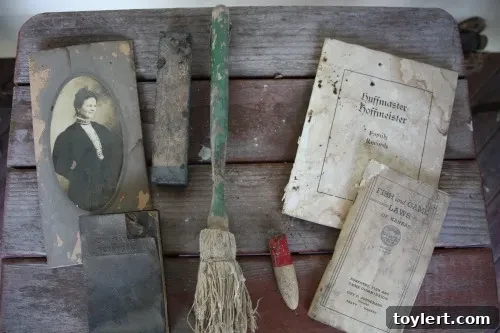
The image below provides a glimpse into such discoveries, featuring an old photograph and various personal objects found carefully tucked away in the attic of an exquisite 1885 Italianate house. Such finds are not uncommon; they are an exciting part of the old house renovation experience.
Echoes of Everyday Life: Photos and Personal Mementos
Among the most poignant discoveries are old photographs and personal mementos. An aged photograph, perhaps depicting former residents or the house itself in an earlier state, offers a powerful visual link to the past. These images often provide details about fashion, social customs, or even landscaping that can inform sensitive restoration efforts. Alongside photos, items like old letters, children’s toys, or forgotten tools paint a vivid picture of the domestic life that once thrived within the home’s walls. They humanize the structure, transforming it from mere bricks and mortar into a repository of human experience.
Mysteries and Superstitions: The Curious Case of Concealment Shoes
One of the more peculiar and historically rich finds often reported are “concealment shoes.” These are old shoes, frequently children’s shoes, found hidden within walls, chimneys, or under floorboards. Far from being lost items, these shoes were deliberately placed, often as a form of folk magic to ward off evil spirits, ensure good luck, or even to commemorate a life event. Their discovery offers a fascinating window into the beliefs and superstitions prevalent in earlier centuries, adding a layer of anthropological intrigue to the renovation process. Unearthing a concealment shoe is like finding a direct message from a bygone era about the protective rituals performed within the very home you’re restoring.
Layers of History: Wallpaper as a Chronological Canvas
Beyond personal items, the house itself often contains its own historical records. Old wallpaper, for instance, can be a chronological canvas. Peeling back layers of faded patterns can reveal changing tastes and decorative trends through the decades. Each layer represents a period in the home’s life, a stylistic choice of a former owner. Preserving fragments of these historical wallpapers, or even meticulously reproducing them, can be a beautiful way to honor the aesthetic evolution of the house and its previous inhabitants.
Windows into the Past: Coins, Bones, and Builder’s Marks
Other fascinating finds include old coins, sometimes found in walls or under thresholds, offering clues about the construction date or the economic context of the era. Animal bones, often found near hearths or foundations, might indicate ancient rituals, dietary habits, or even beloved family pets. Perhaps most compelling are inscriptions left by builders or former occupants. A name scratched into a beam, a date etched into a foundation stone, or a message hidden in a wall cavity provides a direct, personal connection, a deliberate attempt to communicate across time. These marks make the history of the house tangible and intensely personal.
Leisure and Laughter: Vintage Games and Childhood Memories
Sometimes, discoveries reveal the lighter side of history. Old board games from the 1890s, marbles, or other children’s playthings often surface during renovations. These items offer a glimpse into the leisure activities and childhoods of yesteryear, reminding us that even within the solemn walls of a historic dwelling, there was once laughter, play, and the simple joys of family life.
The Renovation as an Archaeological Expedition
Approaching a historic home renovation with the mindset of an archaeologist can transform the entire experience. It encourages a meticulous and respectful process, where every structural element and concealed space is examined for potential historical significance. This means more than just demolition; it involves careful dismantling, documentation, and the keen observation that might lead to an unexpected and invaluable find. Renovation becomes a detective story, with the house itself serving as the primary witness.
The ultimate goal is not just to modernize or repair, but to understand and preserve. When an artifact is found, questions arise: Who owned this? What was its purpose? How does it fit into the broader story of this house and the community? These questions drive a deeper engagement with the property’s past, ensuring that its unique character and heritage are respected throughout the restoration.
Below, an image captures the essence of a beautifully preserved interior, showcasing the potential for old homes to blend historical integrity with modern comfort, creating spaces that are both functional and deeply resonant with history.
Connecting with the Past: The Value of Community and Shared Discoveries
The shared experience of discovering hidden historical artifacts during home renovations fosters a strong sense of community among enthusiasts. Online forums and dedicated groups, such as the discussion thread “Share Your Hidden Treasures” on My Old House Online, serve as invaluable platforms for sharing these exciting finds. They allow renovators to post photos, ask questions, and receive insights from fellow history buffs and preservation experts. This collective knowledge not only helps identify and understand specific artifacts but also inspires others to approach their own projects with a keen eye for history. The act of sharing these stories ensures that the past remains alive and celebrated, connecting countless individuals through the unique histories embedded within their homes.
Find out more about fascinating discoveries and join the conversation: Share Your Hidden Treasures. Photo credit for the attic artifacts: SMaclaskey.
Preserving Legacy: Tips for the Modern Renovator
For those embarking on their own old house renovation journey, a few key principles can enhance the experience and ensure responsible preservation:
- Be Observant: Approach every demolition or alteration with a keen eye. What might seem like trash could be a valuable piece of history.
- Document Everything: Take photos and notes of any significant findings, noting their location and context. This documentation is crucial for understanding the item’s story.
- Research: Once an item is found, research its potential origins, purpose, and significance. Online communities and local historical societies are excellent resources.
- Consult Experts: For particularly fragile or historically significant items, consult with conservators or archaeologists.
- Respect the History: Decide whether to preserve, restore, or display the artifact. Sometimes, simply acknowledging its presence and protecting it in situ is the best approach.
- Share Your Story: Contribute to the collective knowledge by sharing your discoveries with online communities or local historians.
Conclusion: Every Old House Has a Story to Tell
Old houses are more than just dwellings; they are living archives, filled with stories waiting to be discovered. The act of renovation, when approached with curiosity and respect, becomes a profound dialogue with the past. Each hidden treasure, from a child’s forgotten toy to a builder’s secret inscription, enriches our understanding of the lives lived within these walls. These discoveries not only inform our restoration efforts but also connect us to a broader historical narrative, making our homes not just places to live, but cherished custodians of time. Embrace the adventure, and who knows what remarkable tales your old house might reveal next?