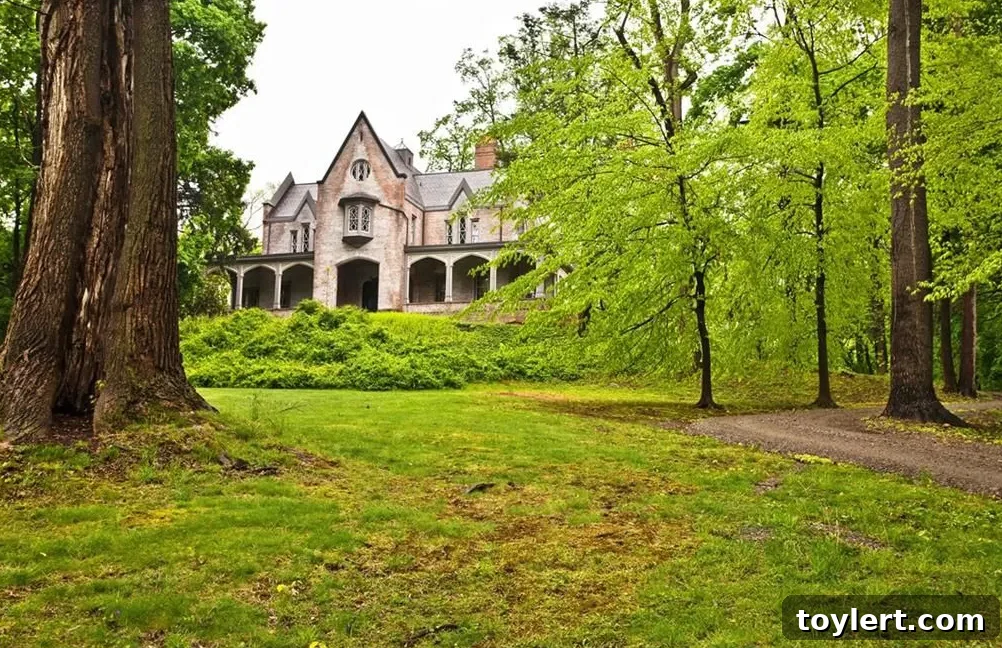
Nestled gracefully along the picturesque banks of the Hudson River, an architectural marvel stands as a testament to 19th-century grandeur and historical significance. For over a century, this majestic Gothic Revival manse served as the cherished country retreat for a family deeply embedded in American history, led by a patriarch who was one of the most distinguished jurists of his era. Beyond the prominent family who commissioned it, the residence holds immense interest for its extraordinary design, conceived by none other than the legendary architect Alexander Jackson Davis.
Hurst Pierrepont: An Alexander Jackson Davis Masterpiece in the Hudson Valley
The esteemed property, currently available on the market at 1070 Route 9D in Garrison, New York, is an iconic example of America’s rich architectural heritage. Completed in 1867 for the distinguished couple Edwards and Margaretta Pierrepont, this residence, affectionately known as Hurst Pierrepont, and the expansive estate surrounding it, is believed to have derived its name from the ancient family manor located in Sussex, England. This ancestral connection harks back centuries, linking the American Pierreponts to Robert de Pierrepont, who was granted lands for his loyal service to William the Conqueror.
The Visionary Architect: Alexander Jackson Davis and Gothic Revival Grandeur
The architectural genius behind Hurst Pierrepont, Alexander Jackson Davis, was a titan of 19th-century American design. A pioneer of the Gothic Revival style in the United States, Davis was instrumental in shaping the aesthetic of country estates and public buildings across the nation. His influence permeated the era, defining an architectural language that blended romanticism with historical reverence. Davis’s work is characterized by a meticulous attention to detail, a profound understanding of picturesque landscape design, and an unparalleled ability to imbue structures with character and narrative.
Hurst Pierrepont stands as a quintessential example of Davis’s mature Gothic Revival style. Unlike the more austere classical designs prevalent in earlier periods, Davis embraced the whimsical and dramatic elements of medieval architecture, translating them into elegant and functional American homes. Expect to find signature Gothic features such as intricate tracery, pointed arch windows, steeply pitched gables, decorative bargeboards, and possibly even crenellated towers or turrets that evoke a sense of a stately European castle. Each element was carefully considered to create a harmonious and visually captivating composition, making the house not just a dwelling, but a work of art that integrates seamlessly with its natural surroundings along the majestic Hudson River.
Davis’s philosophy extended beyond mere structural design; he envisioned homes as integrated parts of their landscapes, creating a holistic experience that connected inhabitants with nature. His designs often featured expansive verandas and strategically placed windows to maximize views, a crucial aspect for a property like Hurst Pierrepont, which undoubtedly boasts breathtaking vistas of the Hudson River and the rolling hills of the Hudson Valley. Owning a Davis-designed home is to own a piece of American architectural heritage, a testament to an era when craftsmanship and artistic vision were paramount.
The Illustrious Pierrepont Family: A Legacy of Influence
Edwards Pierrepont: Jurist, Diplomat, and Statesman
The man who commissioned this magnificent estate, Edwards Pierrepont, was a towering figure in 19th-century American society. Born in 1817, Pierrepont forged a distinguished career as a prominent lawyer, judge, and diplomat. His intellect and integrity propelled him to national prominence, leading to his appointment as Attorney General of the United States under President Ulysses S. Grant. In this role, he played a crucial part in the post-Civil War Reconstruction era, navigating complex legal and social challenges. Later, his diplomatic prowess was recognized when he served as the U.S. Minister to the United Kingdom, where he strengthened Anglo-American relations during a sensitive period.
Edwards Pierrepont’s life mirrored the ambitious spirit of America in its formative years. His dedication to public service and his cultivated tastes are reflected in the choice of Alexander Jackson Davis as his architect and the construction of Hurst Pierrepont as his family’s sanctuary. This country retreat provided a respite from the demanding pace of public life, offering a serene environment for intellectual pursuits, family gatherings, and social engagements befitting a man of his stature. Margaretta Pierrepont, his wife, would have presided over the household, ensuring the estate served as a vibrant hub of culture and hospitality.
The Pierrepont Family Tree: From English Nobility to American Founders
The Pierrepont name carries significant weight in American history, particularly for residents of New York City. Brooklynites, in particular, will recognize the name as it graces one of the most elegant streets in Brooklyn Heights – Pierrepont Street. This street was named after Hezekiah Beers Pierrepont, a colossal figure in the early 19th-century development of Brooklyn. Hezekiah, a major landowner and merchant, was instrumental in transforming Brooklyn into a bustling urban center.
Edwards Pierrepont was a distant but direct descendant of this illustrious lineage, tracing his roots back to the revered Reverend James Pierrepont of New Haven. Reverend Pierrepont was a pivotal figure in the founding of Yale College (now Yale University) in 1701, solidifying the family’s deep connections to education and the establishment of American institutions. This lineage highlights a family tradition of leadership, intellectual rigor, and profound contributions to the burgeoning American republic.
The family’s deep historical roots extend even further back across the Atlantic. The name “Hurst Pierrepont” itself is a nod to their ancestral home in Sussex, England, signifying a proud heritage linked to the very foundations of English nobility. This continuous thread of distinction, from medieval England to colonial America and through the Gilded Age, underscores the profound historical legacy associated with the Pierrepont name and, by extension, with the magnificent estate that bears its name.
Hurst Pierrepont Today: A Timeless Investment in History and Luxury
Today, Hurst Pierrepont offers a unique opportunity to own a piece of this extraordinary heritage. Owning such a property is not merely acquiring real estate; it is becoming a custodian of a significant chapter in American architectural and social history. The grandeur of its Gothic Revival design, coupled with its idyllic setting near the Hudson River, makes it an unparalleled offering in the luxury real estate market.
The location in Garrison, NY, further enhances its appeal. The Hudson Valley is renowned for its natural beauty, vibrant arts scene, and rich historical tapestry. Residents enjoy access to scenic hiking trails, charming small towns, acclaimed farm-to-table dining, and a thriving cultural landscape, all within a reasonable commute to New York City. This blend of historical significance, architectural brilliance, and prime location makes Hurst Pierrepont an ideal country retreat for those seeking privacy, luxury, and a connection to the past.
Potential buyers will appreciate the meticulously preserved details and the enduring craftsmanship inherent in an Alexander Jackson Davis creation. While historic homes often require careful stewardship, the reward is an unparalleled living experience – a journey back in time without sacrificing modern comforts. Imagine entertaining guests in spaces designed for opulent Victorian-era gatherings, or simply enjoying the tranquil solitude of the Hudson River views that have captivated generations.
Artistic Echoes: The Busts by Augustus Saint-Gaudens
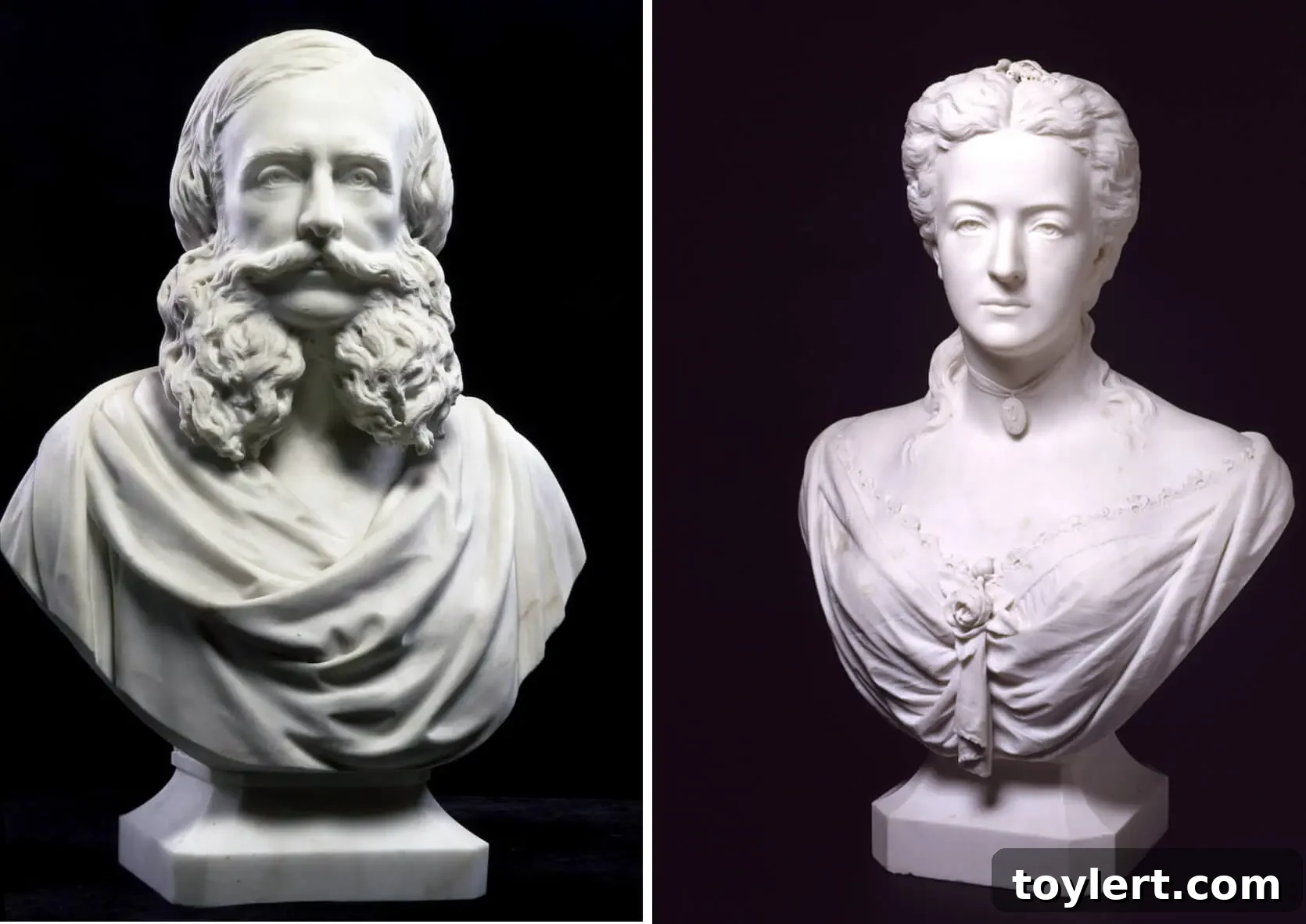
The inclusion of the busts of Edwards and Margaretta Pierrepont, crafted by the renowned sculptor Augustus Saint-Gaudens in 1874, adds another layer of cultural significance to the Pierrepont legacy. Saint-Gaudens was arguably the most important American sculptor of the late 19th century, known for his masterful portraiture and monumental public works. His ability to capture the dignity and essence of his subjects made him highly sought after by the era’s elite.
The existence of these busts speaks volumes about the Pierreponts’ standing and their appreciation for fine art. Commissioning a portrait from an artist of Saint-Gaudens’ caliber was a statement of wealth, taste, and cultural sophistication. These sculptures serve as tangible links to the individuals who shaped Hurst Pierrepont, offering a powerful human connection to the history embedded within its walls. They remind us that this grand house was, at its heart, a home for a family of immense influence and cultivated sensibilities.
A Lasting Legacy on the Hudson
Hurst Pierrepont is more than just a house; it is a monument to an era of exceptional architectural vision and profound historical events. It represents the pinnacle of Gothic Revival design in America, a testament to the Pierrepont family’s enduring legacy, and a cherished piece of the Hudson Valley’s rich narrative. As it seeks its next steward, this magnificent estate offers an extraordinary opportunity to live within a masterpiece, steeped in history, and surrounded by unparalleled natural beauty. It invites a new chapter, promising a future as distinguished as its past, for those who appreciate the rare blend of historical authenticity and luxurious living.