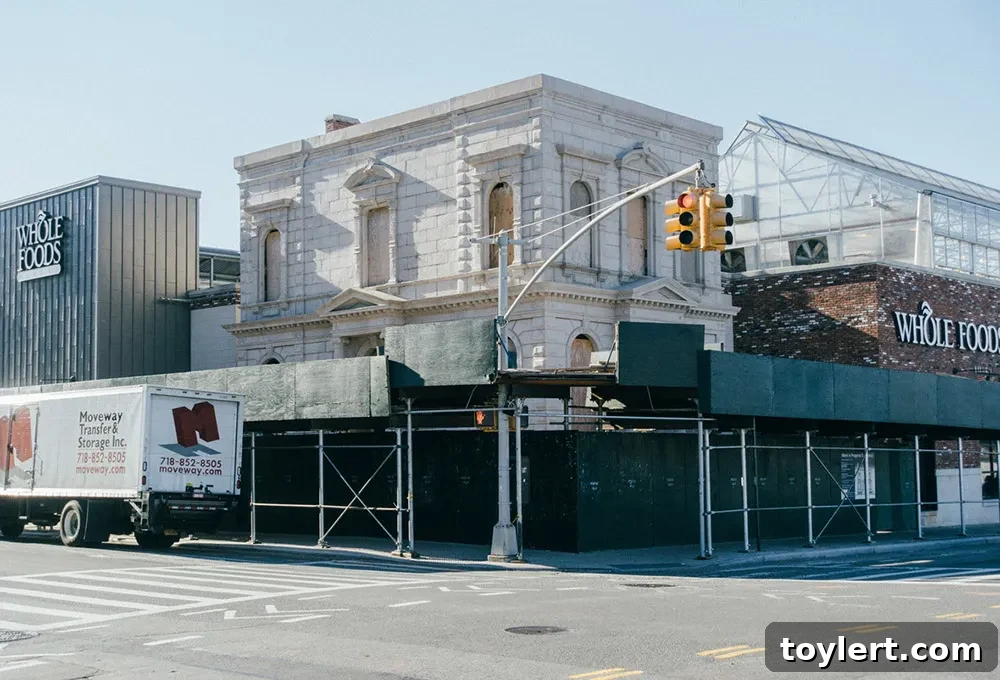
The Coignet Stone Building, a venerable and long-neglected fixture of the Gowanus landscape, has finally shed its decades of decay. Once an undeniable eyesore at 360 3rd Avenue, this historic Brooklyn landmark now stands proudly rejuvenated, its intricate facade gleaming in the Brooklyn sun. The transformation is striking, with its once crumbling exterior meticulously restored to a pristine white, a stark and welcoming contrast to its former derelict state. This monumental facelift marks a new chapter for one of Brooklyn’s most unique architectural treasures, symbolizing a triumph of historic preservation in a rapidly evolving urban environment. Its brilliant new appearance now almost rivals the bright signage of the adjacent Whole Foods, a fitting testament to its dramatic resurgence and its renewed prominence in the Gowanus neighborhood.
The Rich History and Architectural Significance of the Coignet Stone Building
Erected in 1872, the Coignet Stone Building is more than just an old structure; it’s a testament to pioneering architectural innovation. Built for the New York and Long Island Coignet Stone Company, it proudly showcased the groundbreaking material known as “Béton Coignet” – an early form of precast concrete. This revolutionary material, developed by French industrialist François Coignet, was celebrated for its ability to create intricate architectural details that elegantly mimicked expensive cut stone, but at a fraction of the cost and with enhanced durability. The building itself stands as an exquisite example of Second Empire or French Renaissance Revival architecture, characterized by its distinctive mansard roof, ornate window surrounds, and richly textured facade. Its designation as a New York City landmark underscores its singular importance, not only as an early demonstrator of concrete technology in American architecture but also as a significant piece of Gowanus’s rich industrial heritage. Its original purpose was to serve as a showpiece and office for the company, demonstrating the versatility and aesthetic potential of their innovative building material.
From Landmark to Long-Lived Eyesore: Decades of Neglect in Gowanus
For many years, however, the architectural brilliance of the Coignet Stone Building was tragically obscured by decades of neglect. It stood as a stark and increasingly dilapidated reminder of Gowanus’s industrial past, its once grand facade slowly succumbing to the ravages of time, weather, and environmental exposure. Crumbling concrete elements, discolored surfaces, and visible signs of structural decay rendered the landmark an undeniable eyesore, a poignant symbol of urban deterioration amidst a neighborhood grappling with both its gritty history and the promises of revitalization. Locals, preservationists, and architects alike watched with growing concern as the building continued to deteriorate, its immense historical and architectural potential hidden beneath layers of grime, damage, and scaffolding. Its forlorn state was a constant topic of discussion, highlighting the profound challenges of preserving historic structures in a dynamic urban setting where economic development often overshadowed the delicate balance of architectural conservation. The building’s plight became a powerful symbol for the struggle to maintain Gowanus’s unique character as the area underwent significant demographic and structural changes.
The Whole Foods Agreement and the Painstaking Restoration Process
The tide began to turn for the Coignet Stone Building with the controversial development of the Whole Foods Market on the adjacent site. As part of a complex and highly scrutinized agreement to facilitate the supermarket’s construction, Whole Foods committed to undertaking the extensive restoration of the historic landmark. This commitment, however, was not without its hurdles and delays. The original narrative hints at these challenges, noting that it took two separate fines from the vigilant New York City Landmarks Preservation Commission (LPC) before significant and sustained restoration efforts truly commenced. These fines underscored the critical importance the LPC placed on the preservation of this unique Brooklyn landmark and ultimately served as a powerful catalyst for action, pushing the project forward. The restoration project itself was a meticulous and painstaking undertaking, requiring specialized expertise. Preservation architects and skilled craftsmen worked diligently to clean and repair the damaged Béton Coignet, carefully replicating original details and ensuring the long-term structural integrity of the nearly 150-year-old facade. This involved extensive research into the original material composition and construction techniques to ensure historical accuracy, using modern methods that respected the building’s heritage. The multi-year process transformed the building from a dilapidated ruin into the gleaming monument it is today, bringing back the pristine white appearance that was characteristic of its initial construction, and revealing the intricate architectural details that had been hidden beneath layers of dirt and decay for decades.
Showcasing Innovation: Architectural Details and Béton Coignet
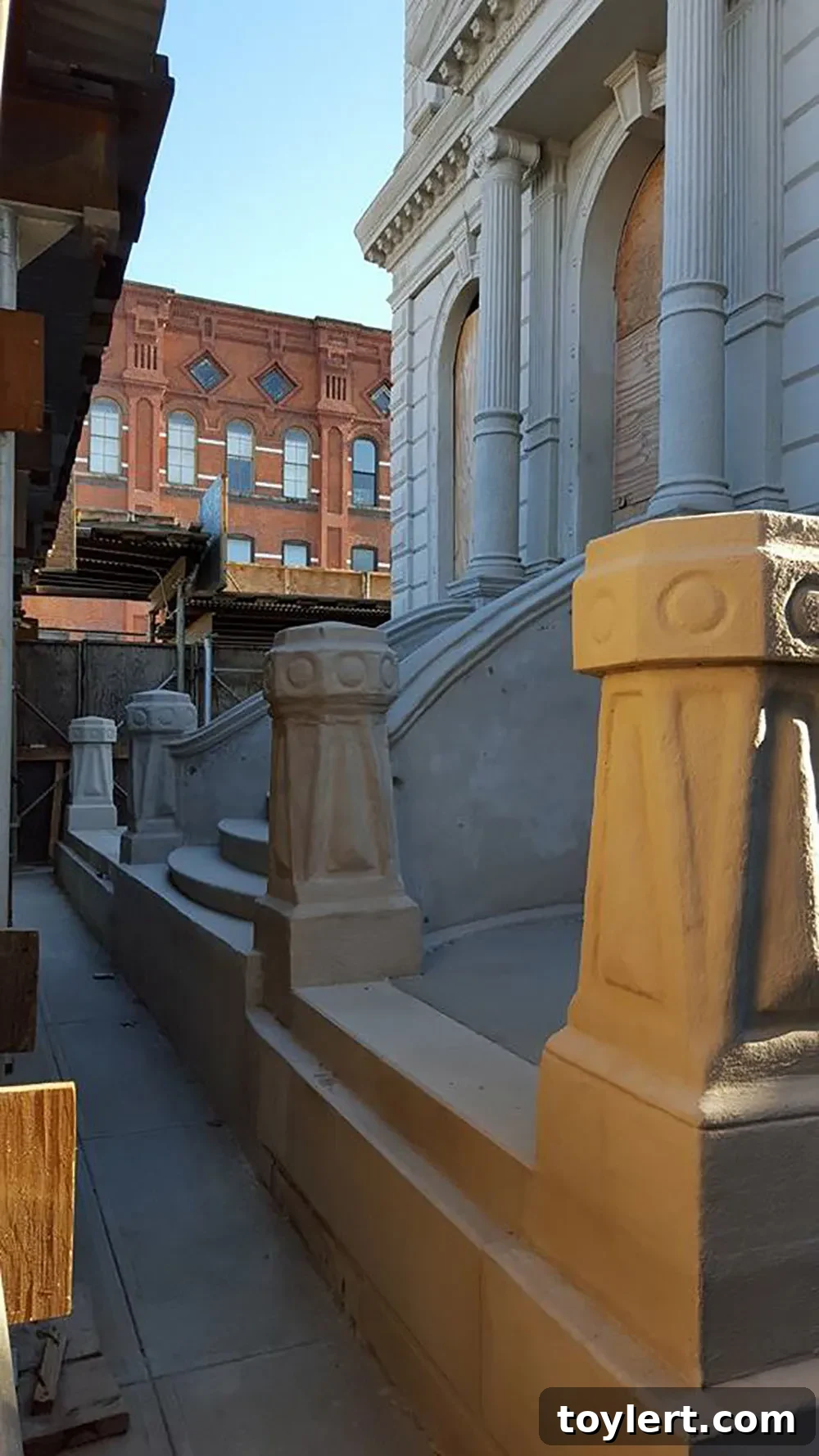
The revitalized Coignet Stone Building now allows its remarkable architectural features to shine, proudly displaying its innovative construction. Its ornate facade, a testament to the versatility and aesthetic potential of Béton Coignet, showcases elements typically associated with high-status masonry work. Elaborate cornices, decorative window pediments, finely detailed quoins, and classical balustrades are all masterfully crafted from this early precast concrete, demonstrating its impressive capacity to mimic traditional stone carving with precision and beauty. The building’s distinctive Mansard roof, a hallmark of the Second Empire style, adds to its grandeur and provides a dramatic, iconic silhouette against the ever-evolving Brooklyn skyline. The innovative use of Béton Coignet was a game-changer in 19th-century construction, offering a durable, fire-resistant, and aesthetically flexible alternative to natural stone. This material allowed for the relatively economical mass production of intricate decorative elements, making ornate and detailed architecture more accessible than ever before. The comprehensive restoration has not only preserved these significant historical details but has also brilliantly highlighted the advanced construction techniques employed in its original design, reminding us of a pivotal moment in the history of building materials and architectural ingenuity.
A Beacon of Preservation: Impact on the Gowanus Neighborhood
The magnificent restoration of the Coignet Stone Building stands as a powerful symbol within the broader narrative of Gowanus’s rapid transformation. Once an industrial hub characterized by its eponymous canal, warehouses, and factories, Gowanus is now experiencing significant gentrification, marked by the emergence of new residential developments, modern retail establishments, and a burgeoning arts and cultural scene. The gleaming white facade of the Coignet Building, now prominently positioned directly next to the contemporary architecture of the Whole Foods Market, creates a fascinating visual dialogue between the neighborhood’s industrial past and its revitalized present. It serves as a crucial and elegant landmark that grounds new developments in local history, actively preventing the erasure of the area’s unique character and identity. For residents, visitors, and history enthusiasts, the rejuvenated building offers a tangible, inspiring connection to Brooklyn’s rich industrial and architectural heritage, demonstrating unequivocally that progress and thoughtful preservation can indeed coexist. It acts as a beacon of successful heritage conservation, inspiring further efforts to protect and celebrate the distinctive identity of this rapidly changing and increasingly vibrant Brooklyn enclave, ensuring its history is remembered amidst its future.
Conclusion: A New Chapter for the Coignet Stone Building
From a crumbling relic to a gleaming beacon, the Coignet Stone Building’s extraordinary journey is a compelling testament to the power and importance of historical preservation. Its magnificent restoration has not only saved an irreplaceable New York City landmark but has also brought renewed vitality and architectural beauty to a key corner of the Gowanus neighborhood. The painstaking efforts to revive its pioneering Béton Coignet facade ensure that its innovative architectural significance will be appreciated and understood by future generations. Standing proudly at 360 3rd Avenue, the Coignet Building is no longer merely an eyesore but a celebrated landmark, embodying the enduring spirit of Brooklyn’s past and its hopeful, revitalized future. Its bright and majestic presence now serves as a vibrant reminder of the rich history embedded within the urban fabric of Gowanus, showcasing a successful blend of architectural heritage and contemporary urban renewal.