Sustainable Futures: Navigating the Brooklyn Bridge Park Pier 6 Funding Debate
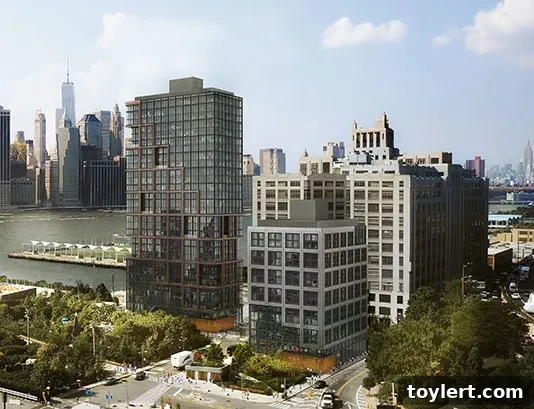
The future of Brooklyn Bridge Park, a cherished waterfront green space, is once again at the heart of a significant public debate, particularly concerning the contentious Pier 6 development. A pivotal moment recently unfolded when the New York City Comptroller’s Office suggested a potentially game-changing alternative for financing the park’s essential capital improvements: the issuance of tax-exempt bonds. This proposal injects a new dimension into the ongoing struggle over how best to ensure the long-term financial viability and ecological health of one of New York City’s most iconic parks, challenging existing plans for revenue-generating residential towers.
For years, community groups and environmental advocates have voiced strong opposition to the Brooklyn Bridge Park Corporation’s (BBPC) proposals to construct two apartment buildings at the park’s southern end, near Pier 6. These towers were envisioned as the primary funding mechanism for the park’s maintenance and future capital needs, based on a “self-sustaining” model mandated during the park’s inception. However, opponents argue that such development compromises the park’s public nature and scenic integrity. The Comptroller’s new suggestion to explore tax-exempt bonds offers a beacon of hope for those pushing for a funding strategy that preserves the park’s open spaces and public access without relying on private residential development.
The Genesis of a Waterfront Jewel: Brooklyn Bridge Park’s Unique Mandate
Brooklyn Bridge Park stands as a testament to transformative urban planning, converting a derelict industrial waterfront into an 85-acre recreational and ecological masterpiece. Stretching 1.3 miles along the East River, it offers unparalleled views of the Manhattan skyline, the Statue of Liberty, and the Brooklyn Bridge itself. Since its phased opening starting in 2010, the park has become an indispensable civic asset, drawing millions of visitors annually and serving as a vital green lung for Brooklyn residents.
However, the park’s creation came with a unique and challenging mandate: it was designed to be financially self-sustaining. This directive, established by the Empire State Development Corporation (ESDC) in 2002, stipulated that the park’s operations and capital improvements should be funded primarily through revenue generated from within the park itself, rather than relying on significant public tax dollars. This model was intended to avoid placing a burden on city or state budgets but inadvertently laid the groundwork for the persistent controversies surrounding development proposals like those at Pier 6.
The BBPC, a not-for-profit entity responsible for the park’s planning, construction, maintenance, and operation, has consistently cited this self-sustaining mandate as the driving force behind its commercial development plans. Their argument has been that without the substantial revenue generated by residential or commercial properties within or adjacent to the park, it would be impossible to meet the park’s extensive operational costs, which include horticultural care, structural maintenance of piers, security, and programming.
The Pier 6 Controversy: Development Versus Preservation
At the heart of the current funding debate lies the contentious plan to build two residential towers at Pier 6. These proposed developments would include market-rate and affordable housing units, with the revenue from ground leases and property taxes allocated to the park’s maintenance fund. From the BBPC’s perspective, these towers represent a practical and necessary solution to fulfill the park’s financial independence clause.
However, the opposition to the Pier 6 towers is robust and multifaceted. Led by local community organizations such as the Brooklyn Heights Association, Preserve Our Parks, and prominent civic leaders, opponents argue that the construction of private residential buildings within the park’s boundaries fundamentally contradicts its purpose as a public green space. Their concerns are broad, encompassing:
- Loss of Public Space: The towers would occupy what many see as precious public parkland, setting a dangerous precedent for further commercialization of public amenities.
- Visual Impact: Critics contend that the height and density of the proposed buildings would obstruct iconic views, diminish the park’s open feel, and detract from its aesthetic appeal.
- Traffic and Infrastructure Strain: Adding hundreds of new residents to an already dense area could exacerbate traffic congestion, strain local schools, and overwhelm public transportation.
- Environmental Concerns: Waterfront development can raise questions about flood resiliency, shadow impacts on plant life, and long-term ecological sustainability.
- Alternative Funding: Opponents have consistently pushed for alternative funding mechanisms, arguing that the need for residential development is not as absolute as the BBPC suggests.
This enduring conflict highlights a fundamental tension in urban development: balancing the need for financial resources with the preservation of public character and environmental quality in cherished community assets.
The Comptroller’s Intervention: A New Path with Tax-Exempt Bonds
The recent announcement from the New York City Comptroller’s Office, as reported by The Brooklyn Eagle, introduces a significant alternative into this long-standing debate. The Comptroller’s office has indicated that the BBPC “might be able to fund capital improvements to the park by issuing tax-exempt bonds.” This official statement from a key city financial oversight body carries considerable weight and offers a credible, non-development-based funding strategy.
What Are Tax-Exempt Bonds?
Tax-exempt bonds are a common financing tool used by state and local governments and their agencies to fund public projects. When an entity like the BBPC issues these bonds, it borrows money from investors. In return, investors receive interest payments that are exempt from federal, and often state and local, income taxes. This tax exemption makes the bonds attractive to investors, allowing the issuer to borrow money at a lower interest rate compared to taxable bonds. The proceeds from the bond sale can then be used to finance capital projects, such as park improvements, infrastructure upgrades, or new public facilities.
Advantages of Using Bonds for Park Funding:
The proposal to use tax-exempt bonds for Brooklyn Bridge Park offers several compelling advantages, particularly from the perspective of the Pier 6 opponents:
- Preservation of Public Space: This option would eliminate the need for residential towers at Pier 6, thereby preserving the park’s designated public space and preventing further private development within its boundaries.
- Maintaining Park Character: It allows the park to maintain its open, natural, and recreational character without the visual or community impact of large residential buildings.
- Targeted Funding: Bond proceeds are typically earmarked for specific capital projects, ensuring that the funds are directly invested in the park’s infrastructure, such as pier repair, landscaping, or recreational facilities.
- Potential for Broader Support: A funding model that doesn’t involve private development is likely to garner wider support from community groups, environmental advocates, and elected officials who have long opposed the Pier 6 towers.
Challenges and Considerations for Bond Financing:
While attractive, the bond financing route is not without its complexities and potential challenges:
- Debt Repayment: Bonds create a long-term debt obligation. The BBPC would need to demonstrate a reliable and sustainable revenue stream to cover the principal and interest payments over the life of the bonds. This repayment mechanism would need to be carefully structured and secured.
- Market Conditions: The cost of borrowing (interest rates) can fluctuate with market conditions, impacting the overall expense of the bond issue.
- Political Will: Issuing bonds for such a purpose would require significant political will and cooperation from various city and state agencies, including the Mayor’s Office, the Comptroller’s Office, and potentially the City Council.
- Scale of Funding: It needs to be determined whether bond issuance alone can generate sufficient funds not only for immediate capital improvements but also for the park’s vast ongoing operational costs, which the tower developments were also meant to address.
Weighing the Funding Models: Development vs. Public Finance
The debate over Brooklyn Bridge Park’s funding boils down to two fundamentally different philosophies for maintaining public assets: relying on private development for revenue versus utilizing public finance mechanisms. Each approach carries its own set of benefits and drawbacks.
Revenue-Generating Development (e.g., Pier 6 Towers):
- Pros:
- Direct Revenue Stream: Provides a steady income source through ground leases and property taxes without direct taxpayer outlays.
- Reduced Public Burden: Aligns with the “self-sustaining” mandate, theoretically freeing up public funds for other city services.
- Private Sector Efficiency: Leverages private sector investment and development expertise.
- Cons:
- Erosion of Public Space: Transforms publicly accessible land into private residential areas, diminishing the park’s core mission.
- Community Opposition: Often faces intense local resistance due to concerns about overdevelopment, views, and precedent.
- Long-Term Impact: Permanent alteration of the park’s character and potential for future development creep.
Tax-Exempt Bonds:
- Pros:
- Preserves Public Character: Avoids private residential development within the park, maintaining its integrity as a public amenity.
- Specific Project Funding: Provides a clear, dedicated source for capital improvements.
- Leverages Public Trust: Utilizes the city’s strong credit rating to secure favorable borrowing terms.
- Cons:
- Debt Creation: Involves taking on long-term financial obligations.
- Repayment Challenge: Requires a reliable, independent revenue stream or city/state backing for debt service, which may indirectly involve public funds.
- Scope Limitation: Might primarily cover capital costs, potentially leaving operational funding needs unaddressed unless supplemented by other sources.
Beyond these two main contenders, other supplementary funding sources could be explored, including increased philanthropic contributions, enhanced concession revenues from within the park (e.g., restaurants, recreational facilities), and potentially a dedicated stream of city or state funding, acknowledging the park’s significant economic and social benefits to the wider region.
The Path Forward: Collaboration and Sustainable Solutions
The Comptroller’s suggestion to explore tax-exempt bonds represents more than just a financial alternative; it signifies an opportunity for a renewed dialogue between the BBPC, community advocates, and city officials. It compels all stakeholders to re-evaluate the original self-sustaining mandate and consider whether its strict interpretation still serves the best interests of the park and the public.
Moving forward, a collaborative approach will be essential. This could involve:
- Feasibility Studies: Detailed financial analyses to determine the viability of bond financing, including potential repayment sources and market assessments.
- Public Engagement: Open and transparent discussions with the community about all available funding options, their implications, and potential trade-offs.
- Political Consensus: Building broad political support for any chosen funding strategy, ensuring long-term stability and commitment.
- Holistic Review: Examining the park’s financial model in its entirety, considering all potential revenue streams beyond just residential development.
The Brooklyn Bridge Park funding controversy underscores a universal challenge faced by urban parks globally: how to ensure the enduring sustainability of invaluable public green spaces in an era of constrained public budgets and increasing development pressures. The decision made regarding Pier 6 will not only shape the future of Brooklyn Bridge Park but also set a precedent for how New York City, and potentially other municipalities, approach the financing and preservation of their crucial public amenities.
Ultimately, the goal is to secure a future for Brooklyn Bridge Park that is not only financially sound but also truly reflective of its purpose: a vibrant, accessible, and ecologically rich waterfront park for all New Yorkers and visitors to enjoy for generations to come. The Comptroller’s intervention offers a critical moment for reflection and a potential turning point toward a more publicly oriented and sustainable funding solution.