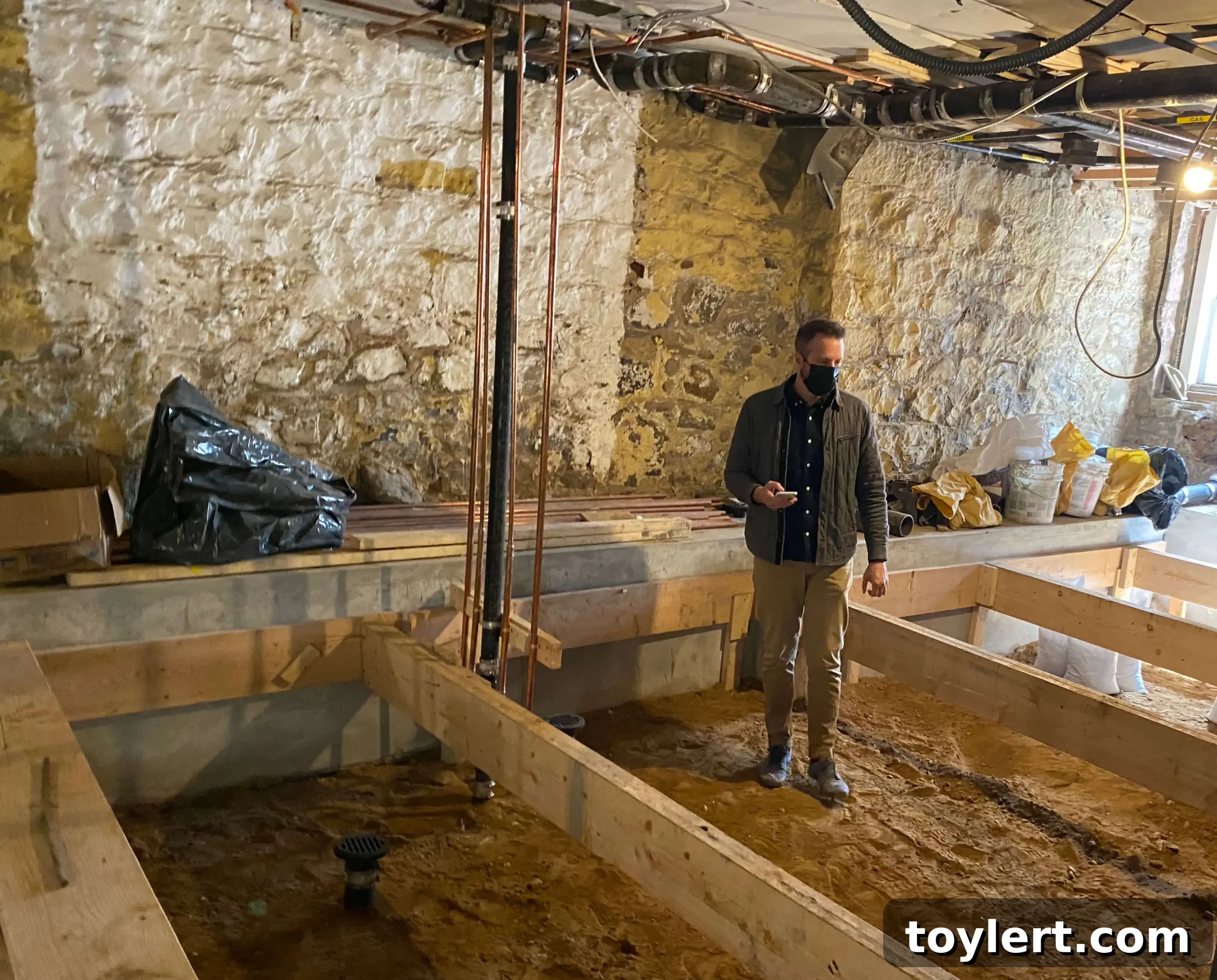
Editor’s note: Welcome to the Brownstone Boys Reno, a dedicated renovation diary chronicling the journey of transforming a historic brownstone in Bed Stuy. Catch up on the initial stages of their exciting project here. For more insights and updates from the team, visit their blog at www.thebrownstoneboys.com.
Imagine a significant portion of your valuable home lying dormant, an entire floor that feels dark, perpetually damp, and frankly, a bit unsettling. Many urban homeowners grapple with this exact scenario, often leaving their cellars underutilized – or worse, completely avoided. It’s a significant waste of potential square footage that could otherwise be a vibrant home office, a dedicated art studio, a well-equipped personal gym, or even a cozy family recreation room. The primary barrier preventing these spaces from reaching their full potential is frequently the prohibitively low ceiling height. The transformative solution for unlocking this hidden level of usable space often involves a substantial undertaking: professional excavation, digging down to create the essential vertical clearance needed to turn a forgotten cellar into a truly integrated and functional part of your home.
This process of deepening a foundation, particularly in older urban structures like brownstones, is not merely about moving dirt. It’s about vision, structural integrity, and adhering to complex regulations. It promises to add an entire additional floor of valuable, climate-controlled living space, dramatically increasing both the functionality and market value of your property. For those dreaming of expanding their urban footprint without the hassle of moving, cellar excavation represents one of the most impactful home improvement projects imaginable, converting a previously neglected area into a beacon of utility and comfort.
The Semantic Divide: Cellar vs. Basement in New York City
Before delving deeper into the intricacies of excavation, it’s crucial to address a common point of confusion, especially within the context of New York City real estate and building codes: the distinction between a “cellar” and a “basement.” While often used interchangeably in everyday language, their official definitions have profound implications for renovation projects and the legal use of these spaces.
In New York City, the Department of Buildings (DOB) provides clear, legally binding definitions. A **basement** is defined as a story of a building that is below the curb level, but with at least one-half of its height — from finished floor to finished ceiling — situated above the curb level. This crucial “above curb level” measurement often means that a basement level typically features windows and doors, allowing for natural light and direct access to the outside, often at garden level. Consequently, a basement can, and frequently does, meet the necessary building code requirements to be considered legal living space, suitable for bedrooms, living rooms, and other habitable areas.
Conversely, a **cellar** is a space where more than one-half of its height is situated below the curb level. Due to this deeper placement, cellars typically have little to no natural light or ventilation and are often accessed only from within the main structure of the building. This fundamental difference in elevation relative to the curb level is critical. Because cellars fall predominantly below grade, they are generally not permitted to be used as legal sleeping spaces or primary dwelling units in New York City. While they can be converted into useful auxiliary spaces—such as a home gym, storage area, laundry room, or utility space—they cannot legally house bedrooms or fulfill the criteria for a separate, habitable apartment without extensive and often complex modifications that effectively reclassify them as basements or other legal living areas, which is a rare and challenging endeavor. Therefore, when many New Yorkers refer colloquially to “the basement,” especially in brownstones and similar urban dwellings, they are, in fact, almost always referring to what the city officially designates as a cellar.
Unlocking Potential: The Transformative Power of Cellar Excavation
For brownstone owners in vibrant neighborhoods like Bed Stuy, facing the challenge of a dark, low-ceilinged cellar, the prospect of excavation offers a tangible path to unlocking significant new living or utility space. This process, often referred to as “basement lowering” or “underpinning,” involves carefully digging out the earth beneath the existing foundation to increase the vertical height of the cellar. The goal is to transform a previously uninviting space into a functional, comfortable, and valuable extension of the home, potentially doubling usable square footage without altering the building’s exterior footprint.
Beyond simply gaining more headroom, cellar excavation opens up a world of possibilities. Imagine a dedicated home theater where the acoustics are perfect, a spacious laundry room with ample storage, a bright and airy home office, or even a well-appointed guest suite (for non-sleeping functions if it remains a cellar). The ability to integrate modern amenities, proper waterproofing, and efficient HVAC systems ensures that this newly expanded space is not just larger, but also healthier, more energy-efficient, and far more enjoyable than its former incarnation. This strategic investment not only enhances daily living but also significantly boosts the property’s overall market value, making it a highly attractive option for long-term homeowners.
The Intricate Dance: Process of Cellar Excavation and Benching
Embarking on a cellar excavation project is a monumental undertaking, demanding meticulous planning, engineering precision, and strict adherence to local building codes. It’s a complex multi-stage process that should only be attempted with experienced professionals at the helm, including structural engineers, architects, and specialized contractors.
1. Comprehensive Planning and Permitting
The journey begins long before any dirt is moved. It necessitates detailed architectural plans that outline the proposed new layout and structural modifications. Crucially, a qualified structural engineer must assess the existing foundation, soil conditions, and surrounding structures to design a safe and stable new foundation system. Obtaining all necessary permits from the New York City Department of Buildings (DOB) is paramount. This phase is extensive, involving multiple reviews and approvals to ensure the safety and compliance of the entire project. Neglecting this step can lead to significant legal and structural complications down the line.
2. Structural Assessment and Preparation
Before any digging commences, an in-depth structural assessment of the entire building is vital. This involves inspecting the existing foundation walls, footings, and overall structural integrity. Any pre-existing cracks, weaknesses, or signs of water intrusion must be addressed. Temporary structural supports, often in the form of shoring, are installed to safely bear the weight of the upper floors as the earth below is removed and the foundation is modified.
3. The Excavation Phase
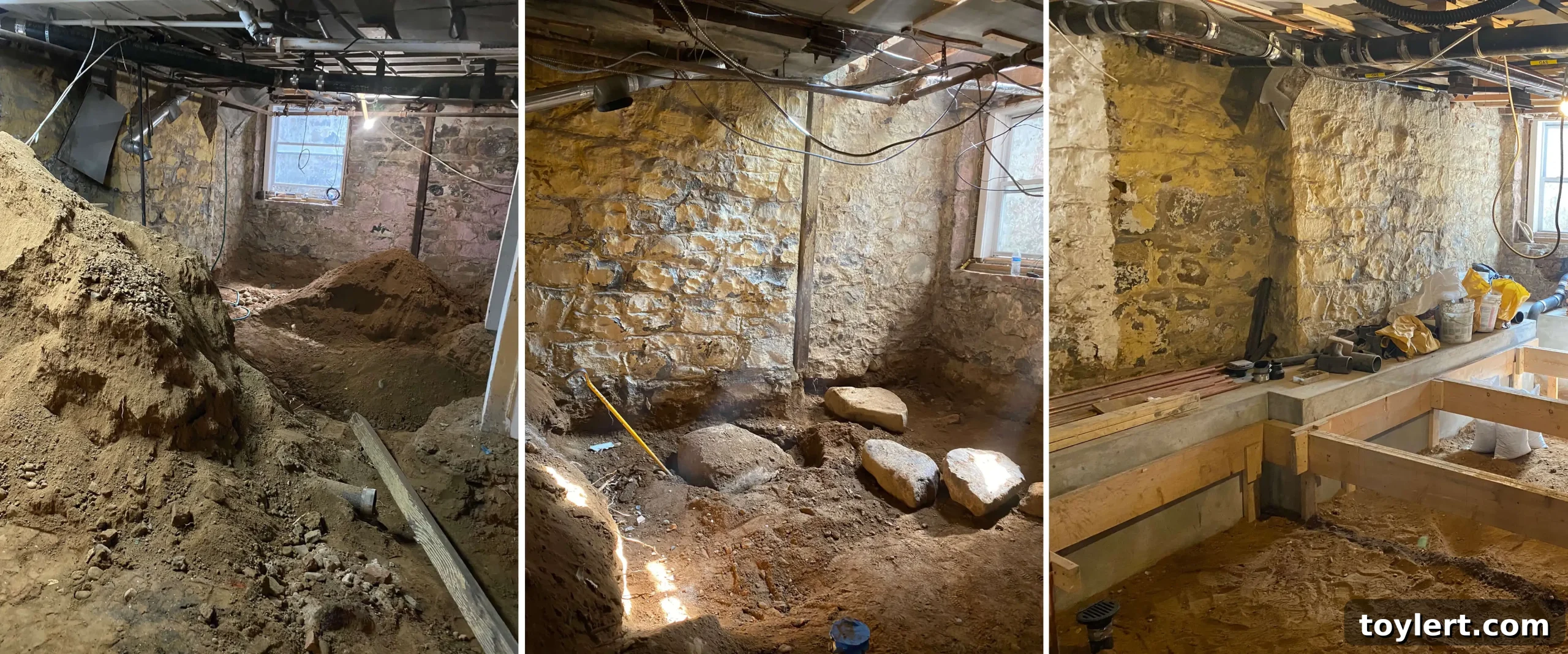
This is the literal digging part. Given the tight constraints of urban brownstones, heavy machinery is often not feasible. Consequently, much of the excavation work in NYC cellars is performed manually, a labor-intensive process. Workers carefully dig out the earth, often in sections, beneath the existing foundation. The excavated soil and debris must then be efficiently removed from the site, which can be a significant logistical challenge in dense urban environments. Dust control measures are also implemented to minimize disruption to the rest of the home.
4. Understanding and Implementing Benching
Benching, also known as bench footing or a “slab on grade” system, is a critical technique often employed during cellar excavation, especially when deepening an existing foundation. Instead of lowering the entire foundation wall uniformly, benching involves creating a stepped or “bench-like” configuration. The existing foundation wall’s footings are retained at their original depth, and new, lower concrete footings and a new concrete slab are poured at the desired lower level. The “bench” portion then connects the original, higher footing to the new, lower slab, essentially forming a new, reinforced concrete structure that supports the original foundation while allowing for the increased ceiling height in the center of the room. This method is often more cost-effective and less disruptive than full underpinning, where the entire foundation wall is deepened.
5. New Foundation Walls and Slab Construction
Once the desired depth is achieved and any benching is complete, new concrete foundation walls are poured or block walls are constructed up to the original foundation, ensuring a seamless and structurally sound connection. This new perimeter wall is essential for supporting the building’s load at the lower level. Following this, a new reinforced concrete slab is poured for the floor, providing a solid, stable base for the transformed cellar space.
6. Critical Waterproofing and Drainage Solutions
Given that cellars are inherently below grade, robust waterproofing and drainage systems are non-negotiable. This typically involves installing a perimeter drain (French drain) system around the interior or exterior of the new foundation, routing water to a sump pump that ejects it away from the house. Exterior waterproofing membranes are often applied to the outside of the foundation walls (if accessible), while interior dimple board or vapor barriers protect against moisture penetration. Proper grading around the exterior of the house also helps direct surface water away from the foundation.
7. Utility Upgrades and Relocation
The excavation project often necessitates significant modifications to existing utility lines. Plumbing pipes, electrical conduits, and HVAC ducts may need to be rerouted, updated, or installed from scratch to accommodate the new layout and ensure the cellar is fully functional and up to modern standards. This includes planning for new bathrooms, kitchenettes, or laundry facilities if part of the renovation plan.
Beyond the Dig: Benefits of a Transformed Cellar
The arduous process of cellar excavation yields a multitude of benefits that extend far beyond simply gaining a few extra feet of headroom.
- Significantly Increased Usable Space: This is the most obvious gain. A formerly neglected cellar can become a valuable extension of your home, offering flexibility for various functions such as a media room, play area, home gym, or spacious storage.
- Enhanced Property Value: Adding fully functional, conditioned square footage to your home is one of the most effective ways to boost its market value, particularly in high-demand urban markets like NYC where space is at a premium.
- Improved Home Functionality and Lifestyle: A well-designed cellar can alleviate common household pressures, providing dedicated spaces for hobbies, work, or relaxation, thus improving the overall flow and comfort of your home.
- Better Structural Integrity and Foundation Health: When executed by professionals, the process of excavation and foundation work often involves reinforcing the existing structure, leading to a more robust and stable building overall.
- Superior Moisture Control and Indoor Air Quality: Modern waterproofing and drainage systems installed during excavation dramatically reduce dampness and the risk of mold, leading to a healthier indoor environment compared to the original, often leaky cellar.
- Opportunity for Modern Upgrades: The project presents a perfect opportunity to install new, efficient HVAC systems, updated electrical wiring, and modern plumbing, bringing the entire lower level up to contemporary standards.
Navigating the Challenges: Important Considerations
While the rewards are substantial, cellar excavation is not without its challenges. Understanding these beforehand is key to a successful project:
- Substantial Cost: This is a major investment. Costs can vary widely depending on depth, soil conditions, structural complexity, and finishes, but homeowners should anticipate significant expenses.
- Extended Timeframe: From planning and permits to excavation and finishing, these projects can span many months, sometimes even over a year, requiring patience and meticulous scheduling.
- Significant Disruption: Living through a major renovation, especially one involving extensive structural work and heavy debris removal, can be disruptive to daily life.
- Absolute Need for Professional Expertise: This is not a DIY project. Engaging licensed architects, structural engineers, and contractors with proven experience in cellar excavation in your specific region (like NYC) is non-negotiable for safety and compliance.
- Compliance with Strict Building Codes: Navigating complex local building codes and zoning regulations, particularly in a city like New York, requires expert guidance.
Is Cellar Excavation Right for Your Brownstone?
For brownstone owners in search of maximizing their living space and enhancing their property’s value, cellar excavation presents a compelling, albeit challenging, opportunity. It’s a journey from a dark, underutilized space to a vibrant, functional extension of your home. While the costs, complexities, and duration are significant, the long-term benefits of increased square footage, improved structural integrity, and enhanced quality of life often far outweigh the initial hurdles.
Before making any decisions, we highly recommend consulting with experienced local professionals who can assess your specific property, provide detailed structural analyses, and guide you through the intricate planning and permitting processes unique to urban environments. The transformation of a forgotten cellar into a cherished part of your home is a testament to vision, perseverance, and the incredible potential hidden beneath our feet.