Bensonhurst’s Evolving Identity: Understanding its Rapid Asian Influx and Political Impact
New York City, a global beacon of diversity and constant change, continuously experiences demographic shifts that reshape its various neighborhoods. Nowhere is this phenomenon more evident and impactful than in Bensonhurst, Brooklyn. This long-standing residential enclave, once synonymous with its vibrant Italian-American heritage, is now at the forefront of a dramatic transformation, driven by a burgeoning Asian population, predominantly Chinese.
Historically recognized as Kings County’s “Little Italy,” Bensonhurst’s cultural tapestry has undergone a profound reweaving in recent decades. Census data from 2000 to 2010 revealed an astounding 57 percent surge in its Chinese population, marking the neighborhood as one of New York City’s most rapidly expanding hubs for this community. This demographic evolution is not merely a statistical anomaly; it represents a fundamental shift in the social, economic, and, crucially, political landscape of a critical Brooklyn district.
From Little Italy to a New Cultural Mosaic: Bensonhurst’s Demographic Journey
For generations, Bensonhurst was a quintessential Italian-American neighborhood, its streets lined with bakeries, trattorias, and social clubs that served as pillars of a tight-knit community. The aroma of espresso and Sunday gravy filled the air, and families with roots stretching back to Sicily and Southern Italy defined the local character. This strong cultural identity was reflected in everything from local businesses to political representation, creating a distinct and cherished sense of place.
However, as with many immigrant communities across New York City, the dynamics began to shift. Factors such as outward migration of second and third-generation Italian-Americans to the suburbs, coupled with the arrival of new immigrant groups seeking opportunity and community, set the stage for Bensonhurst’s remarkable transformation. The area’s relatively affordable housing, compared to Manhattan or even other parts of Brooklyn, and its established infrastructure made it an attractive destination for new arrivals.
The Rise of Bensonhurst’s Thriving Asian Communities
The influx of Asian residents, particularly those of Chinese descent, has been nothing short of transformative. This growth wasn’t accidental but rather a result of several contributing factors, including the well-documented “Chinatown effect” where established immigrant communities organically expand into adjacent or easily accessible neighborhoods. Many new arrivals initially settle in traditional enclaves like Manhattan’s Chinatown or Flushing, Queens, before seeking more spacious and affordable living options within established community networks.
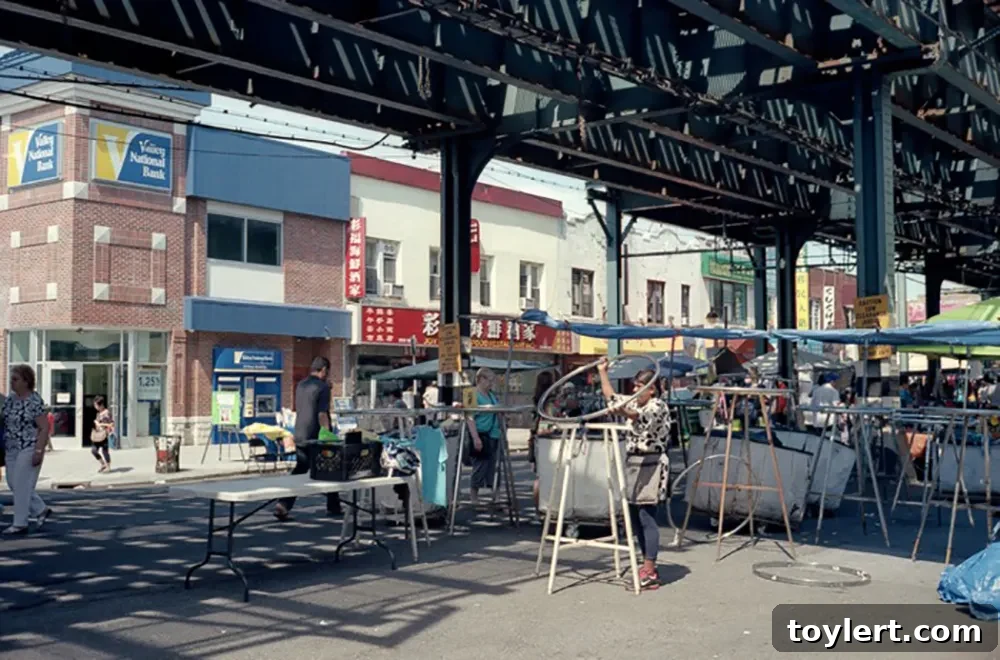
Bensonhurst offered exactly that. The early pioneers of the Chinese community in Bensonhurst laid the groundwork, establishing businesses, community centers, and religious institutions that, in turn, attracted more families. This organic growth created a self-sustaining cycle, transforming commercial corridors like 86th Street and Bay Parkway into bustling centers of Chinese commerce and culture. Suddenly, Chinese supermarkets, dim sum restaurants, herbal medicine shops, and tutoring centers became commonplace, catering to the growing needs of the new residents.
Driving Factors Behind the Influx
- Affordability and Space: Compared to denser and more expensive neighborhoods, Bensonhurst offered relatively larger apartments and houses at more accessible prices, appealing to families looking for room to grow.
- Established Networks: The presence of an existing, albeit smaller, Asian community provided a crucial support system for new immigrants, offering assistance with housing, employment, and navigating a new culture.
- Cultural Familiarity: The emergence of Asian businesses and services created a familiar environment, making the transition smoother for newcomers and fostering a strong sense of community belonging.
- Transportation Links: Excellent subway access (D, N, F lines) connects Bensonhurst directly to Manhattan and other key parts of Brooklyn, facilitating commutes to work and access to city-wide resources.
- Educational Opportunities: The desire for good schools and safe neighborhoods for raising families also played a significant role in attracting many Asian immigrant families to the area.
Unpacking the Political Ramifications: A Critical Discussion
The profound demographic shift in Bensonhurst inevitably brings with it significant political implications, impacting local representation, electoral strategies, and the allocation of city resources. Understanding these changes requires a multi-faceted perspective, often explored by leaders and thinkers deeply embedded in the city’s civic and academic spheres.
Experts like City Limits Executive Editor Jarrett Murphy, whose work focuses on urban policy and community issues; Paul Mak, President of the Brooklyn Chinese-American Association, a pivotal voice for the new community; Professor Peter Kwong, an esteemed academic specializing in urban affairs and planning at Hunter College; and Councilmember Mark Treyger, who directly represents Bensonhurst, are uniquely positioned to dissect what Bensonhurst’s Asian influx truly signifies for New York City’s intricate political landscape.
Shifting Electorates and Representation
The most immediate political impact of a rapidly changing demographic is on the electorate. A surge in a particular ethnic group often translates into new voter registration patterns and potentially different voting priorities. For Bensonhurst, this means a growing bloc of Asian-American voters, whose political participation and preferences become increasingly critical for local elections.
Political candidates now face the imperative of engaging with these new communities, understanding their unique concerns, and articulating platforms that resonate. Issues such as language access in government services, support for small businesses, public safety, educational resources for immigrant children, and elder care facilities often rise to prominence. Outreach efforts must adapt, moving beyond traditional campaign methods to include culturally specific media, multilingual campaign materials, and direct engagement with community leaders and organizations.
The Role of Community Leadership
Community organizations, like the Brooklyn Chinese-American Association led by Paul Mak, play an indispensable role in bridging the gap between immigrant communities and the broader political system. These associations often serve as informal political hubs, informing residents about their rights, encouraging civic participation, and advocating on behalf of their members. They are crucial for voter registration drives, candidate forums, and mobilizing the community around specific policy issues.
Mak’s perspective would likely highlight the challenges of ensuring equitable representation and the need for greater Asian-American voices in local government. He might emphasize the importance of tailored social services, cultural programs, and educational support that cater to the unique needs and aspirations of the growing Chinese population, while also working to integrate new arrivals into the larger fabric of Bensonhurst.
Academic Perspectives on Urban Transformation
Professor Peter Kwong’s expertise in urban affairs and planning offers a broader analytical lens through which to view Bensonhurst’s transformation. He would likely discuss the sociological implications of rapid demographic change, drawing parallels with historical immigrant waves in New York City. Kwong might explore themes of immigrant settlement patterns, the economic drivers of community formation, and the challenges of cultural integration and potential tensions that can arise in rapidly diversifying neighborhoods.
His insights could delve into how city planning and public policy must adapt to accommodate the needs of a new dominant group while preserving the heritage of existing communities. He might also address issues such as gentrification, the availability of affordable housing, and the creation of inclusive public spaces that serve all residents. From an academic standpoint, Bensonhurst serves as a living laboratory for studying urban transformation and immigrant integration.
Local Governance and Councilmember Treyger’s Perspective
As the Councilmember representing Bensonhurst, Mark Treyger faces the direct challenge and opportunity of governing a rapidly evolving district. His perspective would likely focus on the practicalities of governance – how to ensure city services adequately meet the demands of a diverse population, how to foster inter-ethnic harmony, and how to effectively represent all constituents.
Treyger would need to navigate complex issues such as ensuring sufficient school capacity for a growing number of children, providing language access for essential city services (healthcare, housing, social assistance), addressing public safety concerns in a culturally sensitive manner, and supporting the economic vitality of both long-standing and new businesses. His role is critical in translating community needs into actionable policy and securing resources from the city to support Bensonhurst’s diverse populace.
Social and Economic Transformations: A Vibrant New Chapter
Beyond politics, Bensonhurst’s Asian influx has catalyzed significant social and economic transformations. The neighborhood has witnessed a proliferation of new businesses, from bustling markets selling fresh produce and specialty goods to a diverse array of restaurants offering authentic regional Chinese cuisines. This economic vibrancy has created jobs, attracted investment, and significantly diversified the local retail landscape.
Culturally, Bensonhurst is becoming a more dynamic and complex tapestry. New cultural institutions, community centers, and places of worship reflect the spiritual and social lives of the Asian community. Festivals and traditions that were once rare or absent are now celebrated with enthusiasm, enriching the overall cultural fabric of the neighborhood. While this brings incredible vibrancy, it also presents challenges in ensuring harmonious coexistence among different ethnic groups and maintaining a shared sense of civic identity.
Cultural Intersections and New Narratives
The transformation of Bensonhurst is a testament to New York City’s continuous evolution as a global city. It’s a place where former “Little Italy” meets “New Chinatown,” creating unique cultural intersections. This dynamic interaction fosters new narratives about identity, belonging, and community. The challenge, and indeed the opportunity, lies in building bridges between these communities, celebrating shared values while respecting distinct traditions.
This includes fostering dialogue between long-standing residents and new arrivals, creating programs that promote cross-cultural understanding, and ensuring that the neighborhood’s public spaces and institutions are welcoming and accessible to everyone. The future of Bensonhurst is one of continued cultural synthesis, where new traditions blend with established ones, forging a truly unique Brooklyn identity.
The Future of Bensonhurst: A Model for NYC Diversity
Bensonhurst stands as a microcosm of New York City’s enduring strength: its ability to absorb, integrate, and be revitalized by successive waves of immigration. The rapid growth of its Asian communities presents both complex challenges and immense opportunities. Navigating these changes requires thoughtful leadership, proactive urban planning, and a commitment to inclusive community development.
The ongoing discussion among figures like Jarrett Murphy, Paul Mak, Peter Kwong, and Councilmember Mark Treyger is not just about Bensonhurst; it’s about understanding the broader trajectory of a city constantly in flux. How Bensonhurst successfully integrates its diverse populations, addresses their needs, and shapes its political landscape will offer invaluable lessons for other neighborhoods across New York City and beyond, serving as a powerful example of a truly global and evolving urban community.