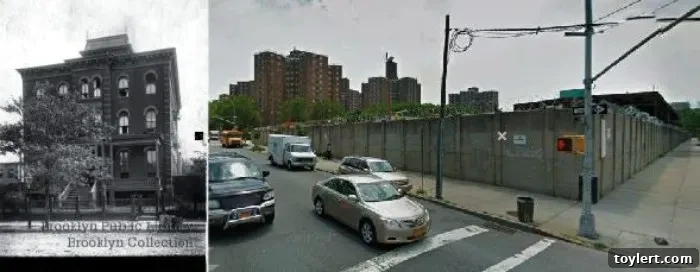
The Howard Colored Orphan Asylum: A Glimpse into Brooklyn’s Segregated Past and Enduring Legacy
Brooklyn, a borough renowned for its rich tapestry of neighborhoods and diverse communities, carries a history that is both vibrant and complex. In the decades immediately following the American Civil War, this bustling urban center experienced rapid growth, significant demographic shifts, and the deeply entrenched societal challenge of racial segregation. This pivotal era saw the establishment of numerous institutions designed to address the needs of the city’s most vulnerable populations. Among these, the Howard Colored Orphan Asylum stands as a profound testament to the systemic inequities of its time, while simultaneously highlighting the extraordinary resilience and self-determination of the African American community in establishing essential avenues of care and support.
Post-Civil War Brooklyn: A Landscape Shaped by Segregated Benevolence
The spirit of philanthropy and community support was undeniably strong in post-Civil War Brooklyn. However, its practical application was inextricably linked to the pervasive societal norms of segregation. The city, mirroring the broader national landscape, operated under a de facto policy of separation, where social services, public spaces, and charitable institutions were meticulously divided along lines of race, ethnicity, and religion. This wasn’t merely an accidental outcome; it was a deeply ingrained system that reflected and reinforced the era’s social hierarchies and prevailing prejudices.
When it came to providing aid for the orphaned, care for the elderly, or support for the infirm, institutions were almost universally founded to serve distinct demographic groups. For instance, Jewish orphans would find a home within the Jewish Orphan Home, while elderly Methodists received care at the Methodist Home for the Aged. Catholics, Baptists, Swedes, Irish immigrants, and various other groups each cultivated their own specific facilities and support networks. This highly structured approach, while sometimes stemming from a genuine desire to offer culturally or religiously sensitive care, undeniably mirrored and reinforced the broader societal segregation. It was, as was often stated, “the way it was done,” representing an unspoken acceptance of separate spheres for different communities.
For Brooklyn’s African American community, this widespread segregation translated into a distinct and frequently challenging reality. Mainstream institutions, even those ostensibly open to the general public, were often either inaccessible due to explicit discrimination or unwelcoming due to ingrained bias. The enduring legacy of slavery, combined with rampant racial discrimination in housing, education, and employment, meant that African American families faced disproportionate levels of poverty, limited opportunities for advancement, and inadequate access to essential services like healthcare. When personal tragedy struck, leaving children without parents or families struggling to cope, the critical need for dedicated, community-led support systems became overwhelmingly clear.
The Indispensable Role of the Howard Colored Orphan Asylum
It was against this stark backdrop of systemic exclusion and profound need that institutions such as the Howard Colored Orphan Asylum came into existence. Born out of necessity and fueled by an unwavering commitment to the welfare of their community, these asylums offered not just basic shelter, but also a vital sense of belonging, stability, and hope to countless African American children who often had nowhere else to turn. While the very descriptor “colored” in its name serves as a painful reminder of racial separation, its establishment also powerfully illustrates the incredible self-reliance, organizational acumen, and deep communal solidarity within the African American population.
The arduous task of establishing and sustaining such an institution was typically a monumental undertaking. It required dedicated and visionary leadership, relentless fundraising efforts, and the steadfast support of the broader community. These were rarely large, state-funded entities, but rather grassroots organizations, nurtured and sustained by local churches, benevolent societies, and individual philanthropists within the African American community, sometimes augmented by sympathetic white allies. The Howard Colored Orphan Asylum, therefore, transcended its physical structure; it stood as a powerful emblem of collective resolve and served as a critical sanctuary for a vulnerable population.
Life Within the Asylum: Nurturing Futures Amidst Adversity
Daily life within the Howard Colored Orphan Asylum, much like other similar institutions of its era, was structured with the aim of providing a stable, protective, and character-building environment for its young residents. Children received the fundamental necessities: nutritious food, appropriate clothing, and a safe, clean place to sleep. However, the care provided extended far beyond mere physical sustenance. Education was considered a foundational pillar, with a clear understanding that knowledge and literacy were essential keys to future self-sufficiency and personal empowerment. While the specific curriculum and educational resources might have varied, significant efforts were made to offer schooling that would equip children with fundamental literacy, numeracy, and practical skills.
Vocational training also played a crucial role in preparing these children for life outside the asylum’s walls. For boys, this training often included practical skills in trades, basic agriculture, or manual labor, designed to prepare them for the often-limited employment opportunities available to African American men in that period. Girls were typically instructed in domestic skills, needlework, cooking, and other trades that would enable them to secure employment as domestic servants, seamstresses, or in similar roles. The overarching goal was to instill discipline, foster strong moral character, and develop practical competencies that would empower these young individuals to become contributing members of society upon their eventual departure from the asylum.
The daily routines were typically rigorous and highly structured, encompassing periods for academic instruction, designated chores, religious education, and supervised recreational activities. While often strict by modern standards, these routines were designed to cultivate a sense of order, responsibility, and self-discipline, reflecting the broader societal expectations of the time. The dedicated staff, often comprising African American women and men deeply committed to their community, served not only as caretakers but also as educators, mentors, and surrogate parental figures, offering invaluable guidance and emotional support in a world that frequently presented formidable challenges.
Challenges, Contributions, and the Crown Heights Community
Operating an institution as vital as the Howard Colored Orphan Asylum was perpetually fraught with challenges. Securing consistent and adequate funding remained a constant struggle, often relying on sporadic donations, charitable events, and the tireless efforts of its administrators and supporters. Epidemics and infectious diseases posed an ever-present threat within crowded living conditions, demanding constant vigilance and care. Yet, despite these numerous adversities, these asylums made immeasurable contributions to their communities. They rescued countless children from destitution, neglect, and potentially dangerous circumstances, offering them a chance at a brighter future.
Furthermore, they provided a pathway to education and skill development that would otherwise have been denied to these children due to systemic discrimination, thereby nurturing a generation of individuals who, despite their challenging beginnings, went on to make significant contributions to the social, cultural, and economic fabric of Brooklyn and beyond. The Asylum itself was also a prominent landmark within the developing Crown Heights neighborhood, influencing the local social landscape and serving as a focal point for community support, fundraising initiatives, and collective efforts to uplift its residents. It was a place where the community’s deepest hopes and anxieties for its youngest members converged, and where collective action transformed dire circumstances into tangible opportunities for growth and resilience.
Brooklyn, Then and Now: Reflecting on a Segregated Past
The Brooklyn of today presents a vastly different landscape compared to the borough that emerged in the aftermath of the Civil War. While various forms of inequality and social challenges regrettably persist, the explicit and legally sanctioned segregation that necessitated the existence of institutions like the Howard Colored Orphan Asylum has, thankfully, been dismantled. The transformative Civil Rights Movement of the mid-20th century profoundly reshaped American society, leading to the integration of public services, educational institutions, and a national commitment to greater equity and access to resources for all citizens.
Today, the specific site where the Howard Colored Orphan Asylum once stood in Crown Heights likely serves a contemporary purpose, perhaps as a modern residential complex, a bustling community center, or even a parcel of land awaiting new development. While the physical remnants of such historic institutions may eventually fade or be repurposed, their profound historical significance endures. They serve as powerful reminders of a period when marginalized communities were compelled to construct their own parallel structures of support and care due to pervasive systemic exclusion.
Understanding the full history of the Howard Colored Orphan Asylum is absolutely crucial for appreciating the nuanced and layered narrative of Brooklyn’s past. It vividly highlights the remarkable ingenuity, profound tenacity, and unwavering communal spirit of the African American community in creating vital safety nets where none otherwise existed. Furthermore, it serves as a potent reminder of the long and often arduous journey towards achieving true social justice and genuine equality for all. As we observe the vibrant, diverse, and dynamic tapestry of cultures and experiences that define Brooklyn today, remembering institutions like the Howard Colored Orphan Asylum allows us to truly comprehend the progress that has been made, and perhaps more importantly, to acknowledge how far we still need to go to ensure truly equitable opportunities and outcomes for every individual.
The story of the Howard Colored Orphan Asylum is much more than a mere chapter in the history of institutional care; it is a compelling narrative of enduring community, extraordinary resilience, and the relentless pursuit of a brighter future for children, even in the face of profound and entrenched societal challenges. It stands as an indelible testament to the indomitable human spirit and the transformative power of collective action to overcome even the most daunting adversities.