The Ghost of Creativity: Monster Island and Williamsburg’s Shifting Tides
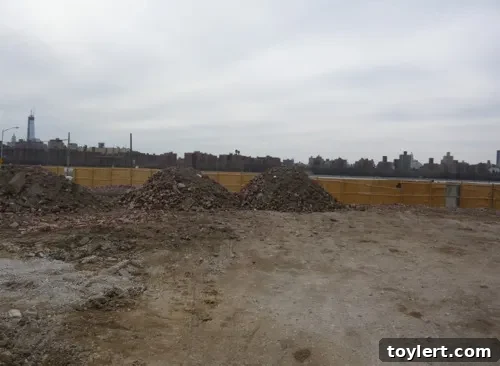
Williamsburg, Brooklyn, a neighborhood synonymous with artistic innovation, independent culture, and a constant state of flux, has witnessed countless transformations over the past decades. Few symbolize this evolution, and indeed, the sometimes painful process of urban development, more acutely than the fate of Monster Island. Once a vibrant epicenter for avant-garde art, experimental music, and performance, the site that housed this iconic collective at 210 Kent Avenue is now merely an empty lot, a stark canvas awaiting its next, likely commercial, reincarnation. This cleared parcel of land serves as a powerful reminder of the delicate balance between preserving cultural heritage and the relentless march of real estate development.
The transition from a bustling creative hub to a desolate space was swift and decisive. In December of 2012, after demolition work commenced, the property officially changed hands. It was acquired by an LLC named Rw William LLC, an entity that conspicuously purchased three other significant properties in Williamsburg on the very same day. Such a coordinated acquisition spree strongly suggests a strategic, large-scale development plan. Industry insiders and property records quickly pointed to a likely connection between Rw William LLC and the prominent developer, Read Property Group LLC, given their shared address. While the new owner has yet to unveil their definitive plans for this prime Williamsburg location, the implications for the neighborhood’s character and future trajectory are profound and widely discussed.
The End of an Era: Unpacking Monster Island’s Legacy
Monster Island was more than just a building; it was an ethos, a sanctuary for a particular strain of Brooklyn’s creative spirit. For years, this sprawling collective provided affordable studio space, galleries, and a crucial performance venue for countless artists, musicians, and performers. Its rough-around-the-edges charm and fiercely independent spirit encapsulated the Williamsburg aesthetic before it became a global brand. Artists working in diverse mediums, from painters and sculptors to noise musicians and performance artists, found a home and a community within its walls. It fostered collaboration, pushed boundaries, and became an indispensable part of the borough’s independent art scene, drawing visitors and participants from across the city and beyond.
The space at 210 Kent Avenue pulsed with a raw, unvarnished energy. It was a place where artistic experimentation thrived, free from the commercial pressures and institutional constraints that often stifle nascent movements. Its legendary parties, art shows, and concerts were not just events; they were vital cultural rituals that defined an era for many young New Yorkers. The very name, “Monster Island,” evoked a sense of playful rebellion and otherworldliness, perfectly reflecting the eclectic and often subversive nature of the work produced and showcased within. Its closure and subsequent demolition didn’t just remove a structure; it extinguished a unique spark in Williamsburg’s ever-evolving cultural landscape, leaving a void that many feel can never truly be filled by new, often more sanitized, establishments.
The Mechanics of Change: Demolition, Acquisition, and Speculation
The demolition of Monster Island marked a poignant moment in Williamsburg’s ongoing narrative of gentrification. For those who had watched the neighborhood transform from an industrial outpost into a trendy destination, the crumbling walls of Monster Island were a vivid metaphor for the loss of its bohemian soul. The December demolition, which cleared the site entirely, paved the way for the property’s sale to Rw William LLC. This entity, with its strong ties to Read Property Group LLC, is a major player in New York City real estate, known for its large-scale residential and mixed-use developments.
The acquisition of 210 Kent Avenue, alongside three other properties on the same day, signals a clear, aggressive strategy to capitalize on Williamsburg’s soaring property values and its continued appeal to a higher-income demographic. While specific blueprints remain under wraps, the historical development patterns of Read Property Group, combined with the location’s prime waterfront proximity and enviable views of the Manhattan skyline, strongly suggest a future development consisting of high-end residential units, perhaps with ground-floor retail or commercial spaces. This pattern is consistent with other recent developments along the Kent Avenue corridor, which has become a hotspot for luxury living and upscale amenities, catering to a different kind of resident than the artists and creatives who once populated the area.
Williamsburg’s Future: What Lies Ahead for 210 Kent Avenue?
The vacant lot at 210 Kent Avenue now represents a blank slate, brimming with potential for a developer, yet tinged with a sense of loss for the community. The anticipation surrounding the announcement of plans is palpable. Will it be a towering condominium complex offering panoramic views and exclusive amenities? Will it be a mixed-use development blending luxury apartments with high-end retail, further cementing Williamsburg’s status as a destination for affluent consumers? Or could there be a nod to the area’s creative past, perhaps with some form of cultural space integrated into the new design? While the latter is often hoped for by long-time residents and preservationists, it rarely materializes in a form that is truly accessible or reflective of the neighborhood’s original artistic ethos.
Any new development on this site will undoubtedly have a significant impact on the immediate surroundings and the broader Williamsburg community. It will contribute to the ongoing transformation of Kent Avenue into a sleek, modern thoroughfare, distinct from its industrial past. It will likely bring more residents to an already densely populated area, further straining infrastructure and potentially altering the local commercial landscape. The questions that linger are not just about what will be built, but what kind of community it will foster, and whether the spirit of independent creativity that Monster Island championed can find new footholds amidst the relentless pressures of development and rising rents.
The Broader Canvas: Gentrification, Art, and Urban Identity
The story of Monster Island is a microcosm of a much larger narrative playing out in urban centers across the globe. As neighborhoods gentrify, driven by economic forces and the desire for urban living, independent art spaces, cultural collectives, and affordable artist studios are often the first casualties. These spaces, by their very nature, thrive in areas with lower rents and a certain degree of grit, which ironically makes them attractive to developers and catalyzes the very processes that ultimately displace them.
Williamsburg, in particular, has become a poster child for this phenomenon. The artists who initially transformed its dilapidated warehouses and industrial buildings into vibrant cultural hubs are now largely priced out, forced to seek new frontiers in other parts of Brooklyn or even beyond the city limits. This continuous cycle of artistic pioneering followed by commercialization raises fundamental questions about urban identity, cultural preservation, and the role of art in shaping cities. Is it possible for cities to embrace economic growth without sacrificing the very cultural vibrancy that often initiates that growth?
The empty lot at 210 Kent Avenue stands as a silent monument to these complexities. It symbolizes not just the end of Monster Island but also a broader shift in what Williamsburg represents. It’s a testament to the city’s ceaseless evolution, where every demolition and every new construction reshapes not just the skyline, but the very soul of a neighborhood. As the community awaits the next chapter for this significant parcel of land, the memory of Monster Island serves as a powerful reminder of what once was, and a poignant question mark over what is yet to come for Brooklyn’s creative heart.
Finally, Demo for Monster Island in Williamsburg [Brownstoner] | View 210 Kent Ave on GMAP