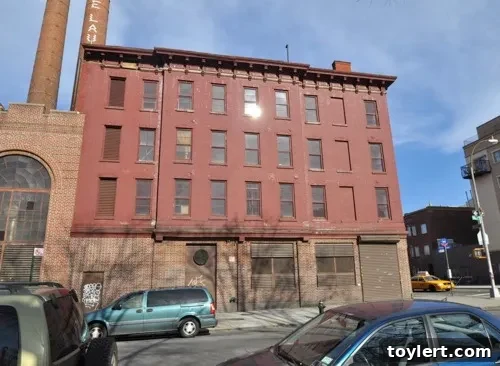
Brooklyn’s Shifting Skyline: The Transformative Future of 835 Myrtle Avenue
Brooklyn, a borough celebrated for its relentless evolution and vibrant urban renewal, continues to redefine its landscape. Amidst this ongoing metamorphosis, many of its historic industrial buildings are embarking on new chapters, repurposed to meet the escalating demands of a booming population. A particularly significant site poised for a dramatic revitalization is the venerable 19th-century brick structure located at 835 Myrtle Avenue, nestled near the bustling Marcy Avenue intersection. This substantial property, which once served as the operational heart of the Cascade Linen Company, is now slated for an ambitious mixed-use residential development. This project marks a pivotal moment for the Bedford-Stuyvesant North neighborhood, as The New York Post initially reported. The impending conversion or potential comprehensive redevelopment of this site underscores the relentless pace of change sweeping across Brooklyn’s competitive real estate market, primarily driven by strategic rezoning initiatives and an ever-increasing demand for dynamic urban living and integrated commercial spaces.
From Industrial Legacy to Modern Livelihood: The Story of Cascade Linen
The edifice at 835 Myrtle Avenue stands as a tangible link to Brooklyn’s profound industrial past. For many decades, it proudly housed the Cascade Linen Company, establishing itself as a prominent fixture within the local economy and contributing significantly to the area’s industrial output. Facilities such as these were once the very backbone of neighborhoods like Bedford-Stuyvesant, providing essential employment opportunities and shaping the borough’s distinctive working-class character. The architectural style of the building, typical of 19th-century brick industrial complexes, evokes a powerful sense of history, resilience, and enduring craftsmanship. However, as the broader economic landscape of New York City shifts away from heavy industry, many of these grand old structures, no longer fulfilling their original industrial purpose, present unique and exciting opportunities for comprehensive redevelopment. Their inherently robust construction, coupled with their often strategic urban locations, makes them prime candidates for adaptive reuse projects. Such initiatives allow for the preservation of a piece of valuable history while simultaneously ushering in a new era of utility, economic vibrancy, and community integration. The strategic decision to convert or extensively redevelop 835 Myrtle Avenue reflects a broader, city-wide trend where former manufacturing zones are being ingeniously reimagined as thriving residential and commercial hubs, seamlessly blending historical charm with contemporary urban sophistication.
A Strategic $27 Million Acquisition: Investing in Brooklyn’s Future Growth
The immense potential inherent in the 835 Myrtle Avenue property did not escape the discerning eye of astute real estate investors. A specialized investor group successfully acquired the sprawling nine-building site for a substantial sum of $27 million. This significant investment is a clear indicator of strong, unwavering confidence in the future growth trajectory and long-term profitability of the Bedford-Stuyvesant real estate market. Such a substantial capital injection highlights the increasing appeal of Brooklyn as a premier destination for both domestic and international investment capital, particularly in areas undergoing extensive urban renewal and revitalization. The lead investor in this landmark acquisition is the Alliance Private Capital Group, a reputable firm primarily specializing in real estate financing. As The Real Deal accurately highlighted, Alliance Private Capital Group operates predominantly as a financing entity rather than a direct developer. This crucial distinction suggests that while they secured ownership of this valuable asset, their strategic approach likely involves forging partnerships with experienced developers and construction firms to bring the ambitious mixed-use project to successful fruition. This collaborative model is a common and highly effective strategy in large-scale urban developments, expertly leveraging deep financial expertise with specialized construction, design, and project management capabilities to maximize the project’s overall success and its harmonious integration into the existing community fabric.
The Catalyst for Change: The Bedford-Stuyvesant North Rezoning District
The monumental development potential unlocked at 835 Myrtle Avenue is largely attributed to its strategic location within the recently established Bedford-Stuyvesant North rezoning district. Rezoning represents a powerful municipal planning tool that enables significant changes in land use regulations and density allowances, often acting as a catalyst for transforming entire neighborhoods. For the 835 Myrtle Avenue property, this specific rezoning has dramatically expanded the allowable scope of development, making the $27 million acquisition an extraordinarily strategic and foresightful move. Under the newly implemented zoning regulations, the expansive property is now permitted to accommodate a substantial 251,505 square feet of dedicated residential development, seamlessly coupled with an additional 101,000 square feet specifically designated for commercial space. This represents a significant and transformative increase in the permissible floor area ratio (FAR) compared to its previous, more restrictive industrial zoning. This critical change sets the stage for a truly transformative and multi-faceted project that will reshape this section of Bed-Stuy.
The parcel itself is impressively expansive, comprising a cluster of nine distinct buildings that collectively encompass 137,386 square feet of existing structures. The rezoning’s generous allowances imply that the property can undergo extensive redevelopment, which may involve thoughtful adaptive reuse of the sturdy existing structures where architecturally feasible, or through strategic new construction designed to fully maximize the newly available development rights. This inherent flexibility allows for the meticulous planning and execution of a comprehensive mixed-use scheme, envisioning a dynamic and self-contained complex where modern, amenity-rich apartments can gracefully rise above vibrant ground-floor retail establishments and essential commercial spaces. This type of development is meticulously designed to foster a live-work-play environment, significantly enhancing neighborhood amenities, providing a substantial boost to local commerce, and delivering much-needed diverse housing options within a rapidly growing urban area. The profound impact of such a large-scale project on the immediate vicinity will be unmistakable, attracting new residents, stimulating business growth, and injecting an undeniable surge of positive activity into what was once a quieter, industrially zoned block.
Bed-Stuy’s Ascent: A Magnet for Diverse New Residents
The precise timing of this significant real estate transaction is particularly notable, as it coincides with a period of remarkable growth and sustained appreciation in Bedford-Stuyvesant property values. As The Post story insightfully noted, this impressive surge is largely fueled by two distinct, yet synergistically complementary, demographic shifts currently reshaping the borough. Firstly, there has been a considerable and consistent influx of young professionals who, increasingly faced with being priced out of Brooklyn’s more established and historically expensive neighborhoods such as Williamsburg, Dumbo, and Brooklyn Heights, are discovering the undeniable charm and comparatively greater affordability of Bed-Stuy. They are drawn to its stunning historic brownstones, picturesque tree-lined streets, vibrant community spirit, excellent transportation links, and its burgeoning culinary and arts scenes. Bed-Stuy offers an authentic and enriching Brooklyn experience at a more accessible price point, making it an exceptionally attractive alternative for those seeking a dynamic urban lifestyle without the prohibitive premium associated with hyper-gentrified areas.
Secondly, the neighborhood is also experiencing a significant and noticeable migration of Hasidic Jewish families from the densely populated and increasingly expensive neighboring Williamsburg. Driven by critical factors such as severe overcrowding and rapidly escalating property costs within their traditional enclaves, these families are actively seeking more spacious residences and community-friendly environments that better accommodate their growing needs. Their arrival further enriches the already diverse social fabric of Bed-Stuy and adds another crucial layer to the rising demand for both housing and local services. These combined demographic pressures collectively create a robust and resilient market for new residential and commercial developments, rendering projects like 835 Myrtle Avenue not just viable, but absolutely essential for effectively accommodating the area’s dynamic growth. The sustained demand from these varied and diverse groups ensures a strong foundational base for continued property value increases and unmistakably underscores the strategic importance of unlocking latent development potential through judicious rezoning initiatives.
The Vision for Mixed-Use: Integrating Apartments and Retail
The proposed mixed-use development model for 835 Myrtle Avenue perfectly encapsulates a modern urban planning philosophy focused on creating self-sufficient, highly walkable, and interconnected communities. With modern apartments thoughtfully planned for the upper floors and vibrant retail spaces occupying the ground level, the development aims to seamlessly integrate living, shopping, and essential community services within a singular, dynamic complex. This carefully considered design strategy offers a multitude of compelling advantages:
- Enhanced Liveability: Future residents will enjoy immediate and convenient access to diverse retail options, charming cafes, and essential services directly at their doorstep, fostering a more convenient, engaging, and active urban lifestyle.
- Vibrant Streetscape Activation: The presence of ground-floor retail establishments actively stimulates and enlivens the street level, transforming a formerly industrial and perhaps quiet stretch into a bustling, lively pedestrian thoroughfare, thereby encouraging greater community interaction and robust local commerce.
- Significant Economic Boost: The introduction of new commercial spaces will invariably attract a variety of businesses, creating valuable local job opportunities and injecting considerable economic vitality into the immediate neighborhood. These businesses can range from unique independent boutiques and artisan eateries to essential service providers, meticulously catering to the diverse needs of both new and existing residents.
- Promotion of Sustainable Development: By intelligently concentrating both residential and commercial functions within a single, strategically located complex, the project inherently promotes walkability, significantly reduces reliance on private vehicular transportation, and ultimately contributes to the creation of a more environmentally sustainable and eco-conscious urban environment.
The comprehensive transformation of the historic Cascade Linen site into a dynamic and integrated mixed-use destination is far more than just a typical construction project; it represents a profound reimagining of a neighborhood’s identity and future trajectory. It powerfully speaks to Brooklyn’s ongoing narrative of reinvention and adaptive reuse, where significant historic industrial footprints gracefully evolve into contemporary, thriving hubs that proficiently serve the diverse needs of a rapidly growing and eclectic population. The architectural design of the new structure, whether realized through meticulous renovation and preservation of existing elements or through bold new construction, will ideally pay respectful homage to the site’s rich industrial heritage while simultaneously embracing cutting-edge modern aesthetics, functionality, and sustainable building practices.
Broader Implications for Brooklyn’s Evolving Urban Fabric
The 835 Myrtle Avenue project serves as a compelling microcosm for the larger, overarching trends continuously shaping Brooklyn’s intricate urban fabric. Across the entire borough, former manufacturing districts and previously neglected industrial sites are consistently being targeted for similar ambitious transformations. This widespread phenomenon includes prominent areas like the revitalized Brooklyn Navy Yard, the innovative Industry City, and numerous smaller, localized pockets that are undergoing significant and impactful redevelopment. These crucial projects are instrumental in addressing New York City’s persistent and acute housing shortage, while simultaneously fostering robust economic growth and innovation. However, they also inevitably raise important and complex questions regarding gentrification, housing affordability, and the delicate preservation of existing neighborhood character. The fundamental challenge for urban planners, policymakers, and developers alike lies in skillfully balancing the pressing need for new housing and commercial spaces with the imperative to maintain authentic community identity and ensure equitable development outcomes for all residents, old and new.
As the old smokestacks, once iconic symbols of industrial Brooklyn, gradually make way for modern residential towers and vibrant retail fronts – a symbolic transition underscored by the potential fate of historic structures like those at Cascade Linen – the borough further solidifies its international reputation as a global urban model for adaptive reuse, dynamic growth, and sustainable development. The ambitious project at 835 Myrtle Avenue is not merely a real estate transaction; it is a profound testament to the enduring appeal of Brooklyn and its remarkable capacity for continuous and thoughtful evolution. It promises to add another vibrant, forward-looking chapter to the rich and storied history of Bedford-Stuyvesant, expertly transforming a dormant industrial asset into a thriving, integrated center for residential and commercial life, thereby contributing significantly to the borough’s future prosperity and dynamism. The coming years will undoubtedly witness the full and inspiring realization of this vision, cementing 835 Myrtle Avenue as a cornerstone of the revitalized and rapidly ascending Bed-Stuy North neighborhood.
A New Century in Brooklyn [NY Post]
Bed-Stuy Poised for Major Mixed-Use Development [TRD]
Brooklyn’s Cascade Smokestacks Are Not Long for This World [Curbed]
Photo by Christopher Bride for PropertyShark