MakerBot’s New Era: Pioneering 3D Printing from Brooklyn’s Industry City
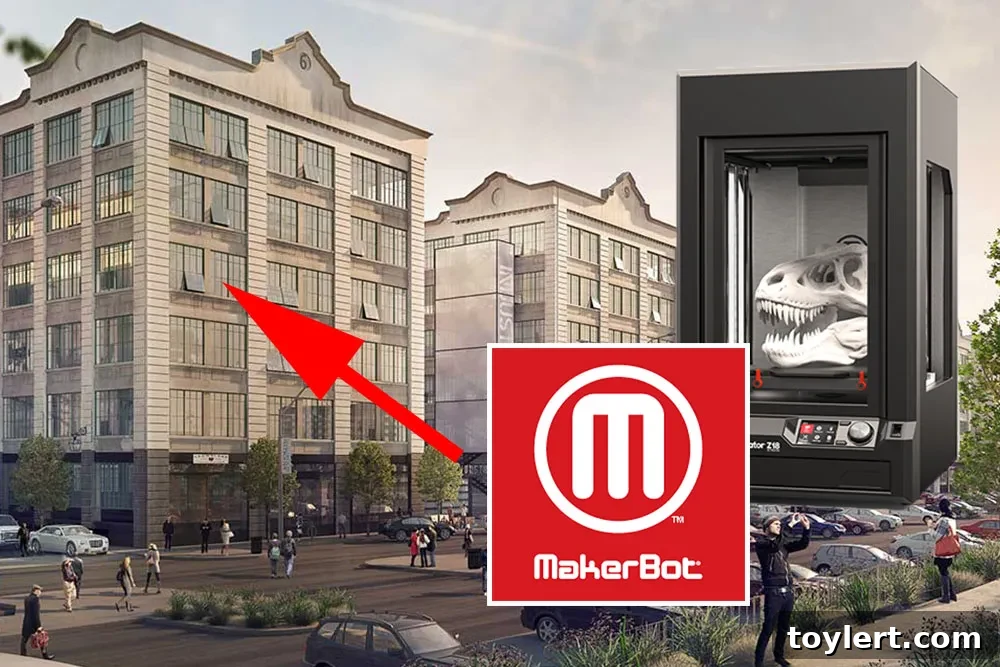
MakerBot, a formidable name in the realm of 3D printing, has long been a cornerstone of Brooklyn’s vibrant tech and maker scene. Since its inception, the company has championed a tech-forward resurgence of the DIY movement, empowering creators and professionals alike with accessible additive manufacturing tools. From its humble beginnings in a Dean Street workshop in 2009, MakerBot has navigated a dynamic journey, experiencing periods of significant growth and strategic evolution. Yet, through every phase, one constant has remained: an unwavering commitment to manufacturing its innovative products right in the heart of Brooklyn.
This dedication to local production entered an exciting new chapter with the recent opening of its state-of-the-art facility in Sunset Park’s historic Industry City. This strategic move signifies more than just a change of address; it represents MakerBot’s renewed focus on efficiency, innovation, and its deep roots within the New York manufacturing landscape. Industry City itself is undergoing a colossal $1 billion redevelopment, transforming into a modern innovation district that seamlessly blends its industrial past with a future-forward vision. MakerBot’s impressive 170,000-square-foot industrial space now serves as the bustling hub where over 140 dedicated employees meticulously assemble MakerBot desktop 3D printers, pushing the boundaries of what’s possible in digital fabrication.
MakerBot’s Enduring Journey in 3D Printing Innovation
Founded at the dawn of the consumer 3D printing revolution, MakerBot quickly distinguished itself by making what was once an esoteric industrial technology accessible to a broader audience. Its early models, like the Replicator series, became synonymous with desktop 3D printing, sparking a global wave of creativity and experimentation. The company’s mission was clear: to put a 3D printer in every home and school, democratizing the power of creating physical objects from digital designs. This ethos resonated deeply with the burgeoning maker movement, a community passionate about open-source technology, hands-on creation, and the sharing of knowledge.
Over the years, MakerBot’s journey has been marked by both soaring successes and inevitable challenges. Its acquisition by Stratasys, a global leader in industrial additive manufacturing, in 2013, signaled a strategic shift, leveraging the vast resources and expertise of a larger entity while maintaining its distinct brand identity. While the initial consumer market proved more volatile than anticipated, MakerBot adeptly adapted, refining its focus towards professional users, educators, and prosumers who demand reliability, precision, and ease of use. This evolution cemented MakerBot’s position not just as a pioneer, but as a resilient innovator committed to delivering robust 3D printing solutions that meet the evolving demands of various industries. Throughout these transformations, the commitment to maintaining manufacturing operations within Brooklyn has remained a core principle, a tangible link to its origins and a powerful statement about the value of local production.
Industry City: A Symbiotic Home for Modern Manufacturing
The choice of Industry City for MakerBot’s expanded operations is a testament to the strategic vision of both the company and the evolving Brooklyn landscape. Once a sprawling complex of warehouses and manufacturing facilities dating back to the late 19th century, Industry City has undergone a remarkable renaissance. It is being meticulously transformed into a dynamic urban innovation campus, a magnet for creative industries, tech startups, artisans, and advanced manufacturing companies. This ecosystem fosters collaboration, shared resources, and a vibrant community that aligns perfectly with MakerBot’s pioneering spirit.
The ongoing $1 billion redevelopment project at Industry City is not merely about renovation; it’s about reimagining an industrial relic as a beacon of 21st-century commerce and creativity. The investment includes modernizing infrastructure, creating inviting public spaces, and attracting a diverse array of tenants that range from film production studios to fashion designers, food manufacturers, and cutting-edge tech firms. For MakerBot, being situated within this energetic hub offers unparalleled advantages: access to a rich talent pool, proximity to other innovative companies for potential partnerships, and a supportive environment that values the blend of technology and craftsmanship. The sheer scale and ambition of Industry City’s transformation reflect a broader trend of urban industrial revitalization, proving that manufacturing can thrive in major metropolitan areas, generating skilled jobs and fostering economic growth.
A Glimpse Inside the 170,000 Sq Ft Innovation Hub
MakerBot’s new 170,000-square-foot facility is far more than just a factory; it is a meticulously designed ecosystem for advanced manufacturing and innovation. Here, the vision of accessible 3D printing comes to life, as over 140 employees engage in the precise assembly of MakerBot’s celebrated line of desktop 3D printers. This substantial space allows for optimized production lines, efficient logistics, and ample room for future expansion and research and development initiatives. The sheer size of the facility underscores MakerBot’s commitment to scaling its operations and meeting the increasing global demand for reliable and user-friendly 3D printing technology.
The workforce at this Industry City location represents a blend of skilled engineers, technicians, and operations specialists, all contributing to the meticulous process of bringing a 3D printer from components to a finished, high-performing device. These are precisely the types of advanced manufacturing jobs that are crucial for a thriving urban economy, providing stable employment and contributing to a highly skilled local workforce. The facility is equipped with modern assembly tools and quality control stations, ensuring that every MakerBot printer leaving the factory meets the company’s rigorous standards for performance and durability. This investment in a large-scale, modernized manufacturing footprint in Brooklyn solidifies MakerBot’s dedication to producing high-quality hardware domestically, distinguishing it in a market often dominated by overseas production.
The Far-Reaching Impact of MakerBot and 3D Printing
MakerBot’s journey and its continued commitment to innovation have played a pivotal role in the broader adoption and understanding of 3D printing technology. Beyond hobbyists and enthusiasts, 3D printing has become an indispensable tool across a multitude of industries. In education, it empowers students with hands-on learning, fostering critical thinking and problem-solving skills as they design and print prototypes. For product designers and engineers, MakerBot printers accelerate the prototyping process, allowing for rapid iteration and significant cost savings compared to traditional manufacturing methods. Architects use them to create intricate scale models, while healthcare professionals explore custom medical devices and anatomical models for surgical planning.
The ability to transform digital designs into physical objects on demand has revolutionized small-batch manufacturing, enabling entrepreneurs and small businesses to bring niche products to market without massive upfront investments. MakerBot has been at the forefront of this democratization, making powerful tools accessible and user-friendly. The company’s continued focus on developing reliable desktop solutions, coupled with its robust ecosystem of software and materials, reinforces its position as a leader in additive manufacturing. As the technology evolves, MakerBot is poised to further expand its influence, contributing to advancements in material science, improved printing speeds, and even more sophisticated applications across various sectors, from industrial design to consumer goods.
Brooklyn’s Tech and Maker Scene: A Hub of Creativity and Production
Brooklyn has long been celebrated for its creative energy, and in recent decades, it has blossomed into a thriving hub for technology and the maker movement. Companies like MakerBot are not merely located in Brooklyn; they are integral to its identity, contributing to a vibrant ecosystem where innovation thrives. The borough attracts a diverse talent pool of engineers, designers, artists, and entrepreneurs who are drawn to its unique blend of industrial heritage and contemporary culture. This confluence of creativity and technical prowess fuels a dynamic environment where groundbreaking ideas are transformed into tangible products and services.
The Brooklyn tech scene is characterized by its collaborative spirit, with numerous co-working spaces, incubators, and industry events fostering connections and partnerships. MakerBot’s decision to maintain and expand its manufacturing operations in Brooklyn sends a powerful message about the viability and value of urban production. It challenges the notion that large-scale manufacturing must be relegated to distant industrial parks, demonstrating that it can coexist and even flourish within a densely populated urban environment. This commitment strengthens Brooklyn’s reputation as not just a place for innovation and design, but also as a place where things are actually made, driving a true manufacturing renaissance that provides economic opportunity and fosters a culture of creation and ingenuity.
Looking Ahead: MakerBot’s Continued Influence
MakerBot’s strategic move to its expansive Industry City facility marks a significant milestone in its illustrious history and underscores its enduring commitment to the Brooklyn tech and maker scene. By embracing this new chapter, MakerBot is not only optimizing its manufacturing capabilities but also reaffirming its dedication to innovation and local production. The 170,000-square-foot hub, bustling with over 140 skilled employees, is a testament to the company’s vision for the future of 3D printing—a future where reliable, high-quality additive manufacturing tools are readily available to professionals, educators, and creators worldwide.
As Industry City continues its transformation into a premier innovation district, MakerBot stands as a beacon of Brooklyn’s industrial and technological resurgence. The synergy between MakerBot’s pioneering spirit and Industry City’s dynamic environment promises to foster further advancements in digital fabrication. This move solidifies MakerBot’s role as a driving force in the additive manufacturing industry, ensuring its continued influence on how products are designed, prototyped, and brought to life. With its roots firmly planted in Brooklyn, MakerBot is well-positioned to continue shaping the landscape of 3D printing for decades to come, inspiring a new generation of makers and innovators.