Manitoga: Russel Wright’s Mid-Century Masterpiece of Nature-Integrated Design in Garrison, NY
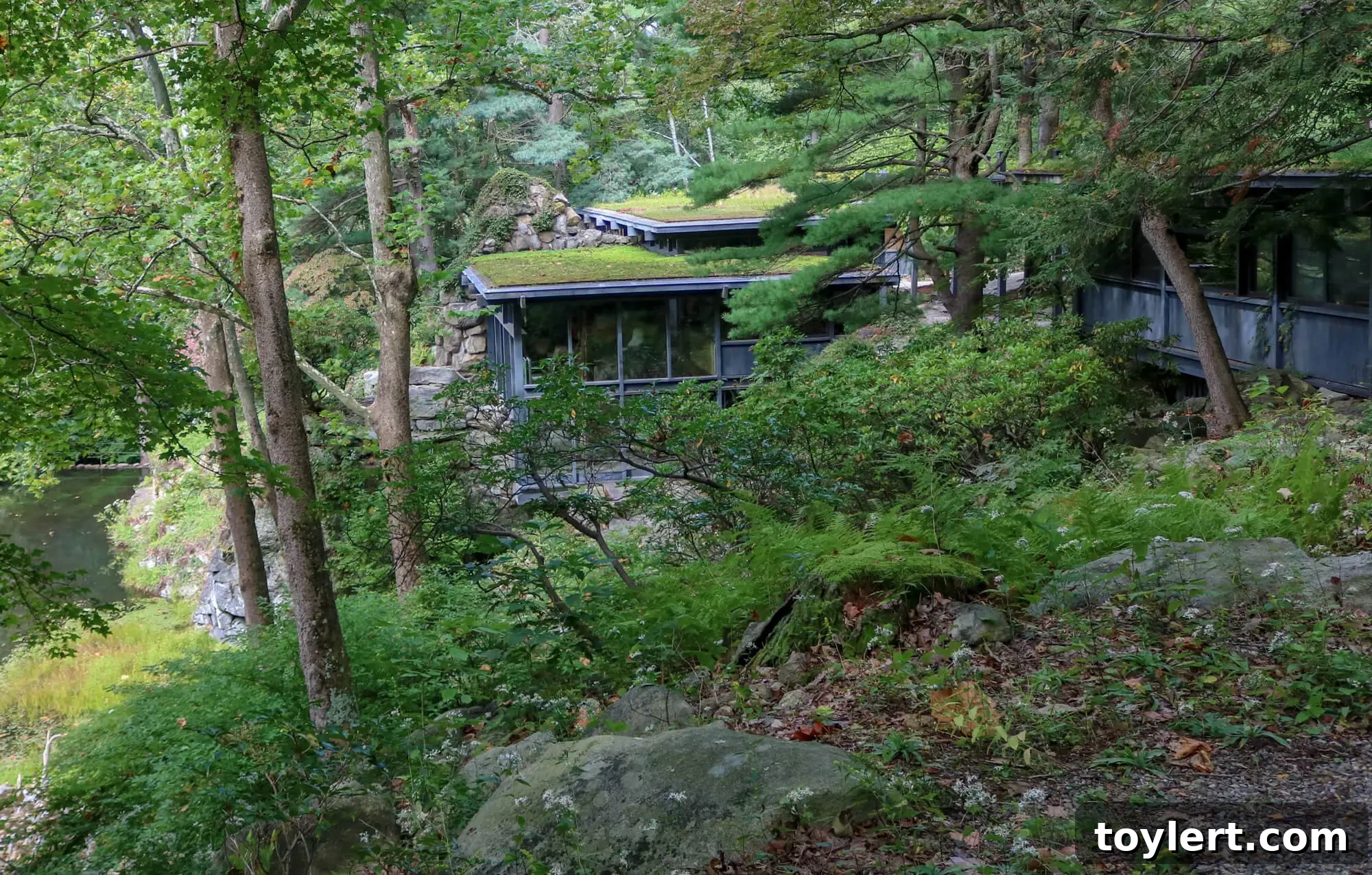
Nestled discreetly within the verdant landscape of Garrison, New York, lies Manitoga, the former home and studio of visionary American designer Russel Wright. This architectural marvel isn’t meant to be stumbled upon; rather, it’s an experience to be slowly uncovered. Visitors embark on a journey through rugged, wooded pathways, each turn offering tantalizing glimpses of a dwelling that appears to organically emerge from the very bedrock, perched gracefully at the water’s edge of a serene pond. Manitoga stands as a profound ode to the harmonious integration of nature and modern living, a testament to Wright’s revolutionary mid-century vision that continues to inspire. It challenges conventional notions of home and landscape, inviting a deeper connection with the environment.
Russel Wright, a pivotal figure in American design during the 20th century, conceived Manitoga not merely as a residence but as a holistic environmental artwork. This unique estate, often referred to as Dragon Rock, embodies his enduring philosophy: that design should be accessible, practical, and deeply connected to the natural world. His approach was a departure from the formal, often rigid designs of his predecessors, paving the way for a more relaxed and intuitive way of life that resonated deeply with the burgeoning modern American household. Wright’s influence extended far beyond the walls of Manitoga, shaping the aesthetics and functionality of countless homes across the nation.

Russel Wright: Championing American Modern Living
While the name Russel Wright might not immediately ring a bell for everyone, his prolific and distinctive work undoubtedly will. A true design polymath, Wright began his impactful career in the 1930s, producing an extraordinary range of objects that redefined domestic living. From elegantly simple tableware to innovative furniture and functional accessories, his creations became synonymous with the “American Modern” aesthetic. He wasn’t just designing objects; he was promoting an entire lifestyle – one characterized by informality, comfort, and an understated elegance that perfectly suited the evolving needs of the mid-20th century family. His designs were democratic, aiming to bring sophisticated yet practical aesthetics to the broader public, making modern living attainable and enjoyable for all.
Wright’s influence as a crucial figure in the modern design movement cannot be overstated. He challenged the ornate and often impractical designs of previous eras, advocating for forms that were both beautiful and highly functional. His “American Modern” dinnerware, characterized by its organic shapes and matte glazes, became incredibly popular, gracing dining tables across the nation. Beyond tableware, his furniture designs often featured lightweight, modular forms, crafted from innovative materials or simple, natural woods, designed to adapt to various living spaces and activities. This revolutionary approach to design fostered a new, informal way of living, blurring the lines between indoor and outdoor, and encouraging a relaxed atmosphere in the home.
Manitoga: A Unique Synthesis of Architecture and Landscape Art
Manitoga, located in the scenic Hudson Valley, represents the zenith of Wright’s creative endeavors, embodying his holistic design philosophy where architecture, interiors, and landscape are inextricably linked. The property, originally a bluestone quarry, was meticulously transformed by Wright over three decades into a landscape masterwork. He didn’t just build a house on the site; he crafted the site itself. The dramatic transformation involved carefully shaping the land, redirecting water flows, and planting thousands of trees and native plants, turning a scarred industrial landscape into a vibrant, living sculpture. This deliberate and thoughtful process speaks volumes about his deep respect for nature and his pioneering approach to sustainable design long before the term became mainstream.
The house, known as Dragon Rock, is a masterful example of organic architecture. Its design deliberately integrates with the challenging topography of the former quarry, with stone walls that appear to be extensions of the rock formations and large windows that frame the surrounding forest and pond like living paintings. Wright utilized natural, local materials such as granite, wood, and glass, ensuring that the structure not only blended seamlessly but also felt indigenous to its environment. The interior spaces flow effortlessly into one another, with varying ceiling heights and strategically placed skylights that invite natural light and create a sense of dynamic discovery as one moves through the home. Every detail, from the built-in furniture to the carefully curated objects, contributes to an overarching sense of calm and connection to the external world.
Inside Manitoga, Wright’s ingenious approach to living space comes alive. Rooms are designed to be flexible and adaptable, reflecting his belief in informal living. He blurred the boundaries between indoor and outdoor living through expansive glass walls, sliding doors, and strategically placed patios and decks that extend the living areas into the landscape. The pond, which Wright also designed and integrated into the ecosystem, serves as a central feature, offering reflective surfaces and a tranquil focal point from multiple vantage points within the house. This constant dialogue between the built environment and the natural world is the essence of Manitoga, showcasing how thoughtful design can enhance our appreciation for both artifice and nature.
The Enduring Legacy of Russel Wright and Manitoga
Today, Manitoga stands as a National Historic Landmark, recognized for its exceptional significance in American design, architecture, and landscape preservation. It serves as a powerful reminder of Russel Wright’s innovative spirit and his profound commitment to creating a lifestyle that was both modern and deeply rooted in the natural world. The estate is preserved and operated as a public museum and study center, offering guided tours, educational programs, and a chance for visitors to immerse themselves in Wright’s unique vision. Experiencing Manitoga is to step into a meticulously crafted universe where every element, from a ceramic cup to a winding pathway, tells a story of design as an extension of life itself.
The principles championed by Wright at Manitoga – sustainable design, the integration of architecture with its landscape, and the promotion of informal, functional beauty – resonate perhaps even more strongly in the 21st century. As society grapples with environmental challenges and seeks more meaningful connections with nature, Wright’s mid-century masterpiece offers timeless lessons. It inspires contemporary designers and architects to consider the ecological footprint of their work and to create spaces that foster well-being and a deeper appreciation for our planet. Russel Wright’s legacy, encapsulated within the serene beauty of Manitoga, continues to shape our understanding of what a home can be: not just a shelter, but a living, breathing part of the environment.
Manitoga is more than just a house; it is an immersive experience, a journey through the mind of a designer who envisioned a new way of living. It invites introspection and encourages visitors to slow down, observe, and connect with the profound beauty that arises when human ingenuity and the majesty of nature converge. For anyone interested in mid-century modern design, landscape architecture, or the history of American innovation, a visit to Russel Wright’s Manitoga in Garrison, NY, is an essential pilgrimage, offering enduring inspiration for living thoughtfully and beautifully.