Read Part 1 of this story.
The Watchtower’s Empire: Jehovah’s Witnesses and the Enduring Impact on Brooklyn Real Estate (Part 2)
The story of the Jehovah’s Witnesses and their profound connection to Brooklyn is one woven into the very fabric of the borough’s history. From their initial arrival seeking wider dissemination of their spiritual messages to becoming one of its most significant landholders, the Watchtower Bible and Tract Society—the legal entity behind the Jehovah’s Witnesses—left an indelible mark on Brooklyn’s landscape, particularly in the vibrant neighborhoods of Brooklyn Heights and Dumbo. This article, a continuation of our exploration, delves deeper into how this religious organization, under the shrewd leadership of Joseph F. Rutherford, transformed its spiritual ambitions into a tangible, expansive real estate empire, pioneering a unique approach to property acquisition and development in the heart of New York City.
Early Ambitions and the Move to Brooklyn
The year 1908 marked a pivotal moment for the nascent religious movement. Initially headquartered in Allegheny, Pennsylvania, the Watchtower Bible and Tract Society relocated its operations to Brooklyn, a borough already renowned for its intellectual vigor, bustling media scene, and prominent religious figures. The primary motivation for this move was strategic: to capitalize on Brooklyn’s advanced printing capabilities and its vast network of newspapers. The Society’s founder, Charles Taze Russell, envisioned a future where Watchtower sermons and theological discussions could be syndicated widely, appearing alongside the respected writings of Brooklyn’s most celebrated pastors. This media-centric approach aimed to reach a broad audience, leveraging the borough’s status as a burgeoning hub of communication and cultural exchange. It was an ambitious undertaking, signifying the organization’s intent to become a visible and influential voice in the broader public discourse and laying the groundwork for what would become an unparalleled real estate venture.
The Rise of Joseph F. Rutherford and a New Era of Expansion
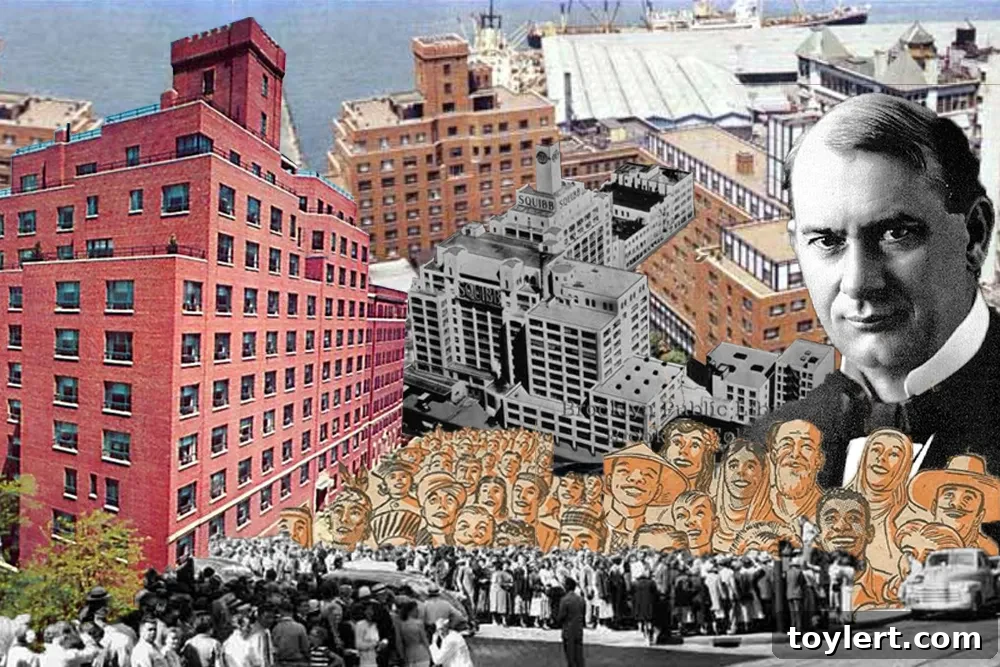
While the seeds of media outreach were sown by Russell, it was under the stewardship of his successor, Joseph F. Rutherford, that the Jehovah’s Witnesses truly embarked on their remarkable journey into Brooklyn real estate. Rutherford, who assumed leadership in 1917, was a figure of immense resolve and, as historical accounts often note, an autocratic leader. His vision for the Watchtower was not merely about disseminating messages through external channels; it was about building a self-sufficient, global organization, and to achieve this, physical infrastructure became paramount. Rutherford understood that control over their own means of production and administration would grant the Society unparalleled autonomy and efficiency. This marked a significant shift from simply syndicating sermons to actively acquiring, developing, and managing properties that would directly serve their expanding global mission. This new directive cemented Brooklyn as the undeniable epicenter of their worldwide operations.
Mastering the “Art of Brooklyn Real Estate”
The phrase “practicing the art of Brooklyn real estate” accurately captures the sophisticated and strategic approach adopted by the Watchtower Society. This “art” involved far more than mere property acquisition; it was a comprehensive strategy aimed at creating a self-sustaining ecosystem within the urban landscape. They weren’t just buying buildings; they were investing in a vision. The Society’s real estate portfolio grew to encompass a diverse range of properties, from grand residential buildings to expansive industrial complexes, primarily concentrated in the highly desirable and strategically vital neighborhoods bordering the Brooklyn Bridge – Brooklyn Heights and Dumbo.
Their strategy was multi-faceted, demonstrating a keen understanding of urban planning, logistics, and long-term investment:
- Strategic Location: Properties were meticulously chosen for their proximity to transportation hubs, especially bridges and subways, facilitating the efficient movement of materials and personnel. The waterfront areas of Dumbo, with their large industrial structures and sturdy foundations, were ideal for housing massive printing presses and logistical operations. Brooklyn Heights, with its elegant brownstones and apartment buildings, offered suitable, dignified residences for the growing number of full-time volunteers, affectionately known as the Bethel family.
- Adaptive Reuse: The Watchtower became remarkably adept at acquiring existing structures – often historic buildings or former industrial sites – and meticulously renovating them to suit their specific, specialized needs. This approach was not only cost-effective but also preserved much of the architectural character of the neighborhoods, albeit with a distinct, well-maintained Watchtower aesthetic. Former warehouses were transformed into state-of-the-art printing facilities capable of producing millions of publications annually in hundreds of languages, all under one organizational umbrella.
- Long-Term Investment: Unlike typical developers focused on quick profits and rapid turnover, the Watchtower adopted an extremely long-term perspective on its real estate holdings. Their acquisitions were viewed as permanent assets serving an eternal spiritual mission. This commitment allowed them to patiently build a vast portfolio over decades without the pressures of short-term market fluctuations, leading to substantial appreciation in value over time.
The Watchtower’s Self-Sustaining Empire
Under Rutherford’s guidance, and continuing for many decades thereafter, the Watchtower’s Brooklyn properties evolved into a formidable, self-contained community. The Bethel complex, which eventually sprawled across numerous buildings, became the nerve center of a global organization. Here, thousands of volunteers lived, worked, and worshipped, operating their own laundries, kitchens, medical facilities, and extensive administrative offices. The sheer scale of their printing operations was astounding, transforming sections of Dumbo into a highly efficient hub for religious literature production and distribution worldwide. This remarkable vertical integration—from writing and editing to printing, binding, and shipping—all managed within their Brooklyn facilities, was a testament to their exceptional organizational prowess and their mastery of real estate logistics. The organization truly demonstrated how strategic property ownership could underpin and accelerate a global religious movement, making their Brooklyn footprint indispensable to their worldwide reach.
Impact on Brooklyn’s Urban Fabric
The Watchtower’s presence profoundly impacted the areas they occupied. While often private and self-contained, their meticulously maintained properties and the distinct, purposeful presence of the Bethel family became an unmistakable feature of Brooklyn Heights and Dumbo. They were not just landlords; they were a significant community anchor, albeit one with a unique internal focus. Their long-term ownership meant stability for many properties in areas that might otherwise have succumbed to decay or disruptive redevelopment in earlier decades. They invested consistently in their buildings, maintaining high standards that often contrasted with some of the more neglected parts of the borough. As Brooklyn gentrified and property values soared through the latter half of the 20th century and into the 21st, the Watchtower’s holdings, accumulated over decades at relatively lower costs, became immensely valuable, a testament to their foresight and persistent strategy in real estate investment.
The Farewell to Brooklyn: A New Era Begins
After more than a century of deep integration into the borough, a new chapter in the Watchtower’s real estate narrative began to unfold in the early 21st century. Faced with the practicalities of maintaining an aging and increasingly costly urban infrastructure, and seeking to consolidate their operations into a more modern, purpose-built facility better suited for their contemporary needs, the Watchtower Bible and Tract Society made the monumental decision to relocate their world headquarters. This decision culminated in a massive sell-off of their extensive Brooklyn portfolio, a process that began in earnest around 2004 and continued for over a decade. The sale of these iconic properties, many of which had been central to the organization’s identity and global mission for generations, signaled the end of an era and marked a significant shift in the organization’s operational strategy.
The move to Warwick, upstate New York, allowed the organization to design and create a state-of-the-art campus, perfectly tailored to their current needs for technology, advanced logistics, and modern residential facilities for their volunteers. It was a pragmatic move dictated by evolving operational requirements, economic considerations, and the desire for a more secluded, efficient environment for their global administrative functions.
The Lasting Imprint on Brooklyn’s Landscape
The departure of the Jehovah’s Witnesses left a significant void in the Brooklyn Heights and Dumbo neighborhoods, but also a remarkable and lasting legacy. Their former properties, often grand, historic, and incredibly well-preserved, were eagerly acquired by a multitude of developers and investors. This influx of capital and vision swiftly transformed sections of Dumbo and Brooklyn Heights into some of New York City’s most coveted residential, commercial, and hospitality spaces. The sales generated billions of dollars, fundamentally reshaping the real estate market in these neighborhoods and accelerating their ongoing gentrification. What were once Watchtower dormitories and printing presses are now luxury condominiums, boutique hotels, high-end retail establishments, and innovative tech company offices. Yet, the architectural bones of their former empire remain, serving as a constant, tangible reminder of the organization’s century-long presence and profound influence on Brooklyn’s urban development.
Conclusion
The journey of the Jehovah’s Witnesses in Brooklyn is a fascinating case study of how a religious organization can leverage strategic real estate acquisition and management to fuel its global mission. From their initial desire to disseminate sermons through local newspapers, to the development of a vast, self-sustaining property empire under the astute leadership of Joseph F. Rutherford, and finally, their strategic, large-scale departure, the Watchtower Bible and Tract Society left an indelible mark on Brooklyn. Their “art of Brooklyn real estate” was a masterclass in foresight, adaptive reuse, meticulous maintenance, and unwavering commitment, contributing a unique and significant chapter to the rich, ever-evolving history of one of America’s most dynamic boroughs. The properties they once owned continue to shape Brooklyn’s identity, standing as silent witnesses to a century of spiritual endeavor and unparalleled real estate acumen that forever altered the landscape of New York City.