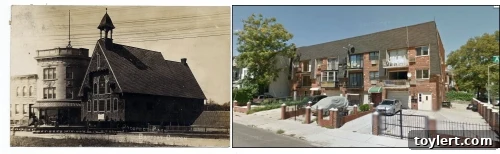
A Look at Brooklyn: Then and Now, Through the Lens of History
There’s an undeniable charm in peering into the past, especially when it comes to a borough as rich in history and character as Brooklyn. The vibrant streets, the towering brownstones, and the iconic landmarks we know today have all evolved from a different era, each holding countless stories within their walls. My ongoing fascination with Brooklyn’s transformation often leads me down intriguing paths, seeking out visual echoes of what once was. This quest for historical glimpses frequently brings me to the vast digital marketplaces, particularly eBay, a treasure trove for anyone eager to unearth relics of yesteryear.
The Thrill of Discovery: Unearthing Brooklyn’s Hidden Gems
As a chronicler of Brooklyn’s architectural and social evolution, sourcing “past” photos is a crucial part of my work. While there are numerous archives and historical societies offering glimpses into the borough’s bygone days, one of my most consistent and exciting sources remains eBay. Every day, thousands of old postcards depicting Brooklyn are listed for sale, offering a window into a world that often surprises even the most seasoned local historian. Amidst the endless stream of familiar images – the majestic Brooklyn Bridge, the sprawling greenery of Prospect Park, and the bustling boardwalks of Coney Island – lies the true thrill: discovering places I never knew existed, or seeing familiar spots rendered in an entirely different light.
The process itself is an adventure. Sifting through hundreds of listings, each click holds the promise of an unexpected find. Sometimes, it’s a detailed street scene from a long-vanished block; other times, it’s a magnificent building that has either been dramatically altered or, sadly, demolished. These are the moments that truly captivate me, moments when a simple cardboard rectangle transports me across time, revealing a forgotten facet of Brooklyn’s identity. It’s in these unexpected discoveries that I often find some of my favorite subjects for the “Past and Present” series, a collection dedicated to illustrating the passage of time in this dynamic borough.
Prospect Park Baptist Church: A Glimpse into a Storied Past
My latest dive into the digital archives yielded a particular gem: a vintage postcard showcasing the stately Prospect Park Baptist Church. This find was especially gratifying because, despite its prominent name suggesting a location near one of Brooklyn’s most famous landmarks, its image wasn’t as ubiquitous as, say, the Grand Army Plaza Arch. The postcard revealed a structure of imposing grace, a testament to the architectural styles prevalent in Brooklyn during the late 19th or early 20th century. Its intricate facade, likely crafted from brick or stone with ornate detailing, speaks volumes about the craftsmanship and aspirations of its builders and congregation.
Located at the intersection of Greenwood Avenue and East 18th Street in the Windsor Terrace neighborhood, close to the southern edge of Prospect Park, the church originally served a burgeoning community. Erected in 1894, it stands as a magnificent example of Romanesque Revival architecture, a style characterized by its robust and dignified appearance, round arches, and often intricate brickwork or stone masonry. Churches of this era were not merely places of worship; they were cornerstones of community life, gathering places for social events, educational programs, and civic engagement. The Prospect Park Baptist Church, with its distinctive bell tower reaching skyward and its grand entrance inviting parishioners, undoubtedly played a pivotal role in shaping the moral and social fabric of its surrounding neighborhood for generations.
Brooklyn’s Enduring Landscape: From Gaslight to Skyline
Comparing the historical depiction of the Prospect Park Baptist Church with its present-day reality offers a poignant reflection on Brooklyn’s relentless evolution. While many structures from its era have succumbed to the pressures of urban development, or been drastically altered beyond recognition, the church stands as a testament to enduring architectural legacy. Its very existence today, amidst the modern ebb and flow of Brooklyn life, highlights the borough’s unique ability to blend its rich past with its vibrant present.
The neighborhood surrounding Prospect Park has undergone significant transformations over the decades. What might have once been quieter streets, perhaps lined with horse-drawn carriages and gas lamps, are now bustling thoroughfares teeming with diverse populations, contemporary businesses, and a distinctly modern energy. Park Slope, Windsor Terrace, and Flatbush have all experienced waves of change, from the suburbanization of the late 19th century to the intensive urban renewal and gentrification of recent decades. Yet, the church remains, a constant sentinel overlooking the changes, its historic facade echoing stories of countless lives lived, milestones celebrated, and challenges overcome within its purview. These “then and now” juxtapositions are more than just visual comparisons; they are powerful narratives that speak to the resilience of communities and the persistence of architectural heritage.
The Art and Value of Collecting Historical Postcards
The allure of old postcards extends far beyond their aesthetic appeal. Each card is a tangible piece of history, a small but significant artifact capable of unlocking narratives from a bygone era. For me, they represent miniature time capsules, capturing moments in the life of a city that might otherwise be lost to memory. My search for these treasures on platforms like eBay is not merely a casual hobby; it is a dedicated pursuit driven by a deep appreciation for the historical record.
Over the years, I’ve acquired a substantial collection of these cards. Each purchase is an investment in understanding Brooklyn’s past, contributing to a broader mosaic of its social, cultural, and architectural evolution. Beyond the well-known landmarks, it’s the less famous buildings, the ordinary street scenes, and the candid snapshots of daily life that truly provide invaluable insights. These images reveal how people lived, what their surroundings looked like, and how communities grew and adapted. They offer an unfiltered, often unintentional, glimpse into the textures of life from decades ago.
The beauty of these postcards lies in their authenticity. Unlike meticulously staged photographs, many postcards captured everyday reality, serving as a popular and accessible form of communication and souvenir for ordinary people. They document changes in transportation, fashion, infrastructure, and even the natural landscape. For the historian, the urban planner, or simply the curious observer, they are indispensable tools for reconstructing the past and understanding the trajectory of urban development. They connect us directly to the experiences of those who walked these streets before us, offering a sense of continuity that modern digital images often lack.
Preserving History in a Modern World: The Ongoing Dialogue
The “Past and Present” series, for which the Prospect Park Baptist Church is a perfect addition, aims to bridge the gap between historical documentation and contemporary experience. It’s about more than just showing a building as it was and as it is; it’s about initiating a dialogue about preservation, change, and identity. In a rapidly developing city like Brooklyn, where new structures rise and old ones are repurposed or demolished with increasing frequency, the visual evidence of what once stood becomes even more critical. Documenting these changes helps us appreciate the layers of history beneath our feet and understand the forces that shape our urban environment.
The preservation of historic buildings like the Prospect Park Baptist Church is not just about nostalgia; it’s about maintaining the character of a neighborhood, providing a sense of continuity, and honoring the craftsmanship and communal spirit of previous generations. These structures are living monuments, teaching us about architectural styles, building techniques, and the social history embedded within their foundations. They serve as anchors in an ever-changing urban tapestry, reminding us of the heritage that defines a place and its people. Their continued presence fosters a sense of place and belonging that is vital for strong communities.
Looking Forward While Remembering the Past
The journey of uncovering Brooklyn’s past, one postcard at a time, continues to be a profoundly rewarding endeavor. Each new discovery, whether it’s a celebrated landmark or a humble street corner, adds another piece to the intricate puzzle of the borough’s history. The Prospect Park Baptist Church, found amidst thousands of digital listings, is a prime example of how even a small, seemingly ordinary item can unlock a rich vein of historical understanding and spark a deeper connection to the place we call home.
As Brooklyn moves forward, constantly reinventing itself, the practice of looking back becomes increasingly vital. It allows us to appreciate the foundations upon which the present is built, to understand the forces that have shaped its unique identity, and to consider the legacy we wish to leave for future generations. The stories held within these old images inform our present decisions and inspire us to build a future that respects its past. The next time I delve into the digital archives, searching for another forgotten church, a vanished park, or a transformed street, I’ll do so with the same sense of anticipation, knowing that Brooklyn’s past continues to offer an endless wellspring of stories, waiting to be rediscovered and retold for new audiences to cherish.