Brooklyn, one building at a time.
The Enduring Elegance of 1984 Flatbush Avenue: A Flemish Renaissance Revival Gem in Flatlands, Brooklyn
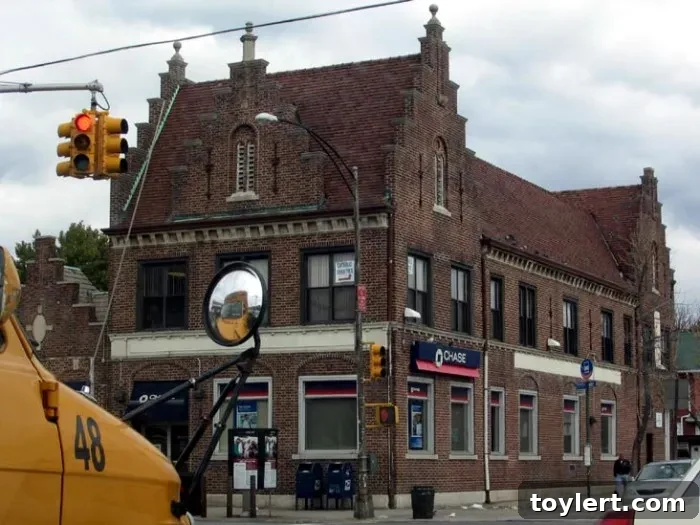
Nestled on a prominent corner in the historic Flatlands neighborhood of Brooklyn, the building at 1984 Flatbush Avenue stands as a magnificent testament to a bygone era of architectural grandeur and community prosperity. Originally constructed in 1926 as the Midwood Trust Company, and now home to a Chase Bank branch, this structure is far more than just a functional banking institution. It is a stunning example of Flemish Renaissance Revival architecture, a style that elegantly harks back to Brooklyn’s deep Dutch roots and adds a distinctive character to the borough’s diverse streetscapes. While not yet officially landmarked, its intricate detailing, robust construction, and historical significance make it a strong candidate for preservation, representing a unique chapter in Brooklyn’s architectural narrative.
Architectural Profile: 1984 Flatbush Avenue
- Original Name: Midwood Trust Company
- Current Occupant: Chase Bank
- Address: 1984 Flatbush Avenue, Brooklyn, NY
- Cross Streets: Corner of Flatlands Avenue
- Neighborhood: Flatlands
- Year Built: 1926
- Architectural Style: Flemish Renaissance Revival
- Architect: Slee & Bryson
- Landmarked Status: No, but highly deserving of designation
A Deep Dive into Flemish Renaissance Revival Architecture
The choice of Flemish Renaissance Revival for the Midwood Trust Company building was a deliberate and deeply symbolic one. This architectural style, flourishing in the early 20th century, drew inspiration from the historical architecture of Flanders – a region historically linked to the Low Countries, now primarily Belgium, but culturally and historically intertwined with the Netherlands. For Brooklyn, a city founded by Dutch settlers, this style offered a direct and tangible connection to its ancestral heritage, going beyond merely naming streets after Dutch families.
Key characteristics of the Flemish Renaissance Revival style, beautifully demonstrated at 1984 Flatbush Avenue, include:
- Stepped Gables: The most iconic feature, the stepped or “crow-stepped” gable, crowns the building’s roofline, creating a distinctive silhouette against the sky. These intricate brickwork details are a direct nod to traditional Dutch and Flemish urban houses.
- Rich Brickwork: The building boasts meticulously laid brick, often in variations of red or dark earth tones, showcasing the craftsmanship of the period. This material choice is both durable and aesthetically pleasing, conveying a sense of permanence and solidity.
- Stone and Terra Cotta Detailing: Complementing the brick, ornate stone or terra cotta elements are used for decorative accents. These can be seen in window surrounds, cornices, quoining (cornerstones), and intricate sculptural panels that often depict allegorical figures or floral motifs.
- Symmetry and Grandeur: While not always strictly symmetrical, the overall massing and fenestration (window arrangement) of Flemish Revival buildings often strive for a balanced and imposing appearance, suitable for institutions like banks.
- Multi-paned Windows: Windows are typically multi-paned, adding to the period feel, and often feature decorative lintels or sills that further enhance the facade’s visual interest.
At 1984 Flatbush Avenue, one can observe these elements working in harmony. The prominent stepped gables immediately draw the eye, while the contrasting light-colored stone details against the brick facade add a sophisticated textural richness. The carefully articulated windows and entrance create a sense of welcoming yet secure grandeur, perfectly befitting a financial institution of its time.
The Midwood Trust Company: A Pillar of the Community
When the Midwood Trust Company opened its doors in 1926, it wasn’t just another bank; it was a symbol of growth and stability in the rapidly developing Flatlands neighborhood. In the early 20th century, local banks played a crucial role in community building, providing essential services like savings accounts, loans for homes and businesses, and a tangible presence of financial security. The imposing architecture of buildings like the Midwood Trust Company was designed to instill confidence and trust in its patrons. Its solid construction and classical references conveyed reliability and permanence, values highly esteemed during a period of significant economic expansion in Brooklyn.
The strategic location at the corner of Flatbush and Flatlands Avenues further underscored its importance, placing it at a vital nexus of commerce and residential life. Over the decades, as the community evolved, so too did the institution. Its eventual transformation into a branch of Chase Bank reflects the consolidation and modernization of the banking industry, yet the building itself continues to serve its original purpose, albeit under a different banner, acting as a financial anchor for the Flatlands community.
The Masterminds: Architects Slee & Bryson
The architectural firm of Slee & Bryson was a prominent name in early 20th-century Brooklyn, leaving an indelible mark across many of the borough’s most cherished neighborhoods. Their work for the Midwood Trust Company demonstrates their versatility and skill in adapting historical styles to contemporary needs. While the 1984 Flatbush Avenue project showcases their mastery of Flemish Renaissance Revival, their broader portfolio reveals an impressive range of styles.
Slee & Bryson were responsible for designing numerous Colonial Revival and Tudor Revival homes and apartment buildings that continue to define the character of upscale Brooklyn residential areas. Their influence can be seen in:
- Prospect Lefferts Gardens: Known for its majestic tree-lined streets and grand homes.
- Crown Heights North and South: Where their designs contribute to the area’s rich architectural diversity.
- Park Slope: A neighborhood celebrated for its brownstones and elegant structures.
- Various parts of Flatbush: Including the picturesque and historically significant enclaves of Prospect Park South, Albemarle, and Kenmore Terraces, and Ditmas Park, all renowned for their detached Victorian and early 20th-century homes.
This extensive body of work highlights Slee & Bryson’s significant contribution to Brooklyn’s built environment. Their ability to execute different revival styles with such finesse speaks to their deep understanding of architectural history and their commitment to creating buildings of lasting beauty and quality. The Midwood Trust Company building is a prime example of their institutional work, demonstrating that their talent extended beyond residential designs to public and commercial structures that were equally impactful.
Flatlands: A Neighborhood Steeped in History
The Flatlands neighborhood itself is one of Brooklyn’s oldest continuously inhabited areas, tracing its origins directly back to the Dutch colonial period. Originally known as “Nieuw Amersfoort,” it was one of the six original towns of Kings County. Its name, Flatlands, reflects the topography of the area – largely flat and fertile, ideal for farming. While much of the agricultural landscape has long given way to urban development, the neighborhood retains a sense of its historical depth.
The presence of a building like 1984 Flatbush Avenue, with its overt references to Dutch and Flemish architecture, reinforces the historical narrative of Flatlands. It serves as a visual anchor, reminding residents and visitors of the foundational heritage that shaped this part of Brooklyn. The architectural gems scattered throughout Flatlands, including this former bank, contribute to its unique identity and differentiate it from other, perhaps more widely recognized, Brooklyn neighborhoods. The building perfectly integrates into the commercial thoroughfare of Flatbush Avenue while simultaneously standing out with its historical character.
The Case for Landmark Protection
The assertion that the Midwood Trust Company building “should be landmarked” is not merely an opinion but a reflection of its profound architectural and historical merit. Landmark status would provide essential protection against insensitive alterations or, worse, demolition, ensuring that future generations can appreciate this significant structure. Reasons for its deserved landmark designation include:
- Exceptional Architectural Style: It is a pristine and well-preserved example of Flemish Renaissance Revival, a style less common than others in Brooklyn and one with deep cultural resonance for the borough.
- Historical Significance: As the original home of the Midwood Trust Company, it represents a crucial aspect of early 20th-century community development and financial history in Flatlands.
- Masterpiece by a Prominent Firm: Designed by Slee & Bryson, a firm with an extensive and impactful legacy in Brooklyn architecture, the building contributes to their documented body of work.
- Contribution to Streetscape: Its unique and striking design adds significant aesthetic value and character to the Flatbush Avenue corridor, standing out from more generic commercial constructions.
- Cultural Heritage: It is a tangible link to Brooklyn’s Dutch ancestry, offering a visual connection to the Low Countries that played such a formative role in the city’s origins.
Preserving buildings like 1984 Flatbush Avenue is vital for maintaining the authenticity and richness of Brooklyn’s urban fabric. Each historic structure tells a part of the city’s story, and this particular building offers a beautifully articulated chapter on heritage, finance, and architectural artistry.
Brooklyn’s Enduring Dutch Legacy
Brooklyn’s identity is inextricably linked to its Dutch founders. Beyond the well-known street names like Fulton, Nassau, or Flatbush (derived from “Vlacke Bos,” meaning flat woods), and neighborhoods such as Bushwick, Canarsie, and Flatlands, the architectural echoes of this heritage are perhaps the most compelling. While the famous Dutch gabled farmhouses have mostly vanished, or are rare survivors, the Flemish Renaissance Revival style offers a more sophisticated, institutionalized interpretation of this legacy.
The building at 1984 Flatbush Avenue serves as a powerful reminder that Brooklyn’s cultural tapestry is rich and deeply woven. It demonstrates how architectural styles can transcend mere aesthetics to become symbols of history, identity, and continuity. The Flemish influence, originating from a part of the Low Countries that was culturally linked to the Netherlands, offers a nuanced perspective on this heritage, distinguishing it from purely Dutch colonial styles and showcasing a broader European artistic connection.
Conclusion
The former Midwood Trust Company building at 1984 Flatbush Avenue is a true architectural jewel in Brooklyn’s crown. Its Flemish Renaissance Revival style, the legacy of Slee & Bryson, and its historical role in the Flatlands community all combine to make it a structure of immense significance. As a vibrant piece of living history, it not only houses a modern bank but also silently narrates tales of Brooklyn’s past, its Dutch roots, and the ambitions of its early 20th-century residents. Its undeniable beauty and historical importance make a compelling argument for its protection, ensuring that this elegant reminder of Brooklyn’s heritage continues to grace Flatbush Avenue for generations to come, standing as a proud testament to the borough’s unique architectural legacy.