540 Vanderbilt Avenue: A New Milestone in Brooklyn’s Pacific Park Development
Brooklyn’s dynamic skyline continues its remarkable evolution with the latest progress at Pacific Park, a monumental urban development project previously known as Atlantic Yards. Recent filings reveal a significant stride forward for 540 Vanderbilt Avenue, signaling the commencement of a third conventionally built residential tower within this sprawling complex in Prospect Heights. This pivotal development arrives amidst a flurry of activity, including prior applications for a second new building at 535 Carlton Avenue, strategic moves by the state to acquire seven key Atlantic Yards properties through eminent domain, and ongoing legal challenges surrounding the pioneering modular tower, B2.
This article delves into the specifics of 540 Vanderbilt Avenue, its strategic placement within the ambitious Pacific Park master plan, and the broader context of one of New York City’s most debated and transformative urban renewal initiatives. From groundbreaking architecture to complex urban planning and community integration, the story of Pacific Park and its newest towers reflects Brooklyn’s continuous growth and the intricate balance between modern development and preserving neighborhood character. As the borough solidifies its status as a vibrant urban center, these new residential offerings are poised to meet the escalating demand for contemporary living spaces.
The Grand Vision of Pacific Park: A Decades-Long Urban Transformation
The Atlantic Yards project, now proudly rebranded as Pacific Park, stands as one of the most ambitious and, at times, controversial urban development endeavors in recent New York City history. Conceived in the early 2000s by Forest City Ratner, and later managed by Greenland Forest City Partners, the initial vision promised a sprawling complex across 22 acres in the heart of Prospect Heights, Brooklyn. This ambitious master plan encompassed 16 residential buildings, a refurbished transit hub, extensive public open spaces, and the iconic Barclays Center arena as its centerpiece. The project aimed to create thousands of housing units, including a substantial portion designated as affordable, along with significant retail and office space, fundamentally reshaping the very fabric of the neighborhood.
However, the journey from vision to reality has been fraught with challenges. Initial timelines were significantly delayed, and the project faced intense opposition from community groups concerned about its sheer scale, potential environmental impact, and, most notably, the use of eminent domain. The global financial crisis of 2008 further complicated matters, leading to revised plans, changes in ownership stakes, and a prolonged construction schedule that stretched over many years. Despite these formidable hurdles, the development has steadily progressed, with several residential buildings and the iconic Barclays Center now standing as prominent testaments to the project’s resilience and unwavering momentum. The ongoing construction of towers like 540 Vanderbilt Avenue and 535 Carlton Avenue represents a renewed and determined push towards completing the extensive residential component of Pacific Park, bringing thousands of new residents to the area and definitively shaping the future of downtown Brooklyn.
540 Vanderbilt Avenue: A Beacon of Progress in Prospect Heights
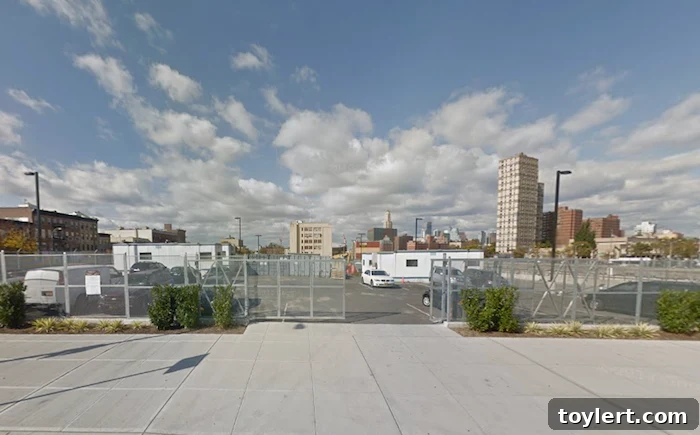
The recent filing of new building applications by Forest City Ratner for 540 Vanderbilt Avenue marks a crucial and exciting phase in the ongoing Pacific Park development. This particular tower, strategically situated between Pacific and Dean Streets, is designed to rise an impressive 17 stories, offering a significant and much-needed contribution to the area’s burgeoning housing inventory. Upon its anticipated completion, 540 Vanderbilt Avenue will house 282 meticulously planned residential units, catering to a diverse range of residents seeking modern, sophisticated urban living in one of Brooklyn’s most desirable and rapidly evolving neighborhoods. This new development is not just about adding housing; it’s about creating vibrant living spaces that contribute to the community’s overall appeal.
Designed by the internationally acclaimed architectural firm Cook+Fox, the project at 540 Vanderbilt Avenue embodies a profound commitment to thoughtful urban design, sustainable practices, and contextual sensitivity. The building’s architecture aims to integrate seamlessly with the existing streetscape while simultaneously establishing a distinct and contemporary identity within the larger Pacific Park complex. The comprehensive plan for 540 Vanderbilt Avenue allocates an expansive 326,047 square feet specifically for residential use, ensuring ample living space and an array of modern amenities for its future inhabitants. Furthermore, the ground floor will feature a substantial 4,731 square feet of retail space, meticulously designed to enhance the pedestrian experience and provide convenient services and diverse shopping opportunities for both residents of the tower and the wider Prospect Heights community. This strategic blend of residential and retail spaces is a hallmark of intelligent urban planning, fostering vibrant, walkable neighborhoods and contributing to the area’s economic dynamism.
The Growing Ensemble: 535 Carlton Avenue and Other Future Phases
The robust development of 540 Vanderbilt Avenue is not an isolated event but rather an integral part of a coordinated and accelerated effort to advance the residential components of Pacific Park. Hot on the heels of the 540 Vanderbilt filings were the equally significant applications for another substantial residential tower at 535 Carlton Avenue. This dual progression underscores the unwavering commitment of Greenland Forest City Partners to expedite the build-out of the ambitious master plan. Each new tower that rises brings Pacific Park significantly closer to its envisioned state, providing much-needed housing options and contributing substantially to the economic vitality and demographic growth of the borough.
The strategic deployment of these conventionally built structures signals a notable departure from some of the earlier, more experimental construction methods employed within the project, specifically the modular approach seen with the B2 tower. This return to traditional construction techniques for towers like 540 Vanderbilt and 535 Carlton may reflect invaluable lessons learned from past experiences, prioritizing efficiency, cost-effectiveness, and timely delivery. As these contemporary buildings rise, they will collectively form a cohesive new urban district, thoughtfully designed to offer a diverse mix of market-rate and affordable housing options, alongside new public amenities. This approach aims to create a truly mixed-income community that aligns with the project’s original, albeit often challenged, social objectives. The timely completion of these prominent towers is crucial for fulfilling the overarching promise of Pacific Park as a holistic, integrated urban environment that caters to a wide spectrum of Brooklyn residents.
Controversies and Challenges: Eminent Domain and the B2 Tower’s Rocky Start
The arduous path to realizing the vision of Pacific Park has been indelibly marked by significant controversy and protracted legal battles, particularly concerning the contentious use of eminent domain and the innovative, yet troubled, construction of the project’s very first residential tower, B2. Eminent domain, the constitutional power of the state to acquire private property for public use, even if the owner does not wish to sell, was a highly contentious aspect of the original Atlantic Yards project. The state’s decisive move to seize seven Atlantic Yards properties for the development sparked numerous high-profile lawsuits and intense public debate. Property owners and community advocates vehemently argued against the legality and fairness of using such sweeping governmental power for what they perceived as a primarily private development, raising fundamental questions about individual property rights and the extent of governmental authority in urban planning.
Adding another layer of complexity to the project’s already intricate narrative was the B2 tower, officially known as 461 Dean Street, which ambitiously aimed to be the world’s tallest modular apartment building upon its completion. This innovative construction method, where pre-fabricated units are meticulously assembled off-site in a factory setting and then stacked like precision-engineered LEGO blocks, promised unprecedented speed and significant cost efficiency. However, B2 faced severe construction delays, substantial cost overruns, and ultimately, a high-profile lawsuit between Forest City Ratner and its modular construction partner, Skanska. These widely publicized disputes highlighted the inherent challenges of pioneering new and unproven building techniques on such a massive scale. While B2 eventually opened its doors, its difficulties served as a cautionary tale and very likely influenced the strategic decision to pursue more conventional construction methods for subsequent towers, including 540 Vanderbilt Avenue. This shift was intended to ensure smoother, more predictable project execution and mitigate future risks. The profound legacy of these early challenges continues to shape the strategic approaches and methodologies employed in the ongoing development of Pacific Park, guiding it towards a more stable and efficient completion.
Architectural Excellence by Cook+Fox Architects
The strategic choice of Cook+Fox Architects to design 540 Vanderbilt Avenue speaks volumes about the unwavering commitment to architectural quality, contextual sensitivity, and sustainable design principles within the Pacific Park development. Cook+Fox is an internationally renowned firm celebrated for its work on high-performance and environmentally responsible buildings that are deeply rooted in their unique urban contexts. Their extensive portfolio includes acclaimed projects across New York City and beyond, each characterized by a thoughtful approach to materials, natural light integration, and the seamless incorporation of natural elements into the built environment. For 540 Vanderbilt, their design aims to create a building that is not only aesthetically pleasing and visually striking but also contributes positively to the pedestrian experience and the overall environmental health and vibrancy of the neighborhood.
Their design approach for 540 Vanderbilt Avenue likely incorporates principles of biophilic design, seeking to foster a deeper connection between building occupants and nature through expansive views, abundant natural light, and the strategic inclusion of green spaces wherever feasible. The firm’s proven expertise in designing buildings that meet rigorous environmental standards ensures that the tower will be a responsible, energy-efficient, and sustainable addition to Brooklyn’s urban fabric. By meticulously focusing on creating engaging facades, optimizing efficient layouts, and integrating amenities that significantly enhance the quality of life for residents, Cook+Fox is poised to deliver a building that stands out not just for its impressive scale but also for its profound sensitivity to its surroundings and its commitment to long-term sustainability. This unwavering commitment to design excellence and environmental responsibility is absolutely essential in a high-profile, transformative development like Pacific Park, aiming to create lasting value for both its future residents and the wider Brooklyn community.
Impact on Prospect Heights and Brooklyn’s Urban Landscape
The ongoing development at Pacific Park, including the significant new tower at 540 Vanderbilt Avenue, has a profound and multifaceted impact on Prospect Heights and the broader Brooklyn urban landscape. From an economic perspective, the project brings substantial investment, creates thousands of jobs during the intensive construction phases, and introduces new retail opportunities that can significantly revitalize local streetscapes and commercial corridors. The anticipated influx of thousands of new residents also provides crucial support for existing local businesses and contributes immensely to a vibrant and thriving local economy. However, the sheer scale of the development also raises legitimate concerns among community members about potential gentrification, the displacement of long-time residents, and the increased strain on existing public infrastructure, such as schools, public transportation networks, and essential public services.
From an urban planning standpoint, Pacific Park represents a dramatic and irreversible shift in how Brooklyn neighborhoods evolve and adapt. The increased density and verticality of the new towers fundamentally reshape the visual character of Prospect Heights, transitioning it from a predominantly low-rise, historic residential district to a more urbanized, high-density hub. While some critics argue this transformation erodes the neighborhood’s unique charm and architectural heritage, proponents highlight the undeniable benefits of an increased housing supply, particularly the crucial provision of affordable units, and the creation of new public parks and amenities that enhance community life. The careful integration of ground-floor retail, as meticulously planned for 540 Vanderbilt Avenue, is specifically designed to activate street life and ensure that the new developments contribute meaningfully to a lively, walkable, and inclusive community. The long-term success of Pacific Park will ultimately hinge on how effectively these new structures integrate with and sensitively serve the diverse needs of both the new and existing residents of Prospect Heights.
The Road Ahead: Future of Pacific Park
With significant and visible progress on key towers like 540 Vanderbilt Avenue and 535 Carlton Avenue, Pacific Park is steadily moving closer to its ultimate and ambitious completion. While formidable challenges undoubtedly remain, including the intricate logistical process of constructing multiple high-rise towers simultaneously and fulfilling the project’s extensive affordable housing commitments, the palpable momentum is undeniable. The partnership between Forest City Ratner (now Greenland Forest City Partners) has skillfully navigated complex regulatory hurdles, significant financial shifts, and persistent community opposition to bring a substantial portion of the original, grand vision to fruition. The completion of each new building not only adds critical housing stock to a perpetually supply-constrained market but also provides essential new commercial spaces and expands the public realm with thoughtfully designed parks and plazas, enhancing the quality of urban life.
The full realization of Pacific Park will undoubtedly transform the very heart of Brooklyn, creating a dense, vibrant, and mixed-use community centered majestically around the iconic Barclays Center. As the remaining parcels of land are systematically developed, careful and considered attention will continue to be given to ensure that the project meticulously delivers on its foundational promises of sustainability, seamless community integration, and substantial economic benefit for all. The invaluable experience gained from earlier phases of the project, including the critical lessons learned from the challenges of B2 and the ongoing, active engagement with local stakeholders, will be absolutely vital in guiding the successful and responsible completion of this ambitious urban endeavor. The captivating story of Pacific Park is far from over, and its ongoing development will continue to shape the future landscape, character, and identity of Brooklyn for many decades to come, leaving a lasting imprint on one of New York City’s most dynamic boroughs.