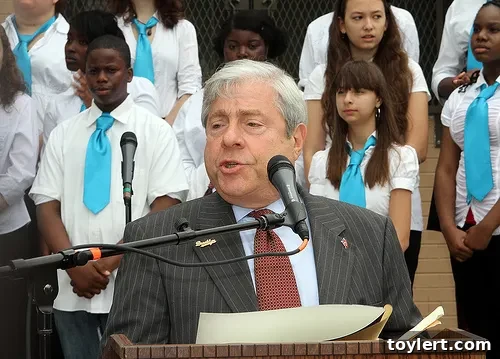
Marty Markowitz: A Brooklyn Icon Sets His Sights on City Hall
The political landscape of New York City is often a vibrant tapestry of ambition, strategy, and public service. Whispers from reliable sources indicate that Brooklyn’s long-serving and much-loved Borough President, Marty Markowitz, is giving serious thought to a mayoral run. This news has sparked considerable discussion across the five boroughs, igniting debates about his city-wide viability, his unique brand of populism, and the potential impact he could have on the race for City Hall.
For years, Markowitz has been an indelible part of Brooklyn’s identity, known for his signature style, his unwavering enthusiasm for the borough, and his folksy charm. His consideration for the city’s highest office represents a significant moment, prompting both excitement among his loyal base and scrutiny from political observers and potential challengers. While his popularity within Brooklyn is undeniable, the path to becoming Mayor of New York City demands a broader appeal, the ability to unite diverse communities, and a clear vision for the entire metropolitan area.
The Rumors Ignite: A Mayoral Bid on the Horizon?
According to insiders speaking to The Post, Marty Markowitz is “strongly considering” a bid for Mayor of New York City. This isn’t just a fleeting thought; it reflects a deep contemplation of the challenges and opportunities that come with seeking the top executive position in one of the world’s most complex and dynamic cities. The decision to run for mayor is never taken lightly, requiring immense dedication, a robust campaign infrastructure, and a compelling platform that resonates with millions of voters.
Markowitz, whose political career has been characterized by an effusive love for Brooklyn and a hands-on approach to local governance, now faces the question of whether his distinct appeal can translate beyond his home borough. A mayoral campaign would demand a strategic shift, requiring him to articulate a vision that encompasses the diverse needs and aspirations of residents from the Bronx to Staten Island, Manhattan to Queens, and, of course, his beloved Brooklyn. The political buzz around his potential candidacy underscores the anticipation and high stakes associated with the upcoming mayoral election, where a formidable field of contenders is expected to emerge.
Navigating a Complex Legacy: Popularity and Controversy on the Campaign Trail
Marty Markowitz’s public career has been a testament to his enduring popularity within Brooklyn, yet it has also been punctuated by significant controversies. Any mayoral campaign he undertakes would inevitably bring these aspects of his legacy into sharp focus, requiring him to skillfully balance widespread support with critical public opinion.
Brooklyn’s Beloved Borough President: A Charismatic Champion
Indeed, Markowitz enjoys “enormous popularity” within Brooklyn. His tenure as Borough President, spanning multiple terms, saw him become the borough’s most vocal cheerleader. He was omnipresent at community events, from street fairs and concerts in Prospect Park to groundbreaking ceremonies for new developments. His warm, accessible demeanor and signature “only in Brooklyn” catchphrase endeared him to countless residents. He fostered a sense of local pride and identity, advocating tirelessly for Brooklyn’s economic development, cultural institutions, and quality of life initiatives. Many Brooklynites saw him as a genuine advocate, a public servant who understood their concerns and championed their interests with an infectious enthusiasm.
His ability to connect with people on a personal level, combined with his long-standing commitment to the borough, built a robust and loyal political base. This grassroots support, cultivated over decades, would undoubtedly be a significant asset in a mayoral primary, offering a formidable advantage over less-established candidates. However, the step from borough-wide adoration to city-wide acceptance is a monumental one, requiring a broader narrative and a demonstrated capacity to lead diverse constituencies.
The Shadow of Atlantic Yards: A Divisive Stance
Despite his popularity, Markowitz’s political journey has not been without its critics. One of the most significant controversies that defined a portion of his tenure was his unwavering support for the Atlantic Yards development. This massive urban regeneration project, which included the Barclays Center arena and thousands of residential units, became a lightning rod for debate. Opponents raised serious concerns about the project’s use of eminent domain, its scale, the substantial public subsidies involved, and its potential impact on local neighborhoods like Fort Greene and Prospect Heights.
Markowitz, however, consistently championed Atlantic Yards, viewing it as a vital engine for economic growth, job creation, and a symbol of Brooklyn’s ascendancy. He argued that the benefits of the development outweighed the costs and that it would ultimately revitalize the area. While his pro-development stance aligned with his vision for a burgeoning Brooklyn, it undeniably “pissed off opponents” who felt marginalized and ignored. These critics were often well-organized and vocal, creating a lasting impression of his willingness to prioritize large-scale development over community concerns. On a city-wide stage, this stance would be scrutinized, potentially alienating voters in other boroughs who might view it as an example of top-down development prioritizing corporate interests over local needs.
The Battle Over Prospect Park West: Alienating Bike Activists
Another point of contention that could resurface in a mayoral campaign is Markowitz’s stance on the Prospect Park West bike lane. This particular issue became a microcosm of the city’s broader debates over urban planning, transportation policy, and the allocation of public space. The bike lane, designed to improve safety for cyclists and pedestrians, faced fierce opposition from some local residents who argued it led to increased traffic congestion, reduced parking, and was poorly conceived.
Markowitz famously sided with these opponents, becoming a prominent voice against the bike lane. His position put him at odds with a growing and increasingly influential demographic: bike activists and urbanists who champion sustainable transportation and safer streets. For these groups, Markowitz’s opposition was seen as regressive and out of step with progressive urban policy. While his stance may have resonated with a segment of car-owning residents, it undoubtedly “pissed off” bike activists and their allies, many of whom represent a key voting bloc in city-wide elections. A mayoral candidate needs to demonstrate a comprehensive understanding of urban mobility and a commitment to diverse transportation solutions, making his past position on the bike lane a potential liability with environmentally conscious and younger voters.
Early Indicators of Strength: The 2008 Polls and the Bloomberg Factor
Delving into the political history reveals compelling evidence of Markowitz’s past viability as a mayoral contender, particularly prior to a pivotal shift in New York City’s political landscape.
A Leading Contender Before the Term Limits Shift
In 2008, before the dramatic extension of term limits allowed Mayor Michael Bloomberg to pursue a third term, Marty Markowitz was a surprisingly strong frontrunner in early polls among potential Democratic mayoral candidates. This was a critical period when the field was wide open, and prominent figures like Anthony Weiner, Christine Quinn, and William Thompson Jr. were all eyeing the city’s top job. That Markowitz, then primarily known as Brooklyn’s Borough President, could consistently lead these established politicians speaks volumes about his inherent appeal and name recognition.
His ability to outpace contenders who had already built significant city-wide profiles – Weiner as a high-profile Congressman, Quinn as the influential City Council Speaker, and Thompson as the respected City Comptroller – suggested a broad base of support that extended beyond his borough. These early polls offered a glimpse into a potential Markowitz candidacy that was both underestimated and highly competitive, signaling that his charismatic persona and local governance experience held significant currency with the electorate.
Unpacking Cross-Community Support: A Surprising Edge
Perhaps even more indicative of his potential strength was a March 2008 Quinnipiac poll, which showed black voters favoring Markowitz over William Thompson Jr. This was a particularly striking detail given that Thompson was an African American candidate with a strong record in city government and deep ties within the black community. For Markowitz to garner such significant support from this vital demographic, surpassing Thompson in their preference, underscored his capacity for cross-community appeal. It suggested that his populism, his direct approach, and his focus on local issues resonated across racial and ethnic lines, hinting at a potential to build a diverse coalition that is essential for winning a city-wide election in New York.
This finding challenged conventional wisdom about voter demographics and political alignments, painting Markowitz as a candidate with a unique ability to bridge divides and attract support from unexpected quarters. Such a broad appeal would be an invaluable asset in a crowded primary field and crucial for success in a general election against a well-funded opponent.
The Bloomberg Factor: Reshaping the Political Landscape
However, the entire political calculus changed dramatically with the extension of term limits. Mayor Bloomberg, initially constrained by the two-term limit, successfully campaigned for the right to seek a third term. This legislative maneuver fundamentally altered the trajectory of the 2009 mayoral race and, by extension, the aspirations of all potential Democratic challengers, including Markowitz. Had Bloomberg not pursued and won his third term, the landscape would have been wide open, and Markowitz’s early polling numbers suggest he would have been a formidable contender in that scenario.
The decision to extend term limits effectively removed the immediate opportunity for candidates like Markowitz, Weiner, Quinn, and Thompson, forcing them to either wait or rethink their political strategies. While Thompson eventually did run against Bloomberg in 2009, losing in a closely contested race, the circumstances were vastly different from a non-incumbent election. The “Bloomberg Factor” highlights how quickly political opportunities can shift and how external events can reshape even the most promising candidacies.
The Path Forward: Challenges and Opportunities for a Mayoral Campaign
Should Marty Markowitz formally declare his candidacy, he would embark on a challenging yet potentially rewarding journey. His campaign would need to navigate several critical areas to build a winning coalition.
Building a City-Wide Coalition
One of the primary challenges for Markowitz would be to translate his immense Brooklyn popularity into a city-wide mandate. This means appealing to voters in diverse boroughs like the Bronx, Queens, Manhattan, and Staten Island, each with its own unique concerns and political dynamics. A successful mayoral campaign requires building broad coalitions that transcend neighborhood and borough lines, uniting voters under a common vision for the city’s future. He would need to demonstrate an understanding of issues affecting all New Yorkers, from housing affordability in Queens to economic development in the Bronx, and public safety across all five boroughs. This would necessitate moving beyond his Brooklyn-centric rhetoric and articulating a comprehensive policy agenda for the entire metropolis.
Addressing Past Controversies: A Campaign Imperative
His past stances on Atlantic Yards and the Prospect Park West bike lane would undoubtedly be re-examined and used by opponents. Markowitz would need a clear and compelling narrative to address these controversies. He could frame his support for Atlantic Yards as a commitment to bold economic development and job creation, arguing that difficult decisions are sometimes necessary for long-term progress. Similarly, he would need to articulate a nuanced position on transportation and urban planning that acknowledges the validity of different perspectives while promoting a forward-looking vision for the city’s infrastructure. Transparency and a willingness to engage critically with his record would be essential for winning over skeptical voters.
Fundraising and Political Machine: Competing with Established Figures
Running a mayoral campaign in New York City is an incredibly expensive undertaking, requiring millions of dollars for advertising, staffing, and voter outreach. While Markowitz has a strong donor base in Brooklyn, he would need to significantly expand his fundraising network to compete with candidates who might have deeper pockets or stronger ties to major financial interests. Building a robust campaign organization with experienced political operatives, strategists, and volunteers across the city would also be crucial. The ability to quickly mobilize resources and personnel would be key to establishing a competitive presence from day one.
Crafting a Winning Message: Beyond Brooklyn Boosterism
Finally, Markowitz would need to craft a compelling and coherent message that resonates with all New Yorkers. While his “only in Brooklyn” persona is endearing, a mayoral campaign demands a broader narrative. He would need to articulate clear policy positions on critical city-wide issues such such as affordable housing, education reform, public safety, economic equity, environmental sustainability, and the future of public transportation. His message would need to convey a vision of leadership that is capable of managing a complex municipal government and addressing the myriad challenges facing the city, moving beyond boosterism to concrete solutions and responsible governance.
Conclusion: Marty Markowitz’s Mayoral Aspirations in the Grand Tapestry of NYC Politics
Marty Markowitz’s consideration for a mayoral run underscores the dynamic and unpredictable nature of New York City politics. With his unique blend of local popularity, a proven track record of community engagement, and surprisingly strong past polling numbers, he represents a fascinating wild card in any mayoral race. Yet, the path to City Hall is fraught with challenges, from overcoming past controversies to building a truly city-wide coalition and articulating a vision that extends beyond the borders of his beloved Brooklyn.
His decision, whenever it comes, will undoubtedly send ripples through the political establishment, forcing other potential candidates to reassess their strategies. Whether he ultimately chooses to run, Markowitz’s contemplation of the mayoralty solidifies his place as a significant figure in New York City’s political narrative, a testament to his enduring appeal and the persistent ambition that drives public service at the highest levels. The questions surrounding his chances will continue to fuel conversations, highlighting the intricate dance between local popularity and the demands of city-wide leadership in the vibrant political theater of New York.
Marty Eyes Mayor Run [NY Post]
Photo by reclaimedhome