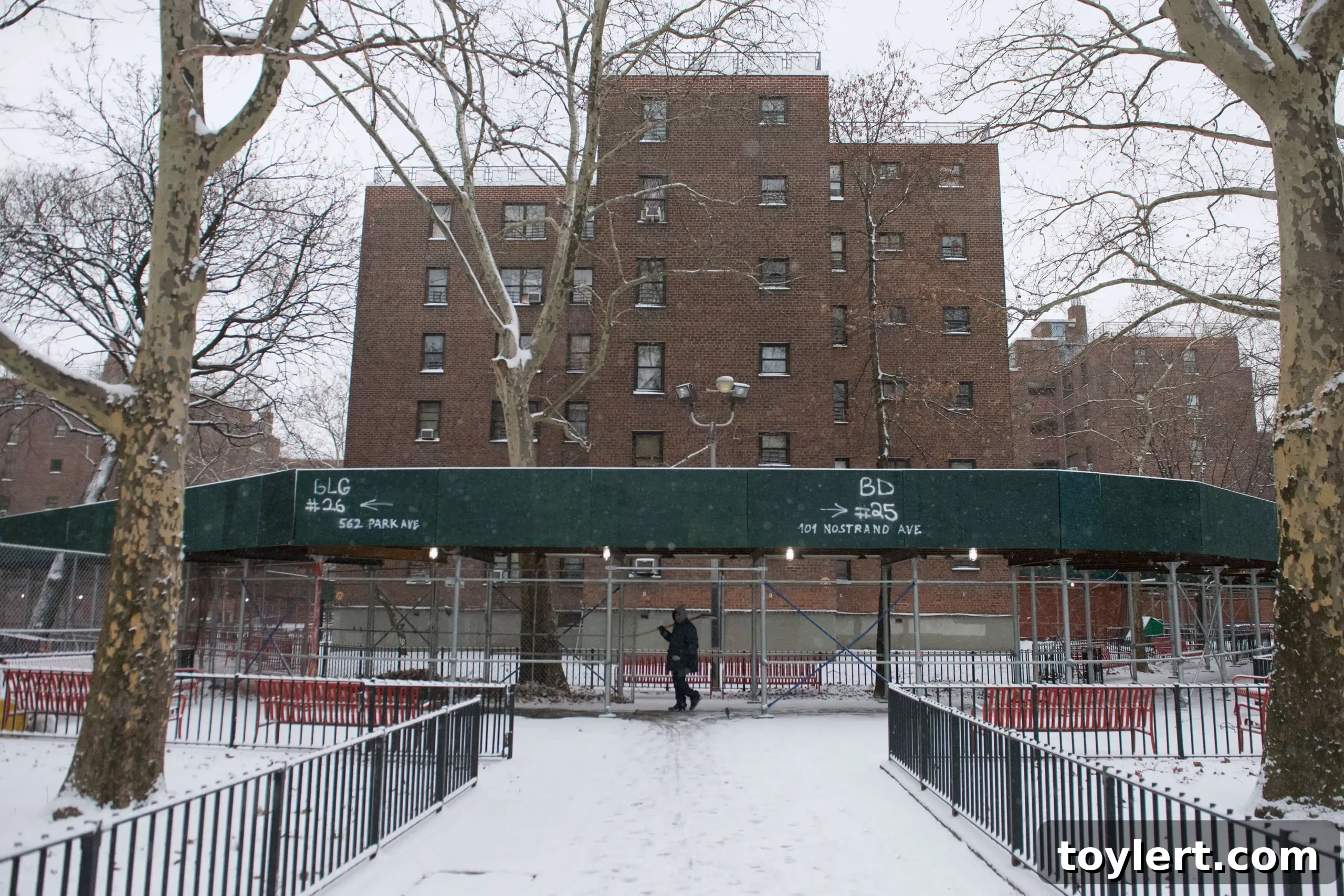
Ensuring Warmth: NYCHA’s Winter Preparedness Under Scrutiny and the Future of Public Housing Oversight
As the chilling winds of winter begin to whisper through the five boroughs, the perennial concern for New York City’s public housing residents once again takes center stage: reliable heat and hot water. The New York City Housing Authority (NYCHA), America’s largest public housing provider, faces immense pressure annually to safeguard the well-being of its nearly 400,000 tenants across 335 developments. This year, the focus intensifies as city leaders, particularly Brooklyn Council Member Alicka Ampry-Samuel, head of the City Council’s Committee on Public Housing, proactively grilled NYCHA representatives on their level of preparedness for potential heat and gas outages well in advance of the coldest months. This crucial Tuesday hearing aimed to preemptively address a systemic issue that has historically left thousands of vulnerable New Yorkers in dangerously cold conditions.
Council Member Ampry-Samuel, a vocal advocate for public housing residents and a former NYCHA tenant herself, articulated the profound frustration and anxiety experienced by her constituents. During the October 12 hearing, she vividly recounted the deluge of calls she receives: “I cannot count how many times I’ve received calls from residents, requesting hot plates and asking that million-dollar question — ‘How long will my gas be out?’ — to which I never have an answer.” This poignant statement underscores a critical communication gap and a deeper systemic failure that has plagued NYCHA for decades. The lack of clear, actionable information in times of crisis exacerbates the hardship faced by families, particularly those with young children or elderly members, for whom prolonged exposure to cold or lack of cooking facilities poses significant health and safety risks. Her direct experience as a former resident gives her a unique and invaluable perspective on the daily struggles and resilience of NYCHA communities, driving her fervent advocacy.
The Pervasive Challenge of NYCHA Heat Outages
NYCHA’s aging infrastructure is a formidable opponent in the battle against winter woes. Many of its boiler systems and gas lines date back to the mid-20th century, operating far beyond their intended lifespan. This legacy of deferred maintenance and chronic underfunding has resulted in a precarious state where breakdowns are not isolated incidents but rather an expected, albeit dreaded, annual occurrence. The sheer scale of NYCHA’s operations — encompassing over 170,000 apartments — means that even minor system failures can impact thousands of families simultaneously. Residents frequently report being without heat or hot water for days, sometimes weeks, during the harshest winter weather. These outages are more than just an inconvenience; they are a profound disruption to daily life, forcing families to seek alternative heating methods, often unsafe, or to relocate temporarily, incurring additional financial strain. The “million-dollar question” about gas outages isn’t just about cooking; it’s about a fundamental sense of stability and the right to a basic living standard that too often goes unfulfilled for NYCHA tenants.
The impact of these outages ripples throughout the community. Children struggle to do homework in cold apartments, increasing educational disparities. Elderly residents and those with chronic health conditions face heightened risks of hypothermia and other illnesses. The psychological toll of living in constant uncertainty, knowing that a sudden cold snap could plunge their homes into frigid conditions, is immense. It erodes trust in the very institutions designed to provide safe and affordable housing. NYCHA’s official responses to these incidents often involve deploying temporary heating solutions like electric hot plates or space heaters, but these are rarely sufficient for sustained warmth and come with their own set of safety concerns and increased electricity costs for tenants. The underlying issue remains the need for robust, proactive maintenance and comprehensive infrastructure upgrades rather than reactive, temporary fixes. Council Member Ampry-Samuel’s persistent questioning seeks to shift this paradigm, demanding not just preparedness for outages, but a strategy for preventing them.
Alicka Ampry-Samuel: A New Chapter in Public Housing Oversight
Beyond her current impactful role on the City Council, Alicka Ampry-Samuel is poised to take on an even more expansive and influential position in the realm of public housing. President Joe Biden has reportedly tapped her as the U.S. Department of Housing and Urban Development’s (HUD) next regional director for New York and New Jersey. This potential appointment signifies a significant elevation in her capacity to advocate for and oversee public housing initiatives. As regional director, she would wield greater influence over federal funding allocations, policy implementation, and the strategic direction of public housing networks, including NYCHA, across a vast and diverse region. This role offers a unique opportunity to bridge the gap between local challenges and federal resources, potentially leading to more integrated and effective solutions for housing authorities grappling with similar issues nationwide.
The transition from a city-level oversight role to a federal one presents both opportunities and challenges. While her current position as head of the City Council’s Committee on Public Housing allows her direct engagement with NYCHA management and city-specific budgeting, the HUD regional director role would grant her a broader vantage point and access to federal levers. This could mean more significant federal investments in infrastructure modernization, more stringent oversight of compliance with housing standards, and the ability to champion innovative solutions across multiple housing authorities. Her deep understanding of NYCHA’s intricacies, forged through years of advocacy and personal experience, would be invaluable in navigating the complex bureaucracy of HUD and effectively translating federal mandates into tangible improvements for residents. However, the lengthy process of replacing broken boilers, securing funding for major capital projects, and addressing thousands of tenant complaints remains a labyrinthine task, regardless of the oversight level.
Navigating Bureaucracy and Infrastructure Decay
The challenge of overseeing and effectively managing public housing, particularly an entity as massive and complex as NYCHA, is far more difficult than it appears from the outside. The scale of the problem is staggering: thousands of aging buildings, millions of components that require maintenance or replacement, and a constant influx of resident complaints. The bureaucracy involved in procuring parts, scheduling repairs, and coordinating labor for something as fundamental as a boiler replacement can be incredibly cumbersome and time-consuming. Financial constraints are perpetually at the forefront; despite its immense needs, NYCHA has historically struggled with chronic underfunding from both federal and city sources, leading to a multi-billion-dollar capital repair backlog. This deficit means that proactive maintenance often takes a back seat to emergency repairs, perpetuating a cycle of crisis management rather than preventative action.
Furthermore, internal inefficiencies within NYCHA have often exacerbated issues. Critics point to difficulties in tracking repairs, inconsistent communication with residents, and a workforce that, while dedicated, is often stretched thin. The process of addressing a single heat outage can involve numerous departments, external contractors, and regulatory hurdles. Each step adds to the delay, contributing to the frustration voiced by Council Member Ampry-Samuel and countless residents. A comprehensive strategy requires not only significant financial investment but also a fundamental overhaul of operational procedures, a streamlining of bureaucracy, and enhanced accountability mechanisms. Effective oversight, whether at the city or federal level, must penetrate these layers of complexity to identify root causes and implement sustainable, long-term solutions that prioritize the health, safety, and dignity of public housing residents.
Future Outlook: Towards Sustainable Solutions and Resident Empowerment
The focus on NYCHA’s winter preparedness is a critical annual exercise, but the long-term goal must be to move beyond reactive measures and towards sustainable solutions that eliminate the recurring crisis of heat and gas outages. This vision necessitates a multi-pronged approach. Firstly, substantial and consistent capital investment is paramount for modernizing NYCHA’s aging infrastructure. This includes upgrading boiler systems to more efficient and reliable models, replacing deteriorating pipes and gas lines, and investing in preventative maintenance technologies. Secondly, improving operational efficiency within NYCHA is crucial. This could involve enhanced training for maintenance staff, better use of data analytics to predict potential failures, and more effective communication strategies to keep residents informed. The implementation of robust tracking systems for repairs and complaints would also foster greater transparency and accountability.
Moreover, empowering residents and fostering stronger community engagement are vital components of any long-term solution. Tenant associations play a crucial role in advocating for their communities and holding NYCHA accountable. Their voices must be central to policy discussions and reform efforts. For an incoming HUD regional director like Alicka Ampry-Samuel, leveraging federal resources to support these initiatives, advocating for tenant rights, and pushing for innovative pilot programs could redefine the future of public housing. Her potential appointment represents a unique opportunity to inject informed, compassionate leadership into the federal oversight of housing, ensuring that the experiences of residents are not just heard, but directly shape the policies and investments designed to serve them. The hope is that through concerted efforts, collaboration between city and federal entities, and unwavering advocacy, the residents of NYCHA will finally experience the peace of mind that comes with reliable heat and a truly safe, warm home, irrespective of the season.