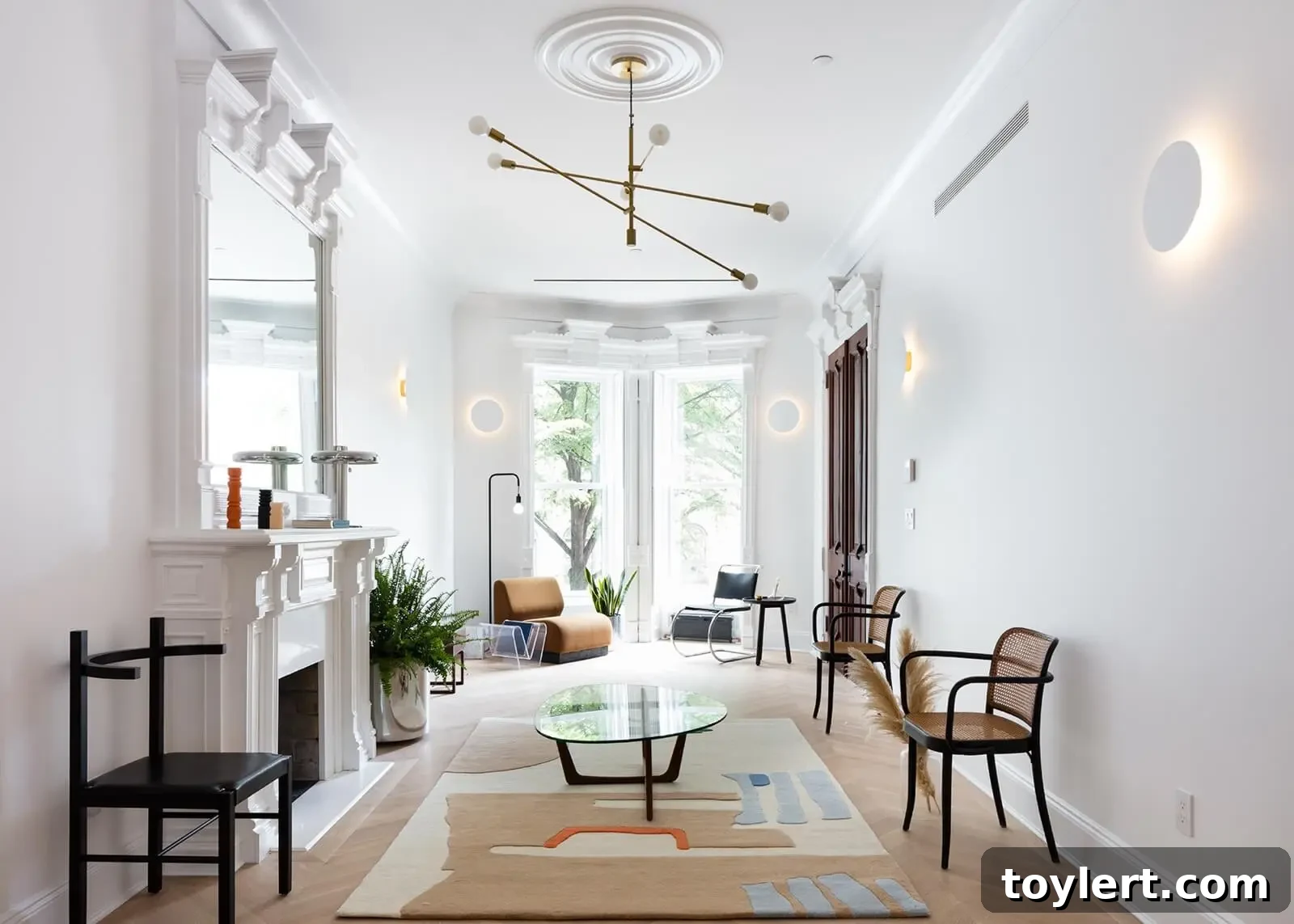
Reimagining Victorian Elegance: A Prospect Heights Brownstone Transformed into a “Cloud-Like” Sanctuary
In the vibrant heart of Prospect Heights, Brooklyn, a late 19th-century Victorian brownstone has undergone a remarkable transformation, blending historical grandeur with a distinctly modern sensibility. The ambitious gut-renovation project, spearheaded by Hatchet Design Build, a local firm renowned for its innovative approach, aimed to create an interior environment that felt “light, cloud-like,” as described by founder Zach Rockhill. This vision dramatically reshaped the home, turning a weighty piece of history into an airy, contemporary haven for its new owners.
The Challenge of History: Preserving Character While Embracing Modernity
Victorian brownstones are iconic for their rich architectural heritage, often characterized by elaborate detailing, dark wood finishes, and a sense of weighty elegance. While deeply cherished, these historical elements can sometimes feel imposing or dated in a modern context. The team at Hatchet Design Build faced the common dilemma of preserving the intrinsic character of such a distinguished property while infusing it with a fresh, breathable atmosphere conducive to contemporary living. The interior’s most striking original feature — its intricate period woodwork — presented both a magnificent asset and a significant design challenge.
For many, the idea of painting over original, elaborate Victorian woodwork might seem radical, even sacrilegious. This particular brownstone boasted an impressive array of window and door casings, cornices, and baseboards, all bearing the hallmark craftsmanship of their era. Traditionally, these elements would have been stained in deep, rich tones, contributing to the often dimly lit, formal aesthetic of Victorian homes. The question was: how to honor this heritage without letting it overwhelm the space or trap it in time?
A Bold Stroke of Genius: The Power of White
The answer, according to Matt Ransom, the Columbia-trained architect and lead designer on the project, lay in an unapologetic application of white paint. “The molding is so present in the house. If it’s all you see, it feels overbearing and sort of stuck in time,” Ransom explained. This wasn’t merely a cosmetic choice; it was a strategic design decision rooted in a deep understanding of architectural history and modern aesthetics. By embracing a lighter palette for these prominent features, the design team sought to reframe the narrative of the home.
Painting the elaborate window and door casings white achieved multiple objectives simultaneously. Firstly, it allowed the detailed craftsmanship of the woodwork to remain visible and appreciated, yet it softened its visual impact. “We retained character, but dialed it down somewhat so there’s space to breathe,” Ransom elaborated. The intricate carvings and profiles were no longer demanding focal points but rather subtle textures, contributing to the overall elegance without dominating the perception of the space. This subtle transformation prevents the historical elements from feeling like museum pieces, instead integrating them seamlessly into a fresh, dynamic environment.
Secondly, this bold choice served as a deliberate “gesture to historical context,” acknowledging the home’s past while “clearing the stage for contemporary intervention.” The white backdrop acts as a neutral canvas, allowing modern furnishings, art, and personal touches to shine without competing with heavy, dark architectural details. This creates a versatile interior where past and present engage in a harmonious dialogue, fostering an environment that feels both timeless and current. The once imposing details now offer a quiet sophistication, enabling the homeowners to imbue the space with their unique style and personality, creating an authentic reflection of modern Brooklyn living.
Beyond Aesthetics: The Practicality of Preservation and Restoration
While the aesthetic transformation was a primary driver, the decision to paint the woodwork also offered significant practical advantages, especially concerning the extensive restoration required for the aged moldings. Over a century of existence had left its mark, necessitating meticulous repairs, patching, and splicing of old and new elements. Restoring aged wood to a perfect, seamless stain match is an incredibly challenging and often prohibitively expensive endeavor.
Matt Ransom highlighted the utilitarian benefit: “It’s a lot easier to splice old with new when the matched and patched elements are to be painted.” This practical approach streamlined the restoration process considerably. Imperfections and areas where original wood had to be replaced with new material could be seamlessly integrated and unified under a fresh coat of paint. This not only ensured the structural integrity and longevity of the historical features but also made the restoration more efficient and cost-effective. The cohesive white finish disguises any subtle variations between old and new materials, resulting in a flawless and pristine appearance that would be much harder to achieve with a natural wood stain. This pragmatic decision underlines Hatchet Design Build’s holistic approach, where design vision and practical execution go hand-in-hand.
The “Cloud-Like” Environment: A Holistic Design Philosophy
The concept of a “light, cloud-like environment” extended far beyond the painted woodwork. It became the guiding principle for the entire renovation, influencing material selections, lighting design, and the overall flow of the home. The goal was to infuse every corner with a sense of expansiveness and serenity. This meant carefully curating finishes that reflected and amplified natural light, creating a bright and airy atmosphere that contrasts sharply with the often dark and enclosed spaces typical of traditional Victorian architecture.
Achieving this ethereal quality involved thoughtful consideration of wall colors, flooring, and even ceiling treatments. Lighter flooring options, for instance, contribute to the reflective qualities of the space, bouncing light upwards and around the rooms. The strategic placement of modern lighting fixtures complements the abundance of natural light, ensuring that the home remains luminous even on overcast days or in the evenings. The overall effect is one of continuous flow and openness, where each room transitions seamlessly into the next, fostering a sense of calm and uncluttered living.
This design philosophy effectively deconstructs the traditional Victorian interior, stripping away its heavier elements to reveal its inherent elegance through a contemporary lens. The focus shifts from ornate decoration to curated simplicity, allowing the architecture itself to breathe and be appreciated in a new light. The “cloud-like” ambiance becomes a sensory experience, inviting residents to relax and find solace within walls that once might have felt imposing. It’s a testament to how intelligent design can transform not just the look, but also the very feel and function of a historical space.
Hatchet Design Build: Masters of Modern Victorian Interpretation
The success of this Prospect Heights renovation underscores Hatchet Design Build’s expertise in navigating the complex waters of historical preservation and modern design. Zach Rockhill’s visionary leadership and Matt Ransom’s meticulous architectural execution demonstrate a profound respect for the past combined with an innovative outlook for the future. Their ability to take a bold, unconventional approach — like painting elaborate period woodwork white — speaks volumes about their confidence in creating spaces that are both beautiful and highly functional for contemporary life.
Their work on this brownstone is a prime example of how historic homes can be adapted to meet the demands of modern living without sacrificing their unique charm. It’s about understanding the core essence of a building and finding creative ways to reinterpret it for a new era. The firm’s commitment to fluent, simple language in design translates into spaces that feel effortless and intuitive, yet are the product of sophisticated planning and execution. This project firmly places Hatchet Design Build among the leading experts in modern Victorian renovation and interior design in Brooklyn, offering valuable inspiration for anyone looking to revitalize a historic property.
The Enduring Appeal of the Modernized Brownstone
This Prospect Heights brownstone stands as a compelling model for future renovations, illustrating that modernizing a historic home doesn’t equate to erasing its past. Instead, it’s about creating a harmonious blend where history and contemporary design coexist and enhance one another. The white-painted woodwork, far from diminishing its character, highlights the craftsmanship and allows the intricate details to be appreciated in a fresh, understated manner. It creates a bright, inviting atmosphere that is perfectly suited for today’s lifestyles, proving that elegance and comfort are not mutually exclusive when it comes to historical homes.
The transformation orchestrated by Hatchet Design Build has not only created a stunning residence but has also contributed to the ongoing evolution of Brooklyn’s architectural landscape. It showcases how thoughtful design can breathe new life into venerable structures, ensuring their relevance and beauty for generations to come. This “cloud-like” brownstone is more than just a renovated house; it’s a testament to the power of design to create spaces that inspire, comfort, and endure, bridging the gap between centuries with grace and ingenuity.