335 Carroll Street: The “Hell Building” Set to Emerge as Carroll Gardens’ Premier Rental Destination
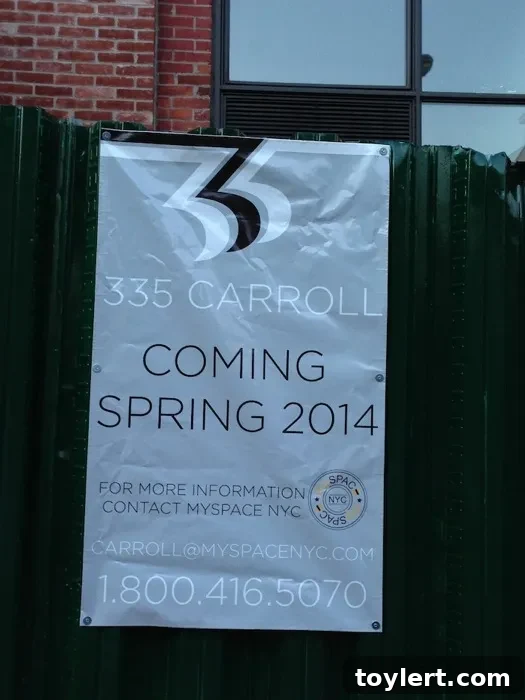
After enduring years of being an enigmatic construction site, shrouded in local lore and speculation, a significant beacon of change has finally graced 335 Carroll Street in Brooklyn’s coveted Carroll Gardens neighborhood. This edifice, famously — or perhaps infamously — known to residents as the “Hell Building” due to its protracted and challenging development journey, now proudly displays a sign declaring its imminent completion: “Coming Spring 2014.” This unexpected announcement has swiftly become a major talking point within the community, hinting that the long-anticipated transformation of this pivotal property is at last reaching its crescendo.
The appearance of this sign signifies a momentous turning point for a property that has languished in various states of incompletion for what has felt like an eternity to many local observers. Further investigation into real estate listings, particularly on MySpaceNYC’s website, corroborates earlier rumors regarding the building’s intended use. The units within 335 Carroll Street are indeed positioned to enter the market as rental apartments. While MySpaceNYC’s platform has yet to disclose comprehensive details such as floor plans, specific amenities, or rental price points, the inclusion of the address under their dedicated “rentals” section strongly reinforces this strategy. This decision points towards a clear intention to cater to Brooklyn’s thriving rental market, offering a fresh alternative to the often-saturated condominium landscape.
From Stalled Dream to Real Estate Reality: The Odyssey of a Warehouse Conversion
The narrative of 335 Carroll Street’s evolution from an industrial warehouse to a contemporary residential complex is anything but simple. This ambitious undertaking, a classic example of urban adaptive reuse, has been notoriously plagued by delays spanning more than a decade. For many years, the site stood as a stark symbol of stalled progress within a borough synonymous with rapid redevelopment. What began with the promise of transforming an antiquated structure into a modern living space slowly devolved into a complex saga involving construction stoppages, intricate financial hurdles, and the arduous navigation of New York City’s notoriously stringent bureaucratic processes for permits and approvals.
The uncharitable nickname, “Hell Building,” was not coined lightly. It stemmed from the deep-seated exasperation felt by the community over the project’s seemingly interminable delays and the unsightly, often hazardous, condition of the construction site. This moniker perfectly encapsulated the prolonged period of uncertainty and the sense of urban blight that overshadowed a prime piece of real estate in an otherwise charming neighborhood. Now, with a new construction site sign signaling a hopeful completion by May 1, residents are breathing a collective sigh of relief, eager for this long and arduous chapter to finally conclude and usher in a revitalized presence on Carroll Street.
Recalling the Rumors: Sterling Equities and Shifting Development Tides
The history of 335 Carroll Street is interwoven with a tapestry of rumors and potential, yet unrealized, plans. One of the most significant pieces of speculation revolved around Sterling Equities, a prominent real estate development and investment firm. Reports indicated that Sterling Equities had seriously considered acquiring the “Hell Building” with the intention of demolishing the existing structure. This possibility gained traction after the firm successfully purchased the adjacent Regency Carts site for a substantial sum of $12,500,000. Such an acquisition would have provided Sterling Equities with a significant footprint, potentially enabling them to create a much larger, integrated development spanning both parcels, fundamentally altering the entire block.
However, current public records and the building’s renewed construction efforts suggest that this particular vision did not materialize. There are no public records indicating a sale of 335 Carroll Street, confirming that, to the best of public knowledge, developer Isaac Fishman retains ownership of the property. This intricate detail highlights the dynamic and often unpredictable nature of large-scale real estate transactions in New York City, where grand plans can evolve or dissolve based on market shifts, revised financial models, or unforeseen regulatory challenges. Fishman’s continued ownership suggests a renewed, perhaps finally successful, commitment to completing the original warehouse conversion, albeit after a notably extended development timeline that tested the patience of many.
Carroll Gardens: A Highly Sought-After Brooklyn Enclave and Its Market Dynamics
To fully grasp the magnitude of 335 Carroll Street’s impending completion, one must appreciate the distinct charm and inherent desirability of Carroll Gardens. This iconic Brooklyn neighborhood is celebrated for its meticulously preserved tree-lined streets, elegant brownstones, and the unique, deep front gardens that lend the area its picturesque name. It represents a harmonious blend of classic Brooklyn architectural heritage and modern urban conveniences, firmly establishing itself as one of the most coveted residential locales in the entire borough.
Carroll Gardens offers its residents a vibrant, community-oriented lifestyle, punctuated by an array of independent boutiques, critically acclaimed restaurants, cozy cafes, and highly regarded local schools. Its strategic location provides convenient access to Manhattan via the F and G subway lines, making it an ideal choice for professionals seeking a serene, residential sanctuary without compromising on urban connectivity. The persistent demand for housing in this particular neighborhood consistently outpaces available supply, contributing to escalating property values and competitive rental rates. The forthcoming introduction of new, high-quality rental units at 335 Carroll Street is therefore expected to generate substantial interest, offering a fresh and attractive option within a notoriously tight and exclusive housing market.
The enduring appeal of Carroll Gardens extends beyond its aesthetic beauty; it is deeply rooted in its strong sense of community. Green spaces such as Carroll Park serve as vital gathering hubs, while numerous annual events and local initiatives foster a close-knit, welcoming environment. The integration of a significant new development like 335 Carroll Street into such a beloved urban fabric demands careful consideration. While the “Hell Building” has undeniably been a source of frustration and an eyesore for an extended period, its successful completion is widely anticipated to contribute positively to the neighborhood’s overall vibrancy, economic activity, and much-needed housing stock.
The Enduring Allure of Warehouse Conversions in Brooklyn’s Urban Revival
Warehouse conversions have become a defining characteristic of Brooklyn’s remarkable urban renaissance, transforming obsolete industrial structures into stunningly modern and highly desirable residential and commercial spaces. Neighborhoods such as Dumbo, Red Hook, and Gowanus are replete with exemplary instances of these conversions, which are prized for their unique architectural character, expansive open layouts, and often prime locations, whether waterfront or historically significant. The fundamental appeal of these projects lies in their ability to preserve the inherent industrial aesthetic – characterized by soaring ceilings, exposed brickwork, and oversized windows – while seamlessly integrating cutting-edge amenities and contemporary design principles. These distinctive properties frequently attract tenants and buyers who seek spaces imbued with character, a rich history, and a unique identity that sets them apart from conventional new constructions.
However, undertaking such conversions is far from straightforward. Structurally, repurposing aged industrial buildings necessitates extensive engineering expertise and often involves substantial costs associated with remediation, particularly if the site has a history of industrial contamination. Navigating complex zoning regulations can also present considerable hurdles, often requiring special variances or complete rezonings to facilitate a transition from industrial to residential use. These inherent challenges undoubtedly played a significant role in the prolonged timeline and numerous delays experienced by 335 Carroll Street. Nevertheless, the successful culmination of such a project frequently results in exceptionally desirable properties that command premium prices, owing to their unique blend of historical significance, innovative design, and modern comfort. The eventual unveiling of 335 Carroll Street as a sophisticated rental complex will undoubtedly add another compelling chapter to Brooklyn’s rich and evolving narrative of repurposed industrial architecture.
A Glimmer of Hope: Impact and Seamless Integration into the Community
The imminent completion of 335 Carroll Street signifies much more than merely the conclusion of a long-standing construction endeavor; it heralds a significant and transformative development for the entire Carroll Gardens community. The long-awaited removal of the “Hell Building” as a persistent eyesore will unequivocally enhance the visual appeal and aesthetic harmony of Carroll Street. Beyond mere aesthetics, the introduction of new, high-quality rental units will crucially contribute to the housing supply in a neighborhood where demand consistently outstrips availability, leading to a fiercely competitive market.
While any new development inevitably sparks discussions about gentrification and potential shifts in neighborhood character, the transformation of 335 Carroll Street also promises a host of positive economic and social impacts. It will provide much-needed housing options, potentially attracting new residents who will contribute to the vitality of local businesses, support the vibrant street life, and enrich the community fabric. The careful design and thoughtful integration of the building’s exterior will be paramount in ensuring it complements, rather than detracts from, the cherished architectural heritage of Carroll Gardens. The overarching hope is that the completed project will not only prove to be a successful commercial venture but also a highly valued addition that genuinely enriches the overall living experience for both current and future residents.
The community’s anticipation is almost palpable. After enduring years of patient observation, persistent waiting, and collective wondering, the finish line for 335 Carroll Street finally appears firmly within reach. This building, once emblematic of stalled ambition and urban frustration, is now poised to become a powerful testament to the triumph of urban renewal and the enduring, magnetic appeal of Brooklyn’s historic and vibrant neighborhoods. Its grand emergence as a collection of luxury rental units marks a brand new chapter for a site that has for too long been shrouded in mystery and delay, promising to contribute a fresh and dynamic element to the ever-evolving real estate landscape of Carroll Gardens.