P.S. 133 Community Garden Paved Over: A Promise Unfulfilled in Brooklyn
In a recent development that has sparked significant concern among Brooklyn residents and local advocates, the School Construction Authority (SCA) appears to have reneged on a crucial promise regarding the P.S. 133 community garden. What was originally slated to be a vibrant green space and educational amenity for students and the neighborhood has instead been transformed into a stark expanse of asphalt. This turn of events not only signifies a profound disappointment for the community but also raises critical questions about transparency and accountability in public development projects across New York City.
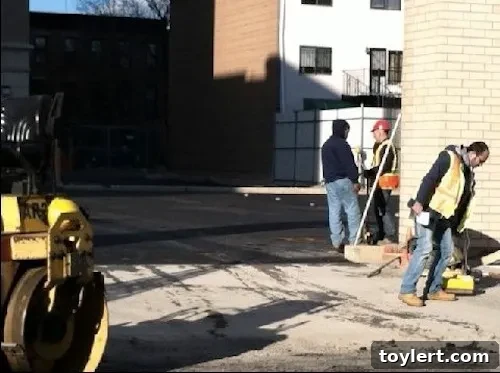
The controversy first came to light when alert tipsters observed that all exterior space behind and beside the new P.S. 133 building, prominently located along 4th Avenue, had been entirely paved. This action stands in direct contrast to a prior agreement that explicitly stipulated the construction of a replacement community garden. The original P.S. 133 building, along with its existing garden, was demolished to make way for the new facility. At the time, the SCA assured residents and stakeholders that a new garden would be established, mitigating the loss of the cherished green space. However, the latest updates paint a very different and troubling picture.
The Broken Promise: Asphalt Where Green Should Be
The core of the issue lies in the School Construction Authority’s alleged failure to deliver on its commitment. Community gardens serve as invaluable assets in dense urban environments like Brooklyn, offering a myriad of benefits that extend far beyond aesthetics. They provide crucial educational opportunities for students, fostering hands-on learning about nature, sustainability, and food systems. For the wider community, these gardens act as vital social hubs, promoting neighborly interaction, collective stewardship, and a sense of shared identity. Environmentally, they contribute to local biodiversity, help manage stormwater runoff, and can even mitigate the urban heat island effect.
The initial agreement to replace the demolished P.S. 133 garden was a testament to the community’s strong desire to preserve these benefits. Residents and school parents anticipated a thoughtfully designed space, complete with essential infrastructure to support active gardening. The promise was clear: a functional and accessible green space that would continue to serve as a cornerstone of the neighborhood.
However, the reality observed on the ground deviates drastically from this expectation:
We now hear that the replacement “new community garden” will consist of asphalt with a fence around it (the moorings for the fence post are visible in the picture above as little yellow dots on the asphalt — the much smaller garden is to the right of those dots.) Anyone who wants to garden there — parents at the school, former gardeners — will need to bring in everything from scratch — and pay for it. No paths, raised beds, no obvious drainage, dirt, tool shed, benches — nothing but asphalt.
This description paints a stark image of an area devoid of any practical amenities for gardening. The implication that residents, including school parents and former gardeners, would be solely responsible for furnishing and funding all necessary infrastructure—from bringing in soil to installing drainage and building raised beds—is not only financially burdensome but also fundamentally undermines the spirit of a “replacement garden” provided by a public authority. A true replacement would entail a ready-to-use or at least foundationally prepared space, reflecting the SCA’s commitment to the community’s needs, not just a fenced-in plot of pavement.
Impact on Education and Community Life
The decision to pave over the promised P.S. 133 community garden carries significant repercussions for both the school’s students and the surrounding neighborhood. For P.S. 133, a lack of an outdoor learning environment means missed opportunities for experiential education. Science lessons, environmental studies, and even basic life skills related to food growth become abstract concepts rather than tangible experiences. In an era where outdoor learning is increasingly recognized for its benefits to child development and engagement, this setback is particularly disheartening.
Beyond the classroom, the absence of a proper community garden represents a substantial loss for neighborhood cohesion. Green spaces often serve as crucial gathering points, fostering interaction between diverse groups of people. Former gardeners, who had invested their time and effort into the original garden, now face the challenge of starting from zero, potentially at considerable personal expense. The sense of collective ownership and shared purpose that blossomed in the original garden is now jeopardized, replaced by frustration and a feeling of being overlooked by the very entities meant to serve the public.
Environmentally, the choice of asphalt over permeable green space contributes negatively to urban ecology. Hard surfaces prevent natural rainwater infiltration, exacerbating stormwater runoff issues and potentially increasing the burden on the city’s drainage systems. A well-designed garden, conversely, can act as a natural sponge, absorbing water, filtering pollutants, and promoting local biodiversity. This paved area represents a lost opportunity for sustainable urban planning and green infrastructure development in a rapidly developing area of Brooklyn.
Advocacy and the Path Forward
The community’s response to this revelation has been one of deep concern and a renewed call for advocacy. Residents had not been notified that the SCA was no longer planning on building a full replacement garden, highlighting a significant lack of transparency and communication. This absence of prior consultation further compounds the sense of betrayal and underscores the importance of community engagement in public works projects.
In response, concerned residents are strongly encouraged to engage with their local representatives and community organizations to address this critical issue. Specifically, reaching out to Council Member Steve Levin and Community Board Six is paramount. Council Member Levin, representing the district, serves as a crucial voice for residents within the city government. He has already indicated his commitment to following up with the SCA, a testament to the power of citizen engagement. His office can apply political pressure, facilitate dialogue, and explore potential solutions or recourse.
Community Board Six also plays a vital role as a local advisory body. It represents the interests of the community and acts as a bridge between residents and city agencies. By raising this issue with Community Board Six, residents can ensure that their concerns are officially documented, discussed in public forums, and considered in recommendations made to city planners and the SCA. Collective action, whether through petitions, public meetings, or sustained communication with these offices, is essential to reversing this decision and ensuring the SCA fulfills its original promise.
Accountability in Public Projects: The SCA’s Role
The School Construction Authority’s primary mandate is to build and renovate public schools across New York City. This includes ensuring that new facilities are not only structurally sound but also integrated thoughtfully into their respective communities, respecting existing agreements and enhancing the quality of life for residents. When promises regarding public amenities like community gardens are made, the community has a legitimate expectation that these commitments will be honored. The current situation at P.S. 133 calls into question the SCA’s adherence to these principles of accountability and community partnership.
While budgetary constraints or logistical challenges might sometimes arise in large-scale projects, such issues should be communicated transparently and collaboratively with the community. Abruptly altering plans without notification, especially concerning a promised public good, erodes trust and sets a troubling precedent for future development initiatives. It is incumbent upon the SCA to provide a clear explanation for this drastic change and to work proactively with the P.S. 133 community to find an acceptable resolution that genuinely addresses the need for a functioning green space.
Looking ahead, a genuine resolution would involve the SCA revisiting its plans and allocating the necessary resources to install basic, foundational garden infrastructure. This could include preparing the ground with proper soil, establishing drainage, and potentially installing raised beds or pathways. Furthermore, partnerships with local non-profits, urban gardening organizations, or even the New York City Parks Department could offer expertise and additional resources to transform the asphalt into the thriving community garden it was always intended to be. The community’s vigilance and sustained advocacy will be key to ensuring that this promise is ultimately kept.
The P.S. 133 community garden controversy serves as a poignant reminder of the continuous effort required from residents to safeguard their local amenities and hold public agencies accountable. The hope remains that through concerted action, the asphalt at P.S. 133 can still blossom into the vibrant, educational, and communal green space that the Brooklyn neighborhood was promised and so richly deserves.