The Resurgence of 500 Metropolitan Avenue: Williamsburg’s Long-Awaited Gateway Project Takes Shape
After years of anticipation and stalled progress, a significant chapter unfolds at 500 Metropolitan Avenue, a site famously dubbed “The Gateway to Williamsburg.” This pivotal Brooklyn development, poised at a strategic entry point into one of New York City’s most dynamic neighborhoods, is finally showing definitive signs of life. Recent observations confirm that foundation work is actively underway, signaling a tangible commitment to bringing this ambitious project to fruition. The commencement of construction represents a major milestone for a development that has long been a subject of local speculation and community interest.
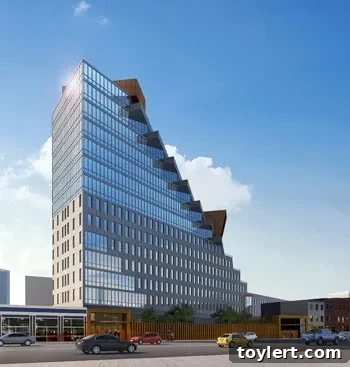
Accompanying this renewed activity is the unveiling of a fresh architectural rendering, offering an updated glimpse into the future facade of this prominent structure. While the core vision—a distinctive, wedge-shaped, stepped, and largely glass-clad building—remains consistent with previous plans, several key details have evolved. The most notable changes include an increase in height to 15 stories, one more than initially planned, and a refined allocation of its mixed-use spaces. The current design now specifies 148 sophisticated hotel rooms alongside 81 exclusive residential units, a blend meticulously crafted to cater to both the burgeoning tourism market and the sustained demand for luxury living in Williamsburg.
The project, overseen by the reputable Chetrit Group, continues its collaboration with the esteemed architect Gene Kaufman. Their combined expertise promises a development that is not only structurally sound but also aesthetically striking, destined to become an iconic landmark in the Brooklyn skyline. With an ambitious completion target set for 2015, the project’s progress is being closely monitored by local residents, urban planners, and real estate enthusiasts alike. This renewed momentum at 500 Metropolitan Avenue signifies more than just a new building; it heralds a transformative period for a corner of Williamsburg that has long awaited its defining architectural statement.
A Deep Dive into the Vision: Architecture and Design Philosophy
The architectural genius of Gene Kaufman, renowned for his innovative urban designs, is at the heart of the 500 Metropolitan Avenue project. His vision for “The Gateway to Williamsburg” is characterized by a sleek, modern aesthetic that blends seamlessly with the vibrant, evolving character of its surroundings while simultaneously establishing a commanding presence. The building’s distinctive wedge shape is not merely an aesthetic choice; it’s a clever response to the site’s unique footprint, maximizing views and natural light for both hotel guests and residential occupants. This thoughtful design ensures that the structure stands out as a contemporary masterpiece without overpowering the historic charm of parts of Williamsburg.
The stepped profile of the building adds another layer of architectural sophistication. This feature allows for the creation of multiple terraces and setbacks, potentially offering private outdoor spaces for residents and communal areas for hotel patrons. Imagine stunning panoramic views of the Manhattan skyline, the East River, and the lively streetscapes of Brooklyn from these elevated vantage points. The extensive use of glass throughout the facade is a hallmark of modern luxury architecture, designed to reflect the dynamic urban environment and allow an abundance of natural light to flood the interiors. This not only enhances the living and lodging experience but also contributes to the building’s dynamic appearance, changing with the light of day and the glow of the city at night.
The updated rendering suggests a refinement in material palettes and finishes, emphasizing high-quality, durable materials that contribute to the building’s longevity and sophisticated appeal. Gene Kaufman’s approach often involves creating buildings that are both functional and visually engaging, and 500 Metropolitan Avenue appears to be no exception. Its design aims to integrate contemporary elegance with the practical needs of a mixed-use development, offering a harmonious blend of residential comfort and hotel-level service. The subtle alterations from previous designs indicate an iterative process, where every detail is considered to optimize the building’s impact and functionality, ensuring it truly lives up to its “Gateway” moniker.
Mixed-Use Excellence: Hotel and Residential Offerings
The strategic composition of 500 Metropolitan Avenue, featuring 148 hotel rooms and 81 residential units, positions it as a premier mixed-use destination in Williamsburg. The hotel component is expected to cater to the discerning traveler, seeking both luxury and convenience in one of New York City’s most sought-after neighborhoods. With Williamsburg’s reputation as a cultural hub, culinary destination, and artistic enclave, a new boutique or upscale hotel will undoubtedly thrive, offering visitors an immersive experience close to independent shops, renowned restaurants, and vibrant nightlife. Potential amenities within the hotel might include state-of-the-art fitness centers, chic rooftop bars with breathtaking views, versatile meeting spaces, and perhaps even a signature restaurant, all designed to enhance the guest experience and attract a diverse clientele.
Complementing the hotel, the 81 residential units are poised to set a new standard for luxury living in the area. These homes will likely feature premium finishes, modern appliances, open-concept layouts, and expansive windows that frame stunning cityscapes. Residents can anticipate a suite of high-end amenities, possibly including a private resident lounge, a dedicated fitness studio, a concierge service, secure parking, and beautifully landscaped outdoor spaces or terraces. The allure of living atop a luxury hotel also means residents could potentially benefit from hotel services, adding an unparalleled layer of convenience and exclusivity to their urban lifestyle. This dual offering of hospitality and residential excellence is a testament to the developers’ understanding of the evolving needs of Williamsburg, creating a vibrant community within a single, architecturally significant structure.
The Power Players: Chetrit Group and Gene Kaufman
The success of a project of this magnitude hinges significantly on the expertise and vision of its developers and architects. The Chetrit Group, a private real estate development firm based in New York City, is widely recognized for its diverse portfolio of successful projects across various sectors, including residential, commercial, and hospitality. Their track record demonstrates a keen ability to identify prime locations and execute ambitious developments, transforming urban landscapes. The Group’s involvement with 500 Metropolitan Avenue reassures stakeholders that the project is in capable hands, backed by extensive experience in navigating the complexities of New York City real estate development, from financing to construction management.
Equally crucial to the project’s identity is the architectural firm led by Gene Kaufman. Gene Kaufman Architects (GKA) is a prolific firm known for its distinctive designs that often push boundaries while remaining sensitive to context. Kaufman’s signature style frequently incorporates modern materials, innovative massing, and a focus on maximizing natural light and views, all evident in the rendering for 500 Metropolitan Avenue. His firm has a reputation for delivering projects that are not only visually impactful but also highly functional and responsive to their urban settings. Their extensive experience with mixed-use developments and hospitality projects, particularly in New York City, makes them an ideal partner for shaping “The Gateway to Williamsburg” into a truly iconic and successful venture. The synergy between the Chetrit Group’s development prowess and Gene Kaufman’s architectural vision forms the bedrock of this exciting project.
Williamsburg’s Evolution: A Perfect Setting for a Landmark Development
Williamsburg, Brooklyn, has undergone a remarkable transformation over the past few decades, evolving from an industrial hub into one of New York City’s most sought-after and culturally vibrant neighborhoods. Its dynamic blend of artistic creativity, independent businesses, world-class dining, and lively entertainment venues makes it a magnet for both residents and visitors. The neighborhood boasts excellent connectivity to Manhattan via multiple subway lines, making it an attractive location for commuters who desire a distinct lifestyle outside the immediate hustle of the city center.
The real estate market in Williamsburg continues to thrive, driven by a strong demand for luxury apartments, boutique condominiums, and mixed-use developments that offer both convenience and a sense of community. Projects like 500 Metropolitan Avenue are critical components of this ongoing evolution, providing modern infrastructure and amenities that cater to the sophisticated tastes of its growing population. The “Gateway to Williamsburg” is strategically positioned to capitalize on these trends, offering a new benchmark for upscale living and hospitality at a prominent intersection. This development is not just adding to the skyline; it’s integrating into the very fabric of a neighborhood that celebrates innovation while honoring its rich history. It will undoubtedly contribute to Williamsburg’s continuous growth as a premier destination within the global urban landscape, solidifying its status as a borough of endless possibilities.
Tracking the Progress: Construction Milestones and Anticipated Completion
The visible foundation work at 500 Metropolitan Avenue is a welcome sight for those who have followed this project’s long and winding journey. After years of dormancy, the heavy machinery and active crews signify a critical phase in the development lifecycle. Foundation construction is inherently complex, requiring meticulous planning and execution to ensure the structural integrity of a towering 15-story building. This initial phase sets the stage for the vertical ascent of the structure, and its progress is a reliable indicator that the project is indeed moving forward with purpose.
The target completion date of 2015, while ambitious for a project of this scale, reflects the renewed commitment of the Chetrit Group and Gene Kaufman Architects to deliver on their vision. Meeting such a timeline will require efficient project management, seamless coordination among various construction teams, and adherence to rigorous building schedules. As the building rises, it will bring with it employment opportunities for local tradespeople and inject significant economic activity into the neighborhood. The steady progress of construction will also offer the community a tangible sense of the impending transformation, building anticipation for the moment when “The Gateway to Williamsburg” finally opens its doors. The journey from a long-stalled dream to a rising reality is a testament to perseverance and strategic planning, promising a bright future for this key Brooklyn address.
Long-Stalled, Huge ‘Burg Project Showing Signs of Life [Brownstoner]
Exploring the Development’s Visuals: Construction Progress and Architectural Renderings
The provided images offer a compelling narrative of the 500 Metropolitan Avenue project, from its envisioned future to its current state of construction. The initial rendering captures the essence of Gene Kaufman’s design: a modern, glassy edifice with a distinctive wedge and stepped profile that promises to become a defining feature of the Williamsburg skyline. This visual foresight allows us to appreciate the architectural ambition and the quality of urban design intended for this crucial site. The contrast between this pristine vision and the subsequent construction photos underscores the intricate process of bringing such a monumental project to life.
The series of construction photographs provide an invaluable look at the foundational work in progress. These images capture the raw energy of urban development: heavy machinery moving earth, workers diligently laying the groundwork, and the initial structural elements beginning to emerge from the ground. These pictures serve as concrete proof that the long-awaited transformation is well underway. They depict the meticulous process of site preparation and foundation laying, which are critical steps before the building can begin its vertical ascent. Observing these stages offers a unique perspective into the scale and complexity involved in constructing a 15-story mixed-use tower. It’s a dynamic visual journey from concept to concrete, inviting observers to track the evolution of “The Gateway to Williamsburg” from its very genesis. These visual updates are essential for both transparency and engagement, allowing the community to witness firsthand the realization of this significant development.