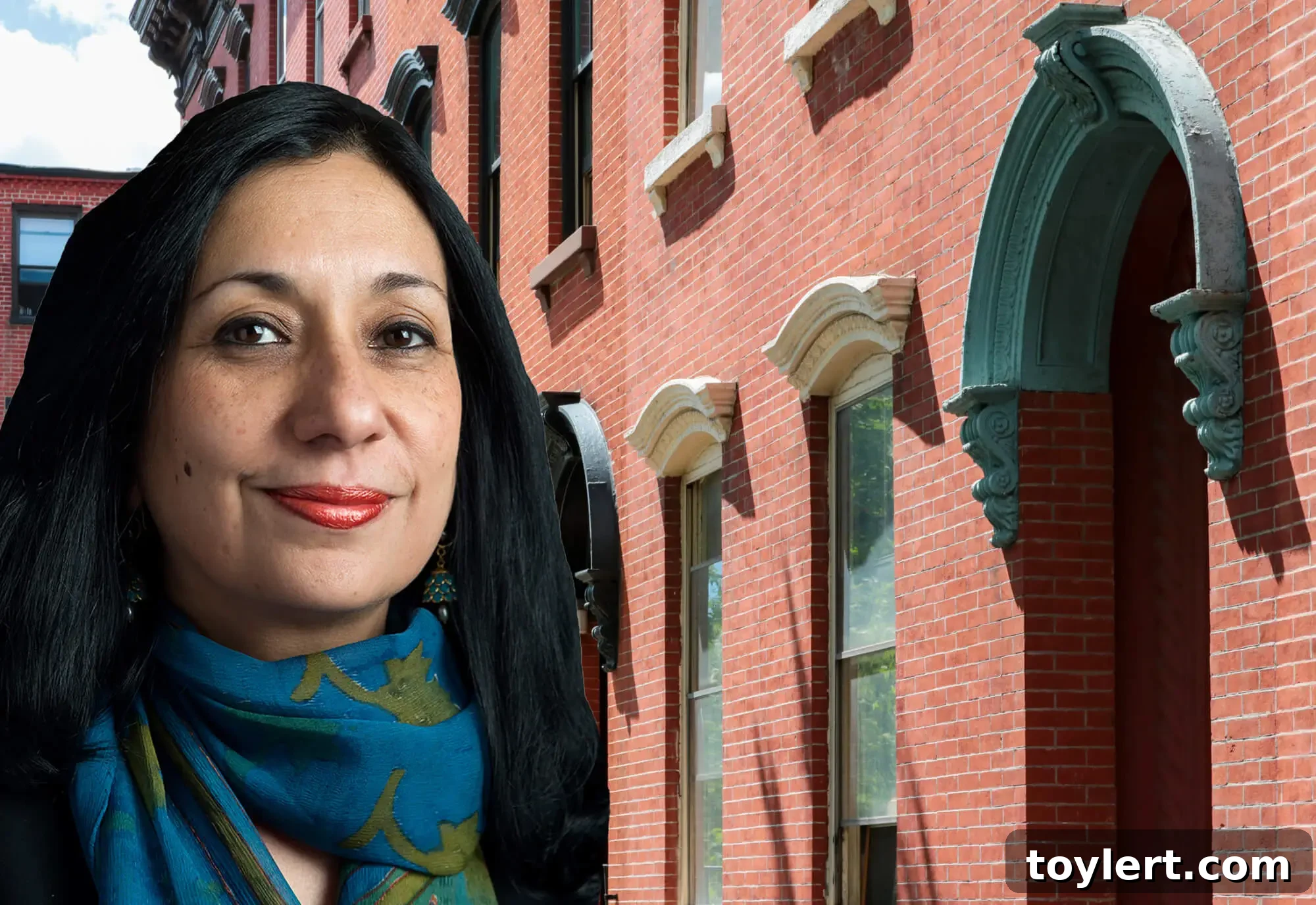
Leadership Shift at NYC’s Landmarks Preservation Commission: Meenakshi Srinivasan Resigns
A significant change is underway at the helm of New York City’s esteemed Landmarks Preservation Commission (LPC). Meenakshi Srinivasan, the long-serving Chair of the vital agency, has announced her resignation from the influential position. The news, first reported by the Queens-based Times Ledger, signals a pivotal moment for historic preservation efforts across the five boroughs.
As of the initial reports, the Landmarks Preservation Commission itself had yet to issue an official statement regarding the Chair’s departure. This silence, while perhaps procedural, has left many within the preservation community and development sectors anticipating further details and the formal announcement of a transition plan.
The Indispensable Role of the Landmarks Preservation Commission
The Landmarks Preservation Commission stands as a cornerstone of New York City’s urban identity, tasked with safeguarding the architectural, historical, and cultural heritage that defines the metropolis. Established in 1965, following the demolition of the original Pennsylvania Station, the LPC holds the unique authority to designate individual landmarks, scenic landmarks, interior landmarks, and historic districts. This designation provides crucial protection, ensuring that significant structures and areas retain their character and contribute to the city’s rich narrative.
Beyond designation, the Commission plays a critical regulatory role. Any proposed alterations, demolitions, or new construction within a designated landmark or historic district must first secure approval from the LPC. This process involves rigorous review to ensure that changes are appropriate, sensitive to the original design, and do not detract from the historic fabric. The LPC’s decisions directly impact property owners, developers, and residents, striking a delicate balance between preserving the past and accommodating the city’s dynamic growth.
The Chair of the LPC is a powerful figure, not only leading the commission meetings and voting on designations and permits but also guiding the agency’s overarching philosophy and policy direction. Their leadership shapes how New York City balances its relentless pursuit of modernity with its profound respect for history, making the role a subject of intense interest and, at times, considerable debate.
Meenakshi Srinivasan’s Tenure: Balancing Preservation and Progress
Meenakshi Srinivasan’s tenure as Chair of the Landmarks Preservation Commission was marked by a period of significant activity and complex challenges for New York City. Appointed to the position, she inherited a landscape where the pressures of development were constantly escalating, often creating tension between the desire to build new structures and the imperative to protect existing historic ones. During her time, the LPC continued its mission of landmarking new sites and districts, adding layers to the city’s protected heritage, yet also navigated numerous high-profile projects that tested the boundaries of preservation guidelines.
Her leadership involved overseeing numerous debates concerning proposed alterations to landmarked buildings, the appropriateness of new construction within historic districts, and the designation of new areas. These decisions often placed the Commission in the spotlight, garnering both praise from those who saw increased efficiency and criticism from advocacy groups who sometimes perceived a shift towards more development-friendly interpretations of preservation policy. The intricacies of these debates often underscored the difficult tightrope walked by the LPC, striving to uphold its mandate while acknowledging the economic and social forces shaping a global city.
Srinivasan’s approach aimed to streamline processes and foster greater predictability for property owners and developers, an effort that was appreciated by some for enhancing clarity and efficiency. However, this focus also led to concerns among certain preservationists who feared that the emphasis on expedited reviews might, at times, come at the expense of thorough consideration for historic integrity. Her resignation thus opens a new chapter, inviting a re-evaluation of the commission’s direction and priorities.
Preservation Advocates React: An Opportunity for Reaffirmation
The news of Chair Srinivasan’s resignation has been met with a nuanced reception, particularly among New York City’s dedicated preservation advocacy groups. Andrew Berman, the Executive Director of the Greenwich Village Society for Historic Preservation (GVSHP), was among the first to offer a public statement, articulating a sentiment shared by many within the preservation community.
In a written statement, Berman remarked, “The Chair’s resignation is an opportunity to get us back on the path towards truly valuing the special qualities which make our city so distinctive and wonderful, which includes preserving and protecting its history.” This statement is particularly insightful, suggesting that for some, Srinivasan’s departure represents a chance to recalibrate the LPC’s focus and perhaps redouble its commitment to a more robust preservation agenda.
Such reactions underscore a persistent dialogue within New York City: the ongoing negotiation between development interests and the deep-seated desire to protect the city’s unique architectural and cultural legacy. Preservationists often advocate for a more proactive approach to landmarking, broader protection for historic neighborhoods, and stricter enforcement of guidelines to prevent insensitive alterations. The “opportunity” Berman highlights implies a hope for leadership that will prioritize these aspects, ensuring that the LPC not only reacts to development pressures but actively champions the historical attributes that make New York City globally cherished.
The Future of Historic Preservation in a Dynamic City
The departure of the LPC Chair ushers in a period of introspection and anticipation regarding the future trajectory of historic preservation in New York City. The next leader will face the ongoing challenge of balancing the city’s insatiable drive for growth with the critical need to protect its irreplaceable heritage. This balance is not merely aesthetic; it profoundly impacts the city’s identity, its tourism economy, and the quality of life for its residents.
Key issues awaiting the new Chair include navigating the complexities of affordable housing initiatives in historic districts, adapting historic buildings for modern uses while maintaining their integrity, and addressing the impacts of climate change on vulnerable landmarked structures. Furthermore, the role of community engagement in the landmarking process remains paramount, with advocates pushing for greater transparency and public input in decisions that shape their neighborhoods.
The selection of a new Chair will therefore be a closely watched process, as their vision will significantly influence how the LPC approaches its mandate in the coming years. Will there be a renewed emphasis on expanding the scope of landmark protections? Or will the focus remain on facilitating development within existing frameworks? These questions resonate deeply within a city where every brick and beam often tells a story, and where the past is a tangible, living presence.
Why Preserving NYC’s Heritage Matters
New York City’s architectural heritage is more than just old buildings; it is the physical embodiment of its history, its culture, and its enduring spirit. Each landmarked building, every historic district, tells a story of innovation, immigration, struggle, and triumph. Preserving these structures and neighborhoods is crucial for several compelling reasons, extending far beyond mere sentimentality.
Firstly, it maintains the city’s unique character and aesthetic appeal. The diverse architectural styles – from stately brownstones to Art Deco skyscrapers – contribute immeasurably to New York’s iconic skyline and streetscapes, attracting millions of tourists annually and providing a distinct sense of place for residents. Lose these, and you lose a piece of what makes New York, well, New York.
Secondly, preservation fosters a connection to the past, offering valuable educational insights into the lives and times of previous generations. Historic buildings serve as tangible links to historical events and cultural movements, enriching our understanding of where we come from. They are outdoor museums that require no entry fee, constantly reminding us of the city’s layered past.
Moreover, historic preservation has significant economic benefits. It supports specialized trades and crafts, creates local jobs, and boosts property values in designated areas. Adaptive reuse of old buildings often proves more sustainable than new construction, reducing waste and conserving resources. It also creates vibrant, walkable neighborhoods that are highly sought after, contributing to a diverse urban fabric that new, uniform developments often fail to replicate.
Finally, the act of preservation is a commitment to sustainability and a recognition of the inherent value in what already exists. It’s about building upon, rather than erasing, the foundations of a vibrant, living city. The next chapter for the LPC will be instrumental in reinforcing this commitment for generations to come.
What’s Next for the Landmarks Preservation Commission?
With Meenakshi Srinivasan’s resignation, attention now turns to the crucial process of identifying and appointing her successor. This decision, typically made by the Mayor, will be intensely scrutinized by all stakeholders – from preservation groups and community boards to real estate developers and property owners. The qualities sought in the next Chair will likely include a deep understanding of architectural history, a proven track record in urban planning or public service, and crucially, an ability to navigate the often-conflicting interests that converge around preservation issues in New York City.
The new Chair will inherit a dynamic portfolio, including a substantial backlog of potential landmark designations that have been under review, ongoing discussions about appropriate development in sensitive historic areas, and the continuous need to engage with diverse communities across the city. Their leadership will set the tone for the LPC’s operational philosophy, influencing everything from the pace of landmarking to the flexibility in interpreting existing guidelines.
This transition presents an opportunity for a fresh perspective, potentially leading to revised strategies for outreach, enforcement, and collaboration. It also offers a chance to reaffirm the LPC’s core mission: to protect and celebrate the extraordinary architectural and historical legacy of New York City, ensuring that its past continues to inform and enrich its future. The coming months will undoubtedly be a period of significant change and strategic realignment for one of the city’s most important cultural institutions.